Engineered Industrial Storage Systems Catalog
Browse our core industrial storage and logistics inventory solutions. Manufactured with Q235B/Q355B high-tensile structural steel, multi-stage corrosion pre-treatment, and load-tested configurations tailored to dynamic warehousing environments worldwide.
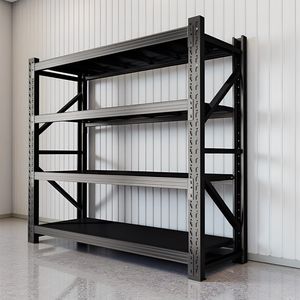
Heavy Duty Metal Warehouse Storage Rack Shelf
Designed for garage, maintenance workshop, and back-room storage applications requiring 300kg to 500kg uniform distributed load (UDL) capacity per beam tier.
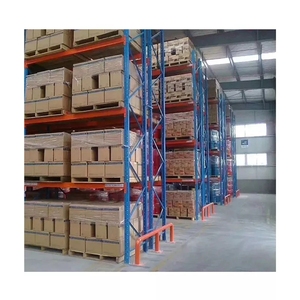
Wholesale Industrial Heavy Duty Pallet Racking
Versatile selective pallet rack configurations built with adjustable beam connectors, safety lock pins, and vertical uprights accommodating up to 4,000kg per level.
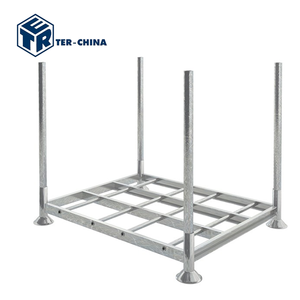
Stackable Removable Galvanized Post Pallet Rack
Modular hot-dip galvanized post racking system offering dynamic stackability (up to 4-high), demountable upright corner posts, and zero-footprint empty storage.
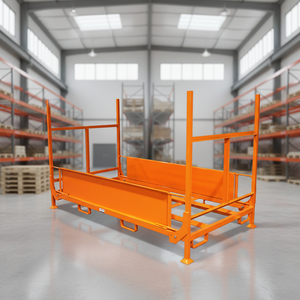
Drive-Through High Density Stacking System
Continuous lane storage engineered for dual-side forklift entry (First-In, First-Out). Eliminates cross aisles to boost cube volume efficiency by up to 65%.
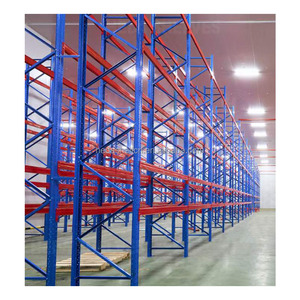
Industrial Commercial Warehouse Racking Systems
Turnkey multi-bay infrastructure engineered for 3PL facilities, central sorting depots, and heavy manufacturing components requiring customized cross-aisle span.
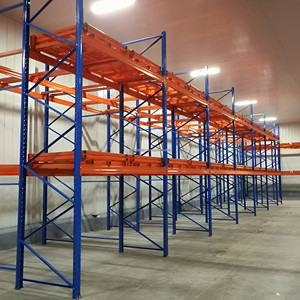
High Density Heavy Duty Push Back Pallet Rack
Gravity-assisted nested trolley carts operating on structural inclination rails. Facilitates 2 to 6 pallets deep storage with LIFO order fulfillment mechanics.
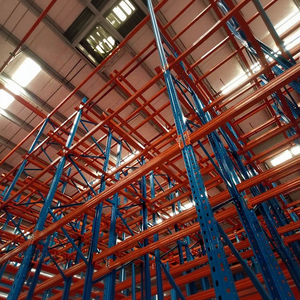
Single Deep Industrial Selective Pallet Storage Rack
Standard 100% immediate accessibility design. Optimized for fast inventory turnover, high SKU variance warehouses, and standard reach or counterbalanced forklifts.
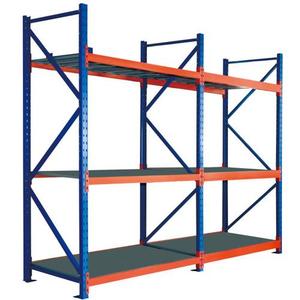
High Quality Shelves Regale Medium Duty Shelving
Longspan multi-tier hand-loaded shelving solution engineered with cold-rolled steel drop-in shelves, adjustable on 50mm centers for e-commerce picking and carton ops.
Industrial Capacity & OEM/ODM Engineering Competence
HEDA Shelves operates as a high-precision original equipment manufacturer (OEM) and custom design manufacturer (ODM) for logistics contractors, racking distributors, and global enterprises. Our scalable infrastructure bridges raw metallurgy and certified site execution.
Structural Compliance & Credentials
Engineered to international regulatory specifications including EN 15512, RMI MH16.1, and AS 4084-2012. Our production facilities maintain third-party audited compliance:
- CE Mark: Certificate No. 2435-CPR-8605159
- ISO 9001:2015: Quality Management No. 18624Q00169R0M
- RoHS Verified: Eco-compliant non-toxic powder surface
- Seismic Engineering: Dynamic load finite element analysis (FEA)
Bespoke OEM/ODM Fabrication
Turnkey custom profile manufacturing allowing international racking brands to scale capacity without capital expenditure. Full integration from raw coil to crated assembly:
- Upright Profiles: Variable gauge (1.5mm to 3.0mm) 50/75mm pitch
- Beam Types: Box beams, step beams, and interlock roll-formed styles
- Custom Finishes: RAL corporate powder matching or hot-dip galvanizing
- Private Labeling: Laser etched branding, serialized component tagging
Rapid Global Logistics & Packing
Strategically situated in Guangzhou near major port hubs (Nansha, Huangpu, Shenzhen). Standardized container nested packaging ensures zero maritime transport deflection:
- Container Optimization: 20GP/40HQ volumetric load balancing
- ASEAN Transit: 2-5 days (Vietnam/PH), 5-8 days (SG/MY/TH)
- Complete Export Docs: Form E, CO, mill test certificates (MTC)
- Installation Kits: Complete 3D layout maps, bolt packs & anchor dowels
10-Step Precision Cold-Form Manufacturing Pipeline
Quality assurance is continuously executed across our 30,000 m² automated facility rather than sampled at final packing. Every structural member conforms to tight geometrical tolerances.
Steel Inspection
Spectrographic analysis of prime Q235B/Q355B coils for chemical and yield compliance.
Precision Slitting
High-speed longitudinal coil slitting guaranteeing exact structural flange dimensions.
CNC Punching
Multi-station automated hydraulic piercing ensuring micron-precise connector hole pitch.
Roll Forming
Continuous multi-pass rolling trains preventing internal structural micro-cracking.
Profile Sizing
Laser cut-to-length flying saws yielding zero end burr and sub-millimeter tolerances.
Robotic Welding
Gas metal arc welding (GMAW) of beam connectors providing complete penetration welds.
Shot Blasting
Surface descaling to Sa 2.5 profile to remove all mill scale and oxidation layers.
Phosphating
Automated pre-treatment immersion building an anti-rust micro-crystalline substrate.
Powder Coating
Electrostatic polymer deposition cured at 200°C for superior impact and scratch resilience.
Rigid QC Packing
Non-destructive ultrasonic testing, steel strapping, corner guards, and container stowage.
System Architecture & Density Trade-Off Matrix
Evaluate industrial racking systems against mission-critical intralogistics parameters: footprint volumetric utility, pallet handling velocity, accessibility profiles, and capital allocation.
| Storage Racking System | Selectivity Level | Storage Density | Inventory Rotation | Forklift Compatibility | Relative Cost Index |
|---|---|---|---|---|---|
| Selective Pallet Racking | 100% (Direct Access) | Standard (40-50% Floor Util) | FIFO / LIFO (Flexible) | Standard Counterbalance / Reach | Baseline (1.0x) |
| Double Deep Pallet Racking | 50% (Two-deep lane) | Moderate (+30% vs Selective) | LIFO | Pantograph / Deep-Reach Mast | Low-Moderate (1.2x) |
| Drive-In / Drive-Through | Low (Single SKU lane) | High (Up to 75% Floor Util) | LIFO (Drive-In) / FIFO (Drive-Thru) | Narrow Chassis Counterbalance | Moderate (1.4x) |
| Push Back Racking (Carts) | Moderate (Lane-specific) | High (2-6 Pallets Deep) | LIFO | Standard Reach / Counterbalance | High (2.2x) |
| Radio Shuttle Automation | High Channel Selection | Maximum (+85% Floor Util) | FIFO & LIFO Automated | Standard Forklift at Bay Face | Advanced (2.8x - 3.5x) |
| Structural Steel Mezzanine | 100% Floor Access | Double/Triple Usable Space | Dynamic Flow Configuration | Hand Truck, AGV, Order Picker | Platform Scale (2.0x - 2.5x) |
Future Trends in Global Industrial Warehouse Procurement
As international supply chains absorb micro-shocks, soaring logistics real estate valuations, and decarbonization mandates, corporate procurement of storage racks is pivoting from commoditized steel purchasing to engineered lifecycle investments.
High-Density Hybrid Automation
Global warehouse operators are increasingly shifting away from single-deep selective racks toward hybrid high-density setups. Rising land acquisition costs demand vertical cubic optimization up to 16-24 meters.
Procurement demands structural racking systems pre-engineered to interface seamlessly with automated guided vehicles (AGVs), autonomous mobile robots (AMRs), and four-way radio shuttle systems. Structural frames now require tighter deflection limits under full load (often L/500 instead of standard L/200).
Climate Resilience & Micro-Corrosion
With expansion concentrated in high-humidity regional zones like Southeast Asia, Latin America, and coastal logistics parks, standard single-coat paint application is obsolete. Atmospheric salinity and condensation degrade structural integrity prematurely.
Forward-thinking procurement teams specify duplex coating systems: pre-treatment zirconium phosphating coupled with multi-stage electrostatic thermosetting epoxy-polyester powder, or continuous hot-dip galvanizing conforming to EN ISO 1461 for cold storage chains (-30°C).
Seismic Deflection & Dynamic Fatigue
Dynamic geological criteria now dictate storage specifications across seismic zones (such as the Pacific Rim). Structural racks are no longer treated as static furniture, but as complex unbraced cold-formed steel frames under severe lateral loads.
Procurement contracts require verified nonlinear static push-over analyses, thickened base plates, double-shear anchor bolting, and dual-flange upright cold forming capable of absorbing seismic acceleration frequencies without progressive collapse.
Product Roadmap & Metallurgy Development
The transition from artisanal steel fabrication to precision metallurgical engineering represents the defining paradigm shift in industrial racking. The next phase of systems development focuses on material chemistry, smart sensors, and modular circular economy lifecycles.
Micro-Alloyed Lightweighting
Modern cold roll-forming lines increasingly leverage micro-alloyed, thermomechanically rolled high-strength steels (such as Q355MC and higher tensile variations). These metallurgical configurations offer a 20-25% reduction in total steel deadweight while increasing yield strength above 355-420 MPa.
This directly translates into lower international container ocean freight charges per pallet location and reduces the embodied carbon footprint per warehouse installation without compromising permissible buckling envelopes.
Structural Health Monitoring (SHM)
The integration of Industry 4.0 IoT telemetry is transforming passive warehouse racking into active smart infrastructure. Specialized wireless micro-strain sensors, three-axis impact gyroscopes, and optical tilt detectors are being integrated into critical upright base frames.
These devices alert warehouse floor safety directors in real-time when a forklift impact exceeds allowable elastic deflection thresholds or when bay overload situations risk secondary beam connection shear failure.
Full Demountable Circularity
Logistics supply contracts are increasingly dynamic, driven by fluctuating e-commerce seasonal demand and short-term 3PL leasing models. Consequently, rigid welded structures are yielding to modular, highly configurable bolted joints.
Standardized hole patterns (50mm and 75mm international pitch) combined with quick-release interlocking safety tabs enable rapid warehouse reconfiguration, multi-tier mezzanine conversion, and complete end-of-lifecycle structural steel recyclability.
Frequently Asked Procurement Questions (FAQ)
Direct technical and commercial answers addressing structural calculations, environmental coatings, shipping optimization, and international regulatory conformance.
What primary inputs are required for HEDA engineers to issue a CAD layout and calculation package?
To produce an engineered proposal within 24 to 48 hours, we require: (1) Architectural DWG floor plans with clear building heights, column grids, and floor obstacle locations; (2) Pallet dimensions (W x D x H) including load overhang and maximum gross unit weight; (3) Forklift specifications including collapsed mast height, max lift reach, and turning radius (Aisle Width - Ast); (4) Desired SKU volume dynamics and storage density preference.
How do your surface finish treatments resist corrosion in high-humidity tropical or cold-store environments?
All structural steel members undergo an automated 4-stage chemical pre-treatment: degreasing, acid pickling to eliminate mill scale, phosphate crystalline coating, and ultra-pure water rinsing. Next, we electrostatically apply a 60–90 micron thermosetting epoxy-polyester powder coat baked at 200°C. For severe condensation environments, coastal logistics, and cold chain freezer depots (-30°C), we supply full hot-dip galvanized components conforming to ISO 1461 standards.
Can your storage systems be engineered to satisfy strict local seismic design requirements?
Yes. Our engineering department incorporates site-specific seismic ground acceleration parameters (Ss, S1 values) based on regional codes such as US UBC/IBC, Eurocode 8, and Chilean/Japanese seismic criteria. Calculations are verified through structural analysis software modeling dynamic response spectra, leading to specified column base footings, enlarged embedment anchor studs, and specialized upright horizontal/diagonal bracing patterns.
What specific certificates verify structural safety and quality control?
HEDA Shelves products are validated by independent international testing bodies. We hold CE Certification (Factory Production Control Certificate No. 2435-CPR-8605159) confirming conformance to European harmonized structural requirements EN 15512 and EN 1090. In addition, our manufacturing facilities operate strictly under ISO 9001:2015 Quality Management System Certification (No. 18624Q00169R0M) alongside full RoHS material non-toxicity compliance.
What are the standard ocean freight transit windows and shipping logistics procedures?
Shipping direct from our Guangzhou factory terminal via Nansha or Shenzhen maritime ports offers exceptional regional and global transit speeds. Typical port-to-port container voyages are: 2-5 days to Vietnam and the Philippines; 5-7 days to Singapore, Malaysia, and Thailand; 7-10 days to Indonesia; 14-18 days to Australia; 20-25 days to Western Europe; and 22-28 days to the US West Coast. We offer full FOB, CIF, DDU, and DDP export documentation support.
How do you maximize volumetric efficiency and prevent damage during container loading?
Upright frames and beams are nested using custom steel cradle pallets and automated bundle banding, optimizing both gross weight limits (up to 26-28 metric tons per 40HQ) and cubic space utilization. Critical component faces are wrapped in multi-layer shock-absorbing corrugated buffer sheets and stretch film, with dedicated heavy-gauge corner edge protectors. Small accessories, hardware bolts, baseplates, and anchors are sorted in wooden crates.
Accelerate Your Warehouse Intralogistics Project
Connect directly with our senior structural logistics engineering team in Guangzhou. We provide free preliminary CAD layout drawings, 3D warehouse renderings, structural load capacity calculations, and factory-direct OEM/ODM quotation packages within 24 hours.