Heavy-Duty Warehouse Storage & Cantilever Racking Portfolio
Configured for structural load resilience, rapid order fulfillment, and maximum volumetric cubic utilization across heavy manufacturing, logistics, and multi-tier distribution.
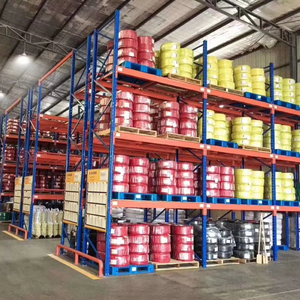
Boltless Stacking Steel Pallet Shelf Cantilever Warehouse Supermarket Multi-Level
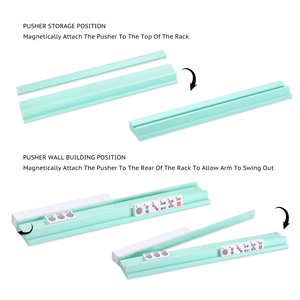
American Mahjong Magnetic Wooden Push Racks Lake Blue Pusher Set Accessories
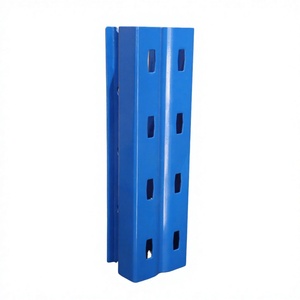
Dexion Upright Rack Frame for Warehouse Storage Pallet Racking Logistics Facilities
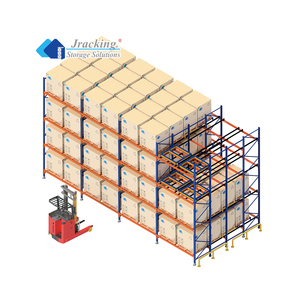
Jracking Push Back Racking Push-in Pallet Storage System 2-6 Pallet Dynamic Lanes
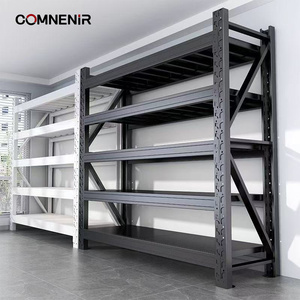
Industrial Shelving Warehouse Rack Heavy Duty Pallet Racking System Distribution
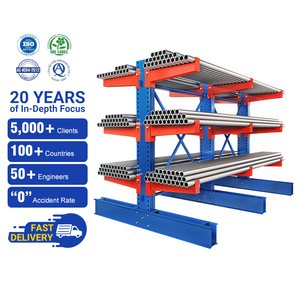
Durable Heavy-Duty Industrial Adjustable Cantilever Arm Racks Racking System
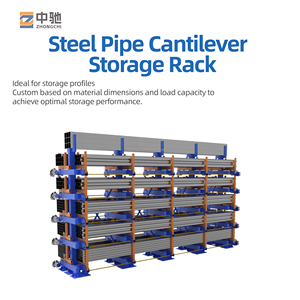
Motor Driven Telescopic Cantilever Rack for Efficient Steel Pipe Profile Warehouse
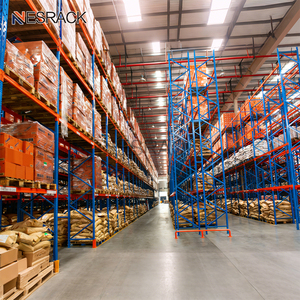
High Density Heavy Duty Galvanized Steel Double Deep Industrial Pallet Racking
Engineering Principles of Cantilever & Heavy-Duty Pallet Racking
Unlike conventional framed systems governed purely by axial column compression, cantilever racking relies on moment-resisting beam-to-column joints subjected to heavy eccentric torsional and rotational moments.
Moment-Connection Dynamics
Cantilever arms support dynamic loads outward from the neutral vertical axis, introducing high bending moments ($M = F \times L$) directly at the column-arm intersection. Our custom ODM solid-pinned or wedge-locking connections prevent plastic arm sag while maintaining full vertical adjustability along 75mm or 100mm increments without compromising shear cross-sections.
Structural Steel Grade Integrity
We forge exclusively with certified prime mill coils conforming to Q235B and high-yield Q355B (tensile strength up to 510 MPa, elongation ≥21%), comparable to European S355JR and ASTM A572 Grade 50. Every upright is hot-rolled or cold-formed through continuous roll forming to ensure zero residual stress concentration across major structural flanges.
Global Compliance Matrix
Our OEM calculations undergo comprehensive Finite Element Method (FEM) analysis calibrated against EN 15512 (European Steel Racking Systems), ANSI MH16.1 (RMI Specifications for Industrial Steel Storage Racks), and Australian AS 4084-2023. Seismic anchor simulations are standard for installations across Pacific Ring of Fire zones.
System Parametric Comparison: Heavy Industrial Storage Formats
Evaluate load deflection ratios, handling efficiencies, and architectural footprint allocations to align your warehouse investment with targeted operational throughput.
| Storage Architecture | Typical SKU Geometry | Standard Load Envelope | Direct Selectivity | Handling Handling Equipment | Volumetric Efficiency |
|---|---|---|---|---|---|
| Heavy-Duty Cantilever | Pipes, Rebar, Lumber, Sheet Metal | 500 kg to 3,500 kg / Arm | 100% Free Frontal Access | Side Loaders, 4-Way Trucks, Cranes | High (Linear/Continuous) |
| Motorized Telescopic Cantilever | Extrusions, Heavy Bar Stock, Molds | Up to 5,000 kg / Level | 100% Single-Bundle Direct | Direct Overhead Bridge Cranes | Ultra-High (Min Aisle Width) |
| Standard Selective Pallet Rack | Standard Euro / GMA Unit Pallets | 1,000 kg to 4,500 kg / Level | 100% Pallet Accessibility | Standard Counterbalance, Reach Trucks | Medium (Aisle Intensive) |
| Double Deep Pallet Racking | Homogeneous Palletized Cargo | 1,000 kg to 3,000 kg / Level | 50% Direct Access (FILO) | Pantograph Reach, Deep-Reach Forklifts | High (+30% vs Selective) |
| Dynamic Push-Back Racks | Batch Goods, 2-6 Pallet Depths | 500 kg to 1,500 kg / Pallet | Lane Face Accessible (LIFO) | Conventional Counterbalance Forklifts | Very High (Single Aisle In/Out) |
Future Procurement Trends in Heavy-Duty Cantilever Racking
Global supply chain directors and facility planners are shifting away from modular, off-the-shelf static shelving toward high-density automated, weather-resilient, and sensorized storage frameworks.
Motorized Telescopic Arms
Traditional fixed cantilever arm formats are being replaced by motor-driven rack designs where drawers extend 100% into aisles via wireless crane remotes, cutting material picking cycles by 60% while slashing forklift traffic accidents in narrow corridors.
Galvanized Outdoor Yards
Indoor industrial land costs in logistics hubs have skyrocketed by 35-50%. Modern engineering tenders mandate heavy-gauge, hot-dip galvanized cantilever structures (ISO 1461, ≥85µm zinc layer) designed to withstand rain, UV exposure, and saline marine airs directly in yard environments.
Crane & AS/RS Interfacing
The convergence of cantilever storage with automated stacker cranes (AS/RS) is defining modern mega-facilities. Extrusions and heavy pipe cassettes are extracted through automated shuttle arms, feeding automated CNC sawing cells without manual human intervention.
Total Cost of Ownership (TCO)
Procurement teams evaluate lifetime durability rather than initial container steel price. Precision-engineered cold-formed uprights, verified weldments, and multi-stage anti-corrosion pre-treatments guarantee zero sagging and minimal frame replacement costs over 20-year operational lifespans.
Factory Assets: Guangzhou Heda Shelves Co., Ltd.
Established in 2001, our 30,000 m² heavy manufacturing facility provides full in-house control from raw coil slitting to automated electrostatic powder coating, producing over 30,000 tons of structural racking per month.
Coil Spectrometry
Incoming prime steel coils undergo destructive tensile testing and chemical composition verification.
Automated Punching
High-speed CNC stamping presses guarantee pitch precision on upright connector slots within ±0.1mm.
Roll Profile Forming
Multi-station cold rolling lines form complex omega profiles, optimizing buckling strength limits.
Robotic MIG Welding
Industrial robotic cells execute continuous welding along arm bases and beam end connectors without porosity.
Pickling & Coating
Full 8-stage pre-treatment chemical pickling and electrostatic powder coating cured at 200°C for maximum adhesion.
Frequently Asked Questions: Global Industrial Sourcing
Detailed technical answers to standard engineering, container load optimization, and international customs clearance queries for global logistics directors.
How is cantilever arm deflection calculated and what is the allowable limit?
Under EN 15512 and ANSI MH16.1 guidelines, arm deflection under static uniform distributed load (UDL) must not exceed $L/250$ to $L/300$ (where $L$ is arm length). For example, a 1,200mm cantilever arm loaded to its nominal capacity must experience under 4.0mm to 4.8mm of total deflection. Our engineering packages include 3D deflection simulations prior to coil cutting.
What is the structural difference between Single-Sided and Double-Sided Cantilever?
Single-sided cantilever columns anchor near warehouse walls and must counteract continuous eccentric overturning moments transferred straight into concrete slab anchors. Double-sided (central spine) columns balance loads symmetrically on opposing arms, significantly canceling out bending forces on the central upright when uniformly loaded.
Can you provide certified seismic calculations for high-risk tectonic zones?
Yes. In earthquake-prone export territories (such as the Philippines, Indonesia, New Zealand, or the US West Coast), we integrate site-specific peak ground acceleration (PGA) variables, floor anchorage moment resistance, and reinforced K-bracing arrays into the structural dynamic analysis to meet local building safety codes.
How does HEDA handle corrosion resistance for coastal humid climates?
Every structural member passes through an automated immersion tunnel consisting of acid pickling, ultrasonic degreasing, zinc phosphating, and deionized water rinsing before thermoset epoxy-polyester powder spraying (60–80µm). For outdoor lumber yards or sub-zero blast freezers, complete hot-dip galvanizing per ISO 1461 is available.
What container packing methods are used to eliminate ocean transit damage?
Cantilever uprights and long cross-beams are bundled into rigid steel channel cradles lined with corrugated plastic sleeves and strapped using heavy-duty polyester cords. Small connection plates, pins, and hardware are crated in heat-treated fumigated wooden cases, maximizing 40HQ volumetric capacity and preventing container rub wear.
What is the standard production and shipping lead time for custom OEM batches?
Custom engineering CAD layouts are generated within 24 to 48 hours. Upon engineering sign-off, fabrication of 1 to 5 full 40HQ container loads requires 18 to 25 working days. Port transit from Guangzhou / Nansha port to Singapore or Manila takes 3–5 days, while direct ocean routes to the US West Coast or Rotterdam average 14–26 days.
Engineer Your High-Density Warehouse Racking Solution
Submit your building CAD drawings, product dimensions, and load specifications. Our certified structural engineers will generate comprehensive 3D layout renderings and dynamic load calculations without preliminary commitment.