Industrial High-Density Storage & Material Handling Systems
Explore our precision-fabricated warehouse storage solutions manufactured to stringent international certifications, designed for deep-lane capacity, seamless pallet selectivity, and maximum warehouse throughput.
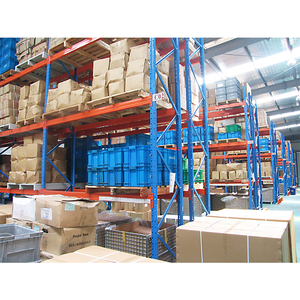
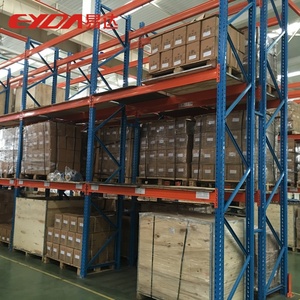
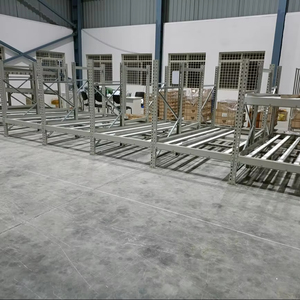
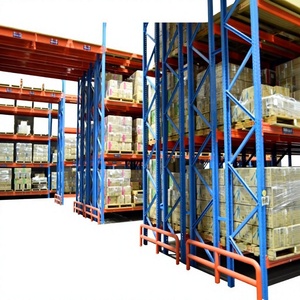
VNA Racking Technical Architecture & Engineering Principles
A granular analysis of structural kinematics, deflection parameters, and ultra-high tolerance manufacturing necessary for high-density vertical warehousing environments.
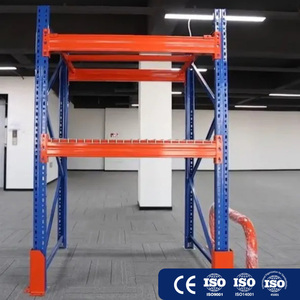
In high-density industrial intralogistics, Very Narrow Aisle (VNA) racking systems represent the quintessential convergence between high-bay volumetric capacity and total SKU selectivity. Standard wide-aisle configurations typically require operating clearances ranging between 3.2 to 3.8 meters to accommodate conventional counterbalanced forklift turns. In contrast, precision-engineered VNA aisle profiles compress operational corridor widths down to 1.5 to 1.8 meters. This spatial compression liberates upwards of 45% additional floor area, allowing vertical extension up to 18 meters or more, governed strictly by the floor flatness specifications dictated by DIN 18202 or EN 15620 classifications.
Cold-Roll Formed Profile Metallurgy
Our upright sections utilize high-tensile Q235B and Q355B structural steel, processed through continuous multi-station cold-roll forming lines. Continuous punched profiles with a standard 50mm or 75mm pitch guarantee micro-tolerance beam adjustability, structural load stabilization, and anti-torsion modulus under maximum seismic and operational stresses.
High-Precision Guide Rail Interfacing
VNA material handling equipment (turret trucks and order pickers) depends on low-clearance floor tracking. We design and deliver custom low-profile mechanical structural steel guide rails or integrated wire-guidance floor embeds. These assemblies absorb horizontal impact forces and guarantee frictionless lateral displacement down 100+ meter long warehouse bays.
FEM 10.2.02 & SEMA Compliance
Each bespoke VNA installation undergoes rigorous finite element structural modeling (FEM) to analyze sway deflection, dynamic operational loading, seismic horizontal acceleration, and cumulative buckling coefficients. Upright column-to-baseplate transitions are reinforced via oversized heavy-duty anchor brackets to ensure unyielding stability.
From High-Grade Coil to Turnkey Installation: The HEDA Edge
Decades of automated manufacturing ensure unyielding quality, rigorous structural verification, and certified engineering execution for demanding OEM/ODM contracts worldwide.
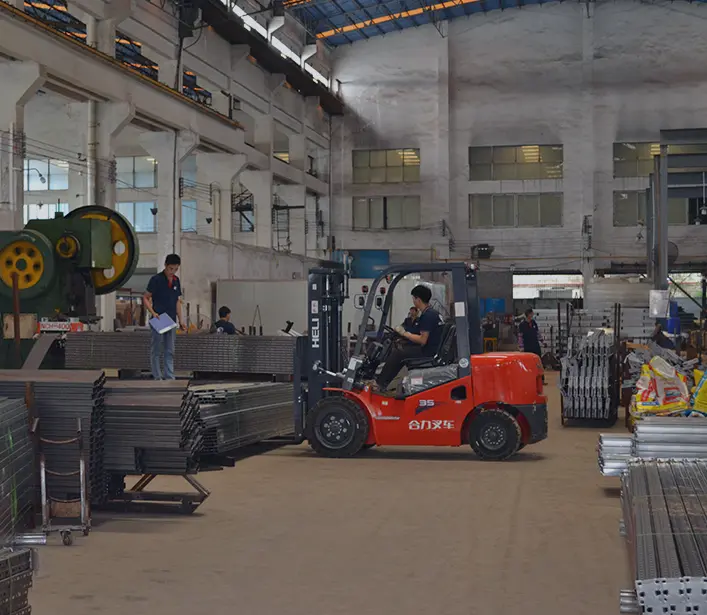
Operating from our centralized 30,000 square meter intelligent manufacturing facility in Guangzhou, China, Guangzhou Heda Shelves Co., Ltd. (founded in 2001) has stood as a pioneer in heavy-duty logistics infrastructure for over 25 years. We maintain total vertical integration across all ten industrial manufacturing stages—spanning high-precision uncoiling, automatic continuous stamping, roll profile forming, robotic pulse welding, ultrasonic degreasing, zinc phosphating, and automated electrostatic thermosetting powder application.
-
✓
Direct Factory Engineering: Free custom 3D CAD modeling, dynamic warehouse capacity optimization, and full structural stress calculations provided prior to procurement commitment.
-
✓
Certified Compliance Architecture: Verified CE certification (No. 2435-CPR-8605159), ISO 9001:2015 quality management compliance (No. 18624Q00169R0M), and RoHS environmental finish standards.
-
✓
Tropical & High-Corrosion Formulations: Complete surface pre-treatment with acid pickling and immersion phosphating creates superior primer adhesion, resisting coastal salt mist and tropical 85%+ relative humidity.
-
✓
Strategic Port Logistics: Located within immediate reach of Guangzhou and Nansha international container ports, ensuring 2 to 10 days rapid maritime freight connectivity to Malaysia, Thailand, Vietnam, Indonesia, Singapore, and global corridors.
Future Procurement Trends & Technological Evolution in VNA Systems
How progressive enterprise supply chain directors and third-party logistics (3PL) providers are configuring high-density storage to accommodate automation and sustainability mandates.
Hybridization with Autonomous Mobile Robots (AMRs)
Future VNA architectures are departing from strictly manual man-up or man-down turret trucks. Procurement specifications increasingly require VNA structural profiles to interface directly with automatic guided turret trucks (AGVs) and autonomous picking robots. This shift necessitates sub-millimeter beam punching accuracy and high-deflection-resistance steel formulations.
Dynamic Floor-Flatness Integration Engineering
Modern buyers demand turnkey supplier liability covering not merely steel components, but holistic laser floor surveying. Because a minute 2mm slab deviation translates to a hazardous 40mm tilt at a 15-meter mast elevation, smart procurement mandates structural shimming packs and heavy-duty seismic baseplates certified to withstand localized floor shear stresses.
Circular Lifecycle & Modular Scalability
Global corporate sustainability directives are shifting procurement toward standardized, reusable upright configurations. Buyers require OEM manufacturers to fabricate interchangeable slotted profiles capable of retrofitting selective pallet positions into VNA, double-deep, or rack-supported mezzanine infrastructures without extensive hot-work on site.
Frequently Asked Questions (FAQ) for VNA System Procurement
Clear, authoritative technical answers addressing engineering validation, floor preparation, logistical integration, and installation guidelines.
What floor slab tolerances are mandatory for a 12m to 15m VNA racking installation?
VNA systems require tight compliance with DIN 18202 (Table 3, Group 4) or the Concrete Society TR34 (Category 'Superflat' or DM2 specifications). Excessive slab undulation causes dynamic mast oscillation on narrow-aisle turret trucks, inducing risk of rack-frame impact. Precise shimming and non-shrink grouting under upright baseplates are mandatory engineering steps provided in our installation documentation.
How does HEDA Shelves adapt structural designs for high-seismic zones?
For earthquake-prone areas such as the Philippines, Indonesia, and specific Pacific Rim territories, our structural engineering team calculates local ground acceleration coefficients (Ss, S1). We utilize thicker gauge upright profiles, reinforced K-bracing and D-bracing patterns, high-grade anchor bolts, and widened ductile baseplates engineered to dissipate dynamic ground shock without column buckling.
Mechanical steel guide rails versus induction wire guidance: which should we specify?
Mechanical guide rails (typically structural angle steel or profile channel anchored every 500mm) offer robust physical protection for racking bottom uprights and ensure dependable truck positioning, ideal for high-throughput operations. Induction wire guidance cuts down on trip hazards and optimizes bottom pallet placement on the floor slab, but demands precise floor slotting and higher electrical guidance truck calibration.
What surface treatments protect steel racking against aggressive humidity and cold condensation?
Every structural beam, brace, and column undergoes a 9-stage automatic chemical pre-treatment cycle including acid rust removal, aqueous degreasing, and zinc phosphating. We apply thermoset epoxy-polyester powder baked at 200°C for durable dry-warehouse service. For blast freezers, cold chain warehouses, or marine environments, hot-dip galvanization to ISO 1461 standards is available to guarantee corrosion immunity.
What parameters are needed for HEDA to prepare a complimentary custom CAD layout?
To deliver an accurate architectural proposal, we require: (1) Architectural floor plan indicating clear ceiling heights, column grids, and egress doors; (2) Pallet dimensions including overhang (Width x Depth x Height) and gross load weight; (3) Operational forklift model with lift height, chassis width, and turning radius; and (4) Throughput requirements and seasonal SKU turnover profiles.
How does container load optimization affect CIF shipping economics?
Because steel racking components represent high weight-to-volume ratios, unscientific bundling leads to wasted container space and escalated ocean freight rates. Our logistics division employs nested structural stacking and precision bundling engineered specifically for 40ft High Cube (HQ) shipping containers, consistently maximizing weight limits (up to 26–28 tons per container) to minimize landed freight cost per pallet position.
Ready to Optimize Your Warehouse Volumetric Capacity?
Collaborate directly with HEDA Shelves' dedicated engineering team. Share your facility blueprints and inventory metrics for a free, fully customized 3D CAD proposal, structural deflection calculation, and factory-direct quote.
Get a Quote