Industrial Storage Architecture & Racking Assemblies
Precision-engineered heavy-duty storage racks, mezzanine support columns, high-density flow systems, and automated warehouse sub-assemblies built in compliance with CE, ISO 9001:2015, and RMI MH16.1 specifications.
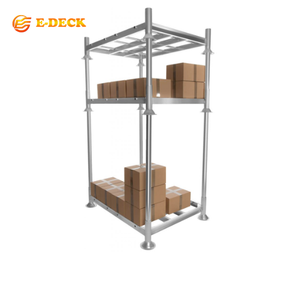
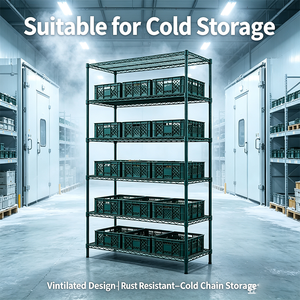
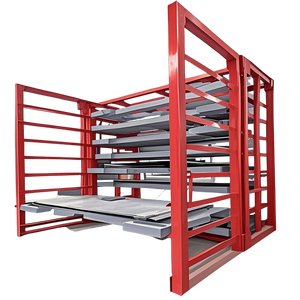
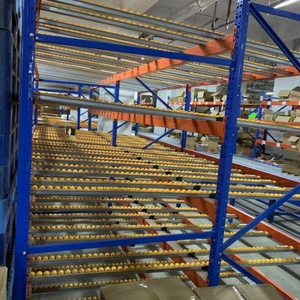
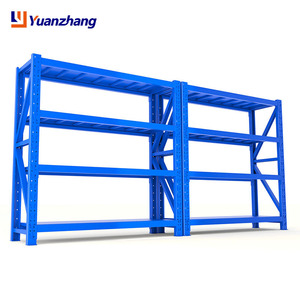
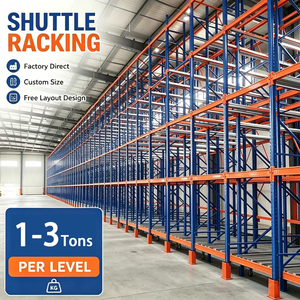
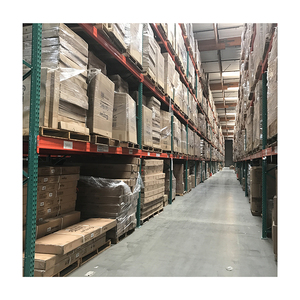
Technical Architecture & Load Dynamics of Rack-Supported Mezzanines
Unlike standalone structural steel mezzanines that rely solely on universal columns (H-beams) and broad grid spacings, a rack-supported mezzanine utilizes the vertical upright frames and intermediate shelf levels of heavy-duty pallet racking or longspan shelving systems as the primary vertical load-bearing structure. This engineering approach eliminates dead structural volume, maximizes clear cubic operational capacity, and drastically reduces the total weight-to-payload ratio of the intralogistics installation.
Substructure & Upright Engineering
Fabricated using high-grade Q235B and Q355B structural cold-rolled steel, the upright columns feature precision multi-bend Omega profiles (80–120mm face width). Upright profiles are engineered with dynamic stiffening ribs that withstand combined axial loading and torsional-flexural buckling under localized stress concentrations.
- Upright profile thickness: 1.8mm up to 3.0mm
- Omega cross-section with 11–13 fold lines
- 50mm / 75mm incremental vertical pitch adjustment
Flooring Systems & Diaphragm Rigidity
The elevated walkway or solid floor level acts as a horizontal structural diaphragm, distributing dynamic seismic and live operational loads across the entire array of rack bays. Exporters must tailor decking options strictly according to rolling pallet jack loads, fire safety regulations, and air-ventilation specifications.
- Solid cold-formed corrugated steel planks
- Perforated / punched grating (up to 50% open area)
- Heavy-duty bar grating with serrated anti-slip ribs
Primary & Secondary Beam Integration
Interlocking box beams and cold-formed C/Z-shaped joist channels are fastened to the rack frames using 3-to-4-claw heavy forged beam connectors with positive engagement spring-steel locking pins. Joists transfer uniform deck loads directly into the upright axes, avoiding localized web crippling.
- Standard live deck capacities: 300 to 1,200 kg/m²
- Safety deflection tolerances: Max L/200 to L/300
- Continuous robotic automated welding seams
| Engineering Parameter | Light-to-Medium Multi-Tier Mezzanine | Heavy-Duty Pallet Rack Mezzanine | Catwalk-Supported Picking Tower |
|---|---|---|---|
| Target Storage Medium | Cartons, plastic bins, hand-picked SKUs | EUR/US Pallets + Upper Work Platform | High-throughput E-commerce sorting |
| Primary Steel Grade | Q235B (Cold Rolled Steel Coil) | Q355B (High-Yield Structural Alloy) | Q235B / Q355B Composite Framing |
| Uniform Distributed Load (UDL) | 300 – 500 kg/m² (Deck level) | 800 – 1,200 kg/m² (Industrial pallet staging) | 250 – 400 kg/m² (Walkways & conveyors) |
| Vertical Frame Pitch | 50mm continuous punch | 75mm heavy-duty punch | 50mm teardrop or bespoke keyhole |
| Decking Selection | Solid steel plate / 18mm Plywood option | Perforated steel plank / Galvanized grating | Open bar grating (Fire sprinkler compliant) |
| Safety Factors & Deflection | 1.67 structural safety factor (L/200) | 1.85 heavy impact safety factor (L/300) | 1.67 dynamic pedestrian factor (L/250) |
| Surface Corrosion Treatment | Electrostatic epoxy-polyester coating (60–80μm) | Pre-treatment phosphating + Outdoor Galvanizing | Pickling + High-adhesion powder coating |
Future Procurement & Sourcing Trends: 2025–2030
Industrial real estate inflation, nearshoring mandates, and the shift toward omnichannel distribution are rewriting global supply chain procurement strategies. Procurement directors face shifting dynamics when choosing an overseas OEM racking manufacturer.
Maximizing Usable Cubic Volume Over Footprint
With urban warehouse leasing rates climbing in logistics corridors across Southeast Asia, North America, and Europe, enterprises are abandoning standard horizontal floor-bound storage. Rack-supported multi-tier installations unlock up to 200% more storage volume within existing warehouse structural envelopes without adding real estate footprint.
Direct-from-Source OEM Supply Reliability
Wholesalers and engineering contractors are bypassing domestic middlemen to partner directly with scale manufacturers. Consolidating fabrication with direct exporters who offer in-house structural engineering, roll-forming, powder coating, and pre-bundled container staging eliminates markup layers and ensures single-point warranty accountability.
Stringent Code & Verifiable Compliance
Municipal fire departments and industrial insurance underwriters demand third-party structural certifications. Procuring rack-supported platforms requires verifiable mill test certificates (MTCs), CE markings under EN 15512 / EN 1090-1, seismic verification data, and compliance with RoHS chemical coating safety standards.
Container Freight Optimization & Modularity
Modern procurement contracts prioritize bolt-together, fully demountable modular systems that optimize 40ft High Cube (40HQ) maritime shipping volumes. Knock-down modular engineering allows global contractors to relocate, reconfigure, or expand mezzanine levels as their lease agreements or business requirements shift.
Technological Developments in Mezzanine Racking Systems
Modern rack-supported mezzanines have advanced beyond basic static shelving frameworks. The convergence of Finite Element Modeling (FEM), automated intralogistics robotics (AMR/AGV), and seismic damping has elevated mezzanine systems into complex structural installations.
Finite Element Analysis (FEA) Stress Modeling
Utilizing advanced ANSYS and midas Gen software, every custom rack mezzanine design undergoes 3D linear and non-linear computational finite element simulations. Engineers analyze moment-rotation curves across beam-to-column beam end-connectors, quantifying second-order P-Delta effects under eccentric live loading and extreme localized deflection.
- Von Mises stress contour validation
- Evaluation of thin-walled cold-formed steel buckling
- Verification of dynamic harmonic floor vibration frequencies
Seismic Engineering for Circum-Pacific Zones
For earthquake-prone logistics zones across Southeast Asia, South America, and Japan, standard upright base plates are insufficient. Upright assemblies are engineered with reinforced heavy-duty welded footplates, chemical anchor bolt arrays with tested shear-pullout ratings, and diagonal X-bracing towers running horizontally and vertically along backflanges.
- Compliant with Eurocode 8, RMI MH16.1, and AS 4084
- Ductile failure modes that prevent progressive structural collapse
- High-energy dissipation portal ties at critical aisle heads
Autonomous Mobile Robot (AMR) Deck Integration
With the rise of automated sortation, modern upper mezzanine platforms frequently host autonomous mobile robots (AMRs) and automated guided vehicles (AGVs). This requires higher point-load engineering, ultra-flat flooring tolerances (DIN 18202 standards), electrostatic discharge (ESD) protective finishes, and floor deflections limited to L/500.
- Heavy composite floorings: Steel deck + High-density resin board
- Elimination of dynamic resonance under rhythmic robot movement
- Integrated vertical goods chutes and continuous spiral conveyors
10 Controlled Production Steps from Raw Coil to Ocean Freight
Total vertical integration ensures structural integrity. Every upright column, load-bearing beam, platform bracket, and interlocking deck plate is manufactured within our Guangzhou facility under strict ISO 9001:2015 quality control.
Frequently Asked Questions for Mezzanine Procurement
Straight answers regarding load distributions, international standards, local permitting, tropical weather protection, and project delivery milestones.
Need Custom Layout Calculations?
Our engineering team analyzes warehouse floor slabs, forklift wheel load footprints, and clear ceiling heights to optimize your usable pallet capacity.
Inquire Now1. Light Duty Picking (300 kg/m²): Ideal for manual piece picking, light carton flows, and pedestrian foot traffic.
2. Standard Industrial (500 – 600 kg/m²): Engineered for heavy manual picking, dynamic hand pallet truck (trolley) traffic, and temporary carton buffering.
3. Heavy Industrial Staging (800 – 1,200 kg/m²): Engineered with reinforced secondary joists to handle powered pallet jacks, buffer pallet storage, and continuous mechanical sortation conveyors.
• Exact building architectural drawings (DWG/PDF) showing perimeter walls, interior structural columns, overhead trusses, fire exits, and dock door locations.
• Clear warehouse ceiling height (from finished floor slab to the lowest overhead obstruction, such as sprinklers or HVAC ducts).
• Concrete slab thickness, compressive strength (e.g., 25–30 MPa), and whether the slab is post-tensioned or reinforced.
• SKU profile: Pallet dimensions (W × D × H), maximum gross unit load weight, and target forklift reach heights.
• Intended usage of the elevated floor level (manual picking, office cubicles, pallet drop stations, or AMR operations).
Transform Vertical Cubic Capacity into Usable Floor Space
Whether you require a custom-engineered multi-tier picking tower or an integrated pallet-flow mezzanine floor, partner directly with an established OEM manufacturer to streamline design, fabrication, and export delivery.