Long-Span
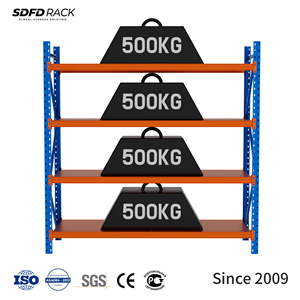
Explore our custom OEM factory-manufactured vertical upright systems, heavy storage post frames, and long-span shelving configurations optimized for distribution centers, manufacturing warehouses, and cold storage logistics.
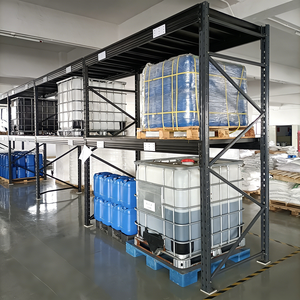
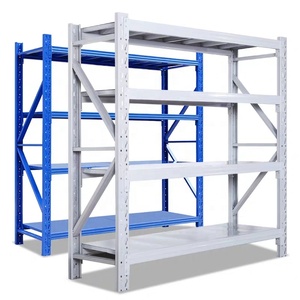
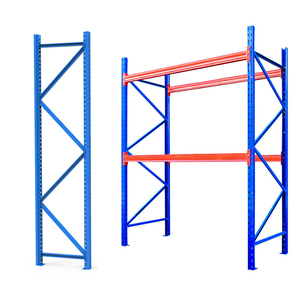
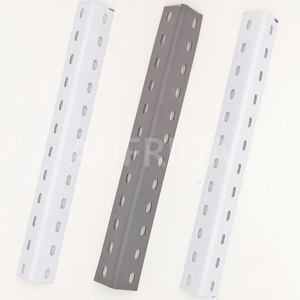
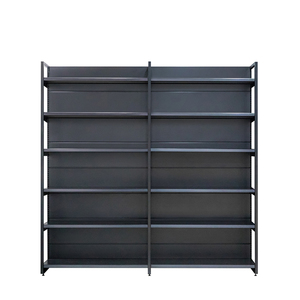
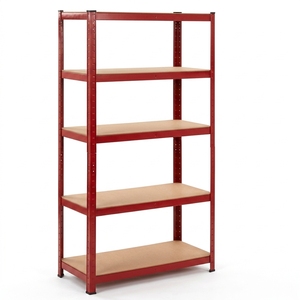
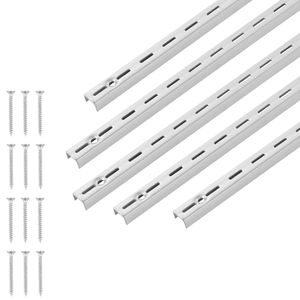
An authoritative metallurgical and architectural breakdown of cold-formed upright profiles, sectional moment of inertia, perforation integrity, and torsional-flexural buckling resistance under extreme vertical stress.
The load capacity of an upright post is fundamentally dictated by its sectional geometry rather than simple mass. Our cold-formed profiles utilize continuous 18-to-24 station roll-forming lines that engineer multiple reverse stiffening return bends (Omega, C-channel, and 8-fold profiles). This strategic placement of ribs dramatically increases the section modulus (Z-axis and Y-axis) and radius of gyration, counteracting local elastic buckling under concentrated pallet or mezzanine deadloads.
Punching patterns (Teardrop, 50mm pitch, 75mm slotted, or butterfly) must be calculated to minimize the reduction of the column's net effective cross-sectional area (A_net). Our progressive CNC high-speed punching presses guarantee precision hole tolerances within ±0.1mm, preserving web integrity while allowing seamless engagement of beam connector tabs without induced shearing stress or lateral racking slop.
We source certified structural prime steel coils from tier-one steel mills. While Q235B provides superior ductility and cold-work elongation for medium-duty retail and boltless applications, high-density distribution centers and seismic racking require Q355B (equivalent to ASTM A572 Grade 50 / European S355JR). With a minimum yield strength of 355 MPa and tensile strength up to 510 MPa, it permits higher bay loadings while reducing total racking deadweight.
| Profile Classification | Structural Profile Dim (mm) | Steel Grade & Yield | Thickness Gauge | Max Axial Load per Frame | Perforation Pitch System | Recommended Industrial Domain |
|---|---|---|---|---|---|---|
| Light-Duty Angle Post | 38 × 38 / 40 × 40 | Q235B (≥235 MPa) | 1.5 mm – 1.8 mm | Up to 1,200 kg | Continuous Slotted / Boltless | Retail stockrooms, manual parts bins, light commercial archive |
| Medium Long-Span Column | 55 × 47 / 60 × 50 | Q235B / Q355B | 1.8 mm – 2.0 mm | Up to 4,500 kg | 50 mm Pitch Butterfly / Keyhole | E-commerce fulfillment centers, automotive parts distribution |
| Heavy Omega Upright (Selective) | 80 × 60 / 90 × 70 | Q355B (≥355 MPa) | 2.0 mm – 2.5 mm | Up to 14,000 kg | 75 mm / 76.2 mm Slotted or Teardrop | High-bay pallet warehouses, heavy FMCG hubs, cold chain logistics |
| Extra Heavy Structural Frame | 100 × 70 / 120 × 95 | Q355B (≥355 MPa) | 2.5 mm – 3.2 mm | Up to 24,000 kg | 75 mm Reinforced Hex-Lock | Drive-in, push-back, radio-shuttle systems & multi-tier mezzanines |
From raw decoiling to robotic automated cold-forming and automated electrostatic polymer coating, every upright post is manufactured in-house under strict ISO 9001:2015 verification.
Strip coils are uncoiled and fed into precision progressive servo die stations. Hole positioning, tear-drop indexing, and mounting slots are punched simultaneously with index positioning errors controlled under ±0.15mm across the entire span.
The punched steel band transitions through 18 to 24 progressive forming rollers. Controlled gradual bending eliminates internal residual stresses, preventing longitudinal twisting, bow, or camber distortion even on upright lengths up to 12 meters.
Every profile undergoes an automated 7-stage immersion process: alkaline degreasing, twin water rinses, acid pickling to strip oxides, and zinc phosphating conversion coating. Followed by electrostatic epoxy-polyester powder curing at 200°C, reaching a 60–80μm thickness that survives 500+ hours salt spray (ASTM B117).
Key technological, environmental, and seismic transitions influencing B2B purchasing decisions, international logistics specifications, and warehouse architecture over the next decade.
The rapid rise of Automated Storage and Retrieval Systems (AS/RS) and Autonomous Mobile Robots (AMRs) mandates millimetric straightness tolerances. Future upright tenders demand maximum column deviations under 1/1000 of height, requiring ultra-precise cold-forming to eliminate sensor misreads and optical shuttle docking errors.
With global cold chains expanding rapidly, procurement is shifting from standard powder coats to hybrid duplex systems: continuous in-line pre-galvanization combined with antimicrobial nano-coatings that prevent zinc flaking and rust under severe -30°C freeze-thaw cycles and high-condensation conditions.
Earthquake-prone global logistics zones (such as Japan, the Philippines, Indonesia, and the US West Coast) require non-linear dynamic seismic simulations. Upright frames are shifting from welded stiffened footplates to ductile, energy-dissipating seismic base hinges that reduce peak lateral frame moments during ground acceleration.
Corporate Scope 3 decarbonization targets will require supply chain verification of the embodied carbon in cold-formed uprights. Sourcing contracts are prioritizing manufacturers utilizing electric arc furnace (EAF) steel with recycled scrap content exceeding 70%, backed by verifiable Environmental Product Declarations (EPDs).
How four decades of material science, cold roll-forming computation, and warehouse automation transformed passive steel columns into integrated structural ecosystems.
Early industrial warehousing relied predominantly on hot-rolled standard structural steel channels (U-channels and I-beams) or rudimentary punched angle irons. These systems suffered from excessive deadweight, inefficient manual bolt-and-nut assemblies, high shipping freight costs, and negligible modular adjustability.
The introduction of computer-aided Finite Element Analysis (FEA) and high-speed multi-station cold roll formers enabled complex multi-bend Omega profiles. Designers minimized wall thickness from 4.0mm hot-rolled profiles down to 2.0mm high-yield cold-rolled steel, achieving a 45% reduction in raw steel consumption while simultaneously increasing vertical axial load capacity.
Modern mega-fulfillment centers are actively testing uprights embedded with IoT telemetry. Micro strain-gauge load cells fitted directly beneath the upright base plate monitor static live-load shifts in real-time, while wireless tri-axial accelerometer collars detect low-energy forklift mast impacts to warn safety engineers before fatal structural buckling occurs.
Established in 2001, Guangzhou Heda Shelves Co., Ltd. operates an advanced 30,000 m² production complex equipped with high-precision CNC multi-punching systems, automated roll-forming production lines, robotic seam welders, and dual electrostatic powder coating tunnels. Delivering factory-direct pricing, certified load-bearing safety, and custom OEM engineering to system integrators and storage distributors across more than 120 countries.
Full international compliance backed by CE Certificate No. 2435-CPR-8605159, ISO 9001:2015 Quality Management Certificate No. 18624Q00169R0M, and RoHS conformity.
Our in-house structural engineers furnish custom 2D AutoCAD bay elevations, 3D architectural renders, and finite element frame loading calculations free of charge prior to contract confirmation.
Strategically situated in Guangzhou, near Nansha and Huangpu container ports. Enjoy fast liner connections: 2–5 days to Vietnam, 3–5 days to Manila, 5–7 days to Singapore, and rapid transit to global hubs.
Authoritative technical answers to common B2B engineering, manufacturing tolerance, steel specification, and international logistics questions.
We manufacture industrial uprights exclusively from prime certified structural steel coils: Q235B (yield strength ≥ 235 MPa, tensile strength 375–500 MPa) for standard commercial and medium duty racking, and Q355B (yield strength ≥ 355 MPa, tensile strength 470–630 MPa; ASTM A572 Grade 50 equivalent) for heavy-duty, AS/RS, and seismic applications. Every raw material batch is verified with 3.1 Mill Test Certificates (MTC) detailing chemical composition (C, Si, Mn, P, S) and mechanical yield elongation.
Axial load capacities are calculated in strict compliance with European Standard EN 15512:2020 and US RMI MH16.1 specifications. Because upright profiles are cold-formed with perforations, theoretical Euler buckling formulas alone are insufficient. We conduct physical stub-column compression tests and frame shear tests to establish the effective cross-sectional area (A_eff) and torsional-flexural buckling curves, guaranteeing a minimum structural safety factor of 1.65 to 1.95.
Yes. Our tooling facility produces custom-machined progressive punching dies to match major global proprietary interfaces. Whether your market requires American teardrop uprights (2-inch increment with 3/8-inch alignment pin), European 50mm or 75mm pitch slotted Omega profiles, Australian 76.2mm (3-inch) pitch, or boltless butterfly hole patterns, we provide drop-in compatible upright posts and frames with private-label OEM branding.
For high-humidity tropical zones and coastal installations (e.g., ASEAN, Caribbean, Middle East maritime), we implement a multi-stage pre-treatment featuring chemical pickling to remove hot-mill scale, followed by micro-crystalline zinc phosphating. Uprights are then coated with architectural-grade TGIC-free polyester powder (60–80 microns) cured at 200°C. For harsh cold storage condensation or outdoor coastal yards, we supply continuous hot-dip galvanized uprights (ASTM A123) with zinc weights exceeding 450 g/m² for 25+ years rust immunity.
Standard 40ft High Cube (40HQ) ocean shipping containers allow maximum cargo lengths of approximately 11.85 meters. For high-bay warehouses requiring upright frames of 12 to 24 meters, we engineer heavy-duty precision CNC-machined internal splice connectors (column upright splices). These internal sleeve splices are positioned at inflection zones where bending moments approach zero, secured with high-tensile Grade 8.8 structural hardware, guaranteeing 100% moment and axial load continuity.
Upright frames can be shipped either fully assembled with horizontal and diagonal bracing or knocked-down (KD). Knocked-down uprights are bundled with precision nested profiles, interleaved with protective corrugated sheeting, and strapped with high-tensile PET bands on hardwood dunnage. KD shipment increases container volumetric efficiency by up to 260% compared to pre-assembled frames, dramatically slashing the landed freight cost per pallet position.
Send our senior engineering team your structural drawings, required beam elevation intervals, design bay loads, and target regional seismic parameters. We deliver complete CAD layouts, 3D parametric renderings, and factory-direct pricing within 24 hours.