Modular Boltless
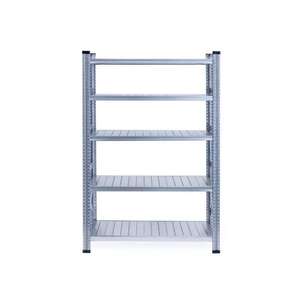
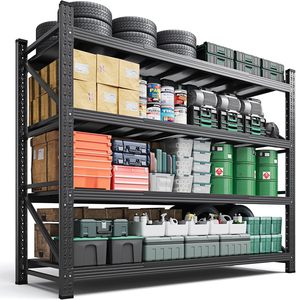
Modular 5-Tier Adjustable White Galvanized Steel Boltless Shelving Rack
Boltless Interlock
Galvanized Steel
350kg/Tier
Explore our heavy-duty modular racking units designed for superior weight capacities, optimal warehouse cube utilization, and seamless material handling integration.
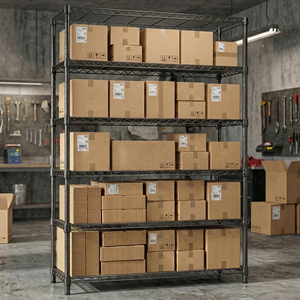
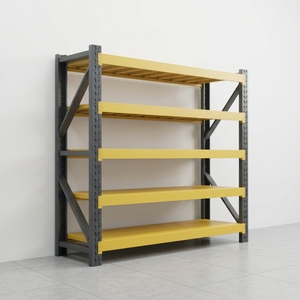
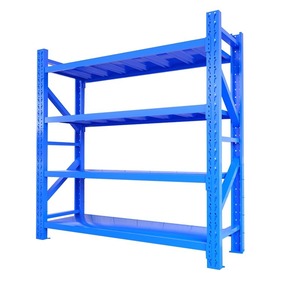
Operating since 2001, Guangzhou Heda Shelves Co., Ltd. eliminates intermediate markups, ensuring full control over material purity, load testing, anti-corrosion finishes, and international trade compliance.
Strictly compliant with international manufacturing benchmarks including verifiable CE Certification (No. 2435-CPR-8605159), ISO 9001:2015 Quality Management, and comprehensive RoHS environmental material safety.
Our senior structural logistics engineers furnish customized 2D CAD architectural placement diagrams, 3D photorealistic renderings, and dynamic finite element stress calculations prior to commercial production.
Every cold-rolled profile undergoes multi-stage pickling and phosphating pre-treatments before automatic electrostatic powder coating, delivering verified durability against 80%+ humidity and marine salt conditions.
Complete customization across steel gauge profiles (Q235B / Q355B), standardized pitch hole geometries (teardrop, butterfly, diamond), custom powder colors (RAL scale), and specialized branding integration.
A technical evaluation for procurement directors, distribution designers, and warehouse logistics executives navigating high-density automation, structural longevity, and global supply chain resilience.
The contemporary standard in heavy-duty shelving has transitioned from generic structural steel toward micro-alloyed, cold-rolled high-tensile steels such as Q235B and Q355B. This metallurgical advancement increases yield strength without disproportionate component weight, significantly curbing containerized shipping costs.
Modern procurement demands verifiable raw material mill test certificates (MTC) certifying tensile yield thresholds and chemical compositions to prevent brittle fracturing under cold-chain cyclic stress.
Industrial warehousing is shifting away from static manual-pick layouts toward autonomous mobile robot (AMR) and Automated Storage and Retrieval System (ASRS) synergy. Static shelving units must now be engineered to host hybrid operational workflows where human pickers and automated bots operate within shared aisleways.
Shelving units are no longer independent fixtures; they function as structural substrates that interface directly with overhead conveyors, pick-to-light sensors, and radio-frequency picking devices.
With massive supply chain decentralization toward manufacturing hubs in Southeast Asia, Latin America, and coastal logistics free zones, environmental resilience is paramount. High humidity, high ambient salinity, and active seismic fault zones demand rigorous manufacturing interventions before deployment.
Factory-direct engineering calculations must explicitly account for regional seismic factors (such as the Pacific Rim of Fire parameters), providing oversized baseplates and heavy diagonal cross-bracings.
| Storage Architecture Type | Typical Load Capacity | Access Selectivity | Ideal Industrial Application | Handling Machinery Interface |
|---|---|---|---|---|
| Modular Boltless Industrial Shelving | 150kg – 500kg / Tier | 100% Direct Picking | E-commerce Fulfilment, Small Parts, Hardware | Manual Cart / Hand Totes |
| Wide-Span Longspan Shelving | 300kg – 1,000kg / Level | 100% Manual Selectivity | Automotive Workshops, Bulky Boxes, Tooling | Manual / Order Picker Platform |
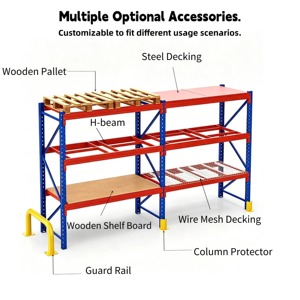
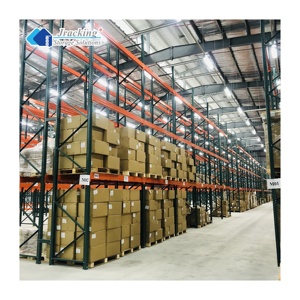
| Heavy Duty Selective Pallet Racking | 1,000kg – 4,500kg / Level | 100% Pallet Accessibility | 3PL Distribution Centers, Raw Material Stores | Reach Trucks, Counterbalance Forklifts |
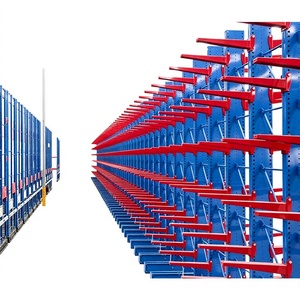
| Structural Cantilever Storage Framework | 500kg – 3,000kg / Arm | Free-Front Variable Access | Steel Pipe, Aluminum Extrusions, Timber, Bar Stock | Side Loaders, Multi-Directional Trucks |
| Multi-Tier Rack-Supported Mezzanine | 300kg – 1,000kg / m² Deck | Multi-Level Pick Zones | High-Ceiling Logistics Depots, Garment Sorting | Pallet Jacks, Vertical Cargo Lifts |
Our 10-stage internal quality control pipeline ensures that every structural upright, step beam, and locking connector meets rigorous dimensional and mechanical specifications.
Certified prime Q235B steel coils verified for tensile load, composition, and uniform gauge thickness.
High-speed CNC punching presses guarantee exact 50mm or 75mm pitch alignment across all upright sections.
Multi-station continuous cold-rolling mill creates structural box beams and stiffened omega upright geometries.
Thorough immersion in degreasing, acid pickling, and phosphating baths guarantees superior coat bonding.
Precision bundling and container load planning to eliminate transit abrasion and maximize shipping efficiency.
Authoritative technical and commercial insights for international supply chain managers and project engineers.
Load ratings are calculated using Uniformly Distributed Load (UDL) engineering formulas based on beam span, profile thickness, moment of inertia, and steel yield strength. Every system adheres to FEM 10.2.02 and EN 15512 structural guidelines, maintaining a safety margin factor of 1.5 to 1.65 to safeguard against unexpected point overloading.
Boltless systems employ precision-punched keyhole, teardrop, or butterfly slots where beam end-connectors securely wedge into upright posts. This reduces on-site erection labor by over 60%, eliminates loose hardware that can shake free under thermal expansion or vibration, and enables easy beam height reconfiguration as inventory dimensions change.
Yes. Based on localized seismic coefficient data (Ss, S1) provided by project structural engineers, we calculate seismic base-shear loads and increase floor plate dimensions, reinforce internal sway bracings, and supply high-strength concrete expansion or chemical capsule anchors to meet regional building codes.
For standard humidity below 60%, electrostatic powder coating provides robust protection. In high-humidity tropical climates (such as Southeast Asia, Central America) or refrigerated chillers, we deploy an advanced epoxy-polyester hybrid powder coat with specialized zinc phosphating. For harsh freezer chambers (-30°C) or outdoor loading docks, hot-dip galvanizing is recommended.
To produce an optimized CAD layout, 3D visualization, and structural quote, our engineering team requires: facility dimensions with clear roof heights, column locations, concrete slab thickness, stored goods package sizes and maximum weights, and designated material handling equipment (such as forklift aisle turning radius requirements).
Because steel racking is dense and heavy, shipping inefficiency can drive up total landed costs. Our logistics software executes 3D container packing simulations to nest upright frames and beams tightly within 20GP or 40HQ ocean containers. This prevents empty cargo space and ensures components arrive free of scratch or bending damage.
Speak directly with our senior racking structural engineers. We provide complimentary CAD blueprints, capacity calculations, and custom OEM manufacturing terms tailored to your facility requirements.