Heavy Duty Storage Racks
Standard & Heavy-Duty Pallet Racking Portfolio
Engineered to FEM 10.2.02 and EN 15512 safety standards, our wide aisle configurations, teardrop modular bays, and specialized cantilever setups deliver uncompromised seismic stability, load-bearing integrity, and maximum logistics throughput.
Engineering Whitepaper
Architectural Integrity of Wide Aisle Pallet Racking (APR)
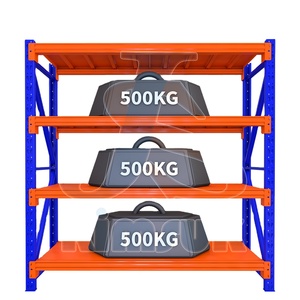
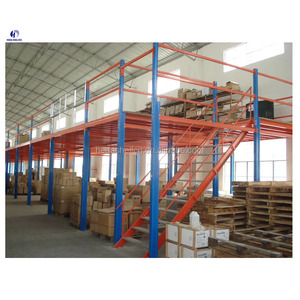
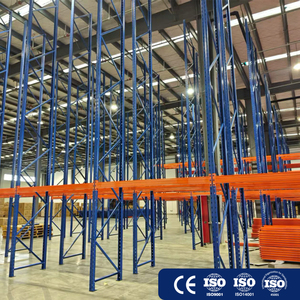
Wide Aisle Pallet Racking (also known as standard Adjustable Pallet Racking - APR) represents the most versatile and ubiquitous high-bay storage configuration worldwide. Engineered for 100% selective accessibility to every stored unit load, this structural methodology accommodates aisle clearances ranging between 2.8 meters to 3.8 meters, accommodating conventional counterbalance, reach, and articulated counterbalance forklifts without specialized wire-guidance infrastructure.
Cold-Formed High-Tensile Uprights
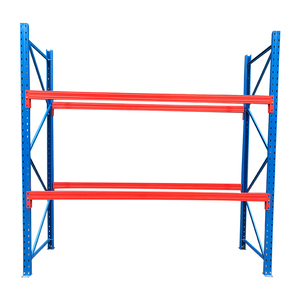
Our upright frameworks are continuously roll-formed using certified structural Q235B and Q355B cold-rolled steel coils, delivering superior modulus of elasticity and resilience against yield failure under continuous dynamic deflection.
- Steel Thickness: 1.8mm – 2.5mm profiles
- Pitch Adjustability: 50mm / 75mm / 76.2mm
- Baseplates: Pre-punched 6mm–10mm seismic plates
Interlocking Box & Step Beams
Manufactured using twin C-sections seam-welded to create heavy-duty rectangular box beams or stepped sections, engineered specifically to resist torsion, torsional buckling, and secondary longitudinal bending under severe pallet weights.
- Beam Profiles: 80x50mm up to 160x50mm
- 3/4/5-Claw heavy connection brackets
- Automatic spring-steel drop pins (anti-dislodge)
Anti-Corrosive Pre-Treatment Matrix
Engineered for high durability in tropical, maritime, and coastal facilities. Every batch undergoes a continuous automated 9-stage degreasing, acid pickling, and phosphating process prior to thermosetting electrostatic powder coating.
- Coating Thickness: 60 to 90 microns
- Adhesion: Cross-hatch adhesion Class 0 (ISO 2409)
- Salt Spray Endurance: >500 hours continuous (ASTM B117)
Industry Insights
Future Procurement & Technological Trends in Pallet Racking
As global supply chains navigate supply volatility, real estate cost inflation, and the rise of semi-automated material handling, procurement teams must anticipate key technological paradigms shaping storage design.
1. Hybrid AMR & AGV Navigational Integration
Modern wide aisle layouts are increasingly shifting from purely manual counterbalance operations to hybrid automation. International engineering specifications now require structural ground-level clearance tolerances, ultra-flat flooring compatibility (DIN 18202), and anti-reflective beam finishes to facilitate autonomous mobile robot (AMR) visual sensors and LiDAR navigational targeting.
2. Seismic Resistance & Finite Element Analysis
Global procurement teams in geologically active regions (such as the Philippines, Indonesia, and the Americas) now mandate custom 3D structural simulations using Finite Element Analysis (FEA). Calculations incorporate real-time dynamic seismic acceleration coefficients, non-linear member buckling analysis, and heavy anchor pull-out verification to prevent progressive structural collapse during seismic events.
3. Decarbonization & Green Steel Procurement
Environmental footprint monitoring is driving rack manufacturers to utilize low-carbon electric arc furnace (EAF) certified steel coils, VOC-free low-bake epoxy-polyester coatings, and optimized nestable upright geometries. Compact container packing lowers ocean freight cubic volumes by up to 18%, significantly trimming scope 3 carbon expenditures across transpacific and European maritime logistics routes.
Manufacturer Trust
Why International Buyers Partner with HEDA Shelves
Direct from our 30,000 square meter Guangzhou manufacturing base, we eliminate intermediary markups, shorten delivery intervals to ASEAN and global hubs, and provide complete structural verification from initial CAD design to freight dispatch.
Rapid Global Sea Transit
Strategically situated near Guangzhou and Nansha ports. Direct sea transit arrives in 2–5 days to Vietnam, 3–5 days to Manila, 5–7 days to Singapore/Laem Chabang, and 6–8 days to Port Klang under flexible FOB, CIF, or DDP terms.
Verified CE & ISO Credentials
Our quality control processes hold full international credentials: CE Certification No. 2435-CPR-8605159, ISO 9001:2015 Quality Management Certificate No. 18624Q00169R0M, and comprehensive RoHS environmental material compliance.
Complimentary Engineering Layouts
Our in-house design engineering department produces architectural 2D CAD floor plans, structural capacity calculations, and photo-realistic 3D BIM/SketchUp spatial renderings free of charge prior to contract confirmation.
Field Installation & Video Guidance
Every international shipment features color-coded component tagging, bundle diagrams, and multilingual video tutorials. For major turnkey industrial projects, our certified field supervisors provide on-site installation guidance.
Procurement Guide
Frequently Asked Questions on Wide Aisle Pallet Racking
Key technical, logistic, and structural considerations addressed by our Senior Logistics Solutions Engineers.
What is the standard aisle width required for wide aisle racking systems?
Wide aisle racking configurations typically require aisle clearances between 3.0m and 3.5m when operating standard counterbalance forklifts, and approximately 2.6m to 2.9m for standard reach trucks. This breadth allows two-way traffic in main arteries and uninhibited 90-degree pallet maneuvering without specialized wire or mechanical guidance tracks.
How does HEDA prevent rust and paint peel in high-humidity tropical climates?
All fabricated uprights and beams undergo automated chemical degreasing, multi-stage acid pickling to eliminate mill scale, and iron-phosphating before receiving thermosetting polyester powder coating baked at 180°C. For coastal, outdoor, or deep-freeze cold storage settings, hot-dip galvanization (HDG compliant with ISO 1461) provides lifelong cathodic protection.
Can wide aisle pallet racking accommodate varying pallet sizes and mixed SKUs?
Yes. Wide aisle selective racking provides 100% direct picking access to every single pallet position without moving adjacent stock. Beam levels can be adjusted in increments of 50mm or 75mm. Wire mesh decks, pallet support bars, or steel shelf panels can be easily integrated to support non-standard GMA, Euro (1200x800mm), or Asian (1100x1100mm) pallet profiles.
What parameters are required to calculate structural beam load ratings?
To deliver an accurate FEA load calculation sheet, our engineers require: (1) Pallet footprint dimensions including load overhang; (2) Maximum gross pallet weight; (3) Building clear height and slab core drill test specifications; (4) Forklift model, maximum mast elevation, and turning radius (Ast); and (5) Local seismic zone classifications.
Request Your Complete Warehouse Layout & Engineering Quote
Submit your architectural drawings or storage dimensions. Our engineering department delivers a compliant 2D CAD layout, 3D visualization, and structural load analysis within 24 working hours.