Featured Industrial Storage & Pallet Racking Systems
Precision cold-roll formed, anti-corrosive, certified pallet storage and stackable racking frameworks engineered to maximize cubic warehouse capacity while ensuring rigorous operational safety compliance.
Need a Customized Engineering Proposal & Free CAD Layout?
Connect with our senior logistics structural engineers. We calculate seismic load safety factors, floor loadings, beam deflections, and produce complete 3D warehouse renderings at zero cost.
Engineering Stackable & Modular Warehouse Racking for Modern Facilities
Navigating warehouse space density requires matching structural integrity, load deflection factors (1/200 vs 1/250 criteria), material grades, and forklift accessibility parameters against SKU velocity.
Selective Pallet Frameworks
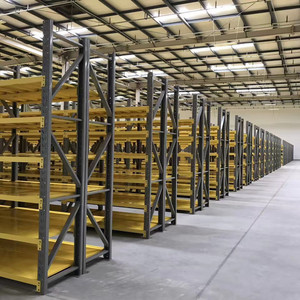
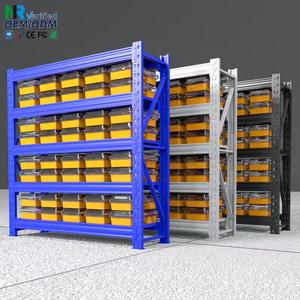
The global benchmark for 100% SKU selectivity. Built with omega-section upright columns roll-formed with high-precision 50mm or 75mm teardrop/diamond pitching. Ideal for multi-SKU fulfillment centers, 3PL transit warehouses, and consumer goods distribution where direct reach to every pallet position is non-negotiable.
Load envelope: 800 kg to 4,500 kg per beam tier. Compatible with standard reach trucks, counterbalanced forklifts, and narrow aisle VNA stackers.
Stackable Modular Post Racks
Designed for dynamic seasonal warehouses and batch goods staging. These portable pallet nest frames eliminate the need for fixed upright bolting. Nesting ratios of up to 4:1 allow empty units to be compacted down when inventory recedes, freeing up valuable floor space for order staging and multi-directional traffic.
Static stack height: Up to 4–5 units high. Dynamic movement rated for direct forklift tines entry with integrated bottom cup-and-cone locating shoes.
High-Density Flow & Shuttle Systems
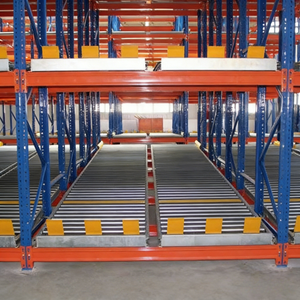
When cold chain energy or building footprint costs dominate operational expenses, radio shuttle carriers and gravity-fed roller lanes boost volumetric utilization by up to 85%. Eliminating interior forklift travel reduces steel impact damage, lowers labor operating overheads, and guarantees zero-energy FIFO stock rotation.
Sub-zero steel ratings: Specially pre-treated cold room coatings rated to -30°C to prevent steel embrittlement and surface spalling.
Engineering Specification Matrix: Stackable & Warehouse Racking Types
| Racking System Classification | Selective Pallet System | Modular Stackable Post Racks | Radio Shuttle / Gravity Flow | Rack-Supported Mezzanine |
|---|---|---|---|---|
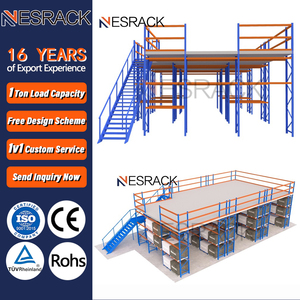
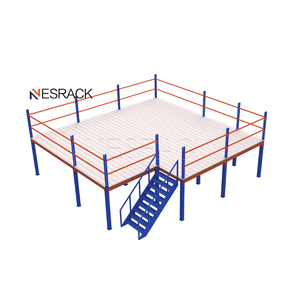
| Volumetric Efficiency | 40% – 50% (Aisle Dependent) | 60% – 70% (Block Stacking) | 75% – 85% (Ultra-High Density) | 80% – 100% (Vertical Multiplier) |
| Access Model | 100% Direct Accessibility | LIFO (Batch Grouped) | FIFO (Flow) or LIFO (Shuttle) | Split Pallet / Piece-Pick Access |
| Standard Load Capacity | 1,000 – 4,500 kg per beam level | 1,000 – 2,500 kg per nest frame | 500 – 2,000 kg per pallet lane | 300 – 1,000 kg/m² uniform deck |
| Standard Steel Grade | Q235B / Q355B Cold Rolled | Seamless Hollow Pipe / RHS | Q355B Heavy Gauge Channels | Hot-rolled H-Beams & C-Sections |
| Structural Safety Standard | EN 15512, RMI ANSI MH16.1 | ISO 9001:2015 Structural Code | FEM 10.2.02, CE Marked | CE 2435-CPR, BS 5950-5 |
Future Procurement Trends in Warehouse Racking Systems
How chief procurement officers, supply chain directors, and warehouse designers are adapting their multi-year intralogistics capital allocation strategies.
1. Decarbonized Steel & Green Cold-Forming Lifecycle
Corporate ESG directives are reshaping heavy racking procurement. Global buyers are prioritizing manufacturers utilizing electric arc furnace (EAF) recycled billet raw materials and low-VOC thermosetting powder formulations. The carbon footprint of every metric ton of cold-formed steel is increasingly scrutinized during open European and North American industrial tenders. Optimized section engineering ensures minimum steel tonnage while exceeding structural safety limits, dropping embedded transport emissions dramatically.
2. Resilience to Extreme Micro-Climates & Humidity
Cross-border supply chains running regional distribution hubs in Southeast Asia, the Gulf, and coastal zones require surface defense beyond standard flash paints. Procurement specifications now mandate thorough automated chemical pickling and multi-stage zinc phosphating before automated electrostatic curing. In cold stores and high-humidity ambient zones, hot-dip galvanized uprights and pre-galvanized beam channels ensure 20+ years of operation without surface oxidation or rust migration.
3. Standardized Hybrid Modularity vs. Rigid Customization
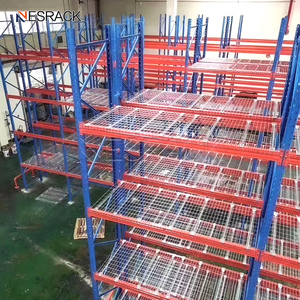
Given volatility in consumer demand, fixed monolithic shelving creates operational bottlenecks. Sourcing managers are shifting capital toward hybrid frameworks that accept modular stackable dividers, drop-in wire decking, wire mesh backstops, and pallet support bars without welding or heavy fasteners. As SKU volumes evolve, racking tiers can be re-spaced along standard 50mm/75mm upright pitch centers by on-site maintenance crews within minutes.
4. Near-Zero Downtime & Rapid Container Packaging
Ocean freight economics demand precision container stowage. Modern rack procurement contracts penalize dead container space. Exporters must employ 3D container cubing simulations that pack disassembled uprights, nesting stacker baskets, and interlocked beams with sub-millimeter precision. Combined with pre-assembled upright trusses, buyers reduce local container unpacking hours by up to 35% and minimize transit abrasion damage.
Future Technological Evolution Trends in Warehouse Racking
From passive mechanical steel structures to automated, sensor-enabled intralogistics nodes: where the storage racking industry is moving next.
Finite Element Seismic Modeling
Advanced non-linear FEM simulation software is used before fabrication to model baseplate ductility, upright torsion, and beam connector moment-rotation stiffness under seismic conditions (such as the Pacific Ring of Fire zones across Southeast Asia and the Americas).
AS/RS & AMR Compatibility
Racking tolerances are tightening from standard +/- 3.0mm architectural limits to sub-millimeter tolerances required for Autonomous Mobile Robots (AMRs), automatic shuttle lifts, and crane-driven stackers with optical positioning targets built into shelf profiles.
IoT Smart Load-Sensing Pins
Next-generation racking integrates smart safety beam pins with micro-strain gauges that communicate over Zigbee or LoRaWAN to alert warehouse management systems (WMS) of structural overloading, severe forklift impact, or localized deflection anomalies.
High-Strength Micro-Alloy Steel
Adoption of ultra-yield cold-rolled Q355B and high-strength boron-alloy micro steels allows profile wall gauges to reduce from 2.5mm to 2.0mm without sacrificing vertical load capacity, reducing raw material utilization while preserving torsional rigidity.
Guangzhou Heda Shelves: 25+ Years of Export Manufacturing Prowess
Operating since 2001, Guangzhou Heda Shelves Co., Ltd. delivers institutional-grade supply security, end-to-end structural production, and certified engineering governance.
Founded over two decades ago, Guangzhou Heda Shelves Co., Ltd. has established itself as one of Asia's most reputable manufacturers and exporters of heavy-duty pallet racking, modular stackable racks, and mezzanine floor solutions. Spanning a modern 30,000 square meter intelligent manufacturing facility with a dedicated staff of over 300 technical operators and licensed engineers, our facility achieves a peak monthly processing output exceeding 30,000 metric tons of structural steel.
Having successfully engineered and delivered more than 10,000 warehouse projects across 120+ countries worldwide, our systems operate within global 3PL distribution campuses, commercial deep-freeze centers, automotive stamping factories, and agricultural processing hubs.
Every structural upright column and interlocking step beam is processed through a closed-loop in-house production chain—from uncoiling and precision punch-press profiling to automated continuous seam welding and multi-tank anti-corrosion pre-treatment.
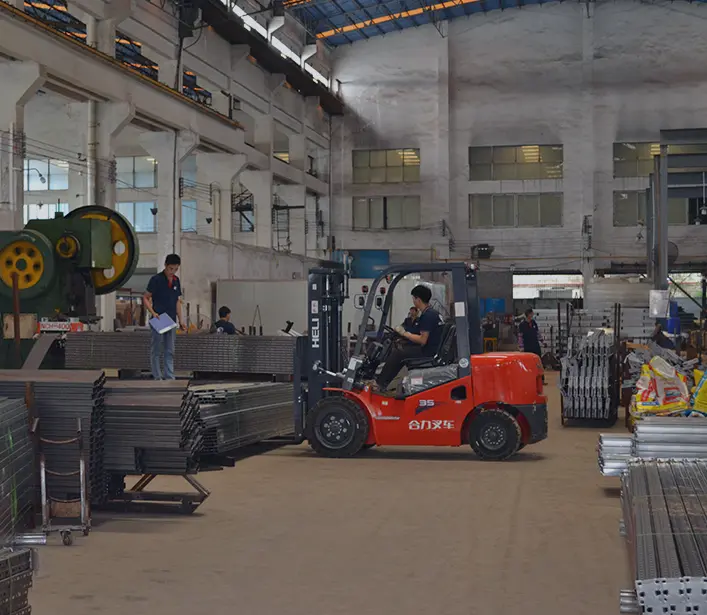
Our 10-Step In-House Quality-Controlled Manufacturing Protocol

Prime Steel Inspection

Laser & Shearing Cut

Automated Punching

Continuous Bending

Cold-Roll Forming

Shot Blasting & Polish

Robotic Beam Welding

Pickling & Phosphating

Electrostatic Coating

Load Test & Packaging


Frequently Asked Questions for B2B Racking Importers
Practical answers addressing technical tolerances, international building codes, shipping terms, and installation oversight.
What structural engineering information is required to receive a formal CAD layout and load calculation?
To deliver an accurate layout and quotation, our structural engineering department requires: (1) Clear warehouse architectural drawings or dimensions showing usable ceiling clear height, column spans, and fire suppression sprinkler clearance; (2) Detailed pallet parameters including width, depth, overall height including cargo overhang, and maximum pallet gross weight; (3) Forklift specifications including aisle turnaround radius (AST), mast lowered height, and maximum fork elevation; and (4) Site seismic data or regional design ground acceleration factors if located in earthquake hazard zones.
How does Heda Shelves calculate beam deflection and factor of safety for export projects?
All load calculations strictly adhere to international codes such as European Standard EN 15512, RMI ANSI MH16.1 in North America, or AS 4084 in Australasia. We design beams to limit maximum vertical deflection under full uniformly distributed load (UDL) to L/200 (1/200th of beam span length) or L/250 upon buyer request. The standard structural safety factor applied against steel yield failure is maintained between 1.5 to 1.65, ensuring safe performance against dynamic load drop surges.
What is the difference between electrostatic powder coating and hot-dip galvanization for warehouse environments?
Electrostatic polyester powder coating (60–80 microns thickness) is our standard finish for ambient dry warehouses. It delivers impact resistance and customizable corporate RAL color schemes. For outdoor open yards, chemical fertilizer storage, or sub-zero refrigeration with recurring condensation cycles, we recommend hot-dip galvanization (HDG) per ISO 1461, achieving 80–120 microns of metallurgical zinc-iron alloy bonding that resists rust even when scratched by forklift tines.
Can stackable post racks and pallet racking be shipped together in mixed export containers?
Yes. We specialize in high-density container bundling. Disassembled upright frames and boxed step beams form the flat bottom ballast of the shipping container (20GP or 40HQ), while modular stackable nesting frames, safety row spacers, mesh wire decking, and column corner guards are stowed compactly on upper levels. Every bundle is tagged with barcoded SKU labels matching the master packing list to streamline container destuffing and cross-docking.
What installation support does your company provide for international projects?
Every international order is supported by a comprehensive technical package, including stamped 2D assembly layout drawings, 3D component exploded schematics, anchor bolt torque charts, and step-by-step video installation guides. For medium-to-large turnkey installations exceeding 500 tons, we offer on-site engineering supervision to oversee local mechanical contracting teams and guarantee structural plumbness, anchor pull-test verification, and safety sign-off.
What are the standard international trade terms and production lead times?
We regularly ship under FOB (Guangzhou / Nansha / Shenzhen ports), CIF, CFR, and DDP incoterms. Standard manufacturing lead time for standard selective or stackable racking containers is 15 to 25 calendar days post drawing sign-off and deposit receipt. For complex multi-tier mezzanine floors requiring custom structural steel stamping, fabrication typically spans 25 to 35 calendar days.
Accelerate Your Warehouse Intralogistics Modernization
Get factory-direct pricing, certified load charts, and free 3D CAD layout planning directly from Guangzhou Heda Shelves Co., Ltd. Our international engineering desk is ready to assist your project.