High-Performance Warehouse Catalog
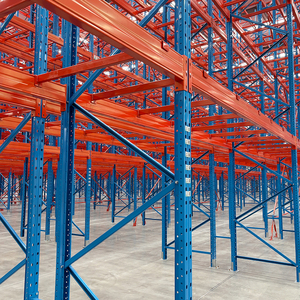
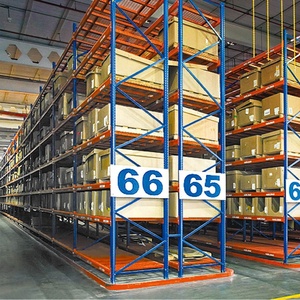
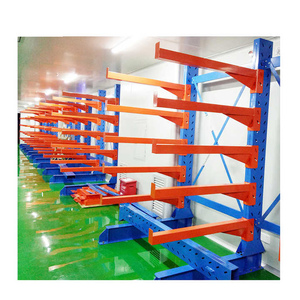
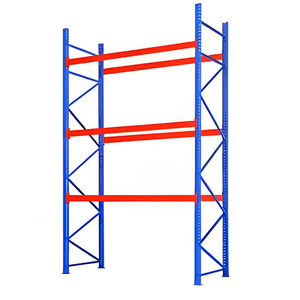
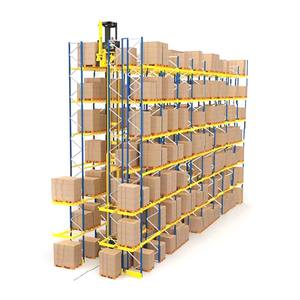
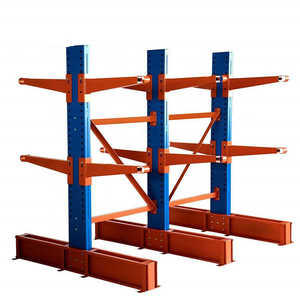
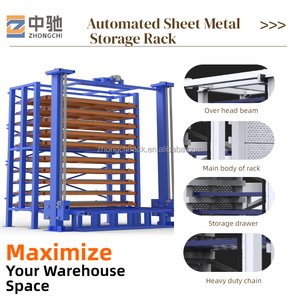
Featured Industrial Pallet Racking & Heavy-Duty Systems
Precision-manufactured cold-rolled steel racking systems built to international FEM, CE, and ISO 9001:2015 standards for third-party logistics (3PL), automotive, food cold storage, and manufacturing plants.
Engineering Whitepaper & Technical Analysis
Kinematic Architecture & Load Physics of Roller Pallet Racking Systems
A deep engineering exploration into live storage dynamics, centrifugal brake roller spacing, gradient geometry, and pallet separation mechanisms for global distribution hubs.
Roller Pallet Racking, universally termed in material handling engineering as Gravity Pallet Flow Racking or Live Storage Pallet Racking, operates on an unpowered, inclined roller track mechanism that leverages gravitational potential energy to transport unitized pallet loads automatically from loading faces to picking faces. Operating primarily under strict First-In, First-Out (FIFO) stock rotation inventory protocols, roller pallet racking condenses storage footprints by eliminating intermediate forklift operational aisles, achieving space utilization rates surpassing 85% of total warehouse cube volume.
As premier China wholesale roller pallet racking suppliers and exporters, our structural fabrication leverages high-tensile Q235B and Q355B structural steel, precision cold-roll-formed into proprietary omega-profile upright columns and heavy-duty box beams. When configuring dynamic roller beds, structural stability is inextricably coupled with kinematic regulation: uncontrolled velocity under heavy unit loads (500 kg to 1,500 kg per pallet position) presents catastrophic impact hazards. To overcome dynamic impact forces, our dynamic flow beds integrate mechanical speed controllers, split-roller tracks, and mechanical safety separators engineered according to EN 15512, AS4084-2023, and FEM 10.2.02 codes.
60%+
Floor Footprint Savings
3.5%
Optimized Flow Gradient
1,500kg
Max Pallet Load Capacity
0.3m/s
Regulated Controlled Speed
Centrifugal Brake Rollers
Standard gravity lanes produce constant acceleration. Our heavy-duty dynamic lanes incorporate internal geared centrifugal brake rollers installed at one-pallet intervals. As pallet velocity reaches 0.25–0.30 m/s, internal centrifugal brake shoes expand against the roller shell, generating proportional friction without electrical power to maintain smooth, constant gliding speed regardless of weight discrepancies.
Automatic Pallet Separators
Accumulation pressure on the foremost pallet in a deep lane (10 to 20 pallets deep) makes safe extraction impossible with conventional lift trucks. Our mechanical end-stop pallet separators physically isolate the leading discharge pallet from trailing pallets. Trailing loads are held back by an automatic locking lever until the first pallet is lifted clear, eliminating back-pressure wedging and mast collision risks.
Cold-Formed Roller Geometry
Supplied with carbon steel, zinc-galvanized, or polyurethane-sheathed cylindrical rollers resting on high-precision ABEC bearings. Rollers feature heavy-wall structural gauge thickness (1.5mm to 2.5mm) with internal hexagonal spring-loaded axles that interlock seamlessly into punched structural C-channels, preventing axle rotation wear and reducing vibrational harmonics during heavy load transit.
Critical Design Standard: Mathematical Slope & Friction Vector
The declination angle in gravity roller beds is calculated as a dynamic coefficient balance: tan(θ) ≥ μ_rolling + μ_bearing. In tropical and sub-zero cold room environments, lubrication viscosity and pallet bottom board irregularities modify the drag coefficient. Our engineers calibrate slope gradients within 3.2% to 4.5% (approx. 1.8°–2.5°), precisely compensating for ambient operational temperature, wood deflection, and plastic runner friction coefficients.
| Storage System Type | Space Utilization | Inventory Access | Forklift Cycle Time | Energy Dependence | Capital Investment Ratio |
|---|---|---|---|---|---|
| Roller Pallet Flow Racking (FIFO) | 85% – 90% | Automatic Gravity Flow (FIFO) | Ultra-Fast (Dedicated Aisle) | Zero kW (Unpowered Gravity) | Medium – High (High ROI) |
| Drive-In Racking (LIFO) | 65% – 75% | Last-In, First-Out (LIFO) | Slow (Truck enters rack) | Zero kW | Low |
| Radio Shuttle Cart Racking | 80% – 88% | FIFO or LIFO Programmable | Fast (Automated Shuttling) | High (Lithium Battery Bank) | High |
| Standard Selective Pallet Racking | 40% – 45% | 100% Direct Individual Access | Moderate (Multiple Aisle Travel) | Zero kW | Low |
Market Intelligence & Strategic Foresight
Future Procurement Trends in Industrial Pallet Flow & Roller Systems (2025–2035)
How macroeconomic shifts, automated guided vehicles (AGVs), ESG carbon mandates, and cold chain distribution hubs are reshaping global procurement orders for Chinese manufactured racking.
1. Hybrid AGV/AMR Interface Integration
Global fulfillment centers are rapidly phasing out manual counterbalanced forklifts in favor of autonomous pallet handling equipment. Future procurement tenders mandate roller pallet racking configured with optical docking sensors, centered roller funnel guides, and reinforced cantilevered outfeed discharge beds. These mechanical accommodations provide zero-tolerance precision for robotic automated guided vehicles (AGVs) and autonomous mobile robots (AMRs) during high-speed pallet retrieval.
2. Net-Zero Energy & ESG Warehousing
With corporate carbon disclosure mandates escalating across the European Union, North America, and ASEAN, warehouse logistics architects are prioritizing passive gravitational energy over electrically intensive AS/RS shuttle systems. Roller pallet racking requires zero operating kilowatt-hours, negligible standby emissions, and delivers a 100% recyclable structural steel profile at end-of-life, drastically cutting Scope 1 and Scope 2 warehouse carbon emissions.
3. Sub-Zero Cold-Chain Surge
The post-pandemic expansion of pharmaceutical temperature-controlled cold chains and regional frozen food exports (such as aquaculture and fresh fruit across Asia-Pacific) has fueled massive demand for deep-freeze roller systems (-30°C). Conventional battery shuttles experience rapid voltage sag and condensation breakdown in sub-zero chambers. High-grade galvanized roller racking operates with complete mechanical immunity to frost heave, sub-zero bearing freezing, and lubrication crystallisation.
Technological Development Trajectories in Roller & Flow Racking
Over the next decade, wholesale exports of Chinese roller pallet racking will evolve beyond purely mechanical static steel into intelligent cyber-physical structures. Key engineering innovations currently leaving our Guangzhou R&D laboratories include:
- Piezoelectric Self-Powered Roller Telemetry: Micro-generators embedded inside speed controller rollers harness pallet kinetic energy to power wireless IoT sensor nodes. These transmit real-time lane occupancy, ambient temperature, bearing vibration analytics, and structural stress telemetry directly to warehouse management systems (WMS) without wired external power grids.
- Modular Multi-Profile Universal Roller Beds: Transitioning from fixed single-track rollers to staggered multi-wheel split cassettes engineered with high-impact techno-polymers. This modular layout allows irregular, GMA, Euro, and disposable plastic pallets to travel seamlessly along the same lane without catching or jamming on broken bottom stringer runners.
- Smart Magnetic Eddy Current Braking: Next-generation deceleration rollers utilizing non-contact neodymium permanent magnets (Eddy Current Braking). By generating magnetic counter-forces proportional to velocity without mechanical brake shoe contact, these mechanisms achieve zero physical friction wear, zero dust generation (critical for semiconductor cleanrooms and pharmaceutical facilities), and maintenance-free lifecycle operation spanning decades.
Guangzhou HEDA Shelves Co., Ltd. Advantage
Your Certified Tier-1 Heavy Industrial Racking Manufacturer in China
Established in 2001, Guangzhou HEDA Shelves Co., Ltd. combines advanced roll forming automation, strict quality control protocols, and rapid global maritime logistics to deliver turnkey storage systems across 120+ countries.
Engineering Precision Backed by Heavy Manufacturing Infrastructure
Operating from our modern 30,000 m² primary production facility in Guangzhou, China, our team of 300+ structural engineers, precision machinists, and international project consultants delivers a formidable 30,000 tons per month manufacturing throughput. We manage the entire fabrication lifecycle entirely in-house: from high-tensile coil slitting and automated CNC column punching to robotized submerged arc beam welding and automated electrostatic powder coating.
Because our production hub is strategically positioned in South China within immediate proximity to Guangzhou, Nansha, and Shenzhen deep-water maritime ports, international contractors and wholesale distributors benefit from aggressive factory-direct pricing, guaranteed metallurgical certifications, and rapid maritime container transit times worldwide.
CE Certified: No. 2435-CPR-8605159
ISO 9001:2015 Quality Management
RoHS Environmental Compliance
FEM 10.2.02 / AS4084 Structural Calcs
Turnkey Export Assurances for Importers
- Complimentary 3D & CAD Layouts: Zero-cost parametric warehouse modeling, clearance cross-sections, and seismic load analyses completed within 24–48 hours of drawing receipt.
- Tropical & Coastal Pre-Treatment: Specialized 10-stage immersion pickling and phosphating pre-treatment guarantees 1,000+ hours salt spray resistance, preventing delamination in 85%+ relative humidity climates.
- Container Volumetric Optimization: Upright trusses, step beams, and roller cassettes are custom-bundled with heavy timber blocking, safeguarding components against transit friction and maximizing 40HQ container cube fill.
- Full Seismic Certification: Customized base plates, ground anchor bolt chemistry, and heavy bracing designs for seismic zones (Philippines, Indonesia, Japan, South America).
Our 10-Stage Controlled Manufacturing Quality Chain
Quality assurance is engineered into every millimeter of steel before loading and export.
01
Raw Materials
Certified mill test coils from premium steel mills (Baosteel, Shougang) tested for tensile yield strength.
02
Precision Slitting
CNC slitting lines accurately slice heavy-gauge coils with sub-millimeter edge tolerances.
03
Column Punching
Fully automated multi-station punch presses produce continuous 50mm or 75mm pitch upright teardrop holes.
04
Cold Bending
Continuous progressive cold roll-forming lines bend uprights into rigid omega profiles without micro-fracturing.
05
Profile Forming
Heavy-duty interlocking step beams and box beams roll-formed with double-thickness seam welds.
06
Mechanical Polishing
Shot-blasting and mechanical surface polishing cleans slag, spatter, and surface impurities.
07
Robotic Welding
Automatic CO2 shielded robotic welding arms bond heavy connectors to beam ends with full penetration welds.
08
Pickling & Phosphate
Multi-tank chemical degreasing, acid pickling, and iron phosphating prevent subsurface rust creeping.
09
Powder Coating
Automated Nordson electrostatic spray booths apply 80–120μm thermosetting epoxy-polyester coatings cured at 200°C.
10
QC & Packing
Comprehensive laser coordinate measurement, coating adhesion testing, cross-banding, and steel strapping.
Knowledge Base & Technical Due Diligence
Frequently Asked Questions: Sourcing Roller Pallet Racking from China
Straightforward, technical answers for supply chain directors, structural engineers, and warehouse logistics buyers.
Q
How do you calculate the optimal lane gradient and roller pitch for varying pallet loads?
The standard incline angle for gravity roller beds is engineered between 3.5% and 4.0% (approximately 2° declination). For lighter loads (300–500 kg) or plastic pallets with flat bottom runners, a 3.8% to 4.2% slope ensures self-starting inertia. For heavy loads exceeding 1,000 kg, a 3.2% to 3.5% gradient prevents excessive momentum. Roller pitch is determined by ensuring a minimum of three rollers remain in continuous contact with the pallet bottom board runners at all times. For a standard 1,200mm deep pallet, a roller pitch of 150mm to 200mm centers is standardly specified.
Q
What prevents pallets from crushing each other or derailing inside deep roller flow lanes?
Three primary mechanisms guarantee operational safety: First, heavy-gauge steel full-length side guide channels center the pallet upon entry and prevent lateral drift. Second, centrifugal mechanical brake rollers positioned throughout the bed dynamically clamp down on speed whenever movement exceeds 0.3 m/s. Third, at the retrieval face, a heavy-duty mechanical pallet separator physically disengages and locks trailing pallets 150mm behind the front-most pallet. Trailing pallets cannot advance until the lead pallet has been hoisted and safely cleared by the forklift mast.
Q
Can your roller pallet racking withstand sub-zero conditions in -30°C cold storage facilities?
Yes. For cold storage and blast freezer logistics, standard grease inside bearings freezes and causes roller lockup. We engineer our cold-room roller tracks with food-grade low-temperature synthetic lubricants rated down to -40°C, sealed ABEC-5 stainless steel or galvanized bearing assemblies, and high-ductility Q355D steel uprights that resist cold-induced embrittlement. Structural steel components receive hot-dip galvanized finishes or cold-cure epoxy powder coats to combat condensation peeling.
Q
What international structural engineering standards do your systems adhere to?
All structural calculations, safety factors, and deflection thresholds adhere strictly to European FEM 10.2.02 (Design of Static Steel Pallet Racking) and EN 15512 standards, Australian Standard AS4084-2023, and American RMI MH16.1 specifications. Guangzhou HEDA Shelves holds verifiable CE Certification (No. 2435-CPR-8605159), ISO 9001:2015 Quality Management Certification (No. 18624Q00169R0M), and full RoHS compliance reports.
Q
What are the port-to-port maritime shipping lead times from your Guangzhou factory?
Thanks to our strategic position in Guangzhou, shipping containers depart directly via Nansha or Shenzhen international ports. Indicative direct sea transit times: Vietnam (2–5 days), Philippines (3–5 days), Singapore and Thailand (5–7 days), Malaysia (6–8 days), Indonesia (7–10 days), Australia/Middle East (12–18 days), Western Europe (26–32 days), and North American West Coast (14–20 days). FOB, CIF, CFR, and DDU/DDP terms are comprehensively supported.
Q
How are defective, damaged, or broken pallets handled on roller flow beds?
Pallet quality is paramount in dynamic live storage. Loose nails, missing runner boards, or splintered wood can catch in roller tracks. We recommend utilizing full-width cylindrical steel rollers rather than narrow skate wheels for wooden pallets to span minor board gaps. For operations utilizing mixed or lower-grade pallets, we incorporate entry-face optical/mechanical profile-gauges (Poka-Yoke sizing gates) at the charge end to ensure questionable pallets are rejected before entering deep lanes.
Q
What specific project inputs are required to generate an engineering CAD proposal?
To produce a fully calculated CAD layout, 3D render, and competitive quotation, our engineering team requires: (1) Warehouse architectural floor plan indicating clear ceiling height under trusses, floor slab load rating, and building column locations; (2) Pallet dimensions (Length × Width × Height inclusive of cargo overhang); (3) Maximum and average gross pallet weight; (4) Forklift truck mast type, collapsed height, and maximum lift reach; and (5) SKU count, daily throughput velocity, and inventory rotation rules (FIFO vs. LIFO).
Q
Do you supply on-site installation guidance and commissioning abroad?
Every export shipment is accompanied by complete 3D exploded assembly diagrams, color-coded component packing manifests, and step-by-step installation videos. For large distribution centers and complex multi-level picking platforms, Guangzhou HEDA Shelves dispatches bilingual senior installation engineers to client job sites globally to supervise local mechanical contractors, manage laser leveling alignment, and perform physical load-test commissioning.