Structural Pre-Fab
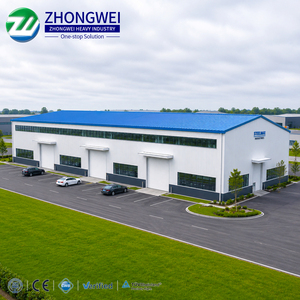
From dynamic push back nested cart assemblies to high-bay structural pallet frames and carton flow tracks, our Guangzhou manufacturing base delivers high-performance racking tailored to global distribution centers.
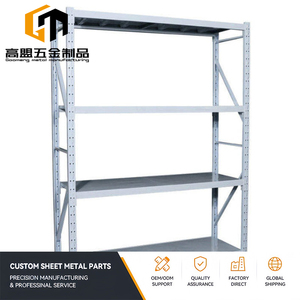
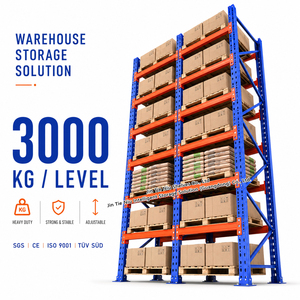
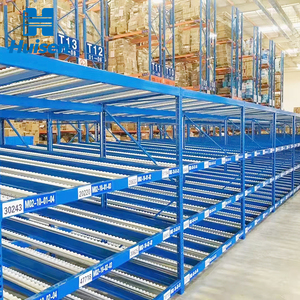
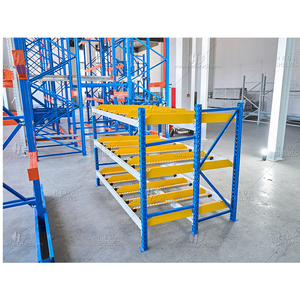
Push back pallet racking bridges the operational gap between pure selectivity and extreme density. Operating on an inclined nested carrier cart system (typically engineered at a 2.5% to 3.5% incline), push back racking allows pallets to be stored from 2 to 6 deep, utilizing standard counterbalance or reach trucks without entering the storage structure.
Low-profile precision carts nest sequentially beneath one another. When the initial pallet is loaded on the top cart, the second pallet pushes that cart backward, revealing the second cart. Flanged steel wheels mounted on heavy-duty sealed bearings guarantee low friction resistance (μ ≤ 0.03) across all ambient and blast-freeze temperatures.
Precision structural grade profiles provide an exact gravitational descent speed (controlled at 0.15 - 0.25 m/s). As the operator retrieves the frontmost unit load, trailing pallets slide forward smoothly under controlled gravity. Heavy-duty mechanical safety stops and redundant travel limiters eliminate derailment risks.
Cold-formed uprights made from high-tensile Q355B (equivalent to S355JR / ASTM A572 Grade 50) feature continuous structural bracing. Proprietary anti-lift catchers prevent cart dislodgment during aggressive loading cycles, exceeding RMI MH16.1 and EN 15512 safety deflection thresholds.
| Storage Architecture System | Space Utilization | Selectivity Profile | Forklift Cycle Time | Damage Vulnerability | Initial Capital Outlay |
|---|---|---|---|---|---|
| Push Back Racking (2-6 Deep) | 75% - 85% Density | 1 SKU per Lane (LIFO) | Fast (No rack entry required) | Extremely Low (Uprights protected) | Moderate (High ROI) |
| Selective Pallet Racking | 40% - 50% Density | 100% Immediate Direct Access | Standard | Low | Low |
| Drive-In / Drive-Thru Racking | 80% - 90% Density | Very Low (Batch retrieval) | Slow (Mast travel inside bay) | High (Frequent upright collisions) | Low to Moderate |
| Pallet Flow (Gravity Roller) | 85% - 92% Density | 1 SKU per Lane (FIFO) | Rapid (Split aisle load/pick) | Low | High (Continuous full-bay rollers) |
| Automated Radio Shuttle | 88% - 95% Density | High SKU flexibility (FIFO/LIFO) | Very Rapid (Autonomous transfer) | Zero (Fully automated lane shuttles) | High (Electronic components + robotics) |
Global supply chain disruptions, rising urban land acquisition costs, and explosive cold-chain infrastructure demands have dramatically reshaped how supply chain vice presidents and procurement directors evaluate warehousing systems for 2026-2030.
With industrial refrigeration costs tripling over recent cycles, every cubic meter of conditioned airspace directly impacts operational EBITDA. Cold-storage operators are migrating from drive-in to heavy push back systems because push back requires zero forklift entry—reducing cold air turbulence and air curtain leakage while boosting storage volume by 70% over conventional wide-aisle racks.
Modern enterprise procurement focuses on future-proofing. Next-generation push back systems engineered by HEDA feature fortified bottom load-entry apertures calibrated for counterbalance Autonomous Forklifts (AFRs) and automated AGV reach trucks. Precise optical locator pins and consistent nesting kinematics allow autonomous pallet placement without manual operator oversight.
Procurement standards are prioritizing green steel verification. Fabricating upright columns and stepped load beams using Q355B and high-yield cold-rolled coils allows material thickness reduction without compromising structural yield moments. Lead-free thermosetting electrostatic powders provide superior scratch resistance and 500-hour salt-spray ratings without emitting VOCs.
Traditional push back installations relied heavily on primitive angle-iron track beds and external bushing sleeve rollers that suffered catastrophic seized bearings under sub-zero or humid conditions. Modern engineering standards executed by certified Chinese original equipment manufacturers (OEMs) integrate:
Established in 2001, Guangzhou Heda Shelves Co., Ltd. is an internationally certified high-density racking design and manufacturing facility. Backed by state-of-the-art roll forming lines, robotic welding stations, and exhaustive automated powder coating tunnels, our solutions safeguard logistics hubs worldwide.
Every consignment leaving our docks is manufactured under strict ISO 9001:2015 management (Certificate No. 18624Q00169R0M) and carries CE marking (Certificate No. 2435-CPR-8605159) alongside full RoHS compliance. Mill test certificates (MTC) accompany every batch of raw steel coils.
Our in-house structural engineering department of 30+ specialists develops detailed 2D CAD architectural layouts, 3D spatial renders, and Finite Element Analysis (FEA) deflection calculations before contractual signing, eliminating clearance misfits and field erection errors.
Positioned adjacent to major deep-water ports (Nansha, Huangpu, Shenzhen), we offer unmatched direct maritime shipping speed: 2-5 days to Haiphong/HCMC, 3-5 days to Manila, 5-7 days to Singapore/Bangkok, 6-8 days to Port Klang, and 7-10 days to Jakarta, backed by container-maximized packing.
Certified Q235B & Q355B hot & cold-rolled structural steel inspection.
High-speed CNC slitting ensuring micrometric width tolerances.
High-tonnage hydraulic multi-die punching for precision teardrop / diamond holes.
Continuous 24-station cold-roll forming lines for uniform residual stress distribution.
Automated CO2 gas-shielded multi-axis robotic beam end-connector welding.
Mechanical descaling removing surface oxides and micro-burrs.
Chemical immersion eliminating lingering scale and industrial grease.
Zirconium/phosphate conversion coating boosting tropical corrosion resistance.
Electrostatic automated spray cure at 200°C for 80-120μm polymer film.
Deflection verification, barcode labeling, and container-optimized steel strapping.
Straightforward engineering insights, logistical parameters, and compliance details to support enterprise RFQ evaluations.
Push back lanes require an additional mast push-force equal to approximately 3.5% to 4.5% of total payload weight per lane to overcome the inclined gravitational gradient and rolling friction. For example, in a 4-deep system with 1,000 kg pallets, the forklift mast must exert an extra ~140 kg of horizontal thrust. Standard counterbalance, reach, and Bendi articulating forklifts have ample thrust capacity, but lifting derations must be engineered in layout calculations.
Yes. Unlike drive-in racks that support pallets solely on narrow side perimeter rails (requiring strict pallet uniformity), push back nested carts feature continuous structural decking or cross-flanges. They readily support Euro pallets (800x1200mm), ISO standard pallets (1000x1200mm), US GMA pallets (40x48 in), skid bottoms, and plastic perimeter-base pallets without bottom runner splintering.
All structural profiles undergo an eight-stage pre-treatment wash including chemical hot-alkaline degreasing, acid pickling, and micro-crystalline phosphating prior to electrostatic polyester powder coating. For sub-zero cold rooms (-20°C to -35°C) or coastal port sites, we engineer hot-dip galvanized nested carts and structural tracks with low-temperature synthetic lubrication to prevent frost lockup and corrosion.
Upright frames are pre-punched and flat-packed or shipped partially disassembled based on ocean freight weight-volume ratios. Nested push back carts nest identically within custom heavy-gauge steel storage cradles. Components are numbered sequentially to match bill-of-materials drawings, allowing contractors to achieve up to 24 metric tons per 40HQ container, drastically slashing per-pallet transport costs.
Yes. We regularly supply high-seismic projects across the Pacific Rim, including the Philippines, Indonesia, Chile, and California. Our engineering team incorporates site-specific Ss and S1 seismic acceleration spectral data into SAP2000 structural modeling, supplying thickened base plates (12mm-16mm), double-anchor sleeve bolts, and cross-bracing that conform strictly to RMI ANSI MH16.1 and Eurocode 8 standards.
Standard production cycles range between 18 to 28 working days depending on total project tonnage. Every container includes detailed 3D exploded assembly diagrams, labeled fasteners, and QR-coded installation videos. For complex tier projects, we dispatch technical installation supervisors to the site or conduct live video QA handovers with your local mechanical installation contractor.
Provide your warehouse floor dimensions, building clear heights, pallet load parameters, and handling vehicle specs. Our application engineers will return a complete 2D/3D storage design, FEA structural calculation report, and competitive wholesale FOB/CIF pricing within 24 hours.