Heavy-Duty Warehouse Storage Systems & Racking Configurations
Precision manufactured from premium Q235B and Q355B structural steel, our storage systems deliver certified load stability, corrosion resistance, and spatial density for high-throughput supply chains.
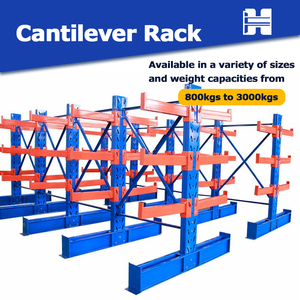 Heavy Profile
Sheet Storage Rack Industrial Storage Inventory Organization Long Goods Handling
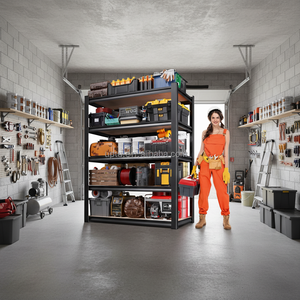 FIFO Dynamic
Live Pallet Flow Racking Gravity-Fed Heavy Duty Steel Wire Shelving Quick Installation
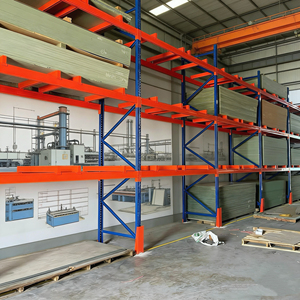 Deep Lane High-Bay
Heavy Duty 5 Layer Galvanized Metal Pallet Shuttle Rack Cold Storage
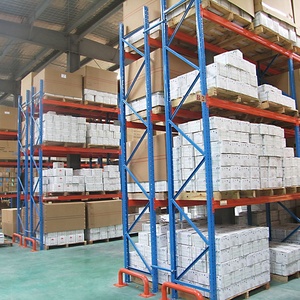 Double Deep
Customizable Boltless Steel Double Deep Selective Pallet Racking for Warehousing
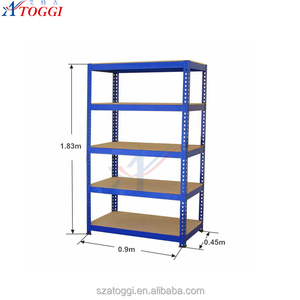 Medium Duty
900x450x1830mm Steel 5 Layer Light-Medium Duty Easy Mobile Warehouse Rack
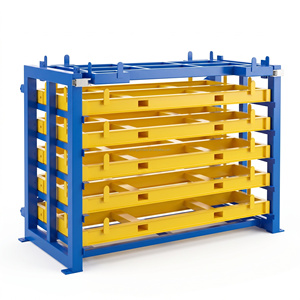 Die & Mould
Custom Heavy Duty Industrial Pallet Racks With Anti-Rust Drawer Roll Out Design
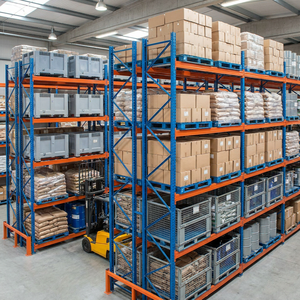 Standard Selective
Selective Rack Warehouse Storage System Heavy Duty Industrial Q235B Steel
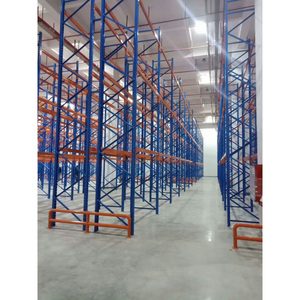 High-Bay VNA
Blue-Orange High Bay Heavy Duty Racking Adjustable Storage Capacity Doubler
Guangzhou HEDA Shelves: 25+ Years of Certified Racking Engineering
Founded in 2001, Guangzhou Heda Shelves Co., Ltd. operates an advanced 30,000 square meter intelligent manufacturing facility. Supported by 300+ structural engineers, precision machine operators, and intralogistics planners, we convert over 30,000 metric tons of certified steel monthly into turnkey logistics frameworks.
Automated Cold-Roll Forming
Continuous CNC multi-roller cold profiling lines yield flawless 11-fold and 13-fold omega-profile upright columns. Precision continuous punch dies ensure pinpoint hole pitch accuracy (50mm / 75mm) across continuous un-spliced profiles up to 14 meters.
Robotic Shielded Gas Welding
Standardized beam end-connectors undergo multi-axis Panasonic robotic MIG welding. Automated bead profiling ensures full weld penetration with certified fatigue failure resistance that surpasses international shear and torsion testing specifications.
Tropical Electrostatic Coating
Our 180-meter automated finishing line integrates an automated 9-stage degreasing, ultrasonic water-wash, rust-stripping pickling, and zirconium-phosphating pre-treatment. Finished with AkzoNobel epoxy powders cured at 200°C for 500+ hours salt-spray durability.
Structural Integrity, Metallurgy & Cold-Formed Steel Calculations
Procuring structural storage frameworks requires verification of steel mechanical properties, finite element strain modeling, and adherence to seismic displacement parameters.
Q235B vs. Q355B Metallurgical Grade Selection
In wholesale pallet racking manufacturing, material properties determine deflection parameters under static load and impact resistance during forklift maneuvers. Guangzhou HEDA manufactures components using high-yield hot-rolled coils sourced directly from top-tier primary domestic mills (Baosteel, Shougang). Every batch is validated with original Mill Test Certificates (MTC) detailing carbon equivalency (Ceq ≤ 0.38%) to guarantee brittle-fracture immunity and weld crack elimination.
| Mechanical Metric | Grade Q235B (Standard) | Grade Q355B (Heavy-Duty) |
|---|---|---|
| Yield Strength (ReH) | ≥ 235 MPa | ≥ 355 MPa |
| Tensile Strength (Rm) | 370 – 500 MPa | 470 – 630 MPa |
| Elongation at Break (A) | ≥ 26% | ≥ 22% |
| Application Focus | Selective Beams, Light Framing | Base Columns, High-Bay Uprights |
For high-bay installations exceeding 8 meters or cold storage environments operating at -25°C to -30°C, Grade Q355B or fine-grained killed low-alloy steels are mandated to preserve charpy V-notch impact toughness values at sub-zero temperatures.
Finite Element Analysis (FEA) & Deflection Compliance
Racking structures act as slender, unbraced or semi-rigid framed structures in the down-aisle direction and braced trusses in the cross-aisle direction. Our engineering division conducts structural validation in accordance with EN 15512:2020 (European Standard for Steel Static Storage Systems) and ANSI/RMI MH16.1 (Specification for the Design, Testing and Utilization of Industrial Steel Storage Racks).
Crucial design parameters evaluated under ANSYS non-linear finite element models include:
- Beam Deflection Limit: Strictly calibrated to not exceed
L / 200under rated working load, preventing pallet dislodgement and pinch points on beam locks. - Upright Buckling Ratio: Evaluating local, distortional, and global flexural-torsional buckling across perforated omega column sections under eccentric pallet compression.
- Rotational Connector Stiffness: Moment-rotation testing of 3-claw, 4-claw, and 5-claw interlocking beam end-plates to calculate accurate spring constants (K-factor) for frame stability.
Procurement Dynamics: How Industrial Storage Is Evolving
Supply chain volatility, rising urban industrial land lease rates, and warehouse labor shortages are fundamentally shifting commercial storage specifications. The following technological shifts represent the benchmark for modern storage investments.
4-Way Radio Shuttle High-Density Transformation
Traditional drive-in racking is increasingly replaced by semi-automated and fully automated radio shuttle channels. By deploying intelligent self-propelled shuttles that navigate deep drive-in rails via radio frequency, warehouse managers eliminate forklift collisions within rack lanes, increase floor volumetric density by up to 80%, and lower labor cycle times across grocery and FMCG cold store operations.
AS/RS & Automated Guided Vehicle (AGV) Compatibility
Standard selective racking is engineered with tighter dimensional tolerances (down to ±1.0mm) to support autonomous pallet jacks, counterbalanced AGVs, and stacker cranes. Tight floor-anchor tolerances, reflective safety target inserts, and precision beam leveling are pre-machined at our factory to enable seamless brownfield robotic retrofits.
Rack-Supported Clad Buildings (Building-as-Rack)
To reduce civil construction timelines, industrial developers are adopting rack-supported structures where heavy-duty upright frames not only support pallet loads, but directly carry external insulated wall cladding and roof framing. This turnkey engineering eliminates traditional structural building columns and unlocks storage heights up to 40 meters.
Sustainability & Closed-Loop Powder Chemistry
Procurement directors in Europe and the Americas now benchmark Scope 3 carbon emissions. Guangzhou HEDA uses scrap-reduced precision slitting, recycled pre-treatment wash water, and non-toxic TGIC-free polyester powders, resulting in VOC emissions that fall well within RoHS compliance parameters while lowering embodied lifecycle carbon.
Multilevel Mezzanine Hybrid Warehousing
With e-commerce requiring extensive SKU pick-and-pack stations, the combination of pallet racking on the ground floor with catwalk mezzanines above has become standard practice. By taking advantage of overhead vertical clearance, facilities multiply usable square footage up to 300% without incurring land expansion or building permit penalties.
Smart IoT Racking Safety Sensors
Next-generation racking components integrate structural monitoring sensors at vulnerable upright impact zones. Strain gauges and impact telemetry record forklift collisions instantly, alerting safety managers to load anomalies or structural fatigue before micro-fractures compromise facility safety.
Total Cost of Ownership (TCO) & Sea Freight Consolidation
Purchasing pallet racking directly from a Tier-1 Chinese manufacturer lowers capital equipment expenditure by 30% to 55% compared to local domestic distribution channels. However, maximizing financial ROI requires careful optimization of freight container loading, anti-corrosion packaging, and installation workflows.
Container Weight vs. Cube Optimization
Industrial steel racking components possess distinct weight-to-volume densities: vertical upright frames are volumetric and long, whereas box beams and steel wire decking are dense and heavy. An unoptimized container load will hit ocean carrier weight restrictions (typically 26.5 to 28.0 metric tons per 40ft HQ) well before physical container cubic capacity (68 CBM) is filled.
Our engineering shipping division utilizes custom 3D nesting CAD software to calculate the optimal balance of knocked-down upright frames (assembled on-site to minimize ocean shipping volume) nested inside bundled box beams. This packaging optimization regularly increases the pallet position yield per 40HQ container by 22% to 35%, substantially lowering per-pallet ocean freight amortization.
Factory Direct vs. Tiered Re-Seller Model
Traditional regional storage vendors operate as middlemen who mark up components by 40-70% to cover regional stocking overheads and showroom costs. Sourcing direct from Guangzhou HEDA provides:
- Direct Design Adjustments: Custom beam profiles and specialized upright hole configurations engineered directly by the factory CAD team.
- Uncompromised Metallurgy: Full traceability to original steel batch receipts, certified CE compliance (EN 15512), and ISO 9001:2015 tracking.
- Guaranteed Lead Times: Large orders up to 500 tons manufactured and ready for loading within 18 to 25 business days.
- Standardized Spares: Re-order identical matching components, beam connectors, and upright profiles years later with guaranteed structural compatibility.
Frequently Asked Questions for Industrial Buyers
Clear engineering and commercial answers to the most common queries raised by international contractors, project managers, and logistics procurement teams.