Architectural Mechanics of Industrial Live Storage Racking (Pallet Flow)
In high-velocity warehouse distribution, floor real estate and fulfillment latency dictate bottom-line profitability. Live storage racking—universally engineered as dynamic pallet flow racking—operates on a high-density, gravity-fed inclined roller conveyor framework. By positioning lanes at an engineered gradient between 2.8% and 3.5%, palletized unit loads roll smoothly from the rear loading face (charge side) to the front picking face (discharge side). This mechanically enforces an uncompromising First-In, First-Out (FIFO) stock rotation without relying on continuous electricity or fossil-fueled handling machinery within the storage lanes.
As a leading factory-direct China wholesale live storage racking manufacturer, Guangzhou HEDA Shelves Co., Ltd. (operating since 2001) designs and exports dynamic storage superstructures engineered with premium cold-rolled Q235B and high-yield Q355B structural steel. By condensing forklift transit into two dedicated access aisles—one for replenishment and one for extraction—live storage racking reduces fork-truck travel times by up to 45%, eliminates dead aisle waste, and boosts volumetric storage capacity by up to 75% compared to traditional selective pallet racking layouts.
Dynamic Live Storage & Heavy-Duty Warehouse Systems
Review our heavy-duty industrial storage racks, automated shuttle tracks, and dynamic pallet handling solutions manufactured to CE EN 15512 and ISO 9001:2015 engineering standards.
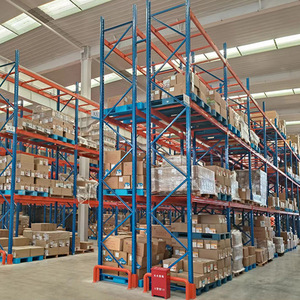
Heavy Duty Tear Drop Industrial Pallet Racking
Rated for 2000kg per level. Built with boltless teardrop connectivity for swift height adjustment and integration into live storage roller beds.
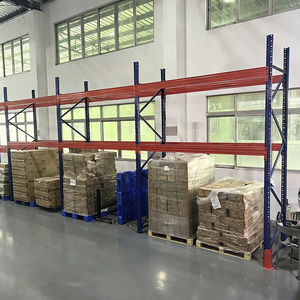
Multi-Level Upright Steel Pallet Storage Racking
Engineered for vertical high-bay warehouse optimization. Features dynamic upright profiles with precision Omega punch pitch for heavy load distribution.
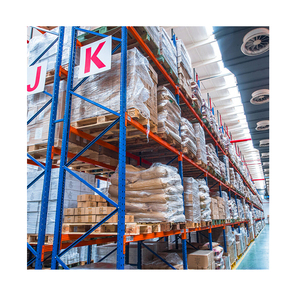
Custom Steel Industrial Warehouse Racking System
Fully customizable structural bay depths, lane lengths, and beam profiles tailored for carton flow, live gravity tracks, and bulk handling operations.
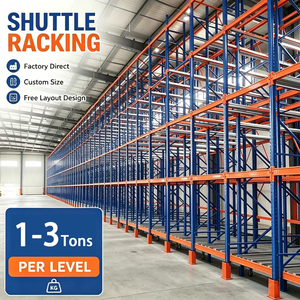
Cold Chain Automated Radio Shuttle Racking
Engineered for -30°C frozen food logistics. Combines high-density lane automation with semi-autonomous lithium-powered shuttle vehicles.
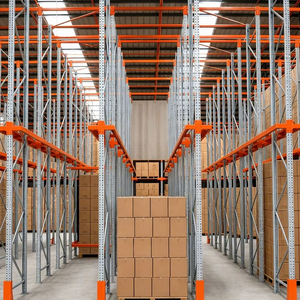
Heavy Duty Drive-In High Density Storage System
Maximizes volumetric storage density by eliminating operating aisles for homogenous SKUs. Reinforced floor guidance rails protect upright columns.
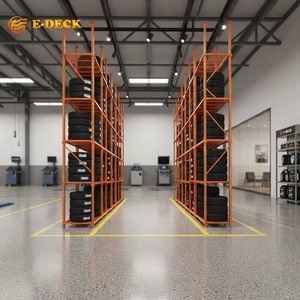
Stackable Welded Truck Tyre Heavy Storage Rack
Modular, stackable steel stillages tailored for heavy truck tyres and commercial automotive parts. Engineered for rapid 4-way forklift handling.
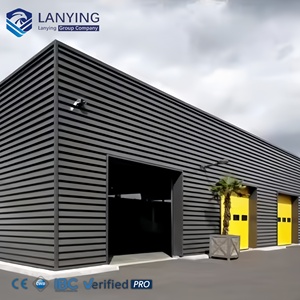
Prefabricated Steel Structure Logistics Warehouse
Engineered portal steel frames and rack-supported building (Clad-Rack) configurations designed to resist tropical typhoons and high seismic zones.
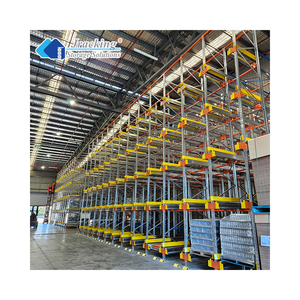
Four-Way Dynamic Radio Shuttle Storage System
State-of-the-art automated pallet routing across longitudinal and transverse tracks. Supports high-density 3D buffer zones and smart warehouse software integration.
Brake Rollers, Dynamic Incline, and Pallet Separator Physics
The continuous safe operation of a heavy pallet live storage racking system relies on three critical engineering components: gravity roller beds, centrifugal brake rollers, and load-dependent pallet separator mechanisms. Without exacting mechanical calculations, heavy pallets (typically ranging from 500kg to 1,500kg) would accelerate uncontrollably down long lanes, creating catastrophic impact risks at the unloading face.
Speed Controller Brake Rollers
Centrifugal brake drums installed at regular intervals (every pallet length) regulate gravitational descent speed to a constant, controlled 0.15 to 0.3 meters per second, dampening kinetic acceleration regardless of load weight fluctuations.
Time-Delay Separator Devices
A heavy-duty mechanical separator holds back following pallets by isolating dynamic line pressure from the lead pallet. Once the first pallet is picked by a forklift, the mechanism releases the subsequent load safely after a controlled 3-second delay.
Calibrated Track Profiles & Guides
Heavy galvanized side channels and flared entry guides protect roller tracks from off-center pallet insertion. Dual or triple split-roller designs support weak wooden skids, Euro-pallets, and plastic pallets without bottom board deflection.
Engineering Benchmark: Dynamic Live Storage vs. Alternative High-Density Systems
| System Architecture | Inventory Logic | Floor Space Efficiency | Picking Cycle Velocity | Equipment Operating Cost | Forklift Intrusion |
|---|---|---|---|---|---|
| Live Storage (Pallet Flow) | 100% Strict FIFO | Up to 80% Utilization | Rapid (Simultaneous Loading/Picking) | Zero Power (Pure Gravity Flow) | None (External Dedicated Aisles) |
| Drive-In Racking | Strict LIFO | 65% – 75% Utilization | Slow (Deep Maneuvering Required) | Moderate (High Forklift Wear) | High (Inside Racking Frame) |
| Push-Back (Carts) | LIFO (2–6 Deep) | 60% – 70% Utilization | Moderate (Single Aisle Operation) | Low (Mechanical Carts) | Aisle Edge Only |
| Selective Pallet Racking | 100% Selective (Random) | 35% – 45% Utilization | High Travel Overhead | High (Multiple Wide Aisles) | Every Aisle Open to Traffic |
| Radio Shuttle Automation | FIFO or LIFO Selectable | Up to 85% Utilization | Automated Fast Cycle | Medium (Batteries & Shuttle AGV) | Aisle Face Only |
Enterprise Production Strengths & Export Verification
Direct factory manufacturing from Guangzhou, China. Supplying certified heavy industrial racking, live storage lanes, and high-bay mezzanines across Southeast Asia, the Middle East, Europe, and the Americas.
Direct Factory Pricing
Our 30,000 m² Guangzhou production facility controls every step: automated slitting, cold roll-forming, robotic welding, and electrostatic powder coating, saving up to 30% on intermediary distributor markups.
Rigorous Certifications
Fully certified under CE Certificate No. 2435-CPR-8605159, ISO 9001:2015 No. 18624Q00169R0M, and RoHS standards. Fully compliant with European FEM 10.2.02 and EN 15512 codes.
Free 3D Layout & Calc
Our team of 30+ in-house structural engineers delivers complete warehouse CAD layouts, finite element analysis (FEA) load calculations, and photorealistic 3D warehouse simulations in 24–48 hours at zero cost.
Rapid Sea Lane Transit
Strategic proximity to Nansha, Guangzhou, and Shenzhen ports enables short sea transit times: 2–5 days to Vietnam, 3–5 days to Manila, 5–7 days to Singapore, 6–8 days to Port Klang, and 7–10 days to Jakarta.
Procurement & Sourcing Trends: The Next Horizon in Dynamic Live Storage
Procurement strategies for heavy-duty warehouse infrastructure have shifted from simple initial steel capital expenditures (CAPEX) to holistic twenty-year Total Cost of Ownership (TCO) models. Over the 2025–2030 sourcing horizon, procurement directors and logistics executives are navigating several major structural market developments:
1. Cold-Chain Thermal Efficiency Demands
As refrigerated logistics electricity costs escalate, refrigerated and deep-freeze operations (-25°C to -30°C) are prioritizing live gravity flow racking. Because gravity flow eliminates wide forklift access corridors, it slashes refrigerated air volume by 40% to 60%, delivering immense multi-year power savings.
2. Decoupling Equipment from Labor Bottlenecks
Warehouse labor shortages in distribution hubs across North America, Europe, and Southeast Asia have accelerated the adoption of gravity-driven FIFO racks. By separating charging and discharging faces, facility managers reduce forklift aisle interference and cross-traffic collision hazards.
3. Nearshoring & Direct Factory Contracting
Major logistics integrators are increasingly sourcing pallet racking directly from verified tier-1 Chinese manufacturers rather than regional distributors. Direct factory procurement secures end-to-end mill cert traceability, customized steel punch tooling, and lower container freight costs.
Development Trends: Hybrid Live Storage, Sensorized Tracks & Digital Twins
The technical design of live storage racking is advancing rapidly beyond purely passive mechanical steel gravity tracks. Future-ready intralogistics ecosystems are integrating dynamic storage into smart, data-driven supply networks through three key engineering advancements:
A. Hybrid Gravity-to-Autonomous Mobile Robot (AMR) Interfaces: Next-generation pallet flow exit faces are now engineered with automated optical alignment docks and pneumatic pop-up end-stops. This allows autonomous forklifts and heavy AMRs to pick pallets directly from live lanes without human intervention, bridging zero-emission gravity flow with automated material handling.
B. Sensor-Instrumented Brake Rollers and Jam Detection: Smart industrial rollers equipped with self-powered piezo-electric sensors can now monitor line velocity, ambient temperature, and brake roller degradation. These sensors transmit real-time lane occupancy alerts to the facility’s Warehouse Management System (WMS), preventing undetected pallet jams.
C. Tropicalized Anti-Corrosion Nanocoatings: In humid coastal hubs across Southeast Asia (such as Port Klang, Manila, and Haiphong), standard powder coating risks blistering from micro-condensation. Advanced live storage racks now feature zinc-rich epoxy primers paired with pre-treated pickling and phosphating, guaranteeing 1,000+ hours of continuous salt-spray resistance.
Frequently Asked Questions by Industrial Buyers & Engineers
Everything you need to know about specifying, importing, installing, and certifying heavy live storage racking systems from our Guangzhou manufacturing facility.
Q1: What is the optimal incline slope for pallet flow racking lanes?
The standard engineered incline for industrial pallet flow tracks is between 2.8% and 3.5% (approximately 30mm rise per linear meter). Poorly maintained wooden pallets or softer bottom boards may require up to 3.5% to overcome initial inertia, while rigid plastic pallets and high-density slave boards operate efficiently at 2.8% to 3.0%.
Q2: How does live storage maintain pallet control in lanes longer than 10 pallets?
For deep lanes (ranging from 5 to 25 pallets deep), centrifugal speed controller brake rollers are installed every pallet position along the bed. These mechanical brake units apply dynamic centrifugal braking directly proportional to pallet speed, keeping velocity between 0.15 and 0.3 m/s and preventing destructive runaway collisions.
Q3: Can live storage racking accommodate mixed pallet types in the same lane?
It is strongly advised to maintain consistent pallet designs within individual lanes. Pallet flow systems rely on uniform contact between the bottom runners and the cylindrical steel rollers. Varied bottom board styles, protruding nails, or missing base boards can cause uneven tracking. We design custom full-width split rollers or triple-roller tracks to accommodate varying pallet runner profiles.
Q4: How does your factory handle international seismic design standards?
All export racking engineered for earthquake-prone regions (such as the Pacific Ring of Fire, Indonesia, the Philippines, Chile, and California) is calculated using static and dynamic modal structural analysis in accordance with European standard EN 16681 and US RMI MH16.1 specifications. Upright cross-sections, baseplate anchoring, and vertical bracing are engineered to site-specific ground acceleration (PGA) parameters.
Q5: What are the concrete slab loading prerequisites for live storage installations?
Because live storage racking condenses pallet tonnage into concentrated vertical upright rows with minimal access aisles, point loads beneath baseplates can exceed 50 to 120 kN. Concrete floor slabs should feature a minimum compressive strength of 25 to 30 MPa (C25/30 or C30/37), reinforced with double steel mesh, and meet strict floor flatness tolerances (such as DIN 18202 Table 3 Line 3 or ASTM E1155 FF/FL standards).
Q6: What lead time and port logistics can international importers expect?
Standard fabrication time is 15 to 25 working days from final approved CAD layout drawings. With direct highway access to Guangzhou Nansha, Huangpu, and Shenzhen container terminals, sea freight arrives in 2–5 days to Vietnam, 5–7 days to Singapore and Thailand, 7–10 days to Jakarta, 14–18 days to Australia, and 22–30 days to European and North American base ports under FOB, CIF, or DDU/DDP incoterms.
Accelerate Your Warehouse Intralogistics with Direct-Factory Engineering
Connect directly with Guangzhou HEDA Shelves' Senior Structural Engineering Team. Share your warehouse floor plan, clear building height, SKU inventory profile, and pallet load parameters to receive a complimentary custom CAD layout, structural calculation report, and 3D concept simulation within 48 hours.