Technical Mechanics of Gravity Feed Pallet Flow Systems
An analytical overview of kinetic energy dissipation, pitch gradient physics, roller bed braking dynamics, and international fabrication standards for procurement directors and supply chain engineers.
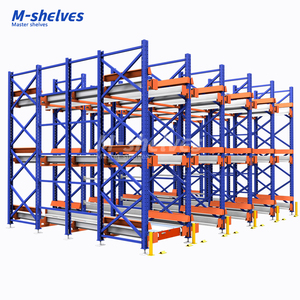
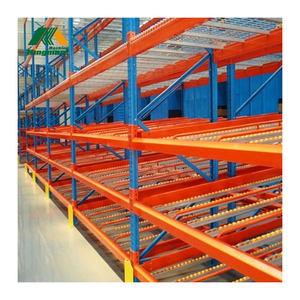
In modern high-throughput logistics, space optimization and inventory velocity represent opposing operational vectors. Traditional selective pallet racking offers 100% individual selectivity but wastes over 60% of warehouse floor footprint on forklift travel aisles. Conversely, block stacking and drive-in systems maximize cubic density at the severe expense of inventory freshness, giving rise to bottlenecking, product damage, and strict Last-In-First-Out (LIFO) limitations. Gravity feed pallet racking systems (commonly designated as Pallet Flow or Live Storage Racking) resolve this mechanical compromise by transforming static cubic volume into an automated, self-propelling First-In-First-Out (FIFO) material buffer.
1. Kinematic Mechanics and Incline Angle Optimization
The foundational principle of gravity feed pallet racking is the conversion of gravitational potential energy into controlled linear kinetic velocity along an inclined roller bed. Factory engineering calculations dictate an incline slope between 3.0% and 4.0% (nominally 3.5 degrees or approximately 35–40 mm of vertical drop per linear meter of lane depth). If the gradient drops below 2.8%, static friction of standard wooden or plastic pallet runners can cause stalling, particularly under ambient temperature variations. Conversely, a slope exceeding 4.5% induces excessive acceleration, placing unsustainable impact strain on discharge end stops.
To safeguard structural integrity and pallet stability, our engineering department integrates heavy-duty cold-formed wheel beds and zinc-plated roller assemblies calibrated to specific pallet bottom architectures:
Full-Width Steel Rollers
Manufactured from precision carbon steel tubes with welded sprockets or sealed bearings, providing up to 350 kg load rating per roller for uneven wooden skids.
Centrifugal Speed Controllers
Internal planetary gearing activates centrifugal brake shoes when roller angular velocity exceeds threshold, capping descent velocity at a safe 0.20 to 0.30 m/s.
Pallet Separator Safety Stop
Patented mechanical release latch isolates the lead pallet at the unloading face from the cumulative hydrostatic push-back pressure of trailing pallets in lane.
Self-Centering Entry Guides
Structural bell-mouth guides at the charging aisle correct forklift pallet misalignments up to ±45mm, protecting upright columns from lateral impacts.
2. Comparative Storage Density and Throughput Matrix
When calculating capital investment against operational floor space efficiency, warehouse architects must evaluate floor utilization ratios, forklift travel cycles, and potential labor savings. Below is a structured engineering comparison highlighting where gravity feed technology delivers decisive advantages over competitive configurations:
| Racking Architecture | Storage Density | Access Methodology | Aisle Requirement | Damage Risk Profile | Best Fit Operational Use Case |
|---|---|---|---|---|---|
| Gravity Pallet Flow | Ultra High (85%) | Strict FIFO | 2 Aisles (Charge & Pick) | Very Low (Separated) | Perishables, F&B, Pharmaceuticals, Fast FMCG |
| Selective Pallet Racking | Low (40%) | 100% Individual | Aisle per Rack Line | Medium (Aisle Collision) | High SKU Count, Low Unit Volume, Retail Fulfillment |
| Drive-In / Drive-Thru | High (75%) | Strict LIFO (FIFO rare) | Loading Lane Aisles | High (Internal Truck Entry) | Bulk Seasonal Commodities, Single SKU Batches |
| Radio Shuttle System | Maximum (88%) | FIFO or LIFO | 1 or 2 Aisles | Low (Autonomous Cart) | Cold Storage, Deep Lane Storage >30m, Low SKU |
| Push-Back Racking | Medium-High (70%) | Strict LIFO | 1 Dedicated Front Aisle | Low-Medium | 2–5 Pallet Deep Buffers, Medium Expiry Products |
3. Strategic Procurement & Industry Trends (2025–2030)
Global supply chains are undergoing structural decentralization. Sourcing directors seeking wholesale pallet flow solutions from Chinese manufacturing centers must align with three primary industry advancements transforming warehouse automation over the current decade:
A. Autonomous Mobile Robot (AMR) and AGV Interface Standardization
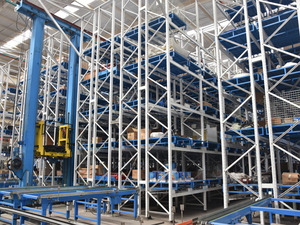
Modern logistics hubs are phasing out manual counterbalanced forklift operations at gravity discharge faces. Next-generation gravity feed beds engineered by our technical division feature pneumatic and photoelectric deceleration dampers. These components slow down descending pallets to a zero-shock halt at specific dimensional datum points, allowing unmanned AGV counterbalanced stackers and autonomous reach trucks to dock and extract pallets without mechanical variance errors.
B. Extreme Temperature Dynamic Lubrication for Cold-Chain Expansion
With the global boom in biopharmaceuticals, blast-frozen agricultural exports, and chilled dairy distribution, pallet flow systems are required to operate reliably down to -30°C (-22°F) without bearing seizure. Conventional petroleum grease crystallizes at low temperatures, causing roller jamming. Modern wholesale specifications incorporate low-viscosity synthetic fluorinated greases, stainless steel internal circlips, and cryogenic polyurethane brake surfaces that prevent rubber embrittlement under condensation and ice cycling.
C. ESG Metrics, Material Thin-Walling, and HSLA Structural Steels
Carbon footprint accounting requires manufacturers to optimize raw steel consumption without diminishing seismic or load safety factors. By adopting high-strength low-alloy cold-rolled coils (Q355B yield strength steel surpassing standard Q235B), upright profiles and step beams achieve an increased strength-to-weight ratio. This reduction in gross structural steel mass lowers ocean container shipping volume while sustaining compliance with European EN 15512 and American RMI MH16.1 design codes.
Guangzhou HEDA Shelves Co., Ltd.
Established in 2001, Guangzhou HEDA Shelves Co., Ltd. operates an integrated 30,000 square meter intelligent manufacturing facility powered by a dedicated technical workforce of 300+ structural engineers, precision tooling specialists, and robotic fabrication operators. We produce up to 30,000 tons of racking each month for worldwide export.
From structural finite element analysis (FEA) to continuous coil cold-roll forming, automated multi-point punching, and zero-emission electrostatic powder coating, every pallet flow racking component is fabricated end-to-end in our own facilities.
Global Export & Transit Efficiency
Positioned adjacent to major deep-water ports in South China (Guangzhou Nansha / Shenzhen Yantian), we guarantee direct containerized sailings with minimal dwell times:
- Vietnam / Haiphong / Cat Lai: 2–5 days transit
- Philippines / Manila Port: 3–5 days transit
- Singapore & Thailand (Laem Chabang): 5–7 days transit
- Malaysia (Port Klang): 6–8 days transit
- Indonesia (Tanjung Priok): 7–10 days transit
- Direct CIF/FOB Deliveries: Europe, Middle East & Americas
In-House 10-Stage Precision Fabrication Workflow
Prime Steel Slitting
Precision CNC Cutting
Auto Hole Punching
Continuous Roll Forming
Cold Section Bending
Surface Deburring
Robotic Gas Welding
Acid Pickling & Phosphating
Powder Electrostatic Bake
Dynamic Roller Rig QC
4. Gravity Feed Pallet Racking Procurement FAQ
Essential technical parameters and design considerations frequently reviewed by factory supply chain managers, 3PL consultants, and import procurement leads:
What pallet quality is required for reliable gravity flow?
Pallets must possess sound, flat bottom runners with minimum deflection under maximum load (less than L/150). Distorted, broken, or soft-wood pallets cause friction variances that may stall lanes. For poor-quality pallets or varied slip-sheets, we engineer three-track roller systems or provide full-width steel rollers with dynamic guide tracks.
How do speed controller rollers prevent runaway loads?
Centrifugal brake rollers are strategically installed every 1 to 2 pallet depths along the bed (e.g., every 1.5 to 2 meters). An internal planetary gear system spins brake shoes outwards against the drum casing as speed rises, mechanically limiting linear speed to approximately 0.25 meters per second, irrespective of lane depth.
Can your factory adapt designs to seismic active regions?
Yes. In high-risk seismic environments (such as the Philippines, Indonesia, and the Pacific Rim), our structural team runs ANSYS FEA simulation models conforming to local building codes. We upgrade upright column profiles (e.g., 100×70×2.5mm or 120×95×3.0mm), reinforce baseplate anchor embedment depth, and increase horizontal bracing ratios.
How are components protected against tropical humidity?
Prior to coating, steel members undergo multi-stage hot alkaline degreasing, zinc phosphate pre-treatment, and thorough acid pickling to strip mill scale. We then apply heavy-duty electrostatic thermoset powder cured at 200°C. For open terminals, sea yards, or harsh cold rooms, we provide continuous hot-dip galvanizing per ASTM A123.
What is the typical maximum lane depth recommended?
While gravity lanes can technically extend over 20 pallets deep (25–30 meters), standard configurations operate best between 5 and 15 pallets deep. Extremely deep lanes require heavy-duty pallet separators to prevent back-pressure jams at the unloading end and require rigorous pallet quality checks to maintain unassisted tracking.
What data is needed for a customized CAD layout quotation?
To deliver a precision CAD proposal within 24–48 hours, our engineers require your building boundary dimensions, clear ceiling height beneath trusses, floor slab rebar/thickness specifications, exact pallet sizes (W×D×H) including bottom runner style, gross pallet weight, and target SKU rotation volume.
Request an Engineered Layout & Wholesale Factory Catalog
Connect directly with our Guangzhou design engineering team. Receive complimentary 2D AutoCAD floor plans, 3D structural visual models, and load static calculations calibrated to your facility's operational throughput.