Precision Gravity-Fed Storage Racks & Dynamic Flow Modules
Fabricated in accordance with FEM 10.2.02, EN 15512, and RMI safety standards. Explore our high-density gravity flow configurations designed for optimal cube utilization and high-turnover fulfillment.
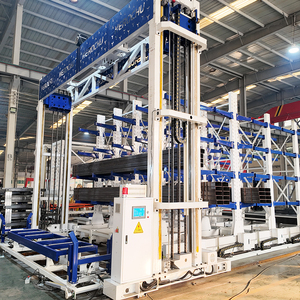
Industrial Fully Automatic Gantry Storage Rack System Profile Steel Equipment
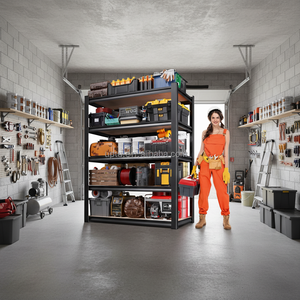
Live Pallet Flow Racking Gravity-Fed Heavy Duty Steel Wire Shelving
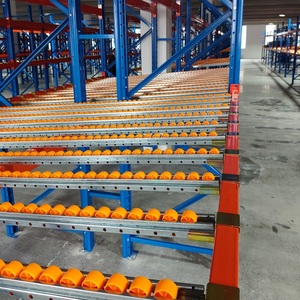
Space Saving Pallet Flow Rack Dynamic Gravity Fed Storage Racking System
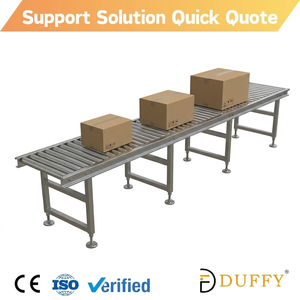
Motorized Roller Conveyor Pallet Storage Racking System Gravity Moving
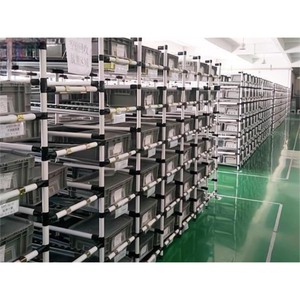
Gravity Fed Steel 5 Layer Adjustable Height Corrosion Protection Flow Racks
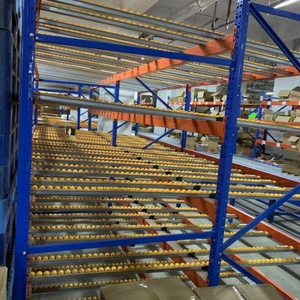
Industrial 5 Layer Heavy Duty Flow Rack Storage Solution for Picking Boxes
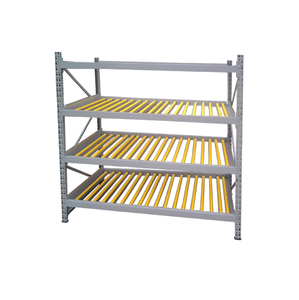
Gravity Fed Steel Mobile 5 Layer Durable Corrosion Protection Flow Rack
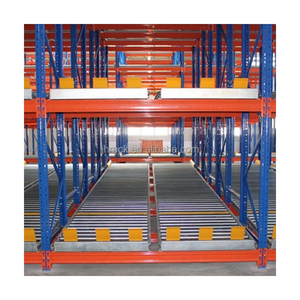
Roller Racking System Pallet Storage Warehouse Gravity Flow Rack
The Mechanics of Gravity Fed Flow Racking: Structural Dynamics & Kinematics
Gravity-fed pallet flow systems (also widely designated as dynamic live storage) represent the apex of passive kinetic warehouse engineering. Unlike static selective pallet racks that necessitate substantial operating aisle footprints, gravity flow systems consolidate cubic volume by eliminating redundant forklift access aisles. Goods are loaded from the higher charge/loading face and slide smoothly along inclined roller beds driven entirely by the force of terrestrial gravitation toward the lower discharge/picking face.
Achieving absolute operational safety and load consistency within gravity systems demands rigorous physics calculations. Variables including pallet bottom construction (skids, perimeter boards, wire mesh), gross weight differentials (ranging from 300 kg to over 1,500 kg per pallet position), and temperature-induced ambient variances directly alter dynamic rolling friction coefficients.
Kinematic Design Formula for Slope Gradient Configuration:
The standard incline angle ($\theta$) is configured typically between 2.5% and 4.0% (1.5° to 2.3°). The dynamic balance is modeled as: F_net = m · g · (sin θ - μ_r · cos θ) - F_brake, where m denotes pallet payload mass, g is gravitational acceleration, μ_r represents the rolling resistance coefficient between the pallet runners and galvanized steel rollers, and F_brake is the resistive counter-force exerted by self-regulating centrifugal speed controllers.
Without precision brake rollers positioned at designated intervals (normally every two pallet depths), heavy pallets would undergo progressive kinetic acceleration, exceeding safe terminal velocities (recommended safe velocity ceiling: 0.25 to 0.30 m/s). As an authoritative China wholesale gravity fed racking manufacturer, our engineering team executes customized roller configuration matrices based on dynamic deflection tests, avoiding pallet derailment, structural frame deflection, or cargo tipping at discharge stops.
Future Procurement Trends for Gravity Racking (2025–2030)
Procurement directors and supply chain leaders are transforming their dynamic warehousing strategies. Below are the key shifts governing wholesale racking acquisitions over the coming decade.
Zero-Carbon Cold Chain Surge
With industrial electricity tariffs climbing globally, cold store operators in Europe, the Americas, and ASEAN are abandoning powered automated racking in sub-zero chambers. Gravity flow runs on zero kWh propulsion, reducing operational energy expenses by up to 35% across multi-deep freezer lanes.
Hybrid Pallet & Carton Live Combinations
Fast-moving retail distribution hubs increasingly procure hybrid structures: heavy pallet gravity lanes at intermediate beam tiers feeding carton flow gravity lanes at lower ergonomic pick levels. This maximizes vertical cube density while expediting individual piece picking.
Standardization to Q355B & Zinc Thermal Coatings
B2B buyers are migrating away from standard untreated carbon steel toward high-yield Q355B cold-rolled profiles treated with multi-stage phosphating or continuous pre-galvanization. This guarantees protection against tropical moisture, condensation, and chemical corrosion.
Technological Developments in Gravity Racking Engineering
How continuous fabrication breakthroughs are revolutionizing gravity-assisted intralogistics systems.
Smart IoT Magnetic Brake Rollers
Traditional mechanical friction brake rollers wear out under continuous 24/7 duty cycles. Next-generation systems incorporate eddy-current magnetic retardation. Non-contact deceleration eliminates friction surface degradation, prolonging operational lifespans past 10 years without maintenance.
Integrated Pneumatic Separators
In ultra-deep gravity channels (10 to 25 pallets deep), back-pressure against the discharge pallet can exceed several tons. Automated pneumatic and mechanical pallet separators isolate the leading pallet from trailing line pressure, enabling safe forklift extraction without product pinching.
Modular AGV & AMR Interface Adapters
Modern gravity tracks feature precision front-end alignment cradles and optical sensor mounts that interface directly with Autonomous Mobile Robots (AMRs) and Automated Guided Vehicles (AGVs). This delivers lights-out warehouse dispatch while retaining gravity’s passive cost efficiency.
Why Global Tier-1 Contractors Source from HEDA Shelves
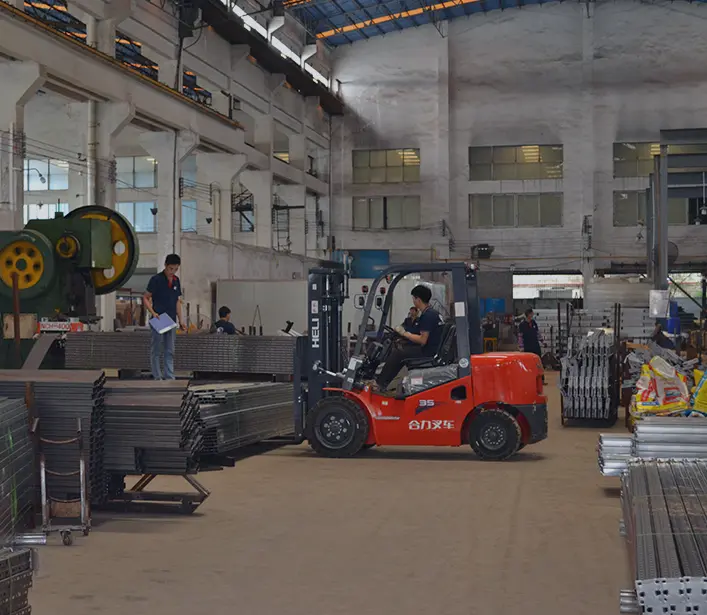
Operating from our 30,000 square meter facility in Guangzhou, China, we combine 20+ years of certified manufacturing rigor with complete OEM/ODM engineering customization.
Founded in 2001, Guangzhou Heda Shelves Co., Ltd. has delivered over 10,000 warehouse storage projects across 120+ nations. When sourcing gravity-fed racking systems, structural integrity and engineering tolerances make the difference between fluid operation and catastrophic pallet jamming.
-
Strict Steel Metallurgy: We form uprights and beams from certified high-tensile Q235B and Q355B cold-rolled steel coil, ensuring certified load capacities under heavy dynamic vibrations.
-
9-Stage Surface Treatment: Fully automated chemical pickling and phosphating lines precede electrostatic polyester powder coating, passing 500-hour ASTM salt spray corrosion tests.
-
Verifiable International Accreditations: Fully compliant with CE Certification (No. 2435-CPR-8605159), ISO 9001:2015 Quality Management (No. 18624Q00169R0M), and RoHS.
-
Rapid Guangzhou Port Dispatch: Proximity to Nansha and Huangpu ports ensures maritime container transit of just 2 to 7 days across ASEAN, and fast sailings to European and American hubs.
Frequently Asked Questions: B2B Gravity Fed Racking Sourcing
Detailed technical answers to help supply chain directors, warehouse architects, and industrial equipment importers evaluate specifications and avoid costly field issues.
Gravity-fed flow racking operates on a pure First-In, First-Out (FIFO) dynamic rotation, separating loading aisles from unloading aisles. This eliminates forklift cross-traffic, accelerating picking throughput by up to 60% compared to Drive-In systems (which run on LIFO). While Push-Back racking provides dense LIFO storage for 2 to 6 pallets deep per lane using nested carts, Gravity Flow supports deep lanes up to 25 pallets deep. This makes gravity racking the premier choice for date-sensitive SKUs, pharmaceutical cold chains, and FMCG staging lanes.
Optimal flow performance requires rigid, uninterrupted bottom surface contact. Standard wooden GMA (48x40 in) or Euro pallets (1200x800 mm) with perimeter base runners or continuous bottom boards travel exceptionally well. Distorted, warped, broken-runner pallets, or single-use stringer pallets with unsupported cross-members may sag and cause line blockages. For plastic pallets or mesh-bottom steel boxes, we configure multi-track roller lanes or full-width steel rollers matched to runner width and spacing.
We integrate mechanical centrifugal speed controllers (brake rollers) every 2 to 3 pallet positions. As a pallet slides forward and turns the brake roller, internal centrifugal flyweights expand against a friction surface, creating proportional resistance that maintains a steady descent speed between 0.2 and 0.3 m/s. At the discharge end, heavy-duty impact safety end-stops and mechanical ramp-stops absorb residual momentum, holding the lead pallet safely in position for forklift picking.
Yes. HEDA Shelves engineers cold-chain gravity systems rated down to -30°C. Cold environments require specialized bearing lubrication, low-temperature synthetic grease, and low-temperature ductile steels to avoid cold embrittlement. All roller shells receive zinc plating or hot-dip galvanization to stop oxidation caused by humidity shifts during air defrost cycles.
Pallet flow lanes are typically set at a 3.0% to 3.5% gradient (approximately 30 to 35 mm drop per meter of lane length). Light payloads (under 400 kg) or rough wooden skids may require a 3.5% to 4.0% pitch to initiate travel, whereas heavy loads (above 1,200 kg) perform reliably at 2.5% to 3.0%. For carton flow tracks utilizing mini-wheel plastic or aluminum tracks, slopes typically range from 2.0% to 5.0%, adjustable via our slotted upright connector brackets.
For seismically active markets (such as the Philippines, Indonesia, New Zealand, or western South America), our structural engineering department designs frames according to FEM 10.2.08 and local building codes. We use high-grade Q355B structural steel, wider base plates, dual heavy-duty expansion chemical anchors, reinforced horizontal/diagonal upright bracing, and heavy-gauge back-to-back row spacers to absorb cyclical ground acceleration forces.
Each shipment includes verified CE Certification under standard EN 15512 (No. 2435-CPR-8605159), ISO 9001:2015 Quality Management certification (No. 18624Q00169R0M), mill test certificates (MTC) proving raw steel tensile and yield strength, powder coating thickness test reports, and millimetric fabrication inspection documentation.
Uprights are nested and bundled with protective corner wrapping, cross-beams are strapped face-to-face on dunnage, and roller tracks are crate-packed in uniform modules to maximize cube utilization in 40ft High Cube (40HQ) containers. A standard 40HQ container typically accommodates between 18 and 23 metric tons of finished racking components, minimizing shipping costs per pallet position.
Standard production cycles range from 15 to 25 working days from final approval of CAD layout drawings and receipt of deposit. Standardized components (such as teardrop or box beam profiles) can ship within 10 to 14 days, whereas bespoke automated live storage designs with custom roller pitches require roughly 20 to 30 days of roll forming, punching, welding, and quality validation.
We supply comprehensive, color-coded CAD installation blueprints, 3D exploded assembly diagrams, detailed step-by-step video manuals, and part identification lists with each container. For large international projects, we offer on-site engineering supervision or real-time remote video walkthroughs to guide local contracting teams.
Plan Your High-Density Gravity Storage System Today
Send us your building dimensions, pallet dimensions, gross weights, and throughput goals. Our engineering team will deliver a customized CAD layout, 3D visualization, and detailed cost proposal within 24 hours.
Inquire Now