Engineered Warehouse Racking & High-Throughput Live Systems
Discover our precision-rolled, heavy-duty industrial racking configurations. Custom-engineered for fast rotation, dynamic pallet conveyance, high-density bulk storage, and high-SKU distribution.
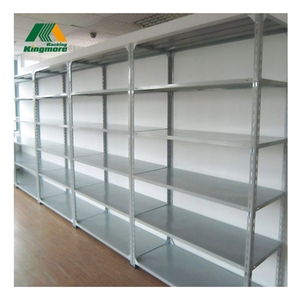
Custom Boltless Shelving Light Duty Long Span Rack
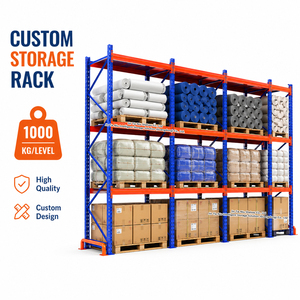
1000KG Heavy Duty Adjustable Pallet Racking System
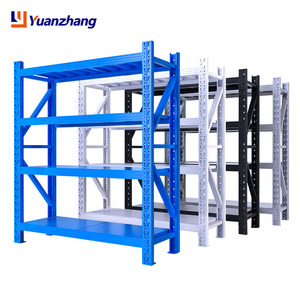
Industrial Spare Auto Parts Longspan Heavy Duty Shelves
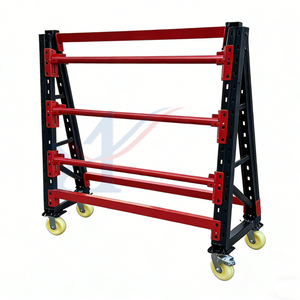
3-Layer Adjustable Metallic Roller Rack with Wheels
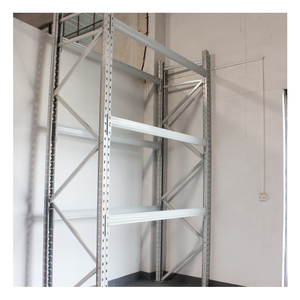
Heavy Duty Boltless Adjustable Steel Storage Rack
Adjustable Steel Structural Warehouse Mezzanine Platform
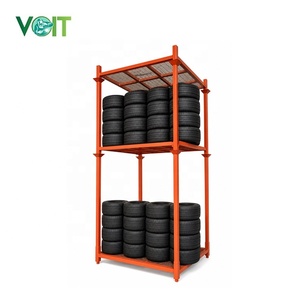
Stackable 4-High Fully Loaded Steel Stacking Rack
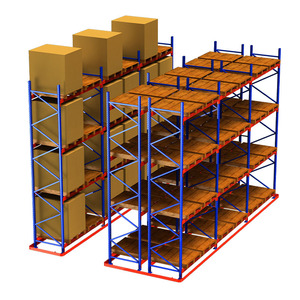
High-Bay Cold-Rolled VNA Narrow Aisle Warehouse Shelving
1. Engineering Foundations: Mechanical Physics & Kinematics of FIFO Storage
A First-In, First-Out (FIFO) racking system—predominantly deployed as Pallet Live Storage or Gravity Flow Racking—is a high-density, dynamic storage structure that leverages gravitational potential energy to transport unit loads along inclined roller tracks. Unlike static selective pallet racking where forklifts must traverse internal aisles, FIFO flow systems decouple replenishment aisles from retrieval aisles. This spatial and operational segregation establishes a strict chronological inventory velocity essential for date-sensitive consumer goods, perishable agriculture, cold-chain operations, and high-turnover pharmaceutical logistics.
From an engineering perspective, the system's operational viability hinges on managing the dynamic coefficient of rolling friction ($\mu_r$) and counteracting runaway velocity through integrated brake rollers. When a unit load (typically a GMA, Euro, or industrial skid weighing between 500 kg and 1,500 kg) is deposited at the charging face, it descends along an incline engineered between 3.0% and 4.0% (approximately 1.7° to 2.3°). An insufficient gradient induces pallet stalling, necessitating manual operator intervention; an excessive gradient results in dangerous impact forces at the discharge face, risking structural fatigue and load deflection.
Kinetic Energy Dissipation via Centrifugal & Magnetic Braking
HEDA Shelves incorporates precision-machined centrifugal speed controllers spaced at one-pallet-interval pitches along the roller tracks. As pallet speed exceeds 0.25 m/s, centrifugal internal shoes expand against the brake drum interior, maintaining a terminal velocity between 0.15 m/s and 0.30 m/s. For automated guided vehicle (AGV) integration and sub-zero cold room environments down to -30°C, contactless eddy-current magnetic controllers are deployed to eliminate mechanical wear and prevent friction-induced icing.
At the discharge face, significant hydraulic line-pressure is generated when multiple downstream pallets accumulate behind the primary extraction position. To guarantee operational safety during forklift extraction, HEDA integrates structural Load Separation Stops (Pallet Separators). This mechanical trip mechanism physically disengages the second pallet from the leading unit load by 150 mm to 300 mm, relieving rear-accumulated hydraulic pressure. The forklift operator safely extracts the primary pallet without drag resistance, preventing catastrophic stack collapses.
| System Architecture | Inventory Logic | Space Utilization | Throughput Rate | Capex per Pallet | Optimal Industry Alignment |
|---|---|---|---|---|---|
| Gravity FIFO Pallet Flow | Strict FIFO | Very High (85-90%) | High (Dedicated Aisles) | Moderate to High | FMCG, Cold Storage, Dairy, Pharma |
| Radio Shuttle Cart | FIFO or LIFO | Maximum (90-95%) | Moderate (Shuttle Battery Bound) | High (Automation Units) | Bulk Raw Materials, Meat Exporters |
| Drive-In Racking | Strict LIFO | High (75-80%) | Low (Forklift Drive-Through) | Lowest Capex | Homogeneous Seasonal Storage |
| Very Narrow Aisle (VNA) | 100% Selective | Moderate (60-70%) | High (Requires Turret Truck) | Moderate | Automotive Parts, Machinery SKUs |
Future Procurement Trends in Global FIFO Warehousing
Procurement directors and supply chain engineers are navigating systemic transformations driven by dark-warehouse automation, high ambient energy costs, and stringent international ESG carbon metrics.
1. AMR & AGV Optical Alignment
Modern B2B buyers no longer procure FIFO racks strictly for manual counterbalanced forklifts. High-throughput facilities demand charging and discharging faces with chamfered lead-ins, sub-millimeter level-sensing targets, and reinforced pallet docks tailored for Autonomous Mobile Robots (AMRs) operating without human intervention.
2. Cold-Chain Thermal Efficiency
With refrigerated logistics space costing 3.5× more to chill than ambient air, warehouses across Southeast Asia, North America, and Europe are transitioning from wide-aisle configurations to high-density gravity flow. Specifying non-crystallizing lubricants inside sealed roller bearings ensures smooth motion at temperatures as low as -35°C.
3. Low-Carbon Steel & EPD Auditing
Multinational 3PLs and Fortune 500 corporations mandate Environmental Product Declarations (EPDs). Sourcing from manufacturers utilizing EAF (Electric Arc Furnace) refined high-tensile Q355B cold-rolled coils reduces embodied carbon footprint by up to 28% compared to traditional blast-furnace processing.
4. Modular FIFO-to-Shuttle Convertibility
Dynamic market demands require adaptable supply chain infrastructure. Engineering beam hole profiles with standardized 50mm/75mm euro-pitches permits facilities to swap gravity roller beds for automated radio shuttle rails within the same structural upright bays, protecting long-term capital investments.
5. In-Transit Micro-Sensors & Telemetry
The rise of digital twins in material handling introduces non-powered optical and piezoelectric micro-sensors along gravity roller tracks. Integrated track sensors provide real-time telemetry to the warehouse management system (WMS), alerting control towers to pallet hang-ups, slot vacancies, and picking speeds.
6. Stringent Seismic Zone Compliance
With seismic activity elevated across the Pacific Rim (Indonesia, Philippines, Japan, West Coast USA), static load verification alone is insufficient. Procurement specifications require certified response spectrum analysis (RSA) calculating base-plate ductility, floor slab anchoring embedment depths, and horizontal rack sway limits.
2. Technological Evolution: Metallurgy, Surface Tribology, & Braking Innovations
Historically, early FIFO roller racks suffered from inconsistent speed regulation, premature bearing seizure in humid or dusty processing plants, and severe roller flat-spotting under continuous load resting. Over the past five years, substantial advancements in continuous cold-roll forming, automated robotic welding, and specialized surface tribology have fundamentally enhanced FIFO reliability.
Continuous Profiling & Cold-Rolled Structural Sections
Modern FIFO uprights utilize high-yield structural steel (minimum yield strength $f_y = 355\text{ MPa}$ for heavy installations) formed through computer-controlled 24-station rolling lines. Automated CNC punching ensures precision slot concentricity down to $\pm 0.1\text{ mm}$, eliminating axial torsion when uprights are erected up to 15 meters in height. Structural Omega and Box beams are double-seam continuously welded using robotic MAG systems to maintain exceptional torsional rigidity against dynamic gravity thrust vectors.
Surface Tribology: 8-Stage Pre-Treatment & High-Durability Coatings
In humid tropical environments (such as ASEAN sea freight corridors and maritime processing hubs), unconditioned steel deteriorates rapidly. Guangzhou Heda Shelves employs a rigorous automated chemical pre-treatment regimen:

Certified Steel Coil

CNC Laser Slitting

Column Punching

Cold Bending

24-Roll Profiling

Rotary Polishing

Robotic MAG Welding

Pickling & Phosphating

Thermoset Coating

QC & Bundling
By immersing fabricated steel elements in multi-stage acid pickling and nano-ceramic/zinc-phosphate baths prior to electrostatic thermoset epoxy-polyester powder application, the cured polymer coating achieves a film thickness of 60 to 90 microns. This ensures exceptional cross-hatch adhesion (DIN EN ISO 2409 Class 0) and exceeds 500 hours of neutral salt spray testing (ASTM B117), safeguarding the installation against premature peeling, oxidation, and chemical washdown corrosion.
3. Enterprise Advantage: Guangzhou Heda Shelves Co., Ltd.
Founded in 2001 and headquartered in the primary industrial core of Guangzhou, Guangzhou Heda Shelves Co., Ltd. has grown to become an international market leader in intralogistics storage system manufacturing. Our state-of-the-art production complex covers over 30,000 square meters, staffed by more than 300 specialized engineers, technicians, and production specialists. Operating multiple fully automated rolling lines, our monthly fabrication capacity exceeds 30,000 metric tons of structural and cold-rolled warehouse racking.
International Standards & Verified Certifications
Global warehouse projects demand verifiable compliance with structural safety, seismic resistance, and material traceability standards. HEDA Shelves holds third-party audited credentials confirming alignment with European, American, and international engineering codes:
CE Certification
Certificate No.: 2435-CPR-8605159
Validates structural steel execution and structural component compliance (EN 1090 / EN 15512).
ISO 9001:2015 Management
Certificate No.: 18624Q00169R0M
Certified quality management governing fabrication, dimensional tolerance, and testing.
RoHS Chemical Compliance
Verification Passed
Strict avoidance of heavy metals and hazardous elements in powder coatings and finishes.
Direct South China Supply Chain & Maritime Corridors
Situated within direct proximity to the deep-water container ports of Guangzhou (Nansha), Shenzhen (Yantian/Shekou), and Hong Kong, HEDA Shelves provides unmatched freight economics and rapid ocean transit times for global B2B procurement networks, with prioritized direct maritime lines into Southeast Asia, Australasia, the Middle East, Europe, and the Americas.
Indicative Direct Ocean Freight Transit Durations (from Guangzhou/Nansha Port)
FIFO Racking Procurement: Frequently Asked Questions
Direct engineering answers addressing critical design choices, structural tolerances, pallet characteristics, and regulatory compliance considerations.
Gravity flow systems rely on uniform physical contact between the pallet runners and the roller bed. Wooden pallets must have sound bottom runner boards aligned parallel to the flow direction without missing boards, broken bottom skids, or protruding fasteners. For GMA pallets (48" × 40") or Euro skids (1200 × 800 mm), runner deflection must not exceed 1/200th of the span under load. If plastic, metal, or non-standard slatted skids are deployed, roller centers and split-roller triple-track configurations must be engineered to prevent pallet sagging and stalling between rollers.
For seismic-sensitive geographies, structural calculations conform to European Standard EN 16681, RMI MH16.1, or local building regulations. Static and dynamic finite element calculations evaluate dead loads, live inventory loads, and horizontal seismic acceleration ground factors ($S_s, S_1$). Upright baseplates are engineered with thicker gauge steel (up to 12mm–16mm), expanded anchor-bolt embedment centers, heavy tubular cross-aisle portal bracing, and seismic spine towers to safely resist dynamic shear forces and avoid plastic deformation during seismic excitation.
Standard ambient FIFO lanes operate efficiently at a 3.5% incline (35mm drop per 1,000mm run). However, in cold storage facilities operating between -20°C and -30°C, atmospheric condensation during door cycles introduces surface micro-frost onto pallet runners and galvanized rollers, reducing the friction coefficient. HEDA's cold-chain design increases the gradient to 3.8% – 4.0%, specifies high-density polyurethaned brake drums, and incorporates low-temperature synthetic grease to ensure smooth, unassisted startup after extended dwell times.
In deep FIFO storage lanes (ranging from 5 to 25 pallets deep), momentum accumulation can cause runaway pallet acceleration. Centrifugal brake rollers are installed at predetermined intervals (typically every 1 to 1.5 pallet positions). As a pallet glides over the brake roller, its downward motion drives an internal geared planetary transmission that spins centrifugal brake shoes. At speeds exceeding 0.25 m/s, the centrifugal shoes engage the housing wall, applying proportional braking resistance that restricts pallet descent velocity to a safe speed between 0.15 m/s and 0.30 m/s throughout the entire lane length.
Because FIFO systems concentrate high tonnage across dense footprints, industrial concrete floor slabs must accommodate significant point loads, frequently ranging from 40 kN to over 120 kN per upright baseplate. Slab thickness typically requires 200mm to 250mm of reinforced concrete with a minimum compressive strength of C25/30 or 4,000 PSI. Floor flatness must adhere to DIN 18202 Table 3 Group 3 or ASTM E1155 $F_F \ge 35 / F_L \ge 25$ to ensure that vertical columns remain plumb without shimming exceeding manufacturer limits.
When multiple pallets queue behind the discharge position, the cumulative downhill gravitational force transfers line-pressure onto the lead pallet. If extracted without separation, the rear pallets push forward simultaneously, pinching the forklift forks or pushing the load unpredictably. A mechanical Load Separator disengages the second pallet by latching an articulated mechanical stop. When the operator lifts the first pallet from the pick face, a spring-loaded foot pedal releases, allowing the next pallet to safely roll into the discharge pocket at controlled speed.
Racking components are engineered for sea container optimization. Upright frames are typically shipped pre-assembled or knocked-down (bolted on site) to maximize cubic utilization. In a 40-foot High Cube (40HQ) container, HEDA packs uprights, box beams, and pre-assembled roller tracks using specialized timber dunnage, protective corner angles, and custom steel strapping bands. This approach yields 22 to 25 metric tons per container, minimizing the ocean freight cost per pallet position.
Connect Directly with HEDA Engineering Specialists
Send us your warehouse CAD drawings, clear height dimensions, pallet specifications, and throughput targets. Our engineering department delivers verified structural calculations, 3D workflow renderings, and factory-direct wholesale pricing proposals within 24 hours.