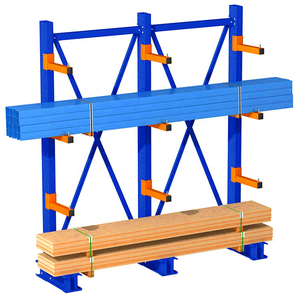
Procurement Engineering Guide
High-Yield Pipe Storage Architecture & Industrial Cantilever Design
Storing long, unyielding, and heavy materials like API casing, schedule steel tubes, PVC conduit, and extruded copper profiles presents acute mechanical and logistical hazards. Traditional selective pallet racking lacks continuous longitudinal accessibility, forcing facility operators into dangerous floor stacking or severe floor underutilization. As a premier Chinese manufacturing exporter with over 20 years of structural fabrication experience, we provide high-tensile cantilever racking engineered to eliminate fork interference, resist lateral impact deflection, and unlock vertical cubic storage density up to 100%.
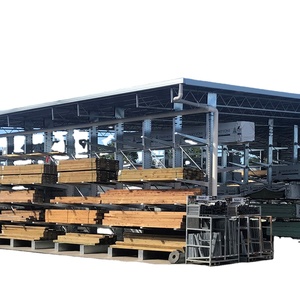
Jracking Industrial Heavy Duty Hot Dip Galvanized Outdoor Rack
Inquire Now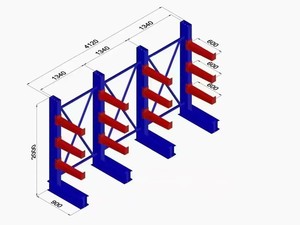
Heavy-Duty Cantilever Racks for Steel Pipes, Hardware and Metal Plates
Inquire Now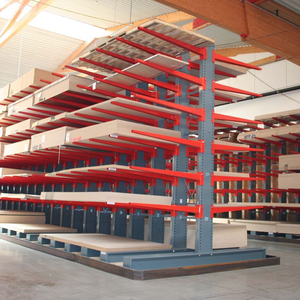
Heavy Duty Cantilever Racking High-Grade Steel Upright Structural System
Inquire Now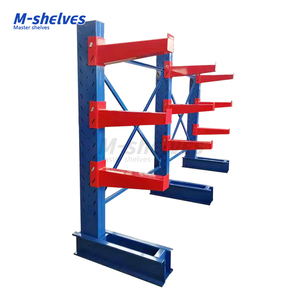
Heavy Duty Cantilever Racks Storage System for Long Pipes and Bundles
Inquire Now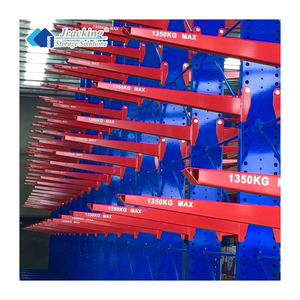
Industrial Warehouse Pipe Storage Cantilever Heavy Distribution Rack
Inquire Now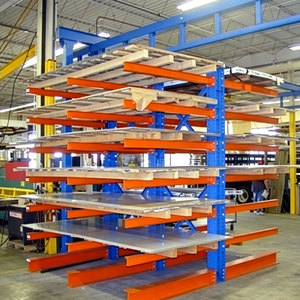
Multi-Layer Space-Saving Cantilever System for Precision Tubes
Inquire Now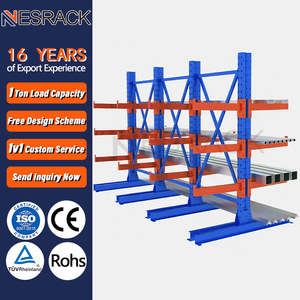
Heavy Duty Adjustable Structural Cantilever Racking System
Inquire Now
Engineering Specifications
Cantilever Pipe Racking Engineering Load Matrices
Technical compliance values calculated according to ANSI MH16.1, FEM 10.2.02, and EN 15620 structural steel logistics protocols.
| Component Segment | Standard Roll-Formed Profiles | Heavy Structural Hot-Rolled (H-Section) | Safety Redundancy Factor |
|---|---|---|---|
| Upright Height Reach | 2,000 mm – 6,000 mm | 3,000 mm – 12,000+ mm | 1.5 to 1.85 static yield |
| Arm Length Configuration | 500 mm – 1,200 mm | 600 mm – 2,500 mm | L/250 max deflection limit |
| Point Load / Uniform Arm Cap | 300 kg – 800 kg per arm | 1,000 kg – 3,500+ kg per arm | ANSI / RMI Tested |
| Pipe Retention Accessories | Removable end-stops, slip-fit pins | Weld-reinforced heavy-duty mechanical pipe chocks | Impact dynamic rating |
| Surface Protection Finishes | Pickled & Phosphated Powder Coated (60-80μm) | Hot-Dip Galvanized (ISO 1461, ≥85μm) | 1,000 hrs salt-spray verified |
Strategic Procurement Shifts
Emerging Trends Shaping Pipe & Tube Storage Logistics
Forward-thinking supply chain directors and structural logistics managers are actively moving away from legacy storage models. Here are the core industry shifts defining procurement through 2026 and beyond.
1. Integration with AS/RS & Automatic Crane Systems
Traditional manually maneuvered side-loader forklifts are being superseded by Automated Storage and Retrieval Systems (AS/RS) paired with specialized telescoping fork arms. Cantilever systems now demand millimeter-tolerance arm leveling and robotic sensor integration to support automated picking of raw steel pipes, oilfield OCTG casing, and extruded plastics without human touchpoints.
2. Climatic & High-Salinity Surface Optimization
Global supply chains frequently position primary tubular staging centers in coastal yards, offshore transshipment ports, or tropical production environments across Southeast Asia, the Middle East, and Latin America. The industry has largely discontinued superficial one-coat spray paints in favor of industrial pre-treatment pickling, phosphating, and severe hot-dip galvanizing to resist tropical humidity and sea mist.
3. Rigorous Dynamic Seismic Engineering
Seismic compliance is no longer an afterthought. Major infrastructure tenders in active seismic zones (such as Indonesia, the Philippines, Japan, and the American West Coast) mandate cantilever calculations accounting for lateral slosh, harmonic resonance of long steel tubes, and dynamic arm flexure. High-elasticity Q355 structural steels combined with reinforced column-to-base moment plates are now universal standards.
25+
Years of Industry Excellence30,000m²
Integrated Facility Footprint30,000t
Monthly Output Potential120+
Global Export Destination Ports
Procurement Knowledge Base
Frequently Asked Questions on Cantilever Pipe Storage Racks
Essential technical, commercial, and engineering clarifications for enterprise buyers, inventory engineers, and import logistics specialists.
How do I calculate the correct cantilever arm length and upright spacing for flexible pipes?
The spacing between upright columns must prevent material deflection (sagging). For rigid carbon steel pipe, upright centers of 1,500 mm to 2,000 mm are typical. However, for flexible high-density polyethylene (HDPE), PVC, or thin-walled copper, support intervals must shrink to 1,000 mm – 1,200 mm or utilize continuous cantilever steel decking / saddle cradles. The arm length should precisely match or slightly exceed the pipe bundle bundle diameter without allowing forward overhang beyond safe fork aisle clearances.
When should we select roll-formed cantilever arms versus heavy structural I-beam arms?
Roll-formed cantilever systems are ideal for light-to-medium pipe applications (under 800 kg per arm level) where inventory profiles vary moderately and cost optimization is critical. Structural hot-rolled I-beam systems (Q355 structural steel) are engineered for severe industrial conditions: offshore casing, heavy cast iron, solid alloy rounds, and unbundled tubing reaching up to 3,500 kg per arm. Structural profiles offer significantly greater impact resistance against lateral forklift collisions.
How do you prevent rolling tubular inventory from falling off cantilever arms?
Every specialized pipe cantilever rack from our factory is engineered with end-arm retention mechanics. We fabricate mechanical drop-in stop pins, permanent heavy-duty welded vertical end chocks (ranging from 100mm to 300mm in height), or continuous inclined arms angled upwards at 2° to 4° toward the column spine. Pipe retention saddles can also be bolted directly across arm pairs to stabilize round goods without restricting overhead crane or side-loader access.
What export shipping standards are utilized to prevent shipping damage during sea transit?
Cantilever columns and bases represent awkward, concentrated steel weights. We bundle components using high-tensile steel strapping, corner edge protectors, industrial water-resistant film wrapping, and dedicated dunnage channels that allow direct container de-stuffing via counterbalance forklift. Heavy components are systematically palletized or placed on custom timber skids to guarantee seamless container entry, weight balancing, and complete elimination of transit abrasion.
Can your engineering department provide dynamic layout designs and structural calculations?
Yes. Guangzhou Heda Shelves provides zero-cost project layout consultations. Our structural design team uses AutoCAD, SolidWorks, and advanced finite element analysis (FEA) to draft comprehensive 2D floor plans, 3D spatial renders, and authenticated static/dynamic structural calculations customized to your facility dimensions, concrete slab load capacities, and forklift working envelopes.
Get Engineering Layout Within 24 Hours
Ready to Optimize Your Tube & Pipe Warehouse Capacity?
Send your pipe bundle weights, stock lengths, and facility clear heights to our structural engineering team. Receive factory-direct wholesale pricing, CAD layouts, and complete container optimization plans without commitment.
Inquire Now