Automated
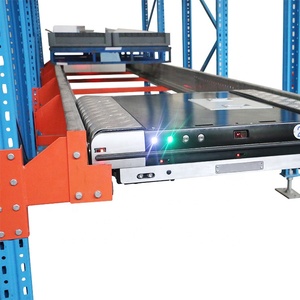
Automated FIFO/FILO Pallet Radio Shuttle System
Deep Lane Storage
Cold-Store Rated
1,500kg/Pallet
Manufactured using certified high-tensile Q235B & Q355B cold-rolled coiled steel with custom anti-corrosive powder finishes and precision seismic bolt configurations.
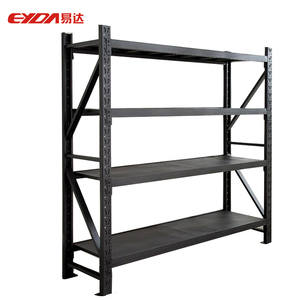
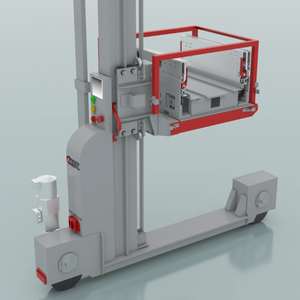
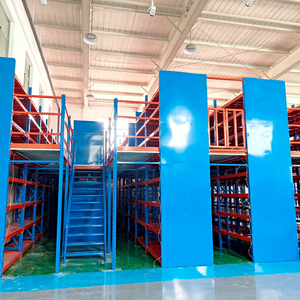
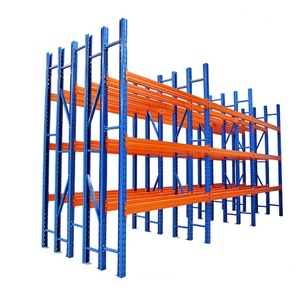
As international supply networks evolve toward unprecedented throughput volumes and rapid order turnaround, warehouse infrastructure faces extreme mechanical demands. In modern distribution facilities, logistics centers, and cold-chain hubs, bolted pallet racking represents the primary structural backbone supporting heavy unit loads under static and dynamic stress. Sourcing direct from tier-one Chinese manufacturing plants has shifted from a pure cost-arbitrage strategy into an engineering-driven engagement prioritizing dimensional tolerance, certified steel metallurgy, seismic resilience, and multi-tier life-cycle economics.
The core structural integrity of industrial bolted racking relies heavily on continuous cold roll-forming profiles rather than conventional hot-rolled structural shapes. Our manufacturing protocols utilize certified grade Q235B and Q355B low-carbon micro-alloyed structural steel, exhibiting yield strengths ranging from 235 MPa up to 355 MPa, with minimum tensile breaking points of 470–510 MPa. Through precision cold-forming roll lines, the steel coil profile undergoes progressive deformation across multi-stage forming stations, introducing work-hardening effects along profile bend radiuses that elevate torsional stiffness.
Unlike outdated welded upright trusses that suffer from localized thermal heat-affected zones (HAZ) and brittle weld margins, high-strength bolted upright frames leverage engineered diagonal and horizontal bracing connected via grade 8.8 structural fasteners. This design achieves controlled ductile energy absorption under forklift impact loads or seismic floor accelerations, preventing catastrophic cascading progressive collapses across adjacent warehouse bays.
| Structural Parameter | Standard Welded Racks | Engineered Bolted Racking Systems | HEDA Heavy-Duty Export Standard |
|---|---|---|---|
| Steel Alloy Grade | Commercial Grade Q195 / Q215 | Structural Q235B / EN10025 S235JR | High-Tensile Q355B / EN10025 S355JR |
| Seismic Dissipation | Rigid, high weld-fracture risk | Semi-rigid calibrated torque damping | Finite Element Dynamic Load Tested (FEM 10.2.02) |
| Container Cubic Efficiency | Low (~65% volume wasted by welded truss) | High (~92% dense nested flat-pack loading) | Optimized 40HQ bundle nesting saving 40% ocean freight |
| Field Damage Repair | Requires structural hot cutting & onsite welding | Modular unbolting and upright replacement | Quick-swap interchangeable modular members |
Procurement directors and third-party logistics (3PL) infrastructure heads are fundamentally changing how warehousing hardware is specified and purchased. Five macro trends dictate the next decade of supply-chain investments:
1. Direct Factory Engineering Partnerships replacing Local Middlemen: Global asset owners are circumventing intermediary distributors to collaborate straight with factory engineering teams in Guangzhou. Direct communication allows 3D parametric BIM models and AutoCAD elevation drawings to be iterated within 24 hours, ensuring beam connector configurations, seismic baseplates, and floor anchor embedment depths integrate seamlessly with municipal building permits.
2. Climate-Adaptive Surface Treatments for Tropical and Marine Environments: Cross-border trade expanding rapidly through ASEAN markets (such as Vietnam, Thailand, Malaysia, Indonesia, and the Philippines) has exposed traditional painted steel to rapid moisture and salinity corrosion. Progressive manufacturers implement a strict 10-step surface preparation regimen: chemical immersion degreasing, acid pickling to eradicate surface mill scale, zinc phosphate conversion coating, followed by automated electrostatic micro-porous powder coating baked at 180°C–200°C. For sub-zero cold stores or open-air loading docks, continuous hot-dip galvanization (HDG) conforming to ISO 1461 guarantees over 25 years of corrosion resistance.
3. Synergy Between Static Bolted Infrastructure and Mobile Automation (AMR & ASRS): Pure static storage is rapidly declining. Warehouses increasingly procure structural bolted racking engineered with tight deflection tolerances (1/200 to 1/300 deflection ratios) to interface with Autonomous Mobile Robots (AMRs), automated pallet shuttles, and automated guided vehicles (AGVs). Rack-supported mezzanines and deep-lane shuttle racks demand frame levelness and beam parallelism under sub-millimeter tolerances.
The future of storage racking centers on structural intelligence. State-of-the-art cold-formed upright profiles are now engineered to incorporate embedded strain-gauge sensors and RFID microchips along critical impact zones (such as aisle corners and loading entry channels). These telemetry modules detect mechanical deflections, localized beam dislodgements, and forklift collision forces exceeding acceptable safety thresholds, relaying alerts instantly to central warehouse management software (WMS).
Furthermore, computerized roll-forming technology allows variable-thickness punched profiles. By thickening the lower 1.5 meters of cold-formed uprights while tapering the upper tiers, material usage is optimized by 14%, reducing overall deadweight without compromising total racking load capacity under full structural payload.
Direct compliance with international testing and certification standards ensures total site reliability.
Fabricated strictly adhering to CE Certificate No. 2435-CPR-8605159 and ISO 9001:2015 No. 18624Q00169R0M quality guidelines, ensuring complete audit readiness.
Custom baseplate gussets and heavy floor chemical anchor systems engineered to meet site-specific Richter earthquake spectrums across Pacific Rim fault lines.
Compact bolted flat-pack nested framing bundles maximize 40-foot high-cube shipping containers, slashing international ocean freight costs per pallet location by 35–45%.
Every industrial inquiry includes structural dead/live load calculations, clear height optimization, and complimentary 3D/CAD layout blueprints returned within 24 hours.
Combining vertically integrated raw steel processing with two decades of cross-border warehouse engineering execution.
Operating a modernized 30,000 m² heavy-industrial manufacturing facility staffed by 300+ technical fabricators. Equipped with 12 automated cold-rolling lines, precision CNC punching presses, and robotic welding stations yielding over 30,000 tons of structural steel storage output per month.
Zero outsourcing of critical load components. From raw coil slit testing to column cold-bending, beam connector stamping, 10-step ultrasonic pickling and phosphating, to continuous powder curing, our in-house lab inspects every production batch against ISO 9001 and CE execution mandates.
Headquartered in Guangzhou adjacent to major Nansha and Shenzhen deep-water container ports. We offer rapid direct liner shipping across ASEAN, the Middle East, Europe, and the Americas, with sea transit reaching key Southeast Asian ports in as little as 2 to 7 days under FOB or CIF terms.
Essential structural, logistics, and technical answers addressing common procurement hurdles.
Bolted pallet racks use precision-punched cold-rolled uprights joined by heavy-duty horizontal and diagonal bracing secured with grade 8.8 structural locking fasteners. This semi-rigid bolted joint dissipates dynamic shock and seismic ground acceleration far more effectively than rigid welds, which are prone to stress fractures. Furthermore, bolted systems pack completely flat, drastically lowering container ocean freight costs, and allow damaged braces to be replaced individually without hot-cutting or structural re-welding.
Our technical division uses specialized FEM (European Federation of Materials Handling) structural calculation software. Based on your site-specific slab thickness, concrete compressive strength, forklift mast dynamics, and regional seismic spectral acceleration (such as IBC or Eurocode 8 parameters), we calibrate upright gauge thickness (1.5mm to 3.0mm), box-beam depths, oversized footplate dimensions, and chemical wedge anchor specifications to guarantee rated safety margins.
All carbon steel profiles pass through a comprehensive automated 10-step surface treatment system. This incorporates chemical alkaline immersion degreasing, hot acid pickling to eliminate mill scale, and zinc-phosphate bath pre-treatment to create a dense crystalline adhesive base. Components are coated with electrostatic thermo-hardening epoxy-polyester powder (60–80 microns) and cured at 190°C. For sub-zero freezers and coastal ports, full hot-dip galvanization is available.
To produce a compliant CAD layout, 3D render, and structural bill of materials, please provide: warehouse architectural floor plans showing internal clear height, building column matrices, and exit doorways; pallet dimensions (Width x Depth x Height including cargo overhang); gross pallet weight (average and maximum); forklift model, mast collapsed height, and turning radius; and target SKU count and throughput velocity.
Typical production lead time for standard containerized bolted racking orders (1 to 5 forty-foot high-cube containers) is 15 to 22 business days. Ocean transit from Guangzhou/Nansha/Shenzhen ports averages 2–5 days to Vietnam and the Philippines, 5–8 days to Singapore, Malaysia, and Thailand, and 7–10 days to Indonesia. European, Middle Eastern, and American transit times range from 18 to 35 days depending on destination routing.
Yes. Every export container includes color-coded, numbered component packing manifests, millimeter-accurate 2D assembly blueprints, and exploded 3D CAD anchor schematics with specified bolt-torque values. For major distribution centers, turnkey mezzanines, and automated shuttle systems, we dispatch bilingual mechanical installation engineers for on-site crew supervision, alignment verification, and final safety handover sign-off.
Send our senior logistics structural engineers your facility architectural drawings. We provide comprehensive AutoCAD space optimization layouts, finite element load calculations, and competitive direct factory pricing within 24 hours.