Flagship Heavy-Duty Industrial Racking & Shelving Modules
Precision roll-formed, hot-dip galvanized or electrostatic powder-coated structural steel solutions engineered to maximize cubic storage density, dynamic forklift access, and load safety.
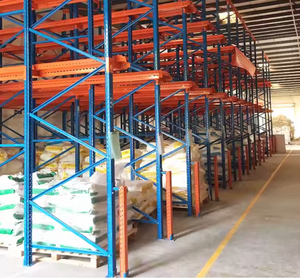
High Quality Adjustable Drive-Through Pallet Rack Industrial Warehouse Drive-In Racking System Folding Metal Storage Rack
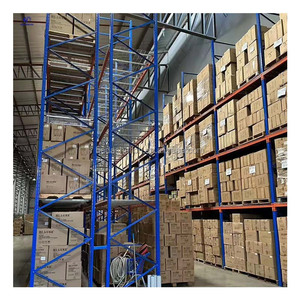
Heavy Duty Pallet Rack Industrial Pallet Shelving Warehouse Storage Racking Selective Rack For Storage
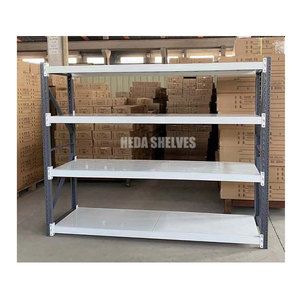
OEM Metal Warehouse Racking Wholesale Medium Duty Pallet Racking China Light Duty Q235B Shelving
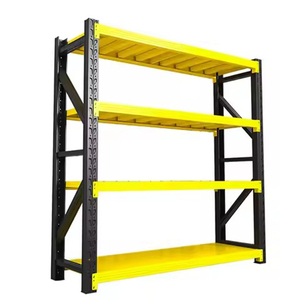
Custom Heavy Duty Steel Storage Racks Adjustable Industrial Shelving Pallet Rack Systems
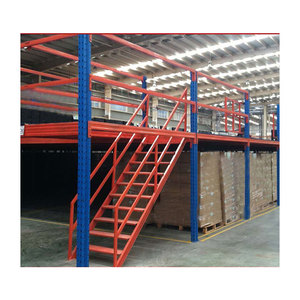
Heavy Duty Multi Tier Steel Grating Floor Mezzanine Platform Mezzanine Racking System Pallet Rack Supported Mezzanine
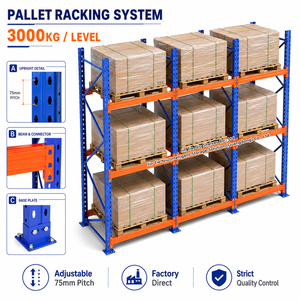
3 Pallet Levels Heavy Duty Steel Warehouse Rack Selective Pallet Racking System 3000KG
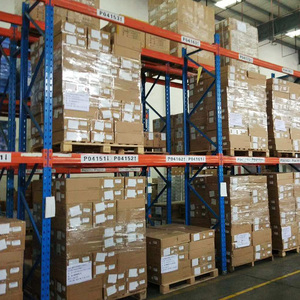
Heavy Duty Rack System Warehouse Storage Pallet Sliding Rack For Factory For Myanmar, Thailand, Malaysia
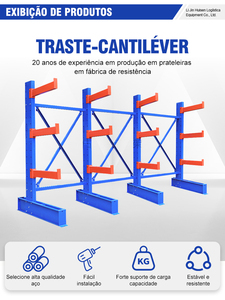
Selective Pallet Single Sided Ibeem Pvc Pipe Storage Cantilever Rack
Engineering Integrity, Structural Metallurgy & Global Procurement Dynamics
In modern high-velocity supply chain management, modern logistics facilities are no longer merely dry floor areas; they represent three-dimensional, highly synchronized material handling engines. Sourcing heavy-duty steel warehouse racking from China requires deep insight into cold-formed thin-walled steel profiles, structural ductility, metallurgical yield strengths, and rigorous international structural building codes. As international freight markets fluctuate and regional industrial facilities embrace higher automation, global enterprise buyers must look beyond headline FOB prices to examine the underlying structural parameters, seismic performance spectra, deflection ratios (such as the standard L/200 European beam deflection criteria under static working loads), and long-term total cost of ownership (TCO).
Guangzhou Heda Shelves Co., Ltd. operates at the vanguard of Chinese racking manufacturing and overseas export engineering. Operating since 2001 with an expansive 30,000 square meter specialized manufacturing base, 300+ seasoned fabrication engineers and production technicians, and a monthly structural throughput peaking at 30,000 metric tons, the company bridges strict European (FEM 10.2.02, EN 15512), American (RMI MH16.1), and Australasian (AS 4084) design paradigms with direct mill-scale production economics.
Structural Steel Grades & Engineering Physics in Warehouse Storage
Evaluating carbon steel microstructure, allowable frame stresses, and safety coefficient tolerances in international export specifications.
| Steel Grade / Parameter | Yield Strength (ReH / MPa) | Tensile Strength (Rm / MPa) | Elongation at Fracture (%) | Primary Racking Component Application | International Standard Equivalent |
|---|---|---|---|---|---|
| Q235B Cold-Rolled Carbon | ≥ 235 MPa | 370 – 500 MPa | ≥ 26% | Standard Upright Columns, Box Beams, Pallet Rails | ASTM A36 / S235JR (EN 10025) |
| Q355B High-Strength Alloy | ≥ 355 MPa | 470 – 630 MPa | ≥ 22% | High-Bay AS/RS Uprights (>12m), Heavy Cantilevers | ASTM A572 Gr 50 / S355JR |
| Hot-Rolled Structural I-Beam | ≥ 235 – 345 MPa | 400 – 520 MPa | ≥ 21% | Heavy-Duty Cantilever Columns, Base Saddles | JIS G3101 SS400 / S275JR |
| Hot-Dip Galvanized Sheet | ≥ 250 – 300 MPa | 360 – 480 MPa | ≥ 20% | Walkway Steel Gratings, Corrosive/Cold Store Decking | EN 10346 DX51D+Z275 |
A primary structural failure mode in high-density pallet racking arises not from static yield compression, but from torsional-flexural buckling in cold-formed perforated upright profiles. Chinese tier-one manufacturers like Guangzhou Heda Shelves mitigate this through multi-bend upright geometry featuring 11 to 13 distinct stiffening ribs along the profile contour. This increases the cross-sectional moment of inertia without adding unnecessary tare weight, optimizing both load distribution and ocean freight shipping volume. Furthermore, laser-calibrated slot punching maintains pin-to-hole tolerances within ±0.1mm, eliminating structural play in connector claw brackets and safeguarding against seismic shear forces.
Future Procurement & Technology Trends (2025–2030)
Strategic supply chain analysis revealing how automation, climate resilience, and modular steel construction are redefining warehouse capital investments.
1. Automated Radio Shuttle & AS/RS Synergy
Manual forklift operations in narrow deep-lane aisles are increasingly replaced by automated shuttle carriers and stacker cranes to counteract global labor constraints and eliminate forklift mast collision hazards.
- Elimination of forklift drive-in travel within storage channels, extending racking structural service life by over 300%.
- Direct integration with warehouse management systems (WMS) for real-time FIFO/LIFO automated execution.
- High-precision rail levelling tolerances (±1.5mm) fabricated on multi-station automated roll-forming lines.
2. Cold Chain & Coastal Microclimate Finishing
With booming trade across humid sub-tropical markets (Southeast Asia, Middle East, Latin America), surface treatment protocols have transitioned from standard cosmetic coats to multi-barrier corrosion protection.
- Rigorous multi-stage pre-treatment: full chemical immersion pickling, surface degreasing, and zinc phosphating.
- Continuous electrostatic powder curing at 180°C to 200°C for superior cross-link density.
- Hot-dip galvanization (minimum 65-85 micron zinc thickness) deployed in blast freezers (-30°C) to withstand condensation cycles.
3. Hybrid Rack-Supported Mezzanine Architecture
Rapidly escalating industrial land acquisition costs are compelling logistics operators to convert dead vertical air space into multi-level processing platforms without adding external structural building columns.
- Multi-tier configurations with live load capacities ranging from 300kg/m² to over 1,200kg/m².
- Custom steel grating, cold-formed perforated steel floor plates, and fire sprinkler penetrations.
- Seamless integration of spiral carton chutes, freight elevators, and mezzanine-level order sorting.
The 10-Step Controlled Production Matrix of HEDA Shelves
How Guangzhou Heda Shelves guarantees zero-defect fabrication from raw steel strip to containerized export stowing.










Verifiable Credentials for Global Tenders & Municipal Audits
Procuring structural racking for public tenders, institutional 3PL developments, and multinational corporations demands third-party verification that can withstand civil engineering reviews. Guangzhou Heda Shelves maintains accredited certification records directly verifiable with international registrars:
- CE Mark Certification: Certificate No.
2435-CPR-8605159(Conformity to European Construction Products Regulation for structural metalwork). - ISO 9001:2015 Quality Management: Certificate No.
18624Q00169R0M, maintaining end-to-end trace logs across all heats and mill certificates. - RoHS Environmental Compliance: Heavy-metal-free thermoset powder coatings certified for safe deployment in food-grade and pharmaceutical facilities.
Strategic ASEAN & Global Freight Proximity
Situated in the heart of the Greater Bay Area manufacturing belt with direct access to Nansha, Guangzhou, and Shenzhen container terminals, our facilities offer exceptional lead times to key global transshipment nodes:
Frequently Asked Questions by International Engineering Buyers
Clear, practical explanations covering steel cross-sections, sea shipping rust protection, local seismic load designs, and installation logistics.
For standard beam spans of 2300mm to 2700mm accommodating two pallets at 1,000kg each (2,000kg uniformly distributed load per level), an interlocking box beam of 100mm × 50mm × 1.5mm is standard. For heavy loads exceeding 3,000kg per level, we specify 120mm to 140mm beam depths with wall thicknesses from 1.5mm to 2.0mm. Upright columns start from 80mm × 60mm × 1.8mm for light configurations, scaling up to 100mm/120mm × 70mm × 2.0mm-2.5mm cold-formed multi-rib profiles for taller assemblies.
Marine container shipment involves high-humidity thermal cycles that produce container rain. HEDA Shelves addresses this through a dual-layer strategy: full chemical pickling and phosphating pre-treatment that creates a micro-crystalline conversion barrier on the raw steel, followed by automated electrostatic powder coating. For shipping, structural beams and uprights are bundled with dense protective film, separated by timber dunnage and heavy-duty desiccants to guarantee scratch-free, moisture-isolated delivery.
Yes. In active seismic regions (such as the Pacific Ring of Fire affecting the Philippines, Indonesia, and parts of the Americas), static calculations are insufficient. Our engineering team models frames against spectral acceleration variables (Ss and S1 values) and soil site classifications according to IBC/UBC criteria. Racking baseplates are widened and thickened (typically 8mm to 12mm plate steel), anchored with heavy-duty mechanical wedge or chemical capsule anchors, supplemented by high-ductility horizontal and diagonal X-bracing.
To deliver a precision CAD layout and 3D rendering within 24 to 48 hours, we request: (1) Warehouse architectural drawings detailing clear floor dimensions, column grids, and clear height under sprinkler/lighting trusses; (2) Pallet specifications (Width × Depth × Height) including cargo overhang and gross pallet weight; (3) Forklift specifications including aisle turn radius (AST), mast retracted height, and maximum lifting height; (4) Preferred inventory methodology (FIFO vs. LIFO).
Standard production cycles for custom-engineered selective pallet racking or drive-in systems range between 15 to 25 calendar days, depending on overall container volume (typically 3 to 10 40'HQ containers). Complex multi-tier rack-supported mezzanine platforms or high-bay AS/RS systems involving bespoke steel grating and accessories typically require 25 to 35 days. Fast-track production lines are maintained for ongoing partner repeat replenishment orders.
Every export container is accompanied by numbered component schedules matching comprehensive assembly drawings, detailed 3D exploded diagrams, step-by-step video guidance, and safety torque parameters for high-tensile anchor and frame bolts. For large-scale installations (distribution centers >5,000 pallet positions), HEDA Shelves can dispatch senior bilingual installation engineers on-site to direct local labor teams, ensure alignment tolerances, and sign off on static load commissioning.
Accelerate Your Warehouse Capacity with Direct Factory Engineering
Collaborate directly with our Guangzhou technical team to receive free structural layout planning, static load calculations, and competitive factory-direct export quotations. Let us calculate how many more pallet positions your existing building footprint can support.