Factory-Engineered Pallet Racking & High-Density Storage Solutions
Constructed from high-tensile certified structural steel coils, precision cold-roll formed, and tested under strict FEM 10.2.02 and ANSI MH16.1 deflection protocols.
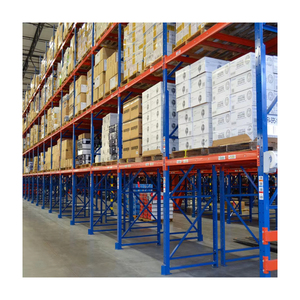
Wholesale Price Heavy Duty Storage Racks Warehouse Stacking Racks Selective Steel Pallet Rack Heavy-Duty Racking For Sale
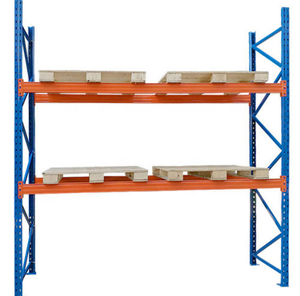
Metal Rack Shelf Pallet Racking Stacking Racks Shelves System Warehouse Equipment and Racks
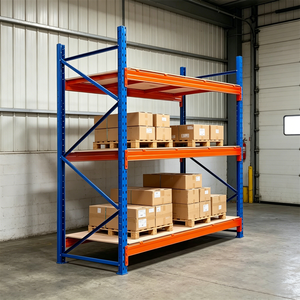
Powder Coated Heavy Duty Rack Industrial Warehouse Storage Pallet Racking Adjustable Industrial Shelves
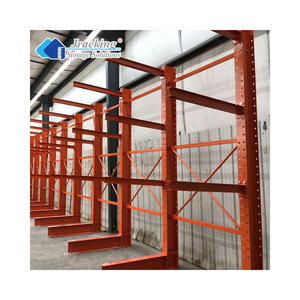
Jracking Heavy Duty Cantilever Rack Used for Storage of Pipe Long-tube Steel Plate Car Racking
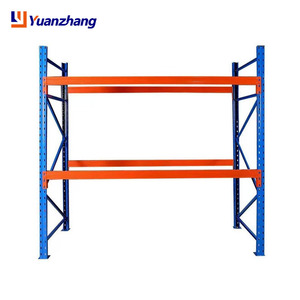
Warehouse Metal Modular High Shelf Heavy Duty Pallet Shelving Industrial Garage Cabinets Storage Stacking Racks
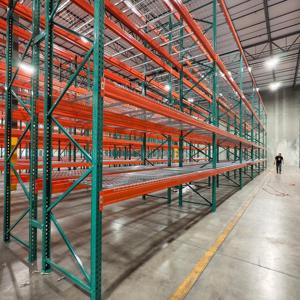
Industrial US Standard Warehouse Shelving Storage Racks Heavy Duty Pallets Racking System for Retail Distribution
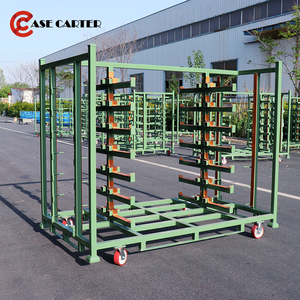
Carter OEM Steel Material Auto Parts Storage Turnover Pallet Rack Cargo & Storage Equipment for Vehicle Transportation
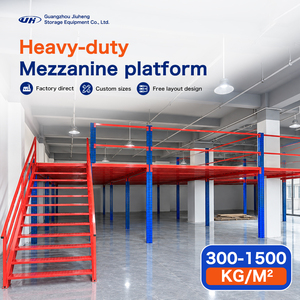
Multi Tier Warehouse Mezzanine Rack Heavy Duty Steel Storage Platform Industrial Shelving Space Saving Customized System
Single Pallet Racking in Modern Logistics: Structural Anatomy & Load Mechanics
Single selective pallet racking systems represent the fundamental architectural framework of global supply chains. Characterized by one-pallet-deep access per aisle face, the single pallet rack provides uninhibited 100% selectivity across all stored stock keeping units (SKUs). While high-density configurations such as drive-in, push-back, or automated shuttle lanes offer higher volumetric storage coefficients, selective single racking remains the gold standard for FMCG distribution hubs, automotive staging facilities, pharmaceutical cold chains, and cross-docking terminals where picking cycle velocity and SKU diversity supersede raw density.
From an engineering perspective, the performance of a single pallet racking system hinges on cold-formed thin-walled structural steel mechanics. Upright frames are subjected to complex axial compression combined with bi-axial bending generated by eccentric beam loading, horizontal seismic excitations, and accidental forklift impacts. Leading Chinese manufacturers like Guangzhou Heda Shelves Co., Ltd. execute finite element analysis (FEA) to calculate second-order (P-Delta) structural effects, ensuring column stability and beam-to-column connector moment resistance conform precisely to international standards such as EN 15512:2020, FEM 10.2.02, and ANSI/RMI MH16.1.
Key Structural Engineering Metric: Beam Deflection Limits
Under design load conditions, the maximum allowable vertical deflection ($\delta$) of structural step beams or box beams must not exceed $\delta \le L / 200$ per RMI MH16.1, or $\delta \le L / 250$ under European FEM/EN guidelines, where $L$ is the clear span distance between upright columns. Maintaining this deflection limit prevents structural fatigue, ensures pallet bottom-board integrity, and eliminates bind-up during automated reach-truck insertion and extraction operations.
Metallurgical Matrix: Comparative Analysis of Structural Steels in Pallet Rack Fabrication
A primary consideration when evaluating top China pallet racking factories is the mill source and chemical composition of the steel coil. Substandard manufacturers frequently utilize non-standard commercial hot-rolled sheet with uneven carbon dispersion and erratic yield thresholds. Premier manufacturers specify prime cold-rolled steel coils with guaranteed yield strengths ($R_e$) and tensile strengths ($R_m$), strictly traceable back to premier Chinese state mills (such as Baosteel, Shougang, or Ansteel).
| Steel Grade (Standard) | Min. Yield Strength ($R_e$, MPa) | Tensile Strength ($R_m$, MPa) | Elongation at Fracture ($A_5$, %) | Typical Structural Application in Racks |
|---|---|---|---|---|
| Q235B (GB/T 700) | 235 MPa | 370 – 500 MPa | ≥ 26% | Standard horizontal beams, wire mesh decking, column footplates, row spacers. |
| Q355B (GB/T 1591) | 355 MPa | 470 – 630 MPa | ≥ 21% | Heavy-duty upright columns exceeding 9m clear height, high-bay seismic frames. |
| ASTM A36 Equiv. | 250 MPa | 400 – 550 MPa | ≥ 23% | Standard American teardrop beam end-connectors and bracing diagonals. |
| S355MC (EN 10149-2) | 355 MPa | 430 – 600 MPa | ≥ 19% | High-yield cold-rolled sections engineered for automated AS/RS single pallet rails. |
Guangzhou Heda Shelves Co., Ltd.: Engineering Prowess Since 2001
Backing international supply chain integrators with heavy industrial machinery, verified CE & ISO management certifications, and comprehensive layout design.
25+ Years Industrial Mastery
Founded in 2001, Guangzhou Heda Shelves Co., Ltd. has evolved from a specialized structural fabricator into an internationally acknowledged leader in warehouse racking and industrial mezzanine systems, providing full technical project lifecycles.
Free 3D & CAD Layout Modeling
HEDA’s dedicated project engineering bureau returns customized AutoCAD architectural layouts, structural calculation books, and 3D virtual walkthroughs at zero cost before commercial confirmation, preventing building column and HVAC clashes.
Severe Environment Engineering
Specialized electrostatic coating chemistry designed specifically for high-salinity coastal ports and tropical environments across ASEAN and the Middle East, including 7-stage chemical pre-treatment and heavy-gauge hot-dip galvanizing.
10-Step In-House Manufacturing Verification
Every component shipped from our Guangzhou production base follows a continuous closed-loop quality management chain:
Raw Material QC
Spectrographic analysis of incoming steel coils for carbon and silicon tolerances.
Precision Slitting
CNC slitting with laser micrometer edge control to eliminate burr formation.
Automated Punching
High-speed continuous hydraulic punching ensuring exact pitch alignment.
Cold Roll-Forming
Multi-station roll profiling preventing residual micro-stresses along the bend axis.
Profile Calibration
Secondary sizing passes ensuring tight mechanical tolerances within ±0.5mm.
Surface Polishing
Mechanical descaling removing mill scale and oxide layers prior to chemical immersion.
Robotic Welding
Continuous twin-torch automated gas shielded arc welding on beam-to-connector joints.
Chemical Immersion
7-stage acid pickling, silane conversion, and phosphating pre-treatment tanks.
Electrostatic Coating
GEMA automatic spray guns delivering 60–90μm durable epoxy-polyester finish.
Container Packing
Palletized bundle sequencing maximizing container volume and maritime safety.
Audited International Credentials
Transformational Trends Reshaping Single Pallet Rack Sourcing
How digital integration, geopolitical decarbonization frameworks, and robotic automation interfaces are modifying traditional procurement specifications.
Autonomous AGV / AMR Interoperability
Single pallet racks are migrating away from manual forklift handling toward autonomous reach trucks. Modern procurement bids require tighter beam deflection (≤ L/300) and laser-guided visual reflective markers integrated into upright footings to accommodate robotic sensor arrays.
Embedded Structural Health Monitoring
Large fulfillment hubs now specify telemetry-ready column bases. Micro-strain sensors and tri-axial MEMS accelerometers continuously transmit real-time deflection and impact logs via LoRaWAN, identifying localized overloads before catastrophic structural failure occurs.
CBAM & Low-Carbon Steel Compliance
The European Union's Carbon Border Adjustment Mechanism (CBAM) has transformed procurement formulas. Top Chinese suppliers now furnish mill-certified Scope 1, 2, and 3 emission audits and offer Electric Arc Furnace (EAF) steel options with up to 70% recycled scrap content.
Cube-Optimized Modular Flat-Packing
Skyrocketing ocean freight rates have elevated container packing efficiency into an engineering discipline. Beams, upright frames, and shelf components are modeled via 3D algorithm to achieve 98.4% volumetric fill in 40HQ containers, dropping shipping landed cost per pallet slot by 18%.
Technological Trajectories: From Static Single Beams to Dynamic Storage
Trace the structural evolution of selective pallet racking as modern facilities balance vertical space economics, pick rates, and floor footprint utilization.
Generation I: Static Wide Aisle (APR)
Traditional adjustable pallet racking (APR) utilizes aisle widths between 3.2m and 3.8m to accommodate counterbalance and reach trucks. While offering 100% SKU selectivity, space utilization rarely exceeds 35-40% of the overall facility cube.
Generation II: Very Narrow Aisle (VNA)
By compressing aisle widths down to 1.6m–1.8m and utilizing turret trucks guided by inductive wire or mechanical floor rails, VNA systems elevate space efficiency to 65%. High-bay single pallet racks regularly scale to 15 meters with reinforced bottom frames.
Generation III: Hybrid Dynamic & Multi-Tier
The state-of-the-art incorporates single selective base levels with upper-tier rack-supported catwalk platforms, or transitions into semi-automated radio shuttle cart channels. This approach bridges fast pallet turn rates with dense buffer reserve capacity.
Topological Comparison: Storage Density vs. SKU Access Dynamics
Procurement teams must balance mechanical equipment costs against square-meter warehouse lease rates to select the appropriate structural framework:
| Racking Architecture | Selectivity | Storage Density Index | Inventory Flow Logic | Forklift Equipment Compatibility | Relative CapEx Index |
|---|---|---|---|---|---|
| Selective Single Pallet Rack | 100% (Instant Direct) | Baseline (40%) | FIFO / LIFO Adaptive | Standard Counterbalance, Reach Truck | $ (Most Economical) |
| Double Deep Pallet Racking | 50% Immediate | Medium-High (55%) | LIFO Primary | Pantograph Double-Reach Truck | $$ |
| Drive-In / Drive-Thru | < 15% (Batch SKU) | High (75%) | LIFO / FIFO | Specialized Slim Counterbalance | $$$ |
| Radio Shuttle Automation | Semi-Selective (By Channel) | Ultra-High (85%) | Software Switchable (FIFO/LIFO) | Standard Forklift + Automated Shuttle Unit | $$$$ |
| Rack-Supported Mezzanine | 100% Pick + Pallet Base | Extreme (Vertical 200%) | Hybrid Manual / Bulk | Forklift Ground + Conveyor / Goods Lift | $$$ |
Frequently Asked Questions: Global Racking Procurement
Clear, engineering-backed answers addressing structural design, seismic compliance, sea freight, and quality inspection.
Q1 How do you prevent paint peeling and corrosion in tropical or coastal facilities?
HEDA implements a strict 7-stage chemical pre-treatment system featuring hot alkaline degreasing, twin-stage water rinse, acid rust removal (pickling), and zinc phosphate conversion. This crystalline under-layer chemically bonds the thermosetting epoxy-polyester powder coat, passing 500-hour continuous salt spray tests (ASTM B117). For sub-zero cold rooms or open outdoor yards, continuous hot-dip galvanizing per ISO 1461 is applied.
Q2 Can structural designs be certified for seismic zones like Indonesia or the Philippines?
Yes. Our civil engineering team calculates dynamic horizontal base shear and overturning moments according to localized seismic design codes (such as UBC-97, ASCE 7, or Eurocode 8). Depending on site-specific Peak Ground Acceleration (PGA) values, we engineer heavy-gauge footplates (up to 16mm thick), dual chemical mechanical anchor bolts, and reinforced tubular cross-bracing to absorb lateral ground shocks.
Q3 What critical parameters must a client submit for an engineered layout?
To produce an authoritative AutoCAD schematic and structural proposal, provide: (1) Architectural floor plan showing interior columns, perimeter fire egress, and clear building eaves height; (2) Pallet dimensions (W × D × H) including product overhang; (3) Maximum uniform pallet gross weight; (4) Forklift model, mast collapsed height, minimum turning radius, and maximum reach elevation; (5) Total daily SKU turnover velocity.
Q4 How does single selective pallet racking compare economically against drive-in systems?
Single selective racking has an approximately 30-45% lower structural steel cost per pallet position compared to drive-in racking because it does not require continuous cantilevered pallet support rails or heavy top-tie portal frames. Furthermore, selective racks utilize ubiquitous reach trucks without requiring specialized slim-chassis mast trucks, significantly reducing capital expenditure for small-to-medium facilities.
Q5 What shipping terms and maritime transit times should Southeast Asian buyers anticipate?
From our Guangzhou production center and nearby ports (Nansha / Huangpu / Shenzhen), direct maritime transit to major ASEAN ports is exceptionally rapid: Vietnam (Haiphong/Cat Lai) 2–5 days; Manila 3–5 days; Singapore & Laem Chabang 5–7 days; Port Klang 6–8 days; and Jakarta 7–10 days. We operate seamlessly under FOB, CIF, or DDU/DDP terms, managing all export documentation, Fumigation IPPC stamps, and Certificate of Origin (Form E) filings for tariff exemptions.
Q6 How are racking structural components safely assembled on-site without errors?
Every shipment is cataloged with an itemized packing list and color-coded component tagging corresponding directly to the provided AutoCAD assembly blueprint. Uprights are typically flat-packed with bracing bolted or welded, and beams feature our tool-less 3-hook or 4-hook interlocking connector claws equipped with high-visibility spring safety lock pins. Comprehensive video guidance, remote engineering video calls, or on-site supervisory engineers are available on request.
Request a Tailored CAD Layout & Factory Price Quote
Send our senior engineering team your warehouse architectural drawings, clear ceiling elevations, and pallet load profiles. We deliver complete 2D/3D structural layouts, static load calculation sheets, and factory-direct FOB/CIF container proposals within 24 hours.