High-Density Storage & Narrow Aisle Systems Portfolio
Explore our certified storage systems engineered for heavy loads, high throughput, and maximum vertical floor utilization. Compatible with VNA turret trucks, AGVs, and dynamic picking solutions.
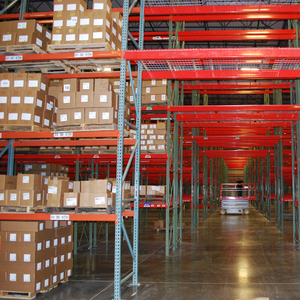
Steel Material Warehouse Rack Numbering System Storage
- Configuration: Organized Aisle Indexing
- Load Rating: 1,000–3,000 kg / Beam Level
- Surface: High-Adhesion Powder Coat
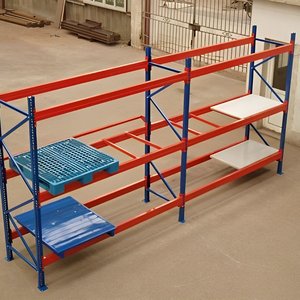
CAIYUN Heavy Duty Warehouse Radio Shuttle Racks
- Operation: Semi-Automated In-Lane Shuttle
- Capacity: Up to 1,500 kg / Pallet Position
- Inventory: FIFO & LIFO Flexible Switching
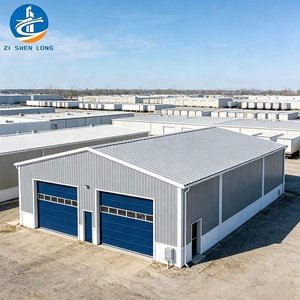
Prefabricated Steel Structure Warehouse Workshop Buildings
- Engineering: High Clear-Height Portal Frame
- Standard: GB / AISC Seismic Certified
- Application: VNA Ready Heavy Industrial Hubs
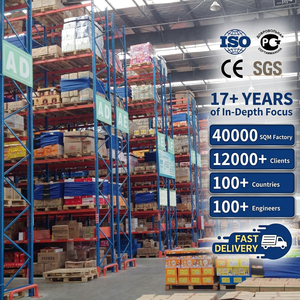
SDFD Heavy Duty Adjustable Selective Pallet Racking
- Beam Type: Heavy-Duty Interlocking Box Beam
- Aisle Layout: VNA or Standard Reach Configuration
- Bay Loading: Up to 5,000 kg / Level Span
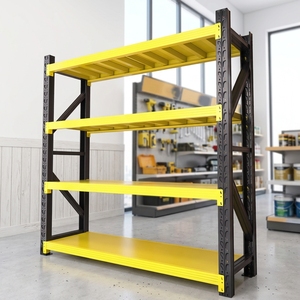
Boltless Corrosion Protection Steel Warehouse Shelves
- Assembly: 100% Boltless Interlocking Pitch
- Protection: Phosphated Epoxy Powder Coat
- Adjustment: 50mm Modular Vertical Increments
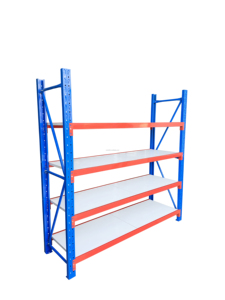
Industrial 4-Level Boltless 500kg Tier Stack Rack
- Tier Capacity: 500 kg Uniform Distributed Load
- Steel Grade: High-Tensile Cold Formed Q235B
- Decking: Steel Panel, Wire Mesh, or Plywood
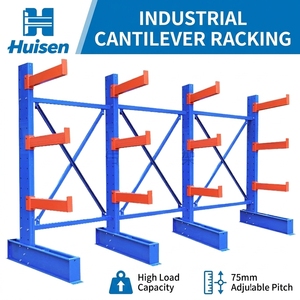
Modular Upright Metal Pipe & Long Material Racks
- Profile: Freestanding Cantilever Columns
- Target Stock: Pipes, Structural Tubing, Bar Stock
- Load Rating: Up to 1,500 kg / Heavy Arm Level
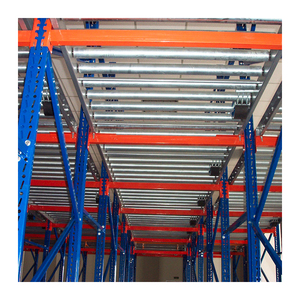
Gravity Pallet Flow FIFO Warehouse Storage Racks
- Rotation Principle: Strict FIFO Expiration Control
- Braking System: Centrifugal Speed Controller Rollers
- Density Gain: Up to 60% Over Standard Selective
Structural Mechanics & Dimensional Physics of Narrow Aisle Racking
Comprehensive technical analysis on transforming high-bay warehouse logistics via Very Narrow Aisle (VNA) system architectures.
As industrial real estate prices surge globally and manufacturing footprints face acute cubic constraints, supply chain directors face an unforgiving equation: elevate volumetric storage capacity without procuring additional land. The **Narrow Aisle Racking System (frequently deployed as Very Narrow Aisle or VNA)** stands as the preeminent mechanical storage architecture designed to resolve this bottleneck. By compacting operating aisle widths from standard counterbalance clearances (typically 3,200 mm to 3,800 mm) down to an ultra-dense **1,500 mm to 1,800 mm**, VNA racking reallocates dead transitional floor area into active storage volume, boosting warehouse pallet capacity by **40% to 50%** over conventional selective racking systems.
1. Guided Aisle Mechanics: Mechanical Rails vs. Inductive Wire Guidance
Because VNA turret trucks and man-up order pickers operate with side clearances of only 100 mm to 150 mm between the pallet edges and racking upright frames, steering within the aisle cannot rely on human operator reaction times. Two guided systems govern China's top tier narrow aisle engineering practices:
A. Low-Profile Mechanical Guide Rails: Engineered from robust cold-formed angle profiles (e.g., $100 \times 75 \times 8 \text{ mm}$ or $120 \times 80 \times 8 \text{ mm}$) firmly anchored into the concrete slab with chemical expansion bolts at 500 mm pitches. Mechanical guide rollers on the base of the turret truck physically contact the interior rail surface, restraining horizontal chassis wander during high-speed aisle entry. Low-profile entrance funnels are positioned at every aisle mouth to center the mast automatically before full acceleration.
B. Inductive Floor Wire Guidance: In modern high-throughput logistics hubs, mechanical rails are increasingly substituted with embedded inductive guide wires. A 3 mm to 5 mm micro-groove is saw-cut into the center line of the aisle slab, housing a frequency-emitting guidance wire sealed with chemical-resistant epoxy resin. High-frequency generators (operating at 6.25 kHz or 10 kHz) broadcast continuous electromagnetic positioning signals to onboard sensor antennae on the VNA truck. Wire guidance eliminates floor tripping hazards, allows seamless low-level order picking across adjacent runs, and avoids mechanical wheel-rail abrasive wear.
2. Concrete Floor Flatness Tolerances (DIN 18202 & Concrete Society TR34)
A catastrophic failure mode in tall narrow aisle systems is mast sway amplification induced by minor slab imperfections. In a 15-meter tall VNA bay, a slab elevation variation of just 2 mm across the wheel track translates into a mast tip displacement exceeding 40 mm at top pick elevations. This lateral displacement risks racking impact, pallet snagging, and catastrophic dynamic collapse.
Elite Chinese racking suppliers compute seismic and dead load tolerances assuming defined movement floor specifications in accordance with **The Concrete Society's Technical Report 34 (TR34)**. For lift heights between 9 and 13 meters, **Classification DM2** is strictly mandated; for lift heights surpassing 13 meters, **Classification DM1 or Superflat tolerances** must be engineered. Our structural layout documentation incorporates precise wheel footprint loads to guide civil contractors in screeding, laser grinding, and post-tensioned joint planning.
3. Comparative System Performance Matrix
Evaluating warehouse storage systems requires balanced trade-off analysis between floor area utilization, capital expenditure (CAPEX), SKU selectivity, and material handling vehicle requirements:
| Storage System Type | Aisle Width Req. | Height Potential | Floor Utilization | Direct SKU Accessibility | Typical MHE Required |
|---|---|---|---|---|---|
| Standard Selective Racking | 3,200 – 3,800 mm | Up to 10 m | 35% – 40% | 100% (Instant Pick) | Counterbalance / Reach Truck |
| Narrow Aisle (VNA) System | 1,500 – 1,800 mm | Up to 18 m | 55% – 65% | 100% (Instant Pick) | VNA Turret Truck / Man-Up Picker |
| Double-Deep Pallet Rack | 2,800 – 3,200 mm | Up to 11 m | 45% – 50% | 50% (Secondary Deep Batch) | Pantograph Double-Reach Truck |
| Drive-In Racking System | Dedicated Lanes | Up to 10 m | 65% – 75% | Low (Strict LIFO Batches) | Standard Counterbalance Truck |
| Automated Radio Shuttle | Lane Dependent | Up to 24 m | 75% – 85% | Medium (Automated FIFO/LIFO) | Standard Truck + In-Lane Shuttle |
4. Upright Column Profile Geometry & Buckling Restraint
Narrow aisle racks endure intense local stresses due to the extreme verticality of beam elevations. China's top manufacturers deploy cold-rolled, continuous multi-bend omega ($\Omega$) profile uprights manufactured from high-yield structural steel grades like **Q235B and Q355B**. The profile incorporates up to 12 distinct mechanical fold angles, which dramatically raises the cross-sectional moment of inertia ($I_x, I_y$) and counters torsion-flexural buckling under non-uniform asymmetrical pallet loading. Heavy-duty back-to-back row spacers and overhead portal bracing ties securely bridge twin racking runs, converting isolated racks into a monolithic, rigid spatial frame.
Why Source Narrow Aisle Systems from Guangzhou HEDA Shelves
Two decades of precision structural fabrication, certified global compliance, and turn-key warehouse engineering.
Operating since 2001, Guangzhou Heda Shelves Co., Ltd. has grown into an international engineering authority for high-bay warehouse logistics systems. Our 30,000 square meter modernized manufacturing complex houses automated cold-roll forming lines, multi-axis automated CNC punching machines, and robotic plasma welding centers, generating a robust output capacity of 30,000 metric tons per month. We do not operate as generic component brokers; our in-house engineering team designs custom VNA racking solutions strictly calibrated to client building CAD layouts, forklift turning radii, seismic zone specifications, and concrete slab load-bearing limitations.
10-Stage Precision Production Cycle: Steel Coil to Container
Full in-house process control guarantees every millimeter of upright beam and connector meets international deflection thresholds.
Unlike secondary workshops that outsource chemical finishing or beam punching, our fully vertically integrated 10-step fabrication cycle ensures unwavering structural integrity across high-bay installations:
01. Certified Raw Steel Sourcing
Mill-certified Q235B and Q355B prime hot-rolled and cold-rolled steel coils verified for tensile yield, elongation, and carbon trace chemistry.
02. High-Precision Slitting & Cutting
Automated uncoiling, decoiling, and CNC hydraulic slitting yielding strip width tolerances within ±0.1 mm, preventing profile camber during roll forming.
03. CNC Automated Column Punching
High-speed hydraulic punching lines stamping teardrop or diamond beam adjustment pitches at exact 50 mm or 75 mm increments with zero cumulative pitch drift.
04. Precision Cold Bending Forming
Multi-station progressive roll mills bending the punched strip into complex open omega sections without residual internal stress cracking.
05. Closed Box Beam Profile Roll
Double interlocking C-sections rolled and seam welded to construct high-strength box beams engineered specifically for dynamic torsional resistance.
06. Surface Polishing & Deburring
Mechanical blast cleaning and edge deburring removing sharp burrs, rolling scale, and slag to prepare components for superior chemical passivation.
07. Robotic Connector Welding
Multi-prong heavy steel beam end connectors joined to box beams using automated robotic metal active gas (MAG) welding for 100% throat consistency.
08. 9-Stage Pickling & Phosphating
Full-immersion chemical tanks executing grease stripping, acid pickling, ultrasonic water rinsing, and zinc-phosphate conversion coating.
09. Electrostatic Powder Coating
Automated Swiss Gema powder application guns applying 60–80 μm polyester thermoset resins, cured at 200°C for extreme salt spray and humidity defense.
10. QC Clearance & Sea Bundling
Dimensional coordinate inspection, weld magnetic particle testing, bundle wrapping with edge protectors, and container volumetric loading plans.
Internationally Audited Certifications
Global logistics operators, project general contractors, and corporate risk evaluators require traceable and verifiable engineering credentials. HEDA Shelves maintains independently tested, audit-grade certifications:
-
CE Construction Products Certification: Certificate No.
2435-CPR-8605159(Conforms to EN 15512:2020) -
ISO 9001:2015 Quality Management: Certificate No.
18624Q00169R0M(Valid through June 2027) - RoHS Chemical Safety Compliance: Zero restricted heavy metal pigments in electrostatic powder formulations.
Rapid Sea Freight Dispatch from South China Ports
Direct highway connection from our Guangzhou manufacturing facility to Nansha and Huangpu deep-water container berths delivers rapid sea transit timelines:
| Destination Region | Main Port of Entry | Indicative Ocean Transit |
|---|---|---|
| Vietnam | Haiphong / Cat Lai (HCMC) | 2 – 5 Days |
| Philippines | Manila North Harbor | 3 – 5 Days |
| Thailand & Singapore | Laem Chabang / Singapore | 5 – 7 Days |
| Malaysia | Port Klang / Penang | 6 – 8 Days |
| Indonesia | Tanjung Priok (Jakarta) | 7 – 10 Days |
| Europe & Middle East | Rotterdam / Jebel Ali | 22 – 32 Days |
Engineering Trends Reshaping Narrow Aisle Racking Systems
Technological inflection points driving the transition from passive static steel frames to automated, sensor-monitored smart warehouse structural ecosystems.
Autonomous AGV & VNA Turret Integration
Replacement of manual operators with automated guided turret robots (AGV-VNAs). Racking designs now incorporate specialized top guide stabilization profiles and inductive corridor positioning transponders to support continuous 24/7 pallet manipulation with zero human intervention.
Micro-Alloy High-Yield Steel Profiles
Deployment of advanced micro-alloy steels treated with niobium and vanadium. These cold-forming compositions provide yield strengths exceeding 450 MPa while retaining ductility, reducing overall structural steel weight by 14% without compromising load safety margins.
Digital Twin & Dynamic Health Monitoring
Integration of IoT strain-gauge sensors and collision detectors on high-traffic aisle entry uprights. Embedded sensors stream mechanical stress, deflection, and accidental impact telemetry into cloud-based warehouse digital twins to trigger preemptive inspection alerts.
Seismic Energy Dissipating Baseplates
Specially developed for seismic fault lines (e.g., Japan, Philippines, Indonesia, Western Americas), high-ductility baseplates absorb horizontal ground acceleration forces via engineered plastic deformation zones, preventing upright column shear failure.
Future Procurement Trends for Narrow Aisle Systems (2025–2030)
How enterprise procurement officers, 3PL giants, and industrial developers are adjusting their capital allocation strategies.
The global storage equipment procurement landscape is moving rapidly away from low-cost, decentralized component bidding toward risk-mitigated, turnkey engineering partnerships. Over the next five years, four strategic procurement dynamics will define the market:
Total Cost of Ownership (TCO) Prioritization
Procurement directors no longer compare base price-per-ton of steel alone. They evaluate operational lifecycle cost: floor space efficiency savings, reduced energy draw for VNA cold storage, and extended powder coat life in non-conditioned environments.
Integrated Civil-MHE Co-Design
Buyers require unified technical engineering. Top suppliers must co-design the racking alongside the client's concrete floor finishing contractor (ensuring TR34 compliance) and forklift manufacturer (calculating top clearance tolerances).
Demand for Audit-Ready Structural Certifications
With corporate ESG and worker safety protocols tightening worldwide, engineering proposals must include verifiable FEA (Finite Element Analysis) calculation reports conforming to EN 15512, RMI, or AS 4084 before issuing manufacturing POs.
Container-Optimized Modular Packaging
Rising international shipping rates demand container loading optimization. Leading Chinese exporters engineer modular nestable framing and pre-assembled upright trusses to pack over 26 tons into high-cube (40HQ) containers, dropping per-pallet shipping cost.
Frequently Asked Questions on Narrow Aisle Racking Procurement
Direct answers from our senior project structural engineers on technical parameters, building suitability, and compliance.
Q1 What precise floor flatness specification is required for high-bay VNA installations?
Narrow aisle operations cannot function on standard industrial concrete floors. In accordance with Concrete Society Technical Report 34 (TR34), installations with top beam levels up to 13 meters require a minimum classification of DM2 (Defined Movement 2). For systems exceeding 13 meters, DM1 or Superflat tolerances are mandatory. If an existing slab does not meet these criteria, laser-guided longitudinal track grinding must be performed along the turret truck wheel tracks prior to installation.
Q2 How do mechanical guide rails compare to inductive wire guidance systems?
Mechanical guide rails ($100 \times 75 \times 8 \text{ mm}$ steel angle) offer low upfront capital cost and zero electrical maintenance, providing a physical barrier that prevents truck chassis collisions with uprights. However, they restrict floor-level manual case picking across aisles. Inductive floor wire guidance requires saw-cutting a 3 mm groove to house an electromagnetic frequency wire, freeing the floor of mechanical obstacles, facilitating rapid aisle transfer, and lowering wheel tire wear.
Q3 Can standard counterbalance forklifts operate in a Narrow Aisle Racking system?
No. Standard counterbalance forklifts require operating aisle widths between 3.2 and 3.8 meters to make a 90-degree turn with a pallet. Narrow Aisle aisles are restricted to 1.5 to 1.8 meters. VNA racking requires specialized Man-Up Order Pickers, Man-Down Turret Trucks, or Articulated Forklifts (such as Bendi/Aisle-Master) featuring 180-degree rotating swiveling mast heads that deposit pallets into the racking without turning the chassis.
Q4 How does HEDA Shelves ensure structural compliance with international standards?
Our structural designs are engineered in accordance with EN 15512:2020 (European Racking Standard), ANSI/RMI MH16.1 (US Specification), and AS 4084 (Australian Standard). We perform Finite Element Analysis (FEA) on upright omega sections, beam-connector semi-rigid joints, and diagonal bracing trusses under full uniform distributed load (UDL) and seismic acceleration combinations, holding valid CE and ISO 9001:2015 certifications.
Q5 How are components protected against severe tropical humidity and coastal corrosion?
Every steel component passes through an automated 9-stage chemical immersion pre-treatment process consisting of alkaline degreasing, acid pickling, ultrasonic rinsing, and zinc-phosphate passivation. This is followed by automated electrostatic deposition of thermosetting polyester-epoxy powder (60–80 μm thickness) cured at 200°C. For sub-zero cold stores or open-air seaside docks, full **hot-dip galvanization** is applied.
Q6 What critical warehouse data must the client supply to receive a full CAD layout?
To receive a free engineering proposal, submit: (1) Architectural floor plan indicating building column centers, door openings, and clear unobstructed roof height; (2) Pallet dimensions (Length × Width × Height) including load overhang and maximum gross pallet weight; (3) Existing or planned turret truck brand, model, and mast collapse height; (4) Local seismic acceleration zone requirements. Our engineering team delivers 2D CAD and 3D models within 24–48 hours.
Ready to Maximize Your Cubic Storage Capacity by Up to 50%?
Submit your warehouse drawings and operating specifications today. Our senior structural logistics engineers will prepare an optimized 2D/3D CAD layout, structural load analysis, and container-optimized budget proposal free of charge.