Engineered Heavy & Lightweight Racking Configurations
Precision cold roll-formed uprights, high-yield beam profiles, and high-density intralogistics configurations manufactured strictly under ISO 9001:2015 and CE certification standards.
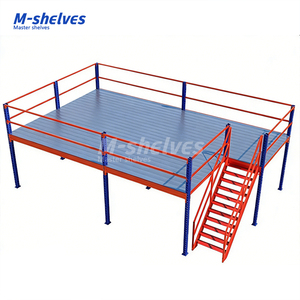
Wholesale CE Integrated Multi Layer Metal Storage Rack Industrial Steel Mezzanine Platform
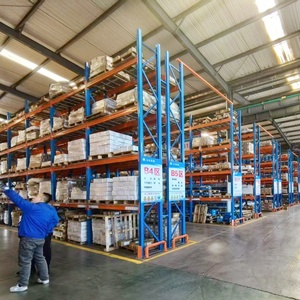
Industrial Storage Rack Adjustable Custom 800-3000kg/Level Heavy Duty Selective Pallet Racking
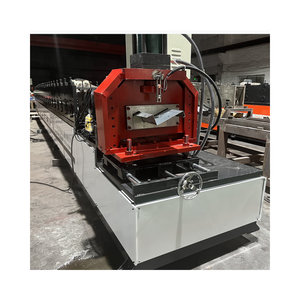
China Supplier Heavy-Duty Pallet Rack Shuttle Racking Rail Drive-In System Bearing Core
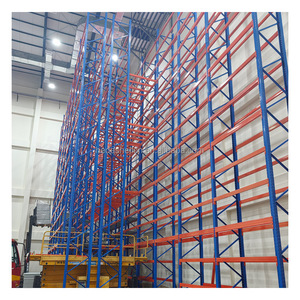
Racking and Shelving Suppliers Adjustable Warehouse Pallet Rack Industrial Shelving Systems
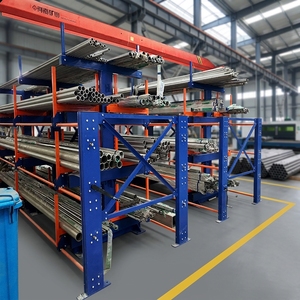
Wholesale Cantilever Racking Adjustable Long Metal Storage Rack Boltless Assembly
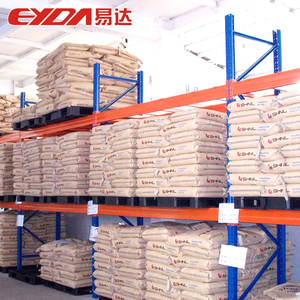
Heavy Duty Steel Adjustable 5 Layer Industrial Selective Pallet Rack Corrosion Protection
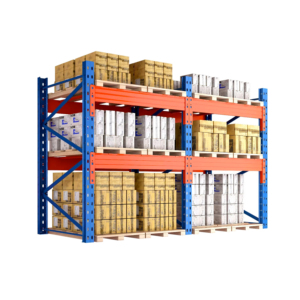
Heavy Duty 5 Steel Warehouse Rack Anti-Rust Narrow Aisle Racking Ensamblados Sin Tornillos
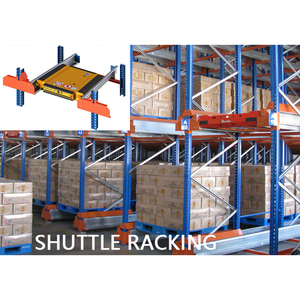
High-Density Shuttle Rack System ASRS 4-Way Pallet Shuttle Racking Ultra-Dense Automation
Decoding "Lightweight Pallet Racking": The High-Strength Low-Alloy (HSLA) Engineering Shift
In modern industrial warehouse infrastructure, international procurement teams often encounter the engineering term "Lightweight Pallet Racking". Contrary to consumer misconceptions, industrial lightweight pallet racking does not imply light-duty commercial supermarket shelving or flimsy tubular frames. In the intralogistics discipline governed by European Standards (EN 15512, EN 15620) and American Rack Manufacturers Institute (RMI MH16.1) codes, lightweight pallet racking designates an advanced structural paradigm: optimizing the cold roll-formed steel cross-section geometry using High-Strength Low-Alloy (HSLA) steels to maximize the load-to-deadweight ratio.
Historically, legacy warehouse designs relied on hot-rolled structural steel channels (such as ASTM A36 or GB Q235B) featuring thick web walls (3.5mm to 6.0mm). While structurally sound, these legacy systems introduced extreme deadweight loads onto warehouse concrete floor slabs, escalated shipping freight volumes, and substantially amplified carbon emissions per storage bay. As a top tier China lightweight pallet racking supplier, Guangzhou Heda Shelves Co., Ltd. (operating at industrial scale since 2001) has engineered proprietary cold-formed Omega (Ω) upright profiles and interlocking step beams utilizing Q355B and S355MC structural grade steels. This metallurgical innovation achieves yield strengths exceeding 355 MPa, allowing a 15% to 22% reduction in component deadweight while simultaneously augmenting permissible flexural load capacities up to 3,000 kg per storage level.
Structural Physics: Flexural Deflection Limits & Euler Buckling Stability
The core structural advantage of engineered lightweight pallet racking rests in the mathematical calculation of torsional-flexural buckling and elastic deflection under static and seismic loading. Under standard EN 15512 protocol, the maximum vertical deflection allowable for any horizontal load beam loaded with palletized freight is strictly constrained to:
δ_max ≤ L / 200 (where L = Clear Distance Between Upright Columns)
By executing Finite Element Analysis (FEA) and utilizing roll-formed profiles featuring continuous cold-work hardening ridges, HEDA Shelves engineers produce cold-rolled uprights with enhanced radii of gyration ($r_x, r_y$). Consequently, the critical Euler buckling load ($P_{cr} = \frac{\pi^2 E I}{(K L)^2}$) is systematically heightened without inflating the linear mass (kg/m) of the upright. The procurement outcome is decisive: global clients receive high-load, high-rigidity racking systems while slashing their maritime container freight expenses by up to 28% on volume-to-weight metrics.
Comparative Technical Matrix: Cold-Formed Lightweight HSLA vs. Legacy Hot-Rolled Structural Racks
| Performance Parameter | HEDA Engineered HSLA Lightweight Racking | Traditional Hot-Rolled Structural Racking | Operational Impact & Procurement TCO |
|---|---|---|---|
| Primary Steel Grade | Q355B / S355MC (Cold-Rolled Micro-Alloyed) | Q235B / ASTM A36 (Hot-Rolled Carbon) | +51% higher tensile yield strength threshold |
| Deadweight per Bay (Linear Mass) | Lightweight (Calculated 18.2 – 24.5 kg/m) | Heavy (Calculated 31.0 – 42.5 kg/m) | Direct 20-30% saving on maritime shipping freight |
| Elastic Deflection Ratio | Strict Compliance: ≤ L/200 under 100% rated capacity | Variable: L/180 to L/200 depending on flange | Zero permanent deformation under sustained load |
| Slab Concentrated Loading ($kN/m^2$) | Lower base plate deadweight footprint | High point-load; requires thicker slab rebar | Prevents concrete structural punch-through failure |
| Surface Pre-Treatment & Adhesion | Acid pickling + phosphating + electrostatic epoxy (80µm) | Sandblasting + industrial primer paint | Salt spray resistance > 500 hours (ASTM B117) |
| Seismic Damping Performance | Flexible ductility; energy dissipation in joints | Extremely rigid; transfers shear directly to bolts | Superior survivability in Pacific Rim seismic zones |
Future Procurement Trends in Lightweight Pallet Racking
In response to shifting global supply chain dynamics, supply chain leaders must evaluate suppliers based on emerging technological benchmarks.
1. Direct AMR/AGV Autonomous Integration
Future fulfillment warehouses require racking structures that facilitate autonomous guided vehicles. Upright baseplate design is pivoting toward recessed floor-anchor configurations and optical QR-fiducial navigation lines stamped directly into bottom load beams.
2. Decarbonization & Green Steel Sourcing
Global multi-national corporations are mandating Scope 3 greenhouse emission reductions. Procurement contracts now demand certified Electric Arc Furnace (EAF) steel coils and low-VOC thermosetting powder coatings that comply with the EU Carbon Border Adjustment Mechanism (CBAM).
3. Dynamic High-Density Cold-Chain Automation
Refrigerated warehouse real estate costs 3.5× more to operate than ambient space. Procurement focuses heavily on high-density semi-automated radio shuttle and 4-way shuttle systems that reduce refrigeration cubic space loss while resisting cold-induced steel embrittlement at -28°C.
Technological Innovations in Modern Pallet Racking Manufacturing
The manufacturing threshold for a certified tier-1 pallet racking exporter has advanced from basic stamping presses into fully digitized robotic roll-forming cells. At HEDA Shelves' 30,000 m² Guangzhou production facility, product consistency and safety are enforced through a rigid 10-stage quality lifecycle:
1. Automated Continuous CNC Cold Roll-Forming: Precision multi-station rolling lines transform raw steel strip coils into complex cross-sectional geometries with up to 14 deformation passes. This cold-working process tightens molecular grain boundaries, boosting yield strength without requiring heat treatments.
2. Fiber Laser CNC Column Punching: Upright pitch holes (50mm or 75mm European standard teardrop / diamond slots) are pierced using automated precision stamping presses with micro-metric tolerances (±0.05mm). This prevents structural canting and ensures locking pins seat with zero mechanical play.
3. Multi-Axis Robotic Beam Welding: Beam connector claws (3-claw and 4-claw configurations) are joined to roll-formed box beams using robotic carbon dioxide shielded welding cells. Continuous weld seams eliminate manual porosity, ensuring load safety ratings between 800 kg and 4,000 kg per beam pair.
4. Industrial Chemical Surface Engineering: Steel profiles undergo a non-negotiable pre-treatment regimen: degreasing, hot water rinsing, acid rust descaling, and multi-stage zinc-phosphate immersion. This chemical conversion process delivers a porous crystalline surface that ensures superior electrostatic powder coat adhesion in high-humidity tropical marine climates (such as Southeast Asia, Latin America, and the Middle East).
Factory-Direct Authority & Manufacturing Superiority
Over 25 years of specialized engineering excellence, delivering international warehouse projects across Southeast Asia, Europe, and the Americas.
Verified Certifications
Official CE Certification (No. 2435-CPR-8605159), ISO 9001:2015 Quality Management (No. 18624Q00169R0M), and full RoHS compliant production line.
Free 3D & CAD Layouts
In-house structural engineering team provides complete AutoCAD floor plans, 3D parametric renderings, and slab load calculations within 24 hours.
Direct Port Proximity
Strategically situated in Guangzhou/Nansha port corridors. Fast sea transit: 2–5 days to Vietnam/Philippines, 5–8 days to Singapore, Malaysia, and Thailand.
Custom OEM/ODM Engineering
Full customization of beam lengths, upright depths, frame colors (RAL spectrum), anti-collapse back meshes, and hot-dip galvanized finishes for cold rooms.
Frequently Asked Questions by Industrial Buyers
Authoritative technical answers to common queries regarding racking standards, logistics, seismic parameters, and climate coatings.
Request Your Structural Warehouse Layout & Quotation
Direct communication with certified structural engineers. Send your warehouse blueprint or spatial requirements to receive a certified AutoCAD layout, 3D parametric rendering, and competitive factory-direct pricing within 24 hours.