Flagship Industrial Racking & High-Density Storage Solutions
Custom-engineered structural steel profiles, cold-roll formed columns, and modular boltless racking configurations designed for distribution centers, manufacturing hubs, and cold storage logistics.
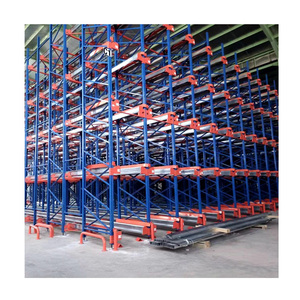
Adjustable High-Speed Auto Pallet Shuttle Racking System
- Payload Capacity: 500 – 1,500 kg/Pallet
- Operating Speed: Up to 1.1 m/s (Loaded)
- Operational Mode: FIFO / LIFO Automated
- Steel Grade: Q235B / Q355B Certified
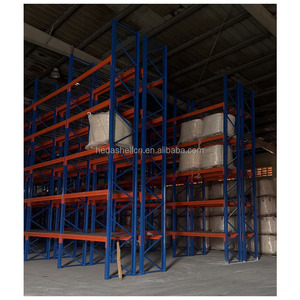
Wholesale Heavy-Duty Warehouse Steel Pallet Storage Racking
- Beam Loading: 1,000 – 4,500 kg/Level
- Upright Height: Up to 14,000 mm
- Pitch Adjustability: 50mm / 75mm Step
- Surface Finish: Epoxy Powder Coat
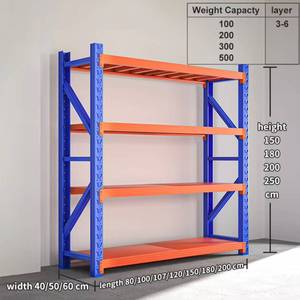
Customizable Industrial Steel Warehouse Pallet Shelving Rack
- Load per Tier: 300 – 1,000 kg/Layer
- Structural Type: Boltless / Bolted Modular
- Shelf Decking: Wire Mesh / Galvanized Panel
- Application: MRO, Spares & Retail Hubs
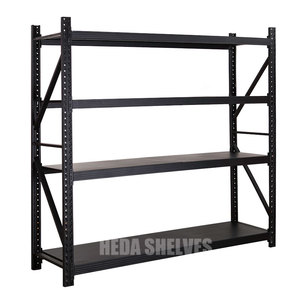
Medium-Duty Longspan Industrial Warehouse Steel Shelving
- Layer Capacity: 200 – 500 kg/Shelf
- Assembly Design: Interlocking Butterfly Hole
- Deck Options: Steel / Plywood / PVC Mesh
- Corrosion Grade: Electrostatic Pre-treated
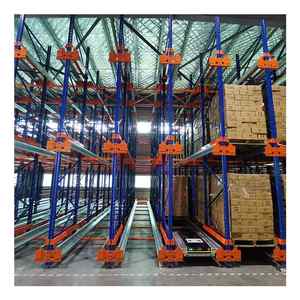
Sub-Zero Cold Storage Radio Shuttle Pallet Racking System
- Temperature Range: -30°C to +40°C Low Temp
- Battery Standard: Lithium-Iron Phosphate
- Density Boost: +70% Over Selective Rack
- Finish Option: Hot-Dip Galvanized / Epox
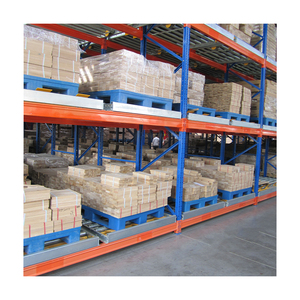
Heavy-Duty Selective Steel Pallet Rack Warehouse System
- Beam Section: Interlocking Box / Step Beam
- Safety Lock: Spring-Steel Drop Pins
- Accessibility: 100% Direct Immediate SKU
- Forklift Aisle: Standard 3.2m / VNA 1.6m
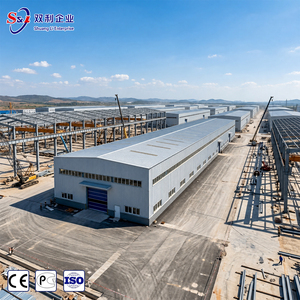
Integrated Multi-Tier Rack-Supported Mezzanine Floor System
- Deck Load Rating: 300 – 1,000 kg/m²
- Vertical Levels: 2 to 4 Structural Tiers
- Integrated Parts: Staircases, Gates & Rails
- Floor Option: Perforated Steel / Plywood
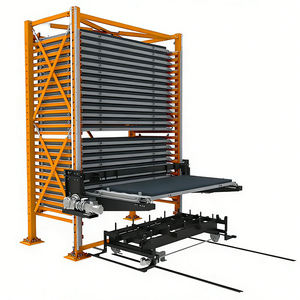
Heavy-Duty Vertical Sheet Metal & Plate Storage Racks
- Profile Handling: Sheet Metal, Panels, Bars
- Load per Bay: 1,500 – 5,000 kg
- Retaining Feature: Adjustable Divider Rods
- Damage Prevention: Nylon / Polyurethane Guards
Guangzhou HEDA Shelves: Enterprise Manufacturing Excellence
Operating continuously since 2001, Guangzhou Heda Shelves Co., Ltd. is an industry-leading designer and exporter of heavy-duty warehouse racking, dynamic material handling systems, and engineered mezzanines serving over 120 countries worldwide.
Continuous Cold-Roll Forming
Our workshop features precision multi-station continuous roll-forming lines engineered for complex omega upright columns and interlocking box beams, ensuring dimensional tolerances within ±0.5mm across extended vertical lengths up to 14 meters.
Pre-Treatment & Anti-Corrosion
Prior to coating, steel members undergo automated pickling, degreasing, and phosphate bath immersion. Our electrostatic thermosetting polyester powder coating provides 60–90µm thickness, resisting high-humidity tropical microclimates and coastal salinity.
Verified International Compliance
Every structural system complies with global intralogistics standards: CE Certification No. 2435-CPR-8605159, ISO 9001:2015 Quality Management No. 18624Q00169R0M, and rigorous RoHS material safety protocols, giving contractors complete regulatory confidence.
Free CAD, 3D & FEA Engineering
Our dedicated structural engineering department provides complimentary CAD floor plans, realistic 3D volumetric renders, and Finite Element Analysis (FEA) load calculations to optimize beam deflection ratios, clear aisle widths, and seismic stability before production.
Export Containerization Ergonomics
Components are pre-sorted, digitally barcoded, bundled with steel straps, and protected with foam corner guards. Specialized container-loading protocols maximize standard 40HQ payload efficiency up to 26.5 metric tons while eliminating transit scratching and bending.
End-to-End Installation Supervision
Every shipment is delivered with modular component numbering, 3D erection guides, and video walk-throughs. For enterprise projects in Malaysia, Thailand, Vietnam, Indonesia, or the Middle East, our technical directors deploy on-site for erection oversight and safety sign-off.
Structural Anatomy, Metallurgy & Safety Factors in Industrial Shelving
Evaluating raw material chemistry, structural geometry, and seismic anchorage mechanics to maximize warehouse floor load capacity while safeguarding operational human life.
High-Tensile Metallurgy: Q235B vs. Q355B Steel
The structural backbone of high-capacity warehouse racking depends on the yield strength ($f_y$) and ultimate tensile strength ($f_u$) of cold-rolled steel coils. Premium Chinese manufacturers utilize certified hot-rolled pickling coils from Tier-1 mills (such as Baosteel, Shougang, and Ansteel). While commercial retail shelving utilizes standard Q195 or Q215, industrial high-bay racks demand high-ductility Q235B (yield strength $\ge 235 \text{ MPa}$) or Q355B low-alloy manganese steel (yield strength $\ge 355 \text{ MPa}$) for seismic bracing and columns exceeding 8 meters in height.
The modulus of elasticity ($E = 2.05 \times 10^5 \text{ MPa}$) ensures that beam deflection under Maximum Uniformly Distributed Load (UDL) remains strictly within European FEM 10.2.02 and US RMI MH16.1 thresholds: $L/200$ for standard pallet storage, and $L/300$ or tighter for automated radio shuttle, AGV lanes, and AS/RS high-rack tolerances.
- Upright Profile Geometry: Continuous 11-13 fold omega cross-sections optimizing the radius of gyration ($r_x, r_y$) against torsional buckling.
- Interlocking Beam Claws: 3-claw to 5-claw high-ductility cast steel connector brackets engineered to transfer bending moments into vertical columns smoothly.
- Positive Safety Locks: Integral spring-actuated heavy locking pins that resist accidental forklift tine upward dislodgement forces exceeding 5.0 kN.
- Base Plate Anchoring: Cold-pressed structural steel footings anchored with M12–M16 high-tensile wedge expansion bolts to concrete slabs $\ge 200 \text{mm}$ (Class C25/30 minimum).
| Structural Member | Standard Dimensions | Tolerance Limit |
|---|---|---|
| Upright Column | 80x60 / 90x70 / 100x70 / 120x95 mm | ±0.5 mm |
| Upright Thickness | 1.5 mm, 1.8 mm, 2.0 mm, 2.5 mm | ±0.08 mm |
| Box Beam Profile | 80x50, 100x50, 120x50, 140x50 mm | ±0.4 mm |
| Beam Deflection | FEM 10.2.02 / RMI Standard Limit | Max L/200 |
| Powder Coating | Thermosetting Pure Polyester | 60 – 90 µm |
| Salt Spray Endurance | ASTM B117 Neutral Salt Spray Test | $\ge 500$ Hours |
| Seismic Resistance | IBC / Eurocode 8 / AS 4084 | Zone 1 to 4 Custom |
| Racking Architecture | Space Utilization | SKU Selectivity | Forklift Compatibility | Ideal Application Sector | Relative Cost Index |
|---|---|---|---|---|---|
| Selective Pallet Racking | 40% – 50% Volumetric | 100% Direct | Counterbalance, Reach, VNA | E-commerce fulfillment, 3PL FMCG DCs | Baseline (1.0x) |
| Drive-In / Drive-Through | 65% – 75% High Density | LIFO / FIFO Strict | Standard Reach / Counterbalance | Bulk homogeneous items, seasonal agricultural goods | 1.25x – 1.4x |
| Radio Shuttle System | 75% – 85% Ultra Dense | Automated Batch | Standard Forklift (Outside Lane) | Cold storage, meat/seafood, beverage plants | 2.2x – 3.0x |
| Rack-Supported Mezzanine | 180% – 250% (Multi-Floor) | Multi-Tier Pick | Manual Cart, Pallet Jack, Conveyor | Automotive spares, apparel, pharmaceutical packing | 1.6x – 2.1x |
| Heavy-Duty Cantilever | Linear Continuity | 100% Lengthwise | Side Loader, Four-Way Reach | Steel pipes, aluminum profiles, timber, rebar | 1.3x – 1.6x |
Future Procurement Trends: Where Modern Warehousing is Heading
Global supply chain volatility, urban real-estate spikes, and automated intralogistics are reshaping how procurement managers specify industrial shelving infrastructure.
Convergence of Shuttle Systems & Autonomous Mobile Robots (AMRs)
Traditional fixed-aisle selective racking is increasingly complemented by semi-automated pallet shuttles and autonomous ground vehicles. Racking suppliers are engineering tighter floor guide rails, laser-guided target reflectors, and wireless sensor channels directly into cold-formed upright profiles to facilitate seamless AMR fleet handovers.
Severe Climate Resilience & Green Galvanizing Metallurgy
With high-growth logistics corridors expanding across tropical ASEAN, coastal Middle East, and Latin American ports, buyers are moving away from basic indoor powder paints toward continuous hot-dip zinc-aluminum-magnesium (ZAM) alloy coatings that deliver up to four times greater corrosion resistance in 85%+ relative humidity environments.
Digital Twins & Dynamic Structural Health Monitoring
Next-generation rack procurement contracts require integration with IoT strain sensors and acoustic impact accelerometers affixed to base columns. Facility operators track micro-deflections caused by forklift collisions or seismic tremors in real time, preventing catastrophic progressive collapse before it occurs.
Circularity, Modular Disassembly & Scope 3 Decarbonization
Multinational 3PLs are mandating Environmental Product Declarations (EPD) for structural steel procurement. Standardized slotted upright patterns and demountable interlocking beam connectors enable warehouse operators to disassemble, reconfigure, expand, or recycle 100% of the steel infrastructure when leasing contracts expire.
Evolution of Industrial Shelving: From Static Angles to Intelligent High-Bay Density
Tracking the transition from manual angle-iron shelving to fully automated, seismically isolated high-density logistics ecosystems.
Phase 1: Manual Slotted Angle Shelving
Historically, warehouses relied on low-gauge bolted angle steel shelves (100–150 kg per layer) assembled with wrench bolts. While versatile for light manual picking, these structures suffered from low vertical height utilization (rarely exceeding 2.5 meters), labor-intensive installation, and high vulnerability to lateral shear under heavy pallet loads.
Phase 2: Standardized Selective Pallet Racks
The industrialization boom introduced teardrop and diamond-punched heavy-duty pallet racking systems. Standardizing on 50mm and 75mm beam adjustment pitches permitted dynamic warehouse re-profiling to accommodate changing Euro (1200x800mm) and ISO/American (1200x1000mm) pallets, scaling warehouse clear heights up to 10–12 meters with reach trucks.
Phase 3: Automated High-Bay Clad-Rack AS/RS
Modern mega-fulfillment centers now adopt self-supporting rack-clad buildings where the racking structure itself supports the exterior roof, wall panels, and stacker cranes up to 40 meters high. This eliminates costly traditional civil building columns, tripling cubic space utilization while minimizing footprint in high-cost metropolitan transit nodes.
Frequently Asked Questions by Global Logistics Procurement Directors
In-depth technical answers addressing international engineering standards, sea freight containerization, seismic calculations, and customs compliance.
How do Chinese racking standards (GB/T 28576) translate to European EN 15512, US RMI, and Australian AS 4084 codes?
Tier-1 Chinese manufacturers like Guangzhou HEDA Shelves design and manufacture strictly in accordance with client-specified regional structural building codes. The core material yield strength formulas of China's GB/T standard are mathematically mapped to EN 15512 (European Committee for Standardization) for EU/UK clients, ANSI/RMI MH16.1 (Rack Manufacturers Institute) for North American operations, and AS 4084:2023 for Australasia. Our structural engineering team provides verified Third-Party Finite Element Analysis (FEA) reports, calculating permissible load deflections, vertical sway limits, second-order $P-\Delta$ moments, and safety factor coefficients ($\gamma = 1.4 \sim 1.5$) under full static and dynamic load conditions.
How are high-density racking systems engineered for seismically active regions such as the Philippines, Indonesia, or Japan?
Seismic engineering requires calculating horizontal base shear forces based on local Peak Ground Acceleration (PGA) and soil profile classifications (Soil Types A through E under IBC/Eurocode 8). In earthquake zones, our designs incorporate: (1) Widened and thickened high-ductility base plates ($\ge 12\text{mm}$ thickness) to distribute moment loads; (2) Dual or quad heavy-duty chemical capsule or mechanical seismic expansion anchors per post; (3) Heavy-gauge vertical upright spine bracing and horizontal top-tie portal frames that unify separate racking runs into a rigid spatial box truss structure; and (4) Pallet safety backstops and wire mesh back cladding to prevent pallet tumble hazards during harmonic building oscillations.
What surface treatments protect steel shelving from severe humidity, coastal salinity, or sub-zero condensation?
Standard commercial paints fail rapidly in 80%+ humidity or cold storage environments. HEDA Shelves uses a multi-stage industrial coating workflow: (1) Automatic shot-blasting or alkaline degreasing to remove scale; (2) Acid pickling followed by zinc phosphate chemical surface conversion, forming a dense micro-crystalline rust-inhibiting substrate; (3) High-voltage electrostatic application of TGIC-free thermosetting polyester powder (60–90 µm thickness) cured at 200°C; (4) For high-salinity marine air or sub-zero cold storage down to -30°C where moisture condensation is chronic, components undergo Hot-Dip Galvanization (HDG) in accordance with ISO 1461, yielding a zinc layer thickness $\ge 65\text{–}85 \text{µm}$ that delivers decades of maintenance-free anti-corrosion protection.
How does HEDA optimize container packing to eliminate transit damage and reduce ocean freight cost per pallet location?
Structural steel components represent high weight-to-volume freight. Our dedicated shipping logistics engineers use 3D container packing simulation software to calculate exact center-of-gravity distribution inside standard 20GP, 40GP, and 40HQ ocean containers. Upright frames are pre-assembled or nested flat, bundled with high-tensile PET/steel banding straps, and shielded with heavy edge protectors, foam interleaving, and moisture-absorbing silica packs. Beams are palletized in interlocking bundles separated by timber dunnage to allow rapid unloading via counterbalance forklifts at the destination port. This approach achieves 96%+ volumetric container efficiency, packing up to 26 metric tons per 40HQ and reducing per-pallet transit costs significantly.
What critical input parameters are required to generate a complimentary CAD warehouse design and price quotation?
To provide an engineered layout and transparent quotation within 24–48 hours, our technical team requires: (1) Warehouse architectural drawings (DWG/PDF) indicating building boundary dimensions, internal column grid locations, overhead truss clear heights, sprinkler clearances, and emergency exit paths; (2) Concrete floor slab specifications, including thickness, rebar mesh, and permissible point load rating ($kN/m^2$); (3) Pallet specifications: Width $\times$ Depth $\times$ Overall Height (including cargo overhang) and maximum gross weight per unit; (4) Forklift specifications: model type, turning radius, and maximum mast lift reach; and (5) Operational throughput goals: FIFO vs. LIFO stock rotation, total SKU profile count, and picking methodologies.
What on-site installation guidance and quality assurance support do you offer for overseas projects?
Every export shipment includes comprehensive digital documentation: localized 3D isometric assembly drawings, connection bolt torque specification sheets, beam elevation charts, and component identification tags. Furthermore, HEDA provides three levels of field installation support: (1) Remote digital supervision with real-time video inspection of plumb alignment and torque verification; (2) Dispatch of Senior Erection Engineers to manage and supervise local general contractor labor forces on site; or (3) Turnkey delivery and installation teams who execute the entire project from offloading through to final load testing and safety compliance sign-off.