Enterprise Solutions
High-Throughput Picking Racks & Industrial Storage Systems
Explore certified structural racking designed for direct picking access, high SKU rotation, dynamic gravity movement, and extreme bulk pallet load capacity.
2001.
Founded & Dedicated to Logistics Engineering
30,000t
Monthly Precision Roll-Forming Output
10,000+
Global Industrial Projects Deployed
120+
Countries Receiving Direct Export Logistics
Engineering Whitepaper
Optimizing Warehouse Picking Architectures: Technical Selection Guide
In modern high-velocity distribution centers, the physical picking rack is no longer a static steel shelf—it is an active node governing manual fulfillment rates, picker ergonomics, SKU density, and travel-time minimization.
Dynamic Gravity Carton Flow Systems
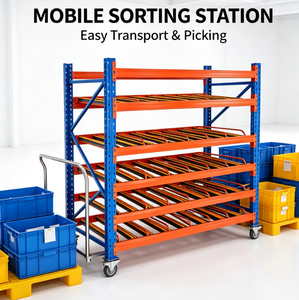
Integrating inclined roller tracks with split-lane aluminum separators ensures automatic First-In, First-Out (FIFO) material progression. Replenishment tasks are executed exclusively from the rear loading aisle, completely isolating restocking traffic from active front picking operators. This reduces worker travel time by up to 40% in high-turnover pharmaceutical and FMCG distribution centers.
Rack-Supported Mezzanine Catwalks
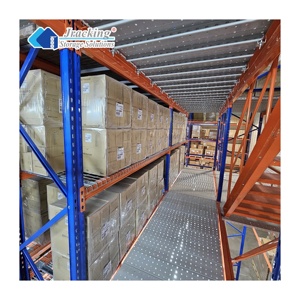
When vertical facility clearance exceeds 6.5 meters, converting overhead air rights into multi-tier picking platforms eliminates expensive structural expansion. Heavy-duty upright profiles act simultaneously as primary pallet racking supports and secondary flooring framing, sustaining live uniform floor loads from 300 kg/m² up to 1,000 kg/m² for simultaneous multi-level parcel sorting.
High-Density Selective & Double Deep
For high-bay installations balancing pallet storage with individual case-pick operations, reinforced bottom beam levels equipped with wire mesh decking or drop-in galvanized shelf plates provide immediate order picking clearance, while upper tiers sustain structural pallet buffers up to 4,500 kg per beam level under stringent deflection ratios (L/200).
Structural Deflection & Steel Ductility Standards
Industrial racking systems installed in high-seismic zones (such as Indonesia and the Philippines) or high-load continuous cycles must maintain exceptional tensile yield strength. HEDA Shelves utilizes cold-rolled Q235B and Q345B structural carbon steel. Our proprietary Omega-profile upright posts feature 11-to-13-fold continuous cold roll-formed return bends, substantially enhancing torsional resistance and load-carrying capacity compared to standard commercial C-sections.
Pre-treatment involves a rigorous 10-stage process: alkaline degreasing, industrial pickling to remove mill scale, zinc phosphate conversion coating, and electrostatic spray-applied polyester powder baking at 180°C–200°C. This molecular bond prevents rust creep under extreme 85%+ relative humidity conditions common throughout Southeast Asian and coastal logistics parks.
Strategic Procurement
Emerging Procurement Trends for Warehouse Racking Systems
Enterprise procurement managers, EPC logistics contractors, and 3PL executives face evolving operating realities. The global shift centers on automation readiness, environmental resistance, and lifecycle cost predictability.
ASRS & AMR Hybrid Readiness
Procurement specifications increasingly mandate that picking racks interface seamlessly with Autonomous Mobile Robots (AMRs) and automated shuttle carriers. Tolerances in beam deflection, hole punch centerlines, and ground guide rails must meet automated optical sensor standards rather than broad manual forklift tolerances.
Climate-Specific Surface Engineering
Standard indoor dry powder coating fails prematurely in tropical logistics corridors. Enterprise buyers now specifically tender for thermosetting epoxy-polyester electrostatic finishes pre-treated with zinc-nickel phosphating, or pre-galvanized beam inserts designed to eliminate condensation corrosion in cold chain warehouses down to -30°C.
Total Cost of Ownership (TCO) Shift
Global supply chain directors avoid low-gauge spot steel suppliers lacking verifiable mechanical warranties. Sourcing evaluation metrics prioritize structural integrity (CE Certification EN 15512 / ISO 9001:2015), containerized volume packing efficiency (FOB/CIF cost optimization), and the provision of verifiable third-party stress test documentation.
Standardized Modular Reconfiguration
Due to shortening retail product life cycles and rapid e-commerce SKU expansion, picking rack structures are required to be 100% modular. Boltless beam drop-in connections, universal 50mm or 75mm pitch adjustability, and standardized accessory clip-ons ensure physical footprints can adapt without field cutting or hot work permits.
Industry Horizon
Structural R&D Trends: The Evolution of Industrial Racking
Continuous materials engineering and smart warehousing logistics are transforming the core design of storage structures across the manufacturing ecosystem.
Ultra-High Tensile Cold Roll-Forming
The transition from conventional low-carbon hot-rolled steel toward micro-alloyed, cold-rolled high-strength steels allows manufacturers to reduce self-weight while sustaining identical or increased yield moments. Progressive 24-station rolling mills ensure uniform web thickness and eradicate localized internal stress along the profile bend radii.
IoT-Integrated Deflection & Impact Sensors
Modern mega-hubs are integrating low-power wireless strain gauges and accelerometers into base plates and critical upright protectors. Instant alerts notify warehouse management systems (WMS) of structural forklift collisions or dynamic overloading exceeding permissible shear limits, safeguarding human operators in manual pick tunnels.
BIM & Digital Twin CAD Integration
Static layout drawings are entirely replaced by Building Information Modeling (BIM) files. Precision structural calculations account for building slab thickness, subsoil settlement, HVAC ducting, and automated in-rack fire sprinkler clearances, validating physical tolerances prior to factory coil slitting and containerized dispatch.
Procurement Intelligence
Frequently Asked Questions: Global Industrial Sourcing
Direct technical answers addressing engineering standards, containerized transit, seismic load limits, and factory direct customization.
Q: How do you determine the safe load rating for a warehouse picking rack beam level?
Safe working loads are calculated in strict compliance with EN 15512 and RMI standards. Our structural engineers compute beam section modulus based on clear entry span, pallet or tote footprint dimensions, center of gravity, and uniform distributed load (UDL). The standard beam deflection limit is constrained to L/200 (1/200th of the span) under maximum design load, incorporating a minimum safety factor of 1.5 to 1.65 against structural yield.
Q: What is the transit lead time from Guangzhou to Southeast Asian and European ports?
Operating from our Guangzhou industrial manufacturing hub adjacent to Nansha and Shenzhen container terminals, sea transit is exceptionally short: 2–5 days to Haiphong/Cat Lai (Vietnam), 3–5 days to Manila (Philippines), 5–7 days to Singapore and Bangkok/Laem Chabang (Thailand), 6–8 days to Port Klang (Malaysia), and 7–10 days to Jakarta (Indonesia). Direct European main port routes (Rotterdam, Hamburg, Felixstowe) range between 28 and 35 maritime days.
Q: How are cold-formed steel racking systems protected against coastal humidity and condensation?
Components undergo an automated 10-step surface treatment. Raw steel is thoroughly degreased and chemically pickled to remove surface oxides, followed by an immersion phosphate wash to create a crystalline corrosion-resistant barrier. We apply an electrostatic thermosetting polyester-epoxy powder coating cured at up to 200°C. For deep-freeze cold storage or outdoor coastal yards, hot-dip galvanizing conforming to ISO 1461 is provided.
Q: Can HEDA Shelves engineer racking systems for high-seismic zones?
Yes. In regions such as the Philippines, Indonesia, and the Pacific Rim, rack design cannot rely solely on static gravity calculations. Our engineering office performs full seismic analysis using Finite Element Modeling (FEM) based on site-specific soil classifications (Ss, S1), ground acceleration factors, and peak velocity parameters. We engineer oversized base plates, reinforced cross-aisle bracing towers, and mechanical wedge anchors to absorb seismic ground motion.
Q: What structural credentials and factory compliance certificates can you provide for project tenders?
We supply verifiable official certification documents indispensable for institutional logistics tenders, including CE Certificate No. 2435-CPR-8605159 (execution of steel structures), ISO 9001:2015 Quality Management System Certification No. 18624Q00169R0M, and RoHS hazardous materials compliance. Every shipment includes certified mill test certificates (MTC) matching the specific steel coils used during production.
Q: How do you optimize container loading to prevent in-transit freight damage and minimize shipping costs?
All upright frames, horizontal beams, and steel shelves are nested and mechanically bound with heavy-duty polyester strapping and corner protectors. Upright frame bundles are custom-spaced to container interior widths, and heavy parts are distributed across container axle lines. By maximizing volume utilization up to 98% in 40ft High Cube containers, we significantly lower the landed freight cost per pallet position.
Enterprise Authority
Why Tier-1 Importers Partner with Guangzhou Heda Shelves
Combining over two decades of heavy industrial manufacturing capability with bespoke logistics engineering support directly from the factory floor.
25+ Years of Proven Manufacturing
Established in 2001, Guangzhou Heda Shelves Co., Ltd. has developed into an internationally recognized manufacturer specializing in heavy-duty racking, carton flow picking lines, cantilever structures, and multi-tier mezzanines. Our engineering depth guarantees structural safety and precision manufacturing tolerances.
30,000 m² Modern Production Base
Equipped with advanced automated continuous rolling production lines, high-precision laser profile cutting units, robotic welding cells, and automated electrostatic powder coating lines. Our 30,000-ton monthly throughput ensures predictable lead times even during global supply chain pinches.
Complimentary 2D/3D Engineering Layouts
Before any commercial commitment, our engineering team produces comprehensive AutoCAD warehouse floor plans, detailed 3D architectural renderings, and structural deflection calculations based on your specific SKU profile, clear ceiling heights, and material handling fleet specifications.
Controlled 10-Step Quality Assurance
From initial raw steel coil chemical testing to precision cutting, computerized punching, roll forming, welding inspection, ultrasonic testing, and dry film thickness (DFT) checks on powder coatings, quality verification is executed at every manufacturing milestone rather than checked solely at packing.
Bespoke OEM/ODM Engineering
We serve overseas distributors, systems integrators, and logistics contractors with custom beam-end connectors, unique punching pitch configurations (50mm/75mm/76.2mm), tailored corporate color matching, and private label carton and beam branding for regional markets.
End-to-End Installation & Export Support
Every international shipment arrives with marked, modular components, detailed step-by-step 3D assembly manuals, and instructional video guidance. For major logistics developments, we provide remote engineering consultation and on-site supervisor deployment.
Request an Engineered Layout & Complete Product Catalog
Connect directly with our Guangzhou logistics engineering department. Submit your architectural floor plan, pallet dimensions, and throughput goals for an immediate design proposal, full technical specifications, and factory-direct FOB/CIF pricing.
Get Catalog