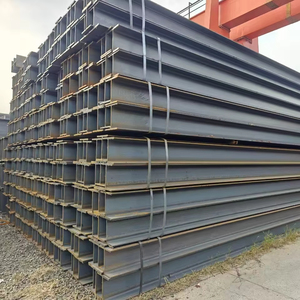
 Structural
Low MOQ H Beam Q235B 12m Length for Warehouse Rack
Ultra-high load structural H-beam frameworks designed for high-bay stability and high seismic risk zones.
View SpecificationsCustom structural calculations, ISO 9001:2015/CE certified raw Q235B cold-rolled steel, and flexible configurations built for global supply chains.
Structural
Ultra-high load structural H-beam frameworks designed for high-bay stability and high seismic risk zones.
View Specifications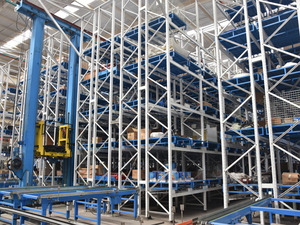 Cold Chain
Optimized for high-density cold storage, food processing plants, and temperature-controlled facilities.
View Specifications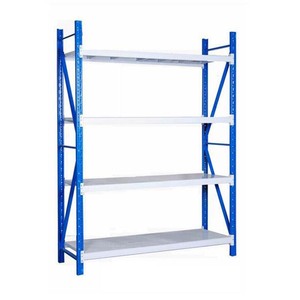 High Bay
Direct 100% pallet selectivity for rapid logistics distribution centers, VNA systems, and industrial hubs.
View Specifications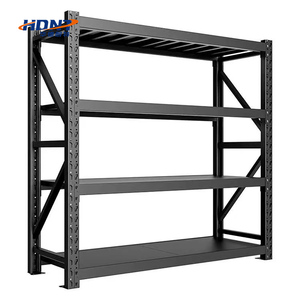 Multi-Tier
Modular boltless industrial shelving with corrosion-resistant finish for workshops, tools, and maintenance storage.
View Specifications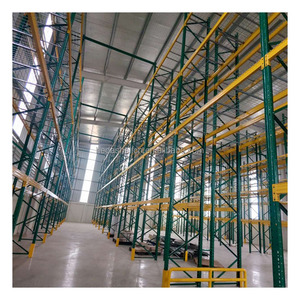 Logistics
Turnkey high-throughput warehousing packages equipped with column guards, mesh decking, and pallet supports.
View Specifications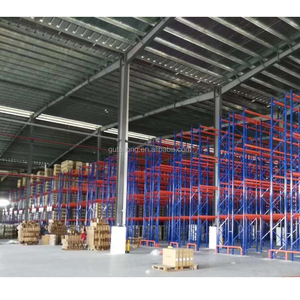 High Density
Eliminate operating aisles to maximize floor cubic usage. Ideal for high batch runs under strict FIFO rotation.
View Specifications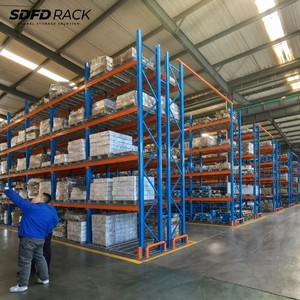 Customized
Reinforced steel shelving panels engineered for variable parcel dimensions, bulk cartons, and non-standard skids.
View Specifications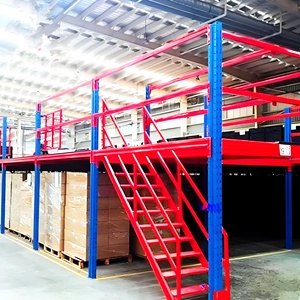 Mezzanine
Double or triple your vertical clearance utility without horizontal expansion, certified to ISO9001 and CE norms.
View SpecificationsModern warehouse racking procurement has shifted from comparing raw steel weight to comprehensive structural lifecycle assessments. As supply chain infrastructure consolidates across Southeast Asia (Malaysia, Vietnam, Thailand, Indonesia, Philippines, Singapore) and Western distribution centers, supply chain directors must evaluate seismic safety, corrosion longevity, and total cost of ownership (TCO).
Procuring warehouse racking from Chinese manufacturing hubs requires analyzing factors beyond FOB metrics:
| Storage System Type | Space Density | Direct Selectivity | Handling Equipment Required | Ideal Industry Use-Case |
|---|---|---|---|---|
| Selective Pallet Racking | Moderate (35–40%) | 100% Immediate | Standard Counterbalance / Reach Truck | FMCG, 3PL Warehousing, Retail Distribution |
| Double Deep Racking | High (50–60%) | 50% Direct | Deep-Reach Pantograph Forklift | Cold Storage, Dry Groceries, Paper Mills |
| Radio Shuttle Automation | Maximum (75–85%) | Lane Dependent (FIFO/LIFO) | Standard Forklift + Radio Pallet Runner | Sub-Zero Freezers, Beverage Bottling, Raw Grain |
| Rack-Supported Mezzanine | Vertical Max (200–300%) | Tiered Manual Access | Conveyors, Vertical Lifts, Order Pickers | E-commerce Fulfilment, Auto Spares, Apparel |
The industry is transitioning toward hybrid automation. While fully automated AS/RS stacker crane systems require substantial capital outlays, semi-automated systems like Radio Shuttle Racks and AMR-compatible High-Bay Mezzanines bridge the efficiency gap. Structural uprights are increasingly roll-formed with tighter engineering tolerances (within ±0.5mm profile deflection) to ensure autonomous guided vehicles navigate aisles without sensor disruption.
Founded in 2001, Guangzhou HEDA Shelves operates a state-of-the-art 30,000 m² heavy-machinery production complex. Supplying commercial warehousing, industrial production, and government logistics projects across 120+ nations, HEDA combines certified engineering with direct South China logistics advantages.
Equipped with continuous automated roll-forming lines, automated punching, CNC bending, and robotic welding rigs that produce certified profiles without internal micro-fissures.
Verified documentation: CE Certificate No. 2435-CPR-8605159, ISO 9001:2015 Management System No. 18624Q00169R0M, and RoHS testing for international site permits.
HEDA structural designers calculate beam deflection limits, rack column loading, and aisle clearance tolerances, providing complete 3D layouts before production commences.
Key technical considerations regarding steel grades, testing parameters, and container freight.
We primarily use certified Q235B cold-rolled steel (equivalent to ASTM A36 / European S235JR) from premier Chinese steel mills like Baosteel and Shougang. For ultra-heavy structural capacities, Q355B (S355JR) can be specified. Mill test certificates (MTCs) detailing yield strength, elongation, and chemical composition accompany every shipment.
Our engineering team designs pallet beams to meet the deflection limit of L/200 under maximum uniformly distributed load (UDL), in accordance with FEM 10.2.02 and ANSI MH16.1 standards. Each beam connector includes safety lock pins that prevent accidental dislodgement from upward forklift impact.
To prepare an accurate CAD proposal and load layout, we require: (1) Warehouse building dimensions, clear roof clearance, and column grid layout; (2) Pallet footprint (W x D x H) including overhang and maximum load weight; (3) Forklift model, minimum turning radius, and maximum lift height; (4) Total required SKU positions.
Factory production ranges from 15 to 25 business days depending on tonnage. Port-to-port sea transit from Guangzhou/Nansha is roughly 2–5 days to Vietnam, 3–5 days to Manila, 5–7 days to Singapore/Laem Chabang, 6–8 days to Port Klang, and 7–10 days to Jakarta. Every crate contains piece-marked structural drawings and 3D installation videos; on-site installation supervisors are available for large implementations.
Request our comprehensive product catalog, complete with technical load charts, component specifications, and factory direct engineering layouts.
Get Catalog