Featured Industrial Teardrop Racking Systems
Engineered for universal compatibility, robust boltless assembly, and dynamic warehouse distribution. Shipped factory-direct to regional logistics hubs and international distributors.
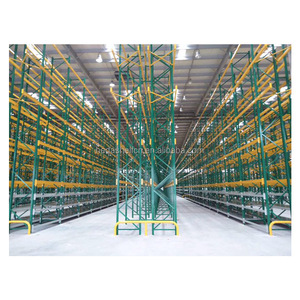
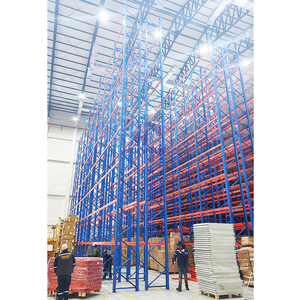
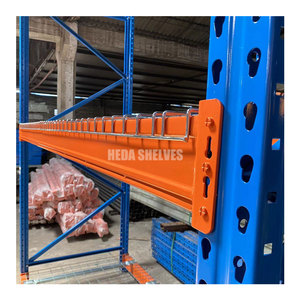
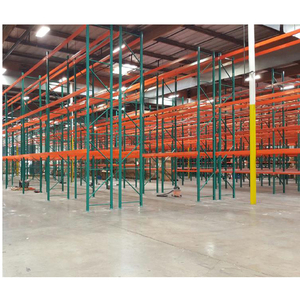
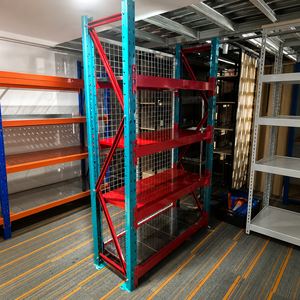
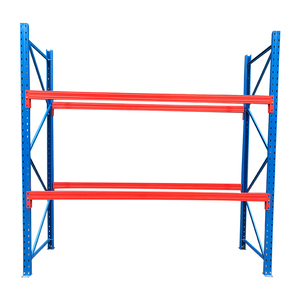
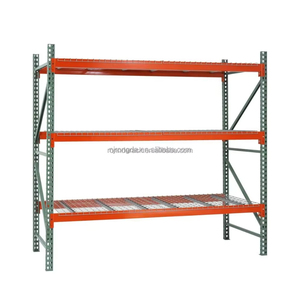
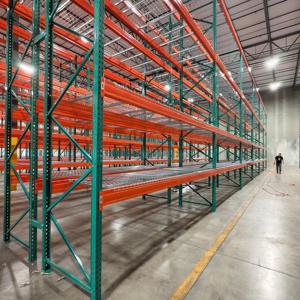
The Engineering Dynamics of Teardrop Pallet Racking Systems
Evaluating structural integrity, precision cold-roll manufacturing, steel grade metallurgy, and the mechanics that established teardrop design as the predominant global storage standard.
In modern industrial intralogistics, selective pallet storage forms the critical interface between material processing, freight logistics, and consumer fulfillment. Among the myriad profiles developed over the past half-century, the Teardrop Pallet Rack configuration has solidified its position as the de facto benchmark across North America, the Asia-Pacific (ASEAN), and expansive global supply chain nodes. Characterized by an inverted teardrop-shaped punching pattern on the front face of vertical uprights, this mechanical coupling system utilizes gravitational engagement combined with mechanical taper pins to create a rigid, self-wedging structural connection without the need for manual bolting during beam adjustments.
From an engineering and metallurgic perspective, the structural reliability of teardrop pallet racks relies heavily on the quality of certified carbon structural steel, precision roll-forming tolerances, and the strict adherence to cold-formed steel design specifications (such as ANSI MH16.1 issued by the Rack Manufacturers Institute - RMI). Industrial facilities handling varying pallet configurations demand rack systems that resist not only deadweight vertical gravity loads, but also transient seismic forces, asymmetric deflection, and potential side impacts from heavy counterbalanced forklifts, reach trucks, and Autonomous Guided Vehicles (AGVs).
Universal Cross-Compatibility
Standardized 2-inch vertical hole increments guarantee universal interchangeability across diverse American-style components, enabling warehouse expansion without vendor lock-in or complete upright retrofitting.
Gravity Self-Wedging Locks
As step-beam rivets seat downward into the tapered aperture, structural stiffness increases proportionally with live load weight. Spring-actuated safety clips prevent accidental dislodgement from upward forklift bumps.
Optimized Sectional Modulus
Advanced profile geometry incorporates continuous cold-rolled stiffening ribs down the upright column's rear web, providing superior torsional rigidity and enhanced resistance to lateral column buckling.
Future Procurement & Industry Development Trends
How smart warehouses, evolving cold-chain logistics, and automated handling equipment are reshaping heavy-duty steel rack specifications globally.
The global storage equipment procurement landscape is moving rapidly beyond transactional price comparisons toward whole-lifecycle performance and automation adaptability. Global supply chain leaders, warehouse construction developers, and 3PL enterprises now factor dynamic seismic criteria, automated intralogistics workflows, and strict sustainability directives directly into their Request For Proposal (RFP) documentation.
AGV & AMR Integration
Warehouses deploying mobile robots demand hyper-accurate beam level tolerances (within ±1.0mm) to allow laser-guided pallet drops without spatial friction or sensor misalignments.
Severe Cold-Chain Expansion
With refrigerated pharma and fresh food trade accelerating across Southeast Asia and the Americas, cold-formed steel must endure deep-freeze environments (-25°C to -35°C) without brittle structural fracture.
High-Efficiency Flat Packing
Escalating ocean freight and carbon costs favor nested column profiles and modular bolted upright frame designs, which compress container cubic consumption by up to 35% compared to pre-welded frames.
Site-Specific Seismic Calc
Regional codes (e.g., in the Pacific Ring of Fire including the Philippines, Indonesia, and West Coast Americas) necessitate finite-element seismic analysis with broadened base plates and double-anchored footings.
Why Source from Guangzhou Heda Shelves Co., Ltd.?
Over 25 years of specialized engineering excellence, automated cold-forming lines, and comprehensive quality assurance protocols driving warehouse installations in 120+ countries.
30,000 m² Modern Facility
Headquartered in Guangzhou, our state-of-the-art facility features automated uncoiling, high-speed continuous punching, precision roll-forming, robotic welding, and fully enclosed electrostatic powder-coating lines.
Certified Global Compliance
We hold verified CE Certificate No. 2435-CPR-8605159, ISO 9001:2015 Quality Management No. 18624Q00169R0M, and RoHS certifications. Every export batch is fully traced back to mill-certified prime steel coils.
Comprehensive Engineering Support
Our dedicated team of 300+ technical specialists provides complimentary 2D AutoCAD layout planning, 3D spatial modeling, and structural deflection calculations, matching building constraints to forklift turning radii.
10-Step In-House Controlled Quality Workflow
From raw prime carbon steel coils to final export container stowing, quality verification occurs at every mechanical transition point.
High-tensile Q235B/Q355 hot-rolled steel inspection.
High-accuracy decoiling and continuous edge slitting.
Automated high-speed punch forming 2-inch teardrop pitches.
Multi-station gradual roll stations avoiding residual stress.
Online laser-guided dimensional check and cutting.
Automated shot-blasting and mechanical scale removal.
CO₂ shielded multi-point beam connector bracket welding.
Chemical immersion pre-treatment ensuring powder adhesion.
Thermoset epoxy polyester cure resisting humidity & scuffs.
Cushioned bundling & container-optimized loading protocols.
Frequently Asked Questions for Global Buyers
Everything you need to know about purchasing teardrop pallet racking systems from China, including specifications, compatibility, shipping, and quality assurance.
Are HEDA teardrop pallet racks compatible with existing US racking brands?
Yes. Our teardrop uprights and step beams are precision engineered using standard 2-inch vertical center-to-center hole patterns, adhering fully to the standard American teardrop geometry. This ensures total mechanical interchangeability with popular systems like Interlake Mecalux, Speedrack, Ridg-U-Rak, and Unarco, allowing you to expand or repair existing configurations seamlessly.
What steel grades and structural safety factors are applied in manufacturing?
We utilize high-yield certified carbon structural steel, predominantly Q235B (comparable to ASTM A36) and Q355B (comparable to ASTM A572 Grade 50) for heavy-load applications. Structural calculations incorporate a standard minimum safety factor of 1.67 to 1.95 in accordance with RMI and CE standards, preventing permanent plastic deformation under rated static and impact conditions.
How does HEDA protect pallet racks against corrosion in humid or coastal climates?
Prior to coating, steel members undergo multi-stage chemical immersion including alkaline degreasing, acid pickling, and zinc-phosphate conversion. Components then receive an electrostatic application of high-grade thermosetting epoxy-polyester powder, cured at 180°C–200°C. For coastal installations, cold-storage, or chemical yards, hot-dip galvanizing with 60–85 micron zinc thickness is available.
What parameters are required to generate an optimized warehouse layout proposal?
To provide free CAD blueprints, 3D renderings, and precise quotation bills of materials, we typically require: building architectural plans (including clear roof height and column grid coordinates), pallet dimensions (Width × Depth × Height including cargo overhang), maximum gross pallet weight, forklift model (turning radius, mast collapsed/extended height), and target SKU throughput.
What are typical manufacturing lead times and port-to-port maritime shipping durations?
Standard production lead time ranges between 15 and 25 days depending on project tonnage. Located in Guangzhou with direct proximity to Nansha, Huangpu, and Shenzhen ports, sea transit is extremely competitive: 2–5 days to Vietnam, 3–5 days to Manila, 5–7 days to Singapore and Bangkok, 6–8 days to Port Klang, 12–16 days to Australian main ports, and 18–24 days to US West Coast terminals (FOB, CIF, and DDP supported).
Ready to Engineer Your High-Efficiency Warehouse Storage?
Connect directly with our Guangzhou senior engineering team for tailored load calculations, customized AutoCAD layout designs, and competitive factory-direct pricing for your next pallet rack project.