Featured Industrial Shelving & Warehouse Racking Systems
Factory-direct warehouse storage engineered under ISO 9001:2015 and CE standards. Explore our benchmark heavy-duty uprights, dynamic flow lanes, automated shuttle systems, and modular pallet racks.
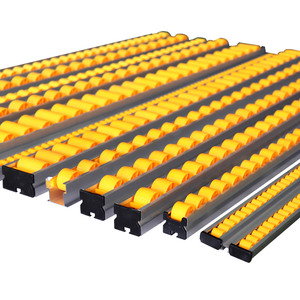
Gravity Flow Roller Track PE ABS 200KG Carton Rack
- Load: 200 kg per roller level
- Rotation: Strictly automated FIFO
- Tracks: Heavy-duty PE / ABS wheels
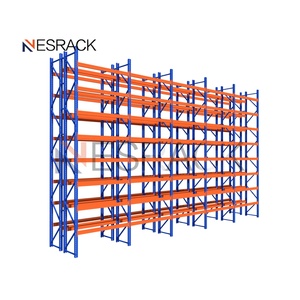
Heavy Duty Pallet Rack System with Wire Mesh Decking
- Load: 1,000–3,500 kg per tier
- Safety: Galvanized wire mesh deck
- Compliance: Fire sprinkler penetration
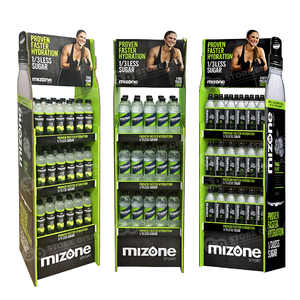
Modular Pop Up Floor Corrugated Display Shelf Stand
- Structure: Foldable corrugated core
- Use: Supermarket point-of-sale display
- Assembly: Tool-free instant setup
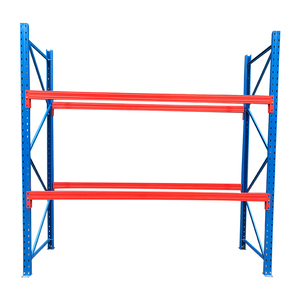
Adjustable Steel Teardrop Pallet Racking System
- Pattern: 2-inch teardrop interchange
- Material: High-yield Q235B / Q355B steel
- Lock: Auto spring safety pins
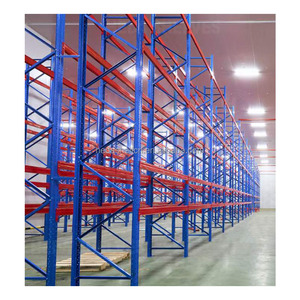
Industrial Commercial Warehouse Storage Rack Shelves
- Configuration: Multi-level picking shelf
- Finish: Epoxy-polyester powder coat
- Target: Distribution hubs & 3PLs
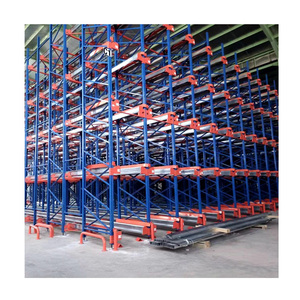
High-Speed Radio Auto Pallet Shuttle Racking System
- Speed: Up to 1.1 m/s empty, 0.8 m/s loaded
- Control: Radio remote & WMS interface
- Environment: Cold store rated down to -25°C
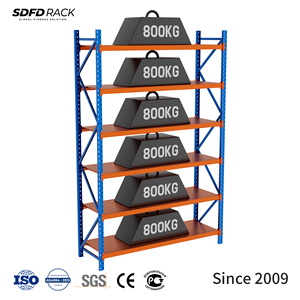
Selective 4-6 Layer 800-2000kg Pallet Racking
- Selectivity: 100% direct pallet access
- Beams: Interlocking box profile with pins
- Pitch: 50mm / 75mm adjustability
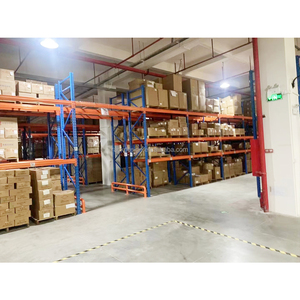
Industrial High Bay Heavy Duty Pallet Rack Uprights
- Frame Height: Custom rolled up to 14 meters
- Profile: Multi-bend Omega (Ω) cold-formed
- Bracing: Bolted diagonal and horizontal C-truss
Need Custom Loading Calculations or a Free Warehouse 3D CAD Layout?
Our structural engineers provide load-deflection profiles (FEM 10.2.02 / RMI standards) and full AutoCAD space optimization drawings within 24 hours. Request our latest technical catalog today.
Evaluating Industrial Racking: Structural Integrity, Steel Metallurgy, & Deflection Limits
A definitive engineering assessment designed for global supply chain directors, industrial architects, and warehouse safety auditors procuring heavy storage infrastructure from China.
1. The Mechanical Science of Cold-Formed Steel Uprights & Beam Connectors
In modern warehouse logistics, racking systems are not static steel frameworks; they are precision-engineered, dynamic structural assemblies subjected to combined axial compression, eccentric torsional buckling, and transient seismic vibration. When sourcing industrial racking from Chinese manufacturers, the primary metallurgical metric begins with the grade of structural steel. Top-tier fabricators strictly deploy high-yield, cold-rolled coils conforming to Q235B (yield strength $f_y \ge 235 \text{ MPa}$) or high-stress Q355B (yield strength $f_y \ge 355 \text{ MPa}$, equivalent to European S355JR or ASTM A572 Grade 50).
The geometric configuration of the upright column determines the entire system's slenderness ratio ($\lambda$) and resistance to local distorsional buckling. Advanced cold roll-forming lines bend the steel strip through continuous multi-pass rolling stations into an intricate Omega ($\Omega$) cross-section containing up to 11 longitudinal stiffening bends. These micro-bends dramatically increase the section's second moment of area ($I_x, I_y$) without surplus deadweight, achieving remarkable load-to-weight ratios.
2. Deflection Thresholds, Dynamic Impact Capacities, & Safety Factors
Under rated operational loads, pallet rack beams experience elastic sagging. If the clear span is 2,700 mm (a standard two-pallet bay), a deflection limit of $L / 200$ allows a maximum mid-span sag of 13.5 mm. However, in automated guided vehicle (AGV) or turret truck (VNA) operations, excessive deflection can trip optical mast sensors or cause mast binding. Therefore, China's best manufacturers utilize dual-C welded interlock box beams (formed by stitching two C-profiles together via continuous automated seam welding). This box construction eliminates open-channel torsional warping and ensures maximum resistance to lateral impact from forklift fork tines.
| Racking Architecture | Storage Density Index | SKU Selectivity Rate | Throughput Speed | Relative CAPEX / Pallet | Primary MHE Required |
|---|---|---|---|---|---|
| Selective Pallet Racking | Baseline (40% - 50%) | 100% Direct Access | Very High (Manual/Fast) | Low (Benchmark) | Standard Counterbalance / Reach |
| Double Deep Racking | Moderate-High (+30%) | 50% Immediate Access | Medium | Moderate | Pantograph Reach Truck |
| Drive-In / Drive-Through | Ultra-High (+75%) | Low (Batch LIFO / FIFO) | Low-Medium (Slow entry) | Moderate-Low | Narrow Counterbalance Truck |
| Gravity Pallet Flow | High (+60%) | Strict FIFO Automatic | High (Continuous dispatch) | High (Roller & brake units) | Standard Forklifts |
| Radio Shuttle Automation | Maximum (+85%) | Controlled LIFO / FIFO | High (Sub-lane shuttle auto) | High-Advanced | Standard Truck + Shuttle Car |
| Rack-Supported Mezzanine | Volumetric Vertical (+100%) | 100% Manual Picking | High (Multi-tier sortation) | Medium-High | Conveyors, Vertical Lifts, Carts |
3. Chemical Passivation & Electrostatic Powder Coating Dynamics
A frequent failure point of low-cost steel racking exported to tropical, maritime, or high-humidity regions (such as Southeast Asia, Latin America, or the Middle East Gulf) is sub-film filiform corrosion. When steel is merely degreased and painted, atmospheric chloride ions and moisture permeate micro-voids, causing internal oxidation that leads to sudden delamination and structural fatigue.
HEDA Shelves enforces a rigorous 10-stage automated pre-treatment and finishing process. Raw cold-rolled steel components pass through heated alkaline wash baths, acid pickling to eradicate all microscopic mill scale, high-pressure rinsing, and a dense zinc-iron phosphating conversion stage. The resulting crystalline chemical conversion layer seals the bare metal against moisture. Next, automated reciprocator spray guns deposit high-grade TGIC-free epoxy-polyester powder at 60 to 80 microns thickness, followed by 200°C convection curing. This delivers a salt spray test rating exceeding 500 hours (ASTM B117) and pencil surface hardness greater than 2H.
Guangzhou HEDA Shelves: 25+ Years of Certified Engineering Excellence
Founded in 2001, Guangzhou Heda Shelves Co., Ltd. operates state-of-the-art manufacturing facilities serving global EPC contractors, logistics hubs, automated fulfillment centers, and multinational distributors.
Seismic Engineering Compliance
Finite Element Analysis (FEA) calibrated for site-specific spectral acceleration ($S_s, S_1$). Optimized for seismic zones in the Philippines, Indonesia, New Zealand, and the Americas with thickened ductile base plates and dual-anchor floor bolts.
Audited CE & ISO Credentials
Holding verifiable CE Certificate No. 2435-CPR-8605159, ISO 9001:2015 Certification No. 18624Q00169R0M, and comprehensive RoHS chemical compliance for international industrial procurement clearance.
Zero-Cost Structural Design
Complimentary warehouse engineering consultancy. Receive full AutoCAD 2D layout schematics, 3D photorealistic architectural models, dynamic forklift turning radius clearance checks, and static structural load calculations.
Container-Optimized Logistics
Direct deep-water port proximity via Guangzhou and Nansha. Components are color-coded, steel-banded, and bundled to maximize container cubic capacity (40HQ), reducing ocean shipping tariffs per pallet position.
10-Stage Precision Manufacturing Control
Raw Steel Testing
Spectrometric assay & yield check of prime Q235B/Q355B coils.
CNC Slitting & Cut
High-tolerance automated longitudinal shearing.
Column Punching
High-speed continuous CNC multi-hole tooling lines.
Roll Profile Forming
18-station progressive cold roll-forming for beam & uprights.
Robotic Welding
CO2 gas-shielded automated robotic arm connector welding.
Shot Blasting & Degrease
Surface descaling and oil elimination baths.
Acid Pickling & Phosphating
Dense microscopic crystalline zinc-iron conversion coating.
Electrostatic Coating
Automated Swiss Gema powder application (60-80μm).
High-Temp Curing
200°C polymerization tunnel for molecular surface bonding.
Static QC & Packaging
Full dimensional audit, load test, and timber-cradled packing.
Future Warehouse Racking Procurement Trends (2025–2030)
How structural modularity, warehouse automation integration, carbon-neutral steel, and high-density micro-fulfillment are reshaping commercial procurement decisions globally.
Convergence of AS/RS & Shuttle Systems
Purely manual selective racking is transitioning rapidly toward semi-automated radio shuttle lanes and mother-child shuttle systems. Warehouses require structural rack tolerances down to ±1.5 mm to ensure seamless pallet engagement by autonomous robotic carriers and high-speed cranes.
Low-Carbon Green Steel & Recyclability
Global ESG mandates are driving multinational logistics operators to account for Scope 3 supply chain emissions. Chinese manufacturers are deploying scrap-fed Electric Arc Furnace (EAF) steel and zero-VOC powder formulations that reduce embodied carbon by up to 38% per ton of installed rack.
Extreme Sub-Zero Thermal Metallurgy
With frozen food, pharmaceutical, and vaccine hubs surging, racking must resist low-temperature embrittlement down to -30°C. Procurement standards prioritize killed fine-grained steels with Charpy V-notch impact toughness certified at sub-zero temperatures, paired with hot-dip galvanizing.
Multi-Tier Mezzanine Micro-Fulfillment
Urban land costs are driving logistics operations upward. Rack-supported catwalk platforms and multi-tier mezzanine floors that multiply clear building heights into 3 or 4 usable picking levels are experiencing exponential adoption across e-commerce and retail parcel distribution hubs.
Seismic Engineering & Finite Element Verification
Warehouse racking installations situated in active seismic zones (such as Southeast Asia, Japan, California, or the Mediterranean) must be analyzed as unbraced steel portal frames in the down-aisle direction and braced trusses in the cross-aisle direction. Under seismic acceleration, the rack experiences intense dynamic P-Delta ($\text{P}-\Delta$) second-order effects.
HEDA Shelves utilizes advanced 3D FEA simulation software to model beam-to-column semi-rigid rotational stiffness ($K_b$). Base plates are engineered with ductile structural steels, enlarged footprint dimensions, and dual wedge anchor bolts embedded into concrete foundations to dissipate kinetic shear forces without catastrophic collapse.
Verifiable International Compliance & Material Testing
International tenders require strict proof of factory capability and independent verification. Every batch of cold-formed steel manufactured in our Guangzhou production hub is tracked by mill test certificates (MTC) stating precise chemical carbon equivalents, manganese content, and tensile yield points.
Frequently Asked Questions by Global Warehouse Equipment Buyers
Critical technical, logistical, and structural questions answered by our senior racking design engineers.
Q What primary parameters are required to calculate structural load capacities?
To produce exact static load calculations and CAD schematics, our engineering team requires: (1) Pallet footprint dimensions including overhang (Width × Depth × Height), (2) Maximum gross pallet weight, (3) Clear internal warehouse ceiling height below sprinklers, (4) Concrete slab compressive strength (e.g., 25–30 MPa) and floor thickness, (5) Forklift model, maximum lift mast height, and minimum turning aisle width (AST).
Q How does HEDA Shelves protect steel racks in tropical and coastal environments?
Unlike workshops that apply liquid paint over untreated metal, our components undergo a full chemical immersion sequence including acid pickling, rinse baths, and iron-zinc phosphating. We then apply thermoset epoxy-polyester electrostatic powder coating cured at 200°C. For extreme outdoor or coastal high-salinity zones, we supply hot-dip galvanized components conforming to ISO 1461.
Q How do you ensure compliance with regional seismic building codes?
When designing racking for earthquake-prone territories (such as the Philippines, Indonesia, Chile, or California), we calculate site-specific ground acceleration values ($S_s, S_1$) and seismic importance factors. Upright frames are engineered with augmented cross-bracing profiles, oversized base plates, and high-tensile anchor bolts to resist overturning moment forces and lateral seismic sway.
Q What is the typical lead time and ocean freight shipping transit from Guangzhou?
Manufacturing lead time for standard selective or teardrop pallet racking typically ranges from 15 to 25 days depending on tonnage. Port-to-port sea transit from Guangzhou / Nansha port is remarkably fast: 2–5 days to Vietnam, 3–5 days to Manila, 5–7 days to Singapore and Bangkok, 6–8 days to Port Klang, 12–16 days to Australia, and 20–25 days to Western Europe and US West Coast ports.
Q What is the difference between Q235B and Q355B steel in racking design?
Q235B steel offers a minimum yield strength of 235 MPa, which is ideal for standard selective racking, medium-duty shelving, and lighter frame members. Q355B offers a minimum yield point of 355 MPa (approx. 51% stronger in tension). Utilizing Q355B allows for slimmer upright walls while sustaining extreme vertical loads, critical for high-bay installations exceeding 10 meters.
Q Can we integrate wire mesh decking with existing fire suppression systems?
Yes. Our heavy-duty wire mesh decking panels feature a 50×50 mm or 50×100 mm open mesh pattern with welded underneath channel supports. This design exceeds NFPA 13 fire code standards by permitting over 70% water flow penetration from overhead ceiling fire sprinklers down through multi-tier pallet positions while preventing fallen product accidents.
Q How do you guarantee component nesting and container load efficiency?
Every pallet racking order is computer-simulated for 40-foot High Cube (40HQ) container utilization. Upright frames can be shipped semi-knocked-down (bolted assembly on site) to prevent excessive cubic dead space, while step beams and box beams are bundled with steel strapping and protective edge protectors. This protocol maximizes container payload up to 26–28 metric tons.
Q What installation guidance and structural warranties are provided?
Every export shipment includes comprehensive 3D step-by-step assembly drawings, component numbering tags matching shipping manifests, and digital video installation walkthroughs. On-site engineering supervision or certified installation teams can be dispatched for large-scale enterprise projects. All structural steel components carry a standard 5-year structural integrity warranty.
Optimize Your Warehouse Footprint With Factory-Direct Engineering
Send us your building dimensions, clear height, and pallet specifications. Our registered structural engineers will configure a compliant, high-density storage layout that multiplies your pallet capacity while lowering equipment cost per position.
- Complete 2D & 3D CAD Warehouse Drawings
- FEM 10.2.02 Structural Load Calculations
- Direct Factory Pricing Without Intermediary Markups
- FOB, CIF, or DDP Shipping Terms to Any Major Global Port
Request Official 2025/2026 Product Catalog
Direct PDF download including technical load charts, beam section properties, and upright selection tables.
Get Catalog