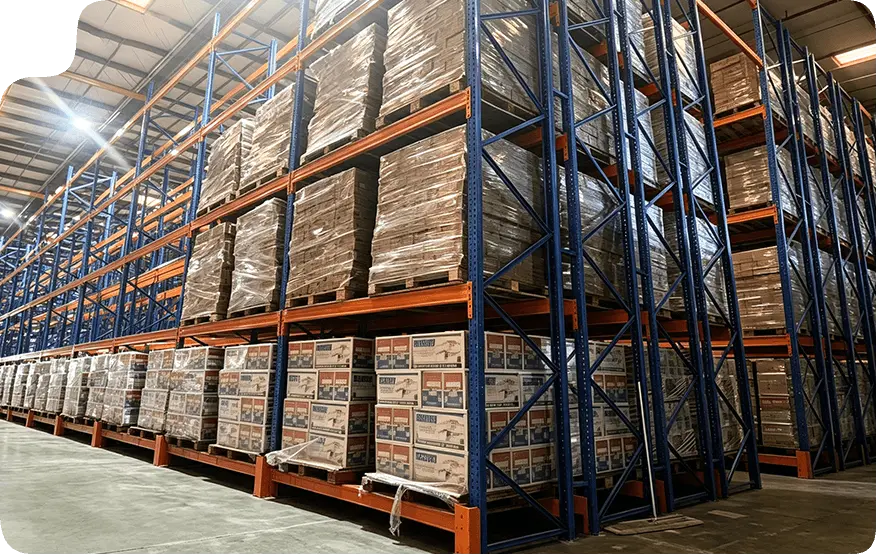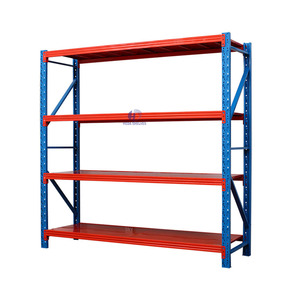
Adjustable Metal Boltless Storage Rack
Custom-slotted modular shelving engineered for rapid assembly and quick SKU manual reconfiguration in regional distribution hubs.
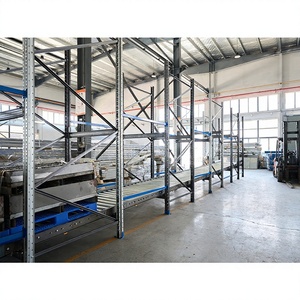
Manufactured using high-tensile structural steel (Q235B / Q355B) and precision dynamic roller tracks. Engineered to minimize forklift travel cycles, prevent pallet blockages, and maximize cubic warehouse utilization.
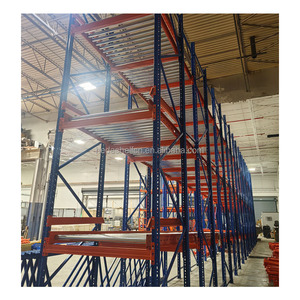
Custom-slotted modular shelving engineered for rapid assembly and quick SKU manual reconfiguration in regional distribution hubs.
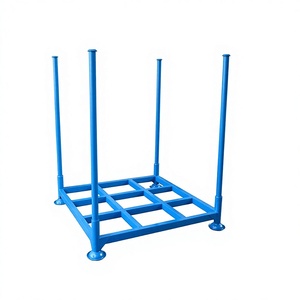
Ergonomic inclined aluminum roller tracks delivering continuous replenishment for high-velocity carton picking lines and fulfillment centers.
Reinforced tubular cradles designed to securely cradle cylindrical rolls, technical textiles, carpets, and heavy coiled industrial goods without creasing.
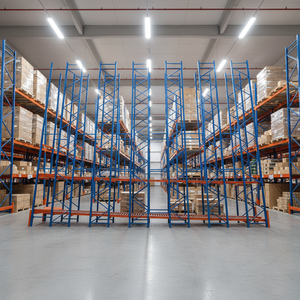
Deep-lane dynamic pallet flow racking incorporating magnetic centrifugal brake rollers and automated entry-pallet separation mechanisms.
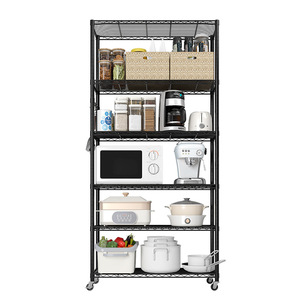
High-load carbon steel wire construction fitted with smooth 3-inch locking wheels, ideal for dust-free electronics and clean-room staging.
Engineered with full-width galvanized steel rollers, built-in end-stops, and structural cross-bracing for high-density cold chain operations.
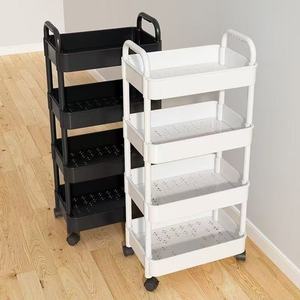
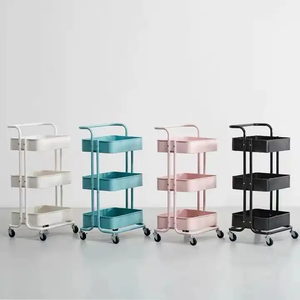
Compact and versatile rolling storage cart designed for fast order packing lines, industrial assembly stations, and dynamic tool handling.
Precision fabricated carbon steel trolley rack equipped with heavy load bearings, rigid grab handles, and high-impact rim protection.
Roller racking storage—frequently engineered as pallet flow racking or carton flow tracks—relies entirely on gravitational potential energy converted into controlled kinetic displacement. Unlike static drive-in or selective racking, dynamic gravity flow eliminates transit forklift aisles between loading and unloading faces, recovering up to 65% of lost floor space while enforcing strict First-In, First-Out (FIFO) stock rotation.
However, achieving reliable operation without pallet stalls or high-speed impacts requires precise calculation of the declination gradient, roller friction coefficients, and pallet bottom-board deflection. As a leading manufacturer based in Guangzhou, HEDA Shelves designs roller racking channels around verified structural and kinetic tolerances:
Poorly engineered roller tracks manufactured with thin-gauge commercial tubing frequently suffer from bearing race seizure, deflection jamming, and paint delamination under humid warehouse conditions. HEDA integrates heavy-wall (minimum 1.5mm to 2.5mm) zinc-electroplated steel rollers matched with precision sealed 6002-2RS bearings, guaranteeing zero maintenance failure over multi-year high-cycle operations.
Industrial supply chains are pivoting toward high-throughput micro-fulfillment, sub-zero cold chains, and automated guided vehicles (AGV/AMR). Procurement teams must evaluate how roller storage adapts to these operational shifts:
Modern roller channels are increasingly deployed as drop-and-retrieve buffers for autonomous mobile robots. This requires ultra-precise end stops, retro-reflective sensor mounting points, and structural tolerance controls within ±1.0mm.
With food, seafood, and biopharma hubs expanding, roller tracks must operate flawlessly at down to -30°C. Lubrication is replaced with synthetic low-viscosity greases, and roller shells are hot-dip galvanized to defeat freeze-thaw condensation.
Procurement teams are actively auditing the carbon footprint of structural steel. HEDA utilizes cold roll-formed, high-yield Q355B coils that reduce steel consumption by 14% while exceeding ISO/CE static deflection criteria.
E-commerce SKU proliferation has driven carton flow systems onto intermediate mezzanine catwalks. Segmented polyolefin plastic wheel beds permit fast lane-width adjustments without hand tools as packaging footprints change.
Next-generation dynamic storage has moved beyond unpowered mechanical rollers. Discover the cutting-edge engineering developments HEDA integrates into its pallet flow lines:
Unlike traditional internal friction-disc speed controllers that wear out over repeated cycles, eddy-current magnetic braking operates contactless. Braking torque scales quadratically with speed, eliminating mechanical friction wear.
Accommodates mismatched Euro (800x1200mm) and GMA/ISO (1000x1200mm) pallets on the same line. Split dual-roller configurations prevent bottom runner splintering and eliminate skewed tracking down the channel.
Integrated pneumatically released roller sections for automated carton lines. Prevents fragile cartons from crushing under the cumulative weight of backlogged inventory at fulfillment pick-faces.
IoT wireless shock sensors embedded into lane end-buffers. Real-time telemetry notifies warehouse supervisors immediately if an anomalous impact or lane stall occurs in high-density automated zones.
Choosing between gravity roller flow, drive-in, push-back, and automated radio shuttle systems requires balancing volumetric density against SKU velocity and capital investment. Review the engineering metrics below:
| Storage Topology | Inventory Logic | Floor Space Utilization | Forklift Cycle Time | Initial CapEx | Operational Safety Risk |
|---|---|---|---|---|---|
| Gravity Pallet Flow (Roller Racking) | Strict FIFO | Up to 75% | Ultra-Low (Dedicated Faces) | Medium – High | Very Low (No Forklifts in Lanes) |
| Drive-In / Drive-Through Racking | LIFO (Typical) | 60% – 70% | High (Slow Mast Positioning) | Low | High (Frequent Column Collisions) |
| Push-Back Cart Racking | LIFO (2–5 Deep) | 55% – 65% | Moderate | Medium | Low (Single Aisle Operation) |
| Radio Shuttle Racking | FIFO / LIFO | Up to 80% | Very Low (Automated Carrier) | High (Robotic Shuttles) | Very Low |
| Standard Selective Pallet Racking | 100% Selective | 35% – 45% | High Travel Required | Lowest | Moderate |
Founded in 2001 in Guangzhou, China, Guangzhou Heda Shelves Co., Ltd. is a recognized engineering and manufacturing powerhouse in dynamic material handling and industrial racking systems.
Over a quarter-century of focused engineering in heavy pallet flow, carton flow beds, and multi-tier mezzanine platforms. Our systems have solved high-density storage challenges for over 10,000 projects globally.
Our structural engineering department provides complimentary architectural CAD layout proposals, complete 3D virtual walkthroughs, and finite element analysis (FEA) deflection calculations before purchase.
Every steel upright, load beam, and roller channel passes through automated 10-stage pickling, ultrasonic degreasing, and phosphating prior to electrostatic powder coating, withstanding humid coastal environments.
Located in Guangzhou directly adjacent to Nansha and Huangpu ports, our logistics pipeline delivers short sea transits: 2–5 days to Vietnam, 3–5 days to Manila, 5–7 days to Singapore, and 6–8 days to Port Klang.
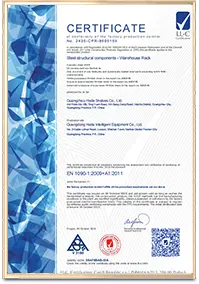
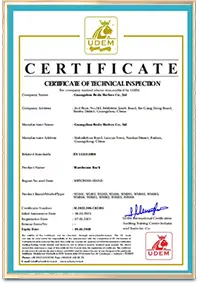
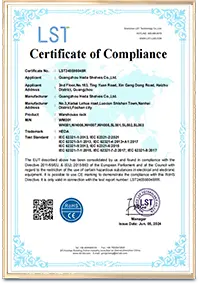
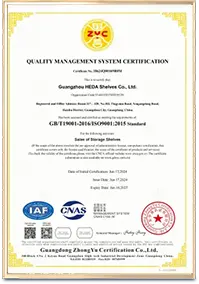
HEDA holds European standard CE Certification No. 2435-CPR-8605159, ISO 9001:2015 Quality Management No. 18624Q00169R0M, and strict RoHS material safety certifications for all components.
From seismic-reinforced baseplates designed for active earthquake zones to custom roller track widths, RAL color coding, and branded upright beam wraps, every system matches your facility's exact requirements.
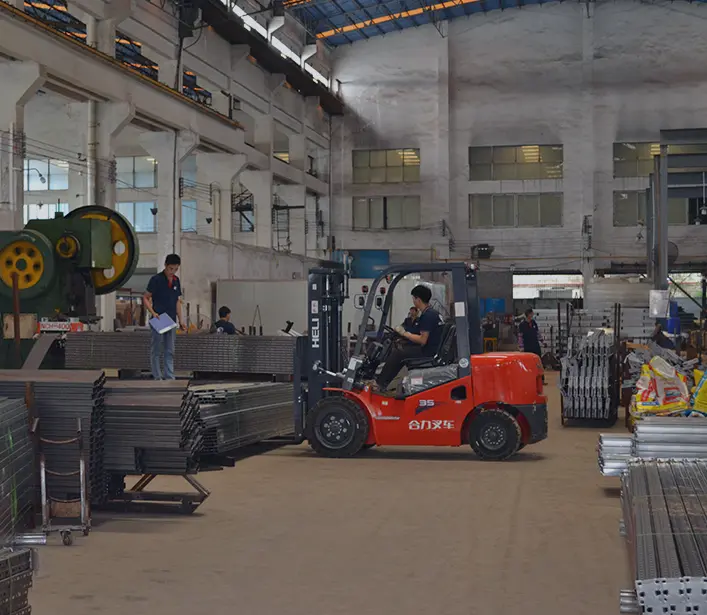
Full in-house fabrication ensuring end-to-end quality control from raw steel coil inspection to container loading.
Verifiable compliance documentation for tenders, structural reviews, and municipal approvals.
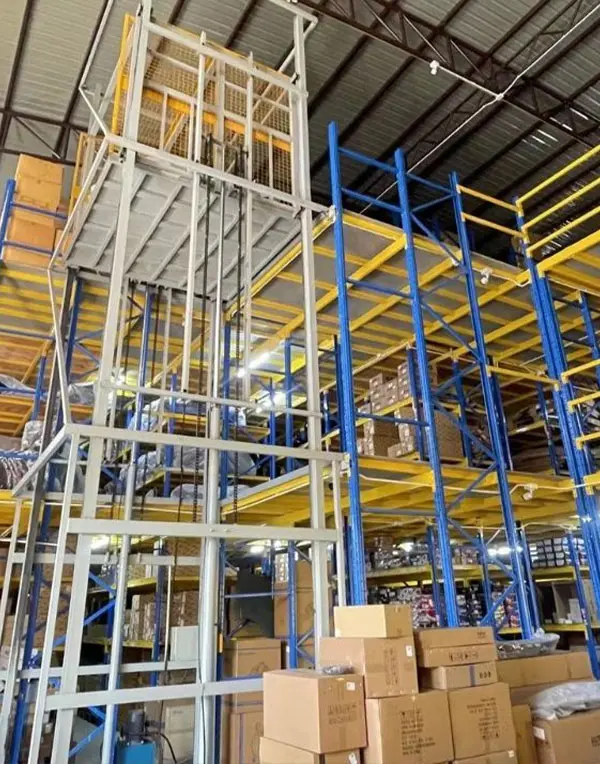
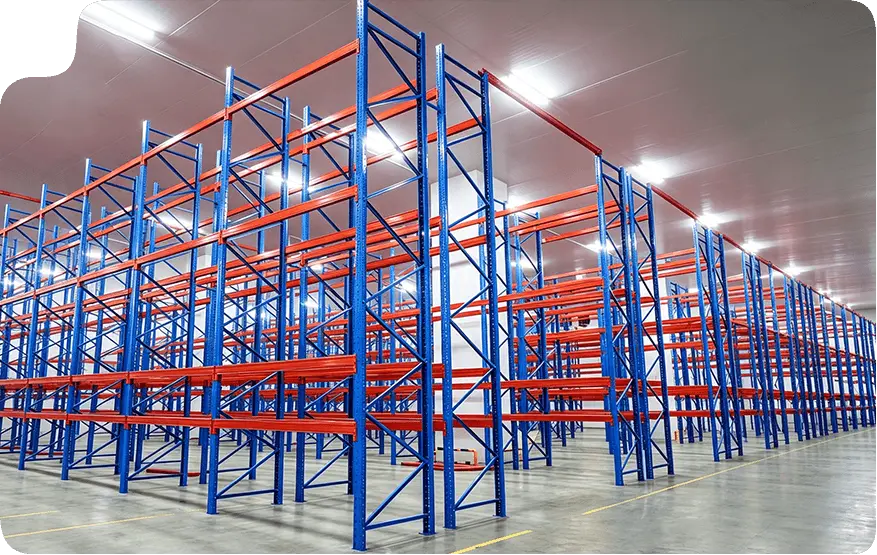
Real installations highlighting how our customized roller tracks and structural racking resolve space constraints and accelerate order picking workflows:
Comprehensive engineering answers addressing the key mechanical, operational, and commercial criteria of roller racking storage:
Roller pitch is determined by the rule of minimum contact: a wooden or plastic pallet must always rest continuously on a minimum of three rollers beneath each runner to prevent dipping and stalling. For standard 1200mm GMA/Euro pallets, a 100mm to 150mm roller pitch is standard. The slope angle is calibrated between 1.5° (2.5% grade) for heavy loads (1000–1500kg) and 2.2° (3.8% grade) for lighter payloads (300–600kg).
We integrate dynamic centrifugal brake rollers spaced at calculated intervals (typically every pallet length after the second pallet position). As the pallet rolls, its friction rotates the brake roller; centrifugal flyweights expand against an internal brake drum, governing terminal descent speed to a safe 0.20 – 0.30 m/s regardless of lane length.
Broken bottom boards, protruding nails, or severe wood bowing can cause pallet flow blockages. For facilities handling mixed or lower-grade pallets, HEDA configures full-width galvanized steel rollers instead of 2-track or 3-track split lanes, distributing ground pressure and preventing runner sagging between rollers.
Every upright frame and horizontal beam undergoes an automated 10-step pickling, degreasing, and phosphating process followed by an electrostatic thermosetting epoxy-polyester powder coating (70–90 microns). Roller tubes are hot-dip galvanized or zinc electroplated with anti-corrosion passivated coatings, and roller bearings feature rubber seals (2RS) packed with moisture-resistant lubricants.
In deep lanes (4 to 20 pallets deep), the cumulative gravitational force of trailing pallets pushes heavily on the front pallet. A mechanical load separator holds back the queue 150–200mm behind the front pallet. When the forklift lifts and retrieves the front pallet, a floor trip-lever automatically releases the queue to advance one position smoothly.
Yes. Our structural engineers design systems according to regional building codes (such as NSCP for the Philippines and SNI for Indonesia). We reinforce column upright gauges, increase footplate thickness, specify high-embedment anchor bolts, and engineer heavy-duty diagonal back-bracing trusses to absorb horizontal seismic shock waves.
To provide a precise engineering proposal, we need: (1) Warehouse architectural drawings indicating clear height under roof joists and column grids; (2) Pallet specifications including L x W x H, bottom runner layout, and gross weight; (3) Forklift model, mast lift reach, and turning radius; and (4) Daily SKU throughput targets.
Standard production lead time is 15 to 25 days depending on project tonnage. Ocean freight directly from our Guangzhou facility takes approximately 2–5 days to Vietnam, 3–5 days to Manila, 5–7 days to Singapore/Bangkok, 6–8 days to Malaysia, and 14–22 days to Australian or Middle Eastern hubs.
Eliminate wasted floor space, accelerate order picking, and reduce forklift fleet collisions. Connect directly with HEDA's structural engineering team to receive a free 2D/3D CAD warehouse layout plan, structural load calculations, and competitive factory-direct pricing.
Download our complete 2025–2026 dynamic roller flow engineering specification catalog and project design handbook.
Get Catalog