Engineered Upright Frame Systems & High-Density Pallet Racks
Direct from Guangzhou factory floor. Built with automated continuous punch indexing, heavy-duty closed box profiles, and multi-hook bracket geometry for maximum axial load stability.
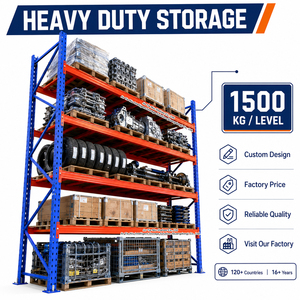
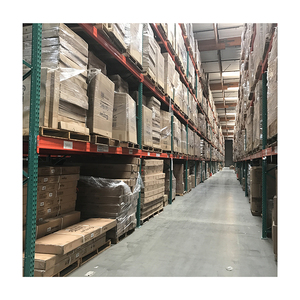
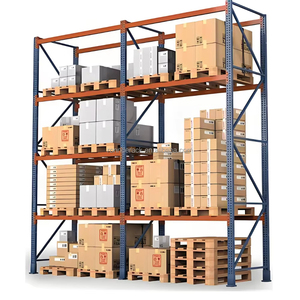
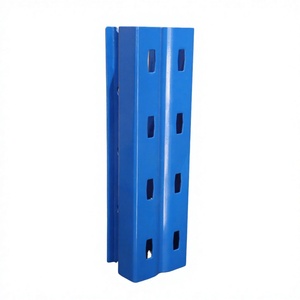
Structural Anatomy, Steel Grades & Load-Bearing Physics of Uprights
Why upright frame engineering dictates the seismic safety, buckling limits, and longevity of the entire warehouse storage ecosystem.
Cold Roll-Forming Cross-Sections
The structural rigidity of an upright column is not merely determined by thickness; it is rooted in the omega-fold geometry and cold work hardening. Standard HEDA profiles employ 11 to 13 precision roll bends.
Multiple stiffening ribs counteract torsional buckling under eccentric loading, converting raw tensile strength into compressive axial load resistance.
- Columns: 80×60, 90×70, 100×70, 120×95, 140×95 mm
- Wall Thickness: 1.5mm to 3.0mm cold-rolled coil
- Bracing: Bolted C-channel diagonal & horizontal struts
Steel Metallurgy: Q235B vs. Q355B
Yield strength selection directly determines steel weight savings, seismic safety margins, and deflection tolerances. HEDA supplies certified hot-rolled pickling coils sourced from primary mills (Baosteel, Shougang).
For high-bay systems exceeding 12 meters, high-strength Q355B (equivalent to S355JR or ASTM A572 Grade 50) offers a minimum yield strength of 355 MPa, delivering 30% higher load margins.
- Q235B: Yield strength ≥ 235 N/mm² (Standard low-rise)
- Q355B: Yield strength ≥ 355 N/mm² (AS/RS & heavy load)
- Chemical tracing & 3.1 Mill Test Certificates available
Perforation & Connector Interlock
The column perforation pattern governs beam adjustability, racking rigidity, and connection moment resistance. CNC continuous indexing ensures pitch tolerance within ±0.1mm along the entire 12-meter profile.
Available in European 50mm pitch, North American 50.8mm (2-inch) Teardrop, 75mm pitch, and 76.2mm Dexion style, integrated with automatic gravity safety pins to prevent beam dislodgement.
- 50mm Pitch: Euro-standard high adjustability
- Teardrop Pattern: Toolless boltless assembly
- Reinforced footplates: Double-anchored baseplates
Engineering Selection: Profile Sizing & Upright Capacity Thresholds
Selecting the optimal upright frame involves calculating unbraced length, seismic acceleration coefficients, and maximum bay capacities. An undersized frame risks elastic buckling under full warehouse deadweight; an oversized profile leads to excessive CAPEX expenditure.
Below is an engineering benchmark from HEDA's structural analysis calculations (based on 1,500mm first beam elevation and static pallet loads with standard vertical deflection criteria ≤ L/200).
| Upright Profile (mm) | Material Thickness | Max Frame Load (kg) | Common Application |
|---|---|---|---|
| 80 × 60 × 1.8 | 1.8 mm (Q235B) | 6,500 kg | Light Selective Racks < 5m |
| 90 × 70 × 2.0 | 2.0 mm (Q235B) | 10,200 kg | Standard 3PL Distribution |
| 100 × 70 × 2.0 | 2.0 mm (Q355B) | 14,500 kg | Drive-In & Heavy Pallet Racks |
| 120 × 95 × 2.5 | 2.5 mm (Q355B) | 21,000 kg | High-Density Radio Shuttle |
| 140 × 95 × 3.0 | 3.0 mm (Q355B) | 28,500 kg | High-Bay AS/RS Platforms > 18m |
Future Sourcing Trends in Industrial Racking & Upright Systems (2025–2030)
How automation readiness, green steel compliance, seismic regulations, and containerized logistics are shifting procurement paradigms worldwide.
1. Transition to AS/RS & Shuttle-Ready Upright Tolerances
The rapid expansion of autonomous mobile robots (AMRs), automated storage and retrieval systems (AS/RS), and four-way radio shuttle systems requires upright manufacturing tolerances far tighter than traditional manual forklift setups.
Modern procurement demands upright column straightness tolerances within 1/1000 and vertical cumulative drift under ±3mm per 10 meters. Racking frames serve as structural guide rails where minor flexural deviations cause shuttle sensor lockouts or lift carriage collisions.
2. Stringent Seismic Resilience Codes (EN 15512 & RMI MH16.1)
From the Pacific Rim seismic belt (Indonesia, Philippines, Japan, West Coast USA) to Mediterranean zones, procurement specifications increasingly require dynamic FEA simulation rather than static load charts.
Global logistics operators now require finite element modeling of joint stiffness (semirigid connection), baseplate plasticity under cyclic ground acceleration, and ductile column-to-base anchoring designs. Uprights must absorb kinetic ground movement without catastrophic shear failure.
3. Green Metallurgy, Decarbonization & CBAM Verification
European and American enterprise buyers are actively integrating Scope 3 carbon emission benchmarks into racking vendor qualifications. The EU Carbon Border Adjustment Mechanism (CBAM) has turned green steel certification into a procurement differentiator.
Modern factories are transitioning to EAF (Electric Arc Furnace) recycled feedstock and adopting solvent-free, heavy metal-free TGIC electrostatic powder coatings that eliminate VOC emissions while extending lifecycle utility beyond 20 years.
Advanced Manufacturing Technology: From Steel Coil to 10-Stage Precision Upright
Quality in racking frames is built during the conversion phase. Explore HEDA's automated 10-stage manufacturing pipeline.










Direct Factory Engineering from Guangzhou: Lower Total Cost of Ownership
Operating out of our self-owned 30,000 square meter production facility in Guangzhou, China, Guangzhou Heda Shelves Co., Ltd. eliminates intermediary trading markups, directly passing 15% to 25% cost efficiencies to global logistics integrators, 3PL distributors, and industrial plant managers.
With an immediate maritime freight proximity to Guangzhou Nansha and Shenzhen Yantian deepwater ports, ocean cargo reaches Southeast Asia within 2 to 7 days, the Middle East within 14 days, Europe within 28 days, and North American ports within 18 to 25 days.
Our in-house design engineering office provides end-to-end support: complete AutoCAD warehouse footprint zoning, 3D structural perspective renderings, full bill of materials (BOM), static calculation reports, and factory-matched anchoring hardware.
Verified Factory Compliance & Credentials
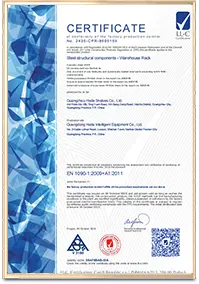
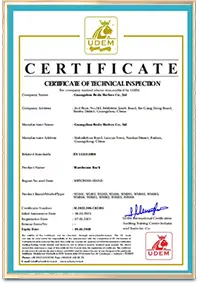
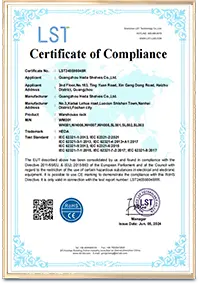
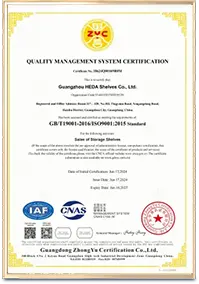
Our manufacturing systems and pallet rack upright frames are tested and accredited by international inspection bodies:
Frequently Asked Questions: Sourcing Pallet Rack Uprights from China
Direct technical guidance covering structural tolerances, seismic verification, corrosion treatments, and custom OEM manufacturing.
1. Pallet Parameters: Pallet dimensions (W × D × H including cargo) and maximum gross weight per pallet.
2. Building Specifications: Clear ceiling height beneath sprinkler heads/HVAC ducts, slab thickness and concrete compressive strength, column grid spacing, and emergency exit doors.
3. MHE (Material Handling Equipment): Forklift model, maximum lift mast reach, collapsed mast height, and minimum turning radius (determines aisle width).
4. Beam Pitch Requirements: Desired first beam level height and total beam levels per bay.
Transform Your Warehouse Space: Request an Engineering Proposal & Catalog
Whether you require standard selective upright frames, seismic-reinforced high-bay columns, or custom OEM cold-roll forming, our engineering team is ready to prepare free 2D CAD floor plans, 3D renderings, and transparent factory-direct pricing within 24 hours.