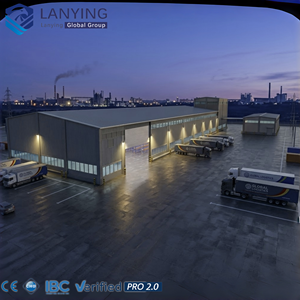
 Complete Facility
Prefabricated Industrial Steel Structure Warehouse Workshop With Racking System
Integrated portal steel frame engineering combined directly with high-density metal storage racks for turn-key logistics plants.
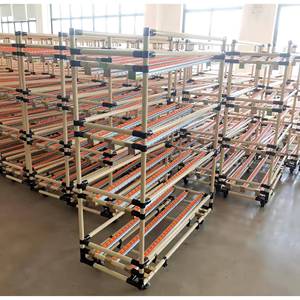 FIFO Rotation
AOCHEN Industrial Gravity Roller Flow Rack Shelving System High-Strength
Self-regulating dynamic roller lane system optimizing First-In, First-Out throughput for date-sensitive food, beverage, and pharma.
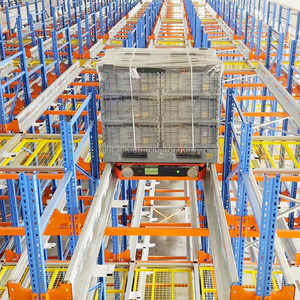 AS/RS Semi-Auto
Heavy Duty 4 Way Shuttle Racking System Steel Radio Shuttle Pallet Rack
Semi-automated radio carrier navigation running inside deep channels, reducing forklift travel distances and boosting storage density by 60%.
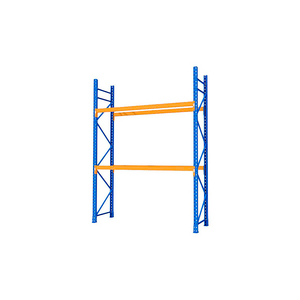 Ventilated Shelving
Light Duty Wire Shelving Standard High Quality Steel Racks For Warehouse
Heavy chrome or zinc-plated modular open-wire decks promoting continuous air circulation, ESFR sprinkler penetration, and zero dust build-up.
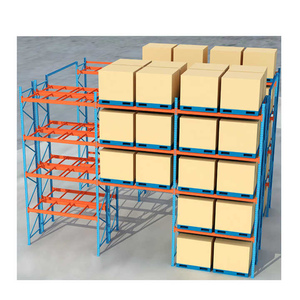 High Density LIFO
Direct Factory Sale High-Density 5-Layer Metal Drive-In Racking System
Eliminates intermediate operating aisles for consolidated batch storage of uniform goods, maximizing floor area cube utilization up to 85%.
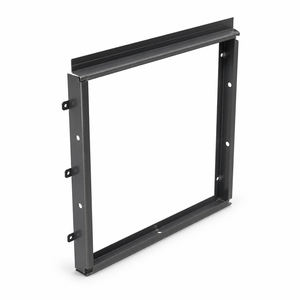 OEM Custom Fab
Bulk Order Tubular Subframe Metal Frames Fabrication Services Platform Rack
Custom laser cutting, CNC tube bending, and robotic MIG welding for specialized equipment platforms, mezzanine carriers, and base structures.
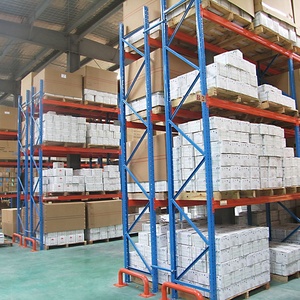 Double Deep
Customizable Double Deep Selective Pallet Racking for Warehousing
Deep reach scissor-truck system storing two pallet depths from a single access aisle, blending selective accessibility with bulk volume capacity.
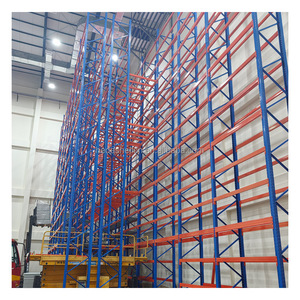 Universal Standard
Racking and Shelving Suppliers Adjustable Warehouse Pallet Rack System
The workhorse of global distribution centres offering 100% individual pallet access, rapid reconfiguration, and multi-tier picking adaptability.
In modern high-velocity supply chains, warehouse cube utilization dictates commercial viability. The global intralogistics landscape has shifted away from localized, piecemeal steel fabrication toward specialized, vertically integrated racking conglomerates based in Southern and Eastern China. Sourcing metal pallet racks directly from a certified Chinese supplier provides an unmatched balance between metallurgical quality, customized cold roll-forming capabilities, and containerized ocean-freight economics.
A certified racking manufacturer is fundamentally an advanced structural engineering firm. Commercial pallet racks bear extreme static and dynamic loads—often supporting multi-ton payload bays stacked over 12 to 30 meters high. Failure to account for cold-formed steel buckling factors, torsional flexure, seismic ground acceleration, or micro-crack propagation under repeated forklift impacts can compromise the structural safety of an entire facility.
Cold-Rolled Steel Metallurgy & Structural Standards (EN 15512 & RMI MH16.1)
Quality Chinese manufacturers utilize certified structural coil grades such as Q235B and high-tensile Q355B (comparable to European S235JR and S355JR, or ASTM A36 and A572 Grade 50). These steels exhibit guaranteed minimum yield strengths (235 MPa and 355 MPa respectively) and elongation percentages above 21%, ensuring that components absorb unexpected point shocks without brittle failure.
Engineering compliance relies on strict adherence to international design codes. For European and Commonwealth tenders, design criteria follow EN 15512:2020 (Steel static storage systems - Adjustable pallet racking systems - Principles for structural design) and FEM 10.2.02. In North American and transpacific projects, compliance with the Rack Manufacturers Institute (RMI) Specification ANSI MH16.1 governs allowable stress calculations, upright perforations, and beam end-connector connection stiffness (rotational spring constant Cd testing).
Finite Element Analysis (FEA)
3D software simulations assess stress concentrations under full load, asymmetrical live loading, and seismic acceleration spectrums.
Continuous Roll-Forming
Up to 24 precision roll stations form omega-profile upright columns without micro-fissures or residual internal stresses.
Verified Certifications
Official third-party compliance, including CE Certificate No. 2435-CPR-8605159, ISO 9001:2015, and comprehensive RoHS chemical safety.
Export Packaging Protocol
Automated nesting and heavy-gauge banding tailored for 40HQ maritime containers prevent transport friction and salt spray damage.
1. Transition from Static to Semi-Automated Racking
Skyrocketing land acquisition costs and industrial labor shortages are driving procurement teams toward high-density automated systems.
- Radio Shuttle Proliferation: Replacing conventional Drive-In racks with 2-way and 4-way autonomous shuttles to lower forklift collision risks.
- Narrower Tolerances: Uprights rolled with sub-millimeter tolerances (±0.5mm) required by automated crane shuttles and AGVs.
- Hybrid Mezzanine Cubes: Integration of multi-tier picking towers directly over standard pallet storage footprints.
2. ESG, Decarbonized Steel & Eco Coatings
International corporate sustainability mandates are forcing tier-1 contractors to audit their supply chains for embodied carbon and environmental safety.
- Low-VOC Powder Formulations: Elimination of toxic heavy metal additives, with thermoset polyester powders baked at energy-optimized cure cycles.
- Direct Coil Traceability: Mill test certificates (MTCs) detailing scrap steel recycling rates and blast furnace emissions.
- Lifecycle Modularity: Boltless, teardrop, or slotted designs that enable field relocation and modular bays without scrap cutting.
3. Factory-Direct Modular Engineering
The historical model of relying entirely on regional middle-tier distributors is yielding to direct technical collaboration with original Chinese plants.
- Free 3D BIM & CAD Integration: Engineering teams receive building DWG drawings and deliver full 3D spatial calculations within 48 hours.
- Transparent Material Indexing: Contracts indexed directly to national hot-rolled coil (HRC) commodities indices to protect procurement margins.
- Consolidated Logistics Kits: Shipments include structural hardware, anchors, floor shims, column protectors, and load notices.
A primary challenge for international warehouse operators—particularly in Southeast Asia, the Middle East, Australasia, and coastal regions—is ambient corrosion. Unprotected cold-rolled steel corrodes rapidly under relative humidity exceeding 75% or in coastal air containing chloride ions. Top-tier manufacturers employ a continuous, multi-stage surface treatment process before finishing.
Prior to coating, steel profiles undergo an intensive sequence of industrial chemical degreasing, pickling to remove mill scale, and zinc or iron phosphating. This chemically etches the micro-surface, creating an inorganic bonding substrate that prevents moisture undercutting. Components then receive an electrostatic application of high-durability epoxy-polyester powder (60–90 microns thick), baked at 180°C–200°C. For cold storage facilities operating down to -30°C, or semi-outdoor storage yards, hot-dip galvanization (HDG) adhering to ISO 1461 (delivering coating thicknesses from 65 to 100+ microns) guarantees decades of rust-free operation.
Seismic Engineering for High-Risk Fault Zones
In regions such as the Pacific "Ring of Fire" (including the Philippines, Indonesia, New Zealand, and western Latin America), warehouse pallet racks function as civil structures during earthquakes. A rack with 500 tons of live storage behaves like a tall, flexible building under ground excitation. Leading Chinese suppliers provide dedicated structural seismic design, calculating base plate surface distribution, heavy-duty floor anchor bolt embedment depths (using M12 to M16 chemical or mechanical wedge anchors), and high-gauge horizontal and diagonal cross-bracing to prevent catastrophic lateral sway and frame buckling.
| Racking Architecture | Space Cube Utilization | SKU Selectivity | Operating Principle | Typical Payload / Pallet | Best Suited Application |
|---|---|---|---|---|---|
| Standard Selective Rack | 40% – 50% | 100% Direct | FIFO (First-In, First-Out) | 500 kg – 2,000 kg | General retail, multi-SKU FMCG, engineering parts |
| Double Deep Racking | 60% – 65% | 50% Semi-Direct | LIFO (Last-In, First-Out) | 800 kg – 1,500 kg | Dry grocery distribution, multi-pallet SKU batches |
| Drive-In / Drive-Through | 70% – 85% | Low (By Bay Lane) | LIFO / FIFO | 1,000 kg – 2,000 kg | Bulk manufacturing, seasonal goods, cold storage |
| Gravity Pallet Flow | 75% – 85% | Medium (Lane Face) | Strict FIFO Auto-Flow | 500 kg – 1,500 kg | Perishable food, pharmaceuticals, cross-dock buffers |
| Radio Shuttle Automation | 80% – 90% | High (Programmed) | Flexible FIFO / LIFO | 500 kg – 1,800 kg | Sub-zero freezers, large distribution centers, raw materials |
| Heavy Duty Cantilever | 60% – 70% | 100% Linear Access | Unrestricted Access | 1,000 kg – 5,000 kg/arm | Steel pipes, timber packs, PVC profiles, sheet goods |
Raw Coil QA
Spectrometric and tensile verification of certified Q235B / Q355B coils.
Precision Slitting
Automated uncoiling, leveling, and high-speed longitudinal slitting.
CNC Punching
Multi-ton mechanical presses create continuous teardrop/diamond pitch slots.
Cold Roll Forming
Up to 24 progressive stations form rigid closed-box beams and omega columns.
Robotic MIG Welding
Automated robotic arms weld beam connectors with zero spatter and full penetration.
Surface Deburring
Shot blasting and mechanical polishing remove sharp edges and thermal scale.
Pickle & Phosphate
Multi-tank chemical bath removes microscopic oils and prepares corrosion bonding.
Powder Coating
Electrostatic spray guns apply uniform thermoset polyester powder.
Curing Oven 200°C
Thermal polymerization yields an impact-resistant, scratch-proof hard coat.
Container Staging
Bundling with protective timbers, heavy steel bands, and waterproof wrapping.
Accelerate Your Warehouse Capacity & Structural Safety
Send our senior engineering team your warehouse architectural drawings or storage requirements. We will prepare an optimized 2D CAD layout, 3D spatial rendering, load capacity calculations, and a transparent factory-direct quotation.