[email protected] Serving Malaysia · Thailand · Vietnam · Indonesia · Philippines · Singapore
English
Certified Enterprise Racking Factory • ISO 9001 & CE Certified
China Best High Density Racking Manufacturer & Factory
Precision-engineered pallet shuttle systems, selective racks, drive-in systems, and heavy-duty structural warehouse storage engineered for maximal volumetric efficiency and international seismic compliance.
Industrial Grade Inventory
High-Density Racking & Warehouse Storage Systems
Engineered with cold-rolled Q235B/Q355B structural steel, our high-density systems maximize pallet density by up to 85% while drastically cutting footprint costs for 3PL, FMCG, and cold-chain hubs worldwide.
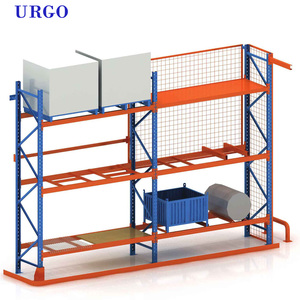
Engineered for medium to heavy hand-loaded inventory, manual order-picking distribution centers, and flexible SKU adjustments with boltless beam clipping.
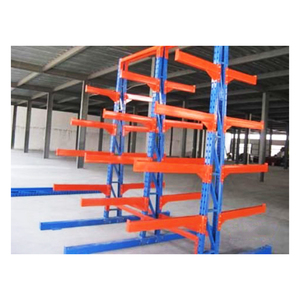
Designed for palletized bulk freight, heavy industrial parts, and multi-tier logistics configurations with high structural rigidity and impact resistance.
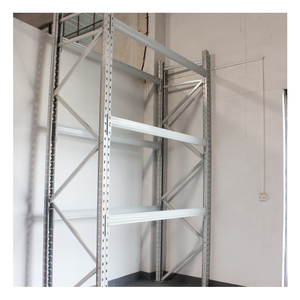
High-speed modular erection requiring zero bolts. Ideal for rapid distribution scaling, archival record storage, and dynamic e-commerce fulfillment hubs.
Founded in 2001, Guangzhou Heda Shelves Co., Ltd. has grown from a specialized domestic sheet metal fabrication facility into one of the world's premier high-density racking engineering manufacturers. Operating out of an expansive 30,000-square-meter intelligent manufacturing campus in Guangzhou, our facilities maintain a robust monthly output capacity surpassing 30,000 metric tons of finished industrial racking components.
To eliminate product failure in demanding automated and heavy-load facilities, every structural member is fabricated from prime cold-rolled coils (Q235B and high-tensile Q355B structural steel). Structural compliance is strictly anchored to international design standards including European EN 15512 (Steel Static Storage Systems), FEM 10.2.02, American ANSI MH16.1 (RMI Specifications), and Australian AS 4084-2012. We maintain verified CE certification (Certificate No. 2435-CPR-8605159) and ISO 9001:2015 Quality Management Accreditation (Certificate No. 18624Q00169R0M), guaranteeing structural integrity from initial finite element analysis (FEA) through high-seas container delivery.
Unlike regional workshops that outsource critical finishing steps, our complete vertical integration keeps all processing in-house. This ensures millimeter tolerances across extended spans and prevents catastrophic deflection under heavy dynamic loads.
Stage 01 Material
Raw Material QA
Spectrometric chemical analysis and tensile yield verification of Baosteel/Shougang structural coils.
Stage 02 Tooling
Precision CNC Slitting
Automated uncoiling, hydraulic leveling, and high-precision continuous slitting to ±0.2mm strip tolerance.
Stage 03 Punching
Continuous CNC Punching
High-speed mechanical press punching of diamond/teardrop slot profiles at calibrated 50mm/75mm intervals.
Stage 04 Profiling
Cold Roll Forming
18-to-24 station roll forming stands gradually cold-forming Omega upright profiles without residual steel stress.
Stage 05 Forming
Box Beam Interlocking
Precision twin C-profile welding or step-beam roll closing with robotic seam trackers for high torsional rigidity.
Stage 06 Welding
Robotic GMAW Welding
Automated multi-axis robotic welding of beam end connectors (3 or 4 claw hooks) ensuring deep root penetration.
Stage 07 Surface
Multi-Stage Pickling
Immersion degreasing, acid pickling to eliminate scale, and zinc phosphating for electrochemical bonding.
Stage 08 Coating
Powder Application
Automatic electrostatic powder spray applying 60-90µm epoxy-polyester powder across all internal cavities.
High-bay warehouses with restricted floor footprints
Pallet Shuttle System
80% – 88%
Lane Dependent
FIFO & LIFO Automated
Single Access Aisle
Up to 2,500 kg/pallet
Cold storage (-30°C), beverage bottling, high-volume DC
Gravity Pallet Flow
70% – 80%
Lane Face Only
Strict FIFO
Separate In/Out Aisles
Up to 1,500 kg/pallet
Perishable food, pharmaceuticals, strict date tracking
Push-Back Racking
65% – 75%
Lane Face Only
LIFO (Gravity Cart)
Single Front Aisle
Up to 1,500 kg/pallet
2 to 6 pallets deep buffer lanes without forklift entry
Information Gain: Critical Deflection & Seismic Design Considerations
High-density racking systems place tremendous axial stress on column uprights and concentrated point loads on concrete floor slabs. Under European Standard EN 15512 and FEM 10.2.02, beam deflection under full static service load must not exceed L/200 (length divided by 200) to avoid dynamic binding of automated shuttle vehicles, while seismic regions (such as the Pacific Ring of Fire affecting the Philippines, Indonesia, and parts of the Americas) require compliance with dynamic base shear equations.
HEDA Shelves incorporates high-ductility base plates with dual-anchor expansion bolts, augmented portal bracing, and finite-element structural simulation. This eliminates structural twist and catastrophic progressive collapse under low-frequency ground acceleration.
Strategic Market Analysis
Future Procurement Trends in High-Density Storage (2025–2030)
Industrial storage procurement is transitioning from static steel commodity purchases to data-driven, automation-ready infrastructure assets.
1. Automation Convergence: AMR and 4-Way Radio Shuttle Synergy
Traditional two-way pallet shuttles, which rely heavily on manual forklifts to reposition vehicles between lanes, are being eclipsed by 4-Way Multi-Directional Shuttle Systems integrated with Autonomous Mobile Robots (AMRs) and vertical reciprocating lifts. Global supply chain operators are demanding racking configurations that allow seamless migration from manual or semi-automated operations to fully lights-out ASRS (Automated Storage and Retrieval Systems) without replacing the structural upright frames or guide rails.
Escalating international ocean freight rates and strict carbon accounting requirements have accelerated the adoption of ultra-high-yield micro-alloyed steels (such as Q355B and Q420 structural grades). By leveraging optimized cold-formed geometries with stiffening ribs, engineers can maintain equivalent load-carrying capacity while reducing total steel mass by 12% to 18%. This yields substantial savings in shipping container packing efficiency (FOB/CIF) while reducing structural deadweight on building foundation piles.
The global boom in refrigerated pharma and frozen protein exports requires racking capable of continuous operation at -25°C to -35°C without low-temperature embrittlement. Modern procurement policies mandate continuous pre-galvanized zinc steel components (minimum Z275 coating) or specialized multi-stage zinc-rich epoxy powder coatings that resist condensation micro-pitting and prevent catastrophic stress cracking along welded end connectors.
From initial structural layout drafting to direct international maritime dispatch, we mitigate engineering risk and streamline overseas project delivery.
Complimentary CAD & 3D Modeling
Our senior structural team provides complimentary AutoCAD floor layouts, 3D parametric renderings, and localized load-bearing calculations within 24 to 48 hours.
Factory Direct Pricing
Direct supply from our 30,000m² factory eliminates middleman trading margins, lowering your capital outlay by 25% to 35% compared to local suppliers.
Optimal Container Loading
Components are precision-nested, labeled, and bundled with steel band reinforcements to maximize 40HQ container volumetric capacity and protect coatings.
CE & ISO Quality Guarantee
Certified under CE No. 2435-CPR-8605159 and ISO 9001:2015 No. 18624Q00169R0M, backed by comprehensive manufacturer structural warranties.
Direct technical answers addressing structural calculations, corrosion resistance, customs clearance, and global installation protocols.
What exact building parameters are required to generate an optimized racking CAD proposal?
To provide an accurate, high-density proposal, our engineering team requires: (1) Warehouse architectural drawings indicating clear height under roof joists/sprinklers, building column positions, door thresholds, and floor flatness specifications (e.g., DIN 18202 or ASTM E1155 FF/FL numbers); (2) Pallet specifications including overall dimensions (W × D × H), bottom runner orientation (Euro, GMA, or industrial perimeter base), overhang allowance, and maximum gross weight; (3) Material handling equipment (MHE) specifics, including forklift make/model, minimum turning aisle width requirement, maximum lift height, and rated residual capacity at peak elevation.
How does HEDA ensure upright frames and beams resist corrosion in tropical or maritime environments?
Corrosion failure often originates under the paint film due to inadequate surface preparation. HEDA employs an automated continuous multi-stage chemical pretreatment line featuring hot alkaline degreasing, acid pickling to strip mill scale, and microcrystalline zinc phosphating. Components then pass through electrostatic powder booths applying pure thermosetting epoxy-polyester powder (dry film thickness 60–90 microns), cured at 200°C. For coastal zones or wet-pack agricultural staging, we provide hot-dip galvanized (HDG) components conforming to ISO 1461, ensuring decades of corrosion-free performance.
Can your high-density racking designs satisfy local seismic codes in high-risk zones?
Yes. We regularly engineer racking installations for earthquake-prone regions (such as the Philippines, Indonesia, Chile, and California). Structural calculations take into account local site peak ground acceleration (PGA), soil profile classes, and structural importance factors in accordance with Eurocode 8 (EN 1998) or IBC/ASCE 7 standards. Countermeasures include enlarged heavy-gauge ductile base plates, anchored wedge systems, double-diagonal horizontal bracing towers, and rigid top-tie portal frames to absorb seismic energy without frame instability.
What are the lead times for production and maritime shipping from your Guangzhou factory?
Standard production lead time for full-container-load (FCL) projects (1 to 5 containers) is typically 15 to 25 calendar days following finalized CAD sign-off and deposit receipt. Shipping from Guangzhou/Nansha or Shenzhen port offers exceptionally fast direct ocean transit: 2–5 days to Vietnam; 3–5 days to the Philippines; 5–7 days to Singapore and Thailand; 6–8 days to Malaysia; 7–10 days to Indonesia; 14–18 days to Australia; 18–24 days to the US West Coast; and 25–30 days to main European hub ports.
How is installation handled internationally, and do you supply on-site engineering supervision?
Every shipment arrives with an exhaustive installation packet, including 3D color-coded assembly blueprints, component piece-mark lists, and video guides. For mid-to-large-scale logistics installations or multi-tier mezzanine builds, HEDA offers two deployment options: (1) Remote digital engineering oversight with real-time video inspection of frame plumbness and anchor torque validation; or (2) Dispatching licensed HEDA project engineers directly to your job site to oversee, train, and certify your local contractor team.
How does high-density pallet shuttle racking compare economically to traditional drive-in racking?
While radio shuttle systems have a higher initial capital expenditure due to the automated shuttle vehicles and precision guide channels, their total cost of ownership (TCO) is vastly superior in medium-to-high velocity facilities. Shuttles eliminate forklift travel inside deep storage lanes, which reduces pallet travel cycle times by up to 60%, drastically lowers forklift fleet requirements, and slashes rack frame collision damage to near zero. Furthermore, radio shuttle systems support both FIFO and LIFO configurations, whereas standard drive-in racking is practically limited to LIFO.
Request a Custom Warehouse Layout & Factory Quote
Send your building dimensions, target pallet count, or project tender specifications. Our senior racking structural engineers will return a complete CAD design, 3D visualization, and detailed pricing proposal within 24 hours.