Featured Industrial Racking Systems: Engineering & Export Specifications
Rigidly engineered using certified Q235B and Q355B structural steel, automated continuous roll-formed columns, and electrostatic epoxy curing to withstand extreme logistical stress.
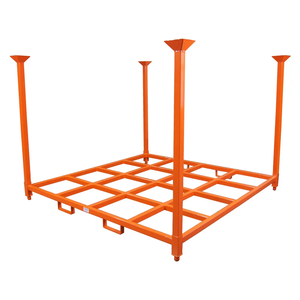
Warehouse Storage Inverted Metal Pallet Stack Rack
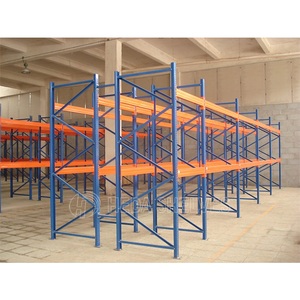
Europe Style Heavy Duty Q235 Steel Industrial Pallet Rack
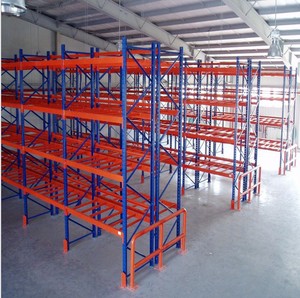
HD-SR-02 Automated Radio Shuttle Pallet Runner System
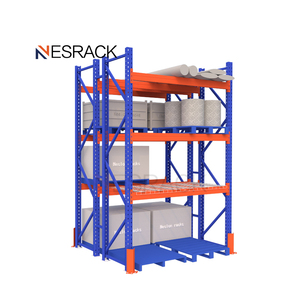
Multi-Level Distribution Logistics Pallet Racking
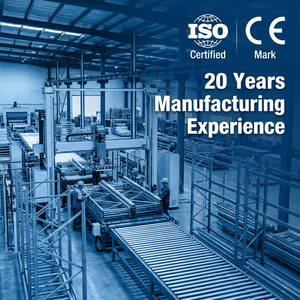
Carton Flow Rack Roller Track Gravity Storage System
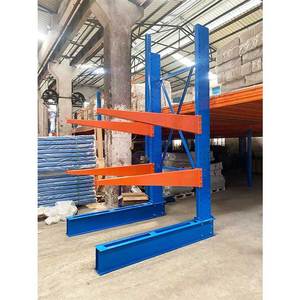
Heavy Duty Industrial Steel Cantilever Storage System
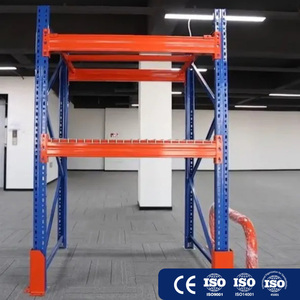
Double-Sided Heavy Duty Selective Pallet Racking
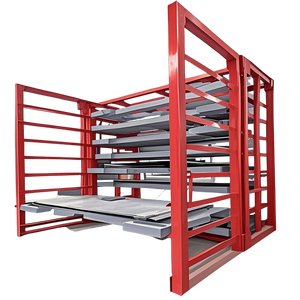
5-Layer Foldable Drawer Sheet Shelving System
Navigating Chinese Heavy-Duty Racking Manufacturing: Engineering Criteria & Structural Quality
Global logistics conglomerates, regional 3PL networks, cold-storage operators, and automotive OEMs increasingly prioritize direct procurement of structural warehouse racking systems from specialized manufacturing hubs in China. China’s advanced steel manufacturing ecosystem produces superior cold-formed structural members when sourced from certified manufacturers possessing deep metallurgical expertise, continuous multi-stand roll-forming lines, automated laser perforators, and standardized multi-stage pre-treatment coating lines.
However, optimizing procurement economics requires looking beyond surface-level quotes. Warehouse structural reliability depends upon cold-rolled cross-sectional geometries, yield strengths (Q235B vs. Q355B structural steel alloys), deflection tolerances governed by European FEM 10.2.02, American RMI ANSI MH16.1, and Australian AS4084 standards. Guangzhou HEDA Shelves Co., Ltd. operates at the vanguard of heavy-duty industrial storage engineering, manufacturing high-tensile upright profiles, box beams, and shuttle automated racking systems engineered for high seismic acceleration coefficients, tropical humidity resilience, and harsh thermal shifts down to -30°C.
Certified Metallurgy & Cold Profiling
Precision structural members cold-formed from high-grade Baosteel and Shougang carbon steel coils. Continuous multi-roller profiling machinery guarantees cross-sectional dimensional accuracy within ±0.15mm, eliminating torsional stress and maximizing structural column stability.
Surface Passivation & Cured Hardness
An advanced 10-step surface finishing system features hot alkaline degreasing, zinc-phosphating, and continuous deionized rinsing followed by electrostatic thermosetting epoxy-polyester powder baking (180°C–200°C), achieving H-2H pencil hardness and salt spray resistance up to 600 hours.
Finite Element Analysis (FEA) Verification
Every customized rack elevation undergoes finite element structural simulation and static/dynamic deflection analysis. Beam member deflections are engineered to exceed standard L/200 thresholds, maintaining an uncompromising safety factor between 1.65 and 1.95 under maximum rated payload.
Industrial Racking Architectures: Technical Selection Guide
Evaluate structural properties, volumetric utilization rates, inventory turnover mechanics, and initial capital expenditure across premier heavy-duty rack typologies.
| Racking Architecture | Primary Steel Spec | Payload / Level | Floor Space Utilization | Turnover Principle | Best Applied Industries |
|---|---|---|---|---|---|
| Selective Pallet Racking | Q235B Cold-Formed | 1,000 – 4,500 kg | 35% – 45% (Wide Aisle) | FIFO (100% Direct Access) | Retail DCs, Fast-Moving 3PL, FMCG |
| Radio Shuttle Automation | Q355B High-Tensile | 500 – 2,000 kg | 75% – 85% (High Density) | FIFO / LIFO Dual Option | Cold Storage, Beverage, Deep Freeze |
| Drive-In / Drive-Through | Q235B / Q355B Mix | 1,000 – 2,000 kg | 65% – 75% (Aisle-Less) | LIFO (Drive-In) / FIFO | Seasonal Bulk, Food, Homogeneous SKU |
| Industrial Cantilever Rack | H-Section Hot Rolled | 800 – 3,000 kg / Arm | 50% – 60% (Unobstructed) | Selective Linear Access | Steel Pipe, Aluminum Extrusion, Lumber |
| Gravity Pallet Flow Rack | Q235B + Rollers | 800 – 1,500 kg | 65% – 75% (Gravity Fed) | Strict Automatic FIFO | Pharmaceutical, Dairy, Perishables |
| Rack-Supported Mezzanine | Q235B Box & C-Channel | 300 – 1,200 kg / m² | Vertical Multiplication 200%+ | Multi-Level Access | E-commerce Sorting, Auto Spares, Kitting |
Future Procurement Trends in Industrial Heavy-Duty Storage (2025–2035)
Technological transformations, seismic safety updates, and macroeconomic logistics demands reshaping how multi-national supply chain directors procure racking infrastructure.
1. Shift from Pure Selective to Automated Semi-Selective
Skyrocketing industrial land lease rates worldwide are causing standard selective pallet systems to be phased out in favor of four-way radio shuttle systems and AGV-converged high-bay racks. Procurement strategies focus on vertical utilization beyond 12 meters, requiring tighter straightness tolerances (under 1/1000 deflection) to accommodate robotic automated handling without human intervention.
2. Stringent Seismic Zone Compliance & Dynamic Base Plates
International buyers across the Asia-Pacific Ring of Fire, Mediterranean Europe, and Latin America mandate sophisticated dynamic earthquake engineering. Procurement demands customized heavy-duty baseplates, anchor shear pins, double bracing geometries, and structural damping designs that dissipate ground energy waves according to updated Eurocode 8 and AS4084 seismic standards.
3. Pre-Galvanized & High-Durability Tropicalized Finishing
In humid equatorial climates (Southeast Asia, Middle East, coastal corridors), conventional single-coat powder coating often corrodes within 36 months. Future procurement guidelines specify pre-galvanized cold-rolled steel coils or hot-dip galvanizing for uprights and ground levels, alongside automated nano-ceramic non-phosphate surface passivations to prevent micro-delamination.
Engineering Advances in Heavy-Duty Rack Profile Design
How modern continuous cold-bending, ultra-high tensile micro-alloy steels, and robotic seam-welding lines produce stiffer, lighter, and more durable racking systems.
Optimized Upright Omega Profile Geometry
Modern heavy uprights utilize proprietary 11 to 13-fold omega (Ω) cross sections. This profile multiplies moment of inertia without increasing gross steel tonnage, providing exceptional resistance against forklift impact loads and dynamic axial buckling forces.
High-Strength Interlocking Beam Connectors
Upgraded 4-hook and 5-hook cold-stamped beam end connectors distribute shearing loads evenly across the upright column faces. Integrated self-locking high-visibility spring safety pins prevent beam dislodgement under accidental upward forklift mast strikes.
Automated Robotic Seam Welding
Transitioning from manual shielded metal arc welding to multi-axis robotic gas-metal arc welding (GMAW) lines guarantees deep, uniform weld penetration along double-C nested box beams, eliminating cold-lap defects and maintaining structural fatigue resistance across millions of loading cycles.
Guangzhou HEDA Shelves: Enterprise Manufacturing Advantages
Based in Guangzhou, China, Guangzhou HEDA Shelves Co., Ltd. is a globally certified designer, manufacturer, and exporter of heavy-duty industrial storage systems. Operating from a fully automated 30,000 square meter manufacturing base with a 300+ strong engineering and assembly workforce, HEDA outputs up to 30,000 tons of precision-machined racking monthly.
HEDA provides an integrated end-to-end service model: from complimentary CAD spatial modeling, 3D structural rendering, and structural load calculations, through to factory-direct containerized export, international customs shipping support, and full bilingual installation supervision.
- 25+ Years Experience: 10,000+ completed projects worldwide.
- High-Tensile Raw Material: High-purity certified Q235B/Q355B steel.
- Free Engineering Layout: Professional CAD & 3D renders in 24–48h.
- Export Packaging: High-cube container-maximized bundled strapping.
Verified International Certifications
HEDA Shelves products undergo rigorous international compliance testing by independent bodies, verifying that every welded joint, punched column, and baked epoxy surface matches stringent global standards.
Heavy Duty Racking Procurement: Frequently Asked Questions
Real-world procurement answers addressing international shipping logistics, structural steel grading, seismic calculations, and installation procedures.
Q235B is standard carbon structural steel with a minimum yield strength of 235 MPa, ideal for standard selective racking with beam loads up to 3,000 kg. Q355B is a low-alloy, high-strength steel with a minimum yield strength of 355 MPa, delivering 50% higher yield performance. We specify Q355B for high-bay uprights (12m+), heavy cantilever columns, automated shuttle rails, and cold-storage facilities where brittle failure risks require higher notch toughness.
Our automated surface finishing involves a rigorous 10-stage pre-treatment: mechanical descaling, hot alkaline degreasing, zinc-phosphate conversion, and tri-stage deionized water cleansing. Components then pass through electrostatic powder coating booths using premium thermosetting epoxy-polyester powder, followed by a 200°C curing tunnel. This creates a cross-linked polymer layer with H-2H hardness, 60–90 micron thickness, and superior adhesion that passes 500+ hour salt-spray testing.
To provide an optimized CAD proposal within 24–48 hours, our structural engineers require: (1) Warehouse building dimensions, clear height under roof joists, and column grids; (2) Pallet dimensions (Length × Width × Height including goods) and maximum gross weight; (3) Existing forklift model, maximum mast lift height, and minimum turning radius; (4) Total SKU profile and daily pallet throughput velocity.
Yes. We incorporate site-specific seismic acceleration spectra (Ss and S1 values) into our finite element calculation models. For earthquake-prone regions such as the Philippines, Indonesia, New Zealand, and the Western United States, we configure widened anchor footplates, dual mechanical anchor bolts, reinforced back-to-back ties, and horizontal/vertical cross bracing to prevent structural frame collapse during seismic events.
Racking components are nested, bundled, and wrapped with protective corrugated cardboard, plastic bubble films, and heavy-duty steel strapping. We utilize dedicated wooden skids and dunnage cushions beneath beam and upright bundles to facilitate smooth forklift unloading at destination ports. All shipping configurations are mathematically optimized for 40HQ container cube utilization to reduce freight costs per pallet position.
Standard production cycles range between 15 to 25 business days depending on order tonnage and customization requirements. Shipped directly from Guangzhou Port or Nansha/Shenzhen hubs, direct sea transit times average 3–7 days to Southeast Asian ports, 18–24 days to Europe, 15–20 days to the US West Coast, and 28–35 days to Latin America. We support international Incoterms including EXW, FOB, CFR, CIF, and DDU.
Ready to Upgrade Your Industrial Storage Capacity?
Connect with HEDA Shelves' Senior Structural Engineering Team. Receive custom CAD layout designs, 3D workflow renderings, and factory-direct export quotations tailored to your operational floor plan.