China Best Heavy Duty Industrial Pallet Racks Factory & Suppliers
Engineered Structural Integrity, Advanced Finite Element Modeling, Tropical Corrosion Resistance, and Automated High-Density Storage Solutions Directly from Guangzhou Manufacturing Facilities.
Factory Direct Selection
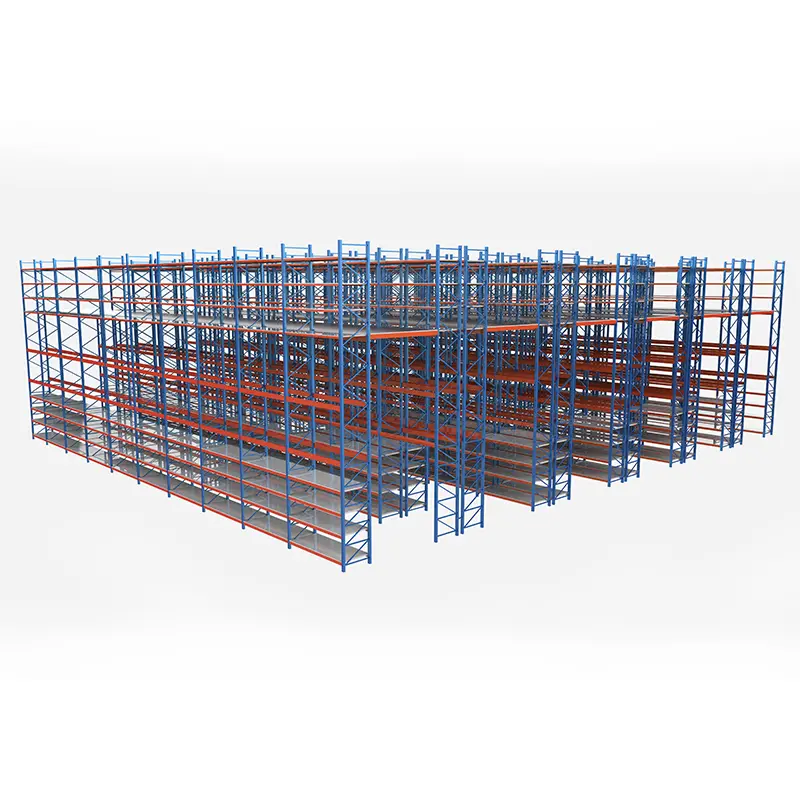
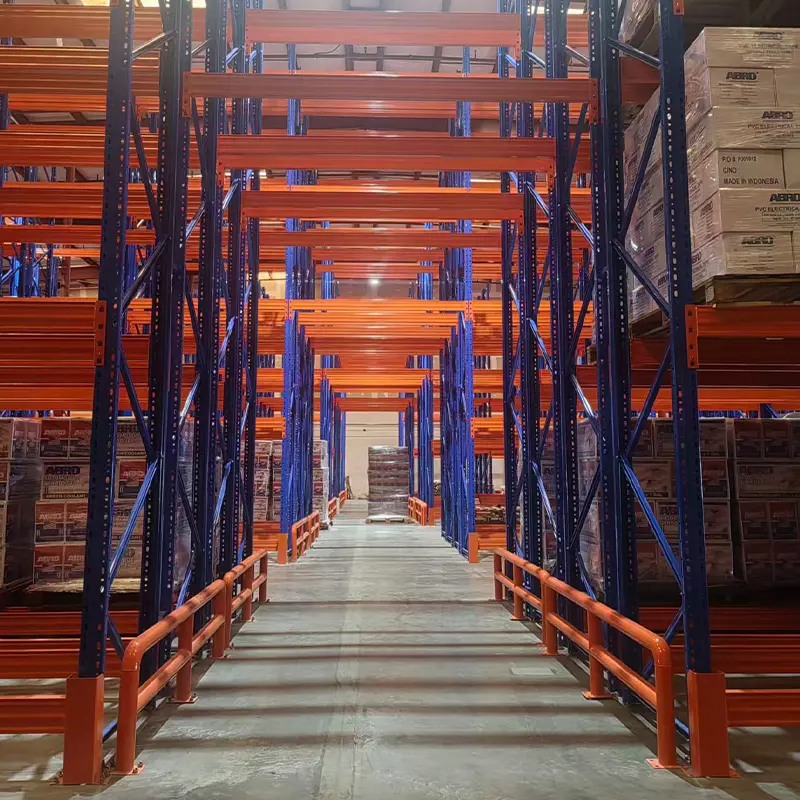
Engineered Heavy Duty Storage & Industrial Rack Systems
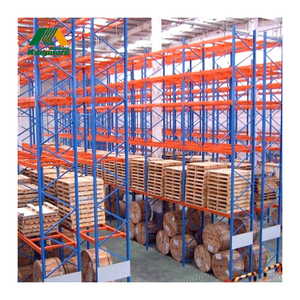
Explore our precision-rolled, high-yield steel structural solutions tested under stringent RMI (Rack Manufacturers Institute) and European EN 15512 safety parameters for extreme load resilience.
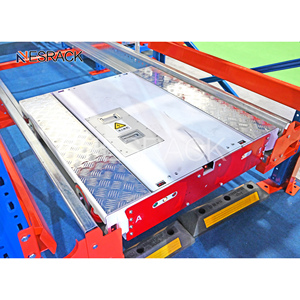
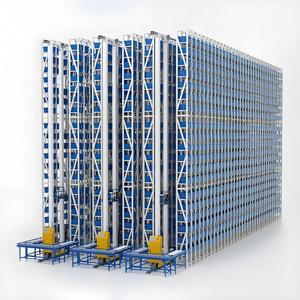
Engineered 5-tier to 12-tier high-bay intelligent shuttle matrix for high-speed cold chains, automated VAN stacking, and integrated WMS/WCS environments.
Strategic Sourcing of Industrial Pallet Racks: The China Advantage
Navigating structural certification, metallurgy standards, cold roll-forming tolerances, and factory direct supplier validation for global intralogistics procurement.
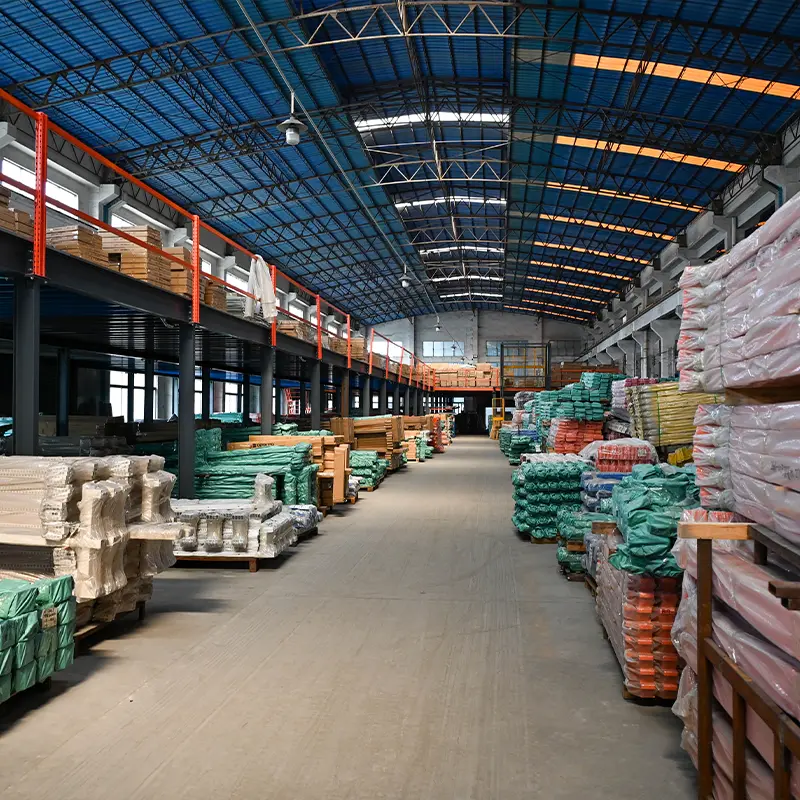
Procuring heavy-duty industrial pallet racking systems from premier Chinese manufacturing hubs represents one of the highest leverage capital expenditure decisions for logistics real estate developers, 3PL providers, and manufacturing operations. However, navigating the Chinese supplier landscape requires deep architectural understanding of structural engineering standards, steel mill origins, and surface treatment science.
Leading Chinese racking manufacturers, represented by tier-1 producers like Guangzhou Heda Shelves Co., Ltd. (founded 2001), utilize primary hot-rolled coil (HRC) derived from certified domestic state steel conglomerates (such as Baosteel, Shougang, and Ansteel). Specifying high-tensile Q235B and Q355B structural carbon steel guarantees predictable yield strengths (up to 355 MPa) and ultimate tensile forces, preventing structural buckling under sudden impact and seismic shear events.
Modern pallet rack installations must adhere strictly to international testing criteria. Unlike commodity fabricators, top-tier Chinese manufacturers engineer according to the European EN 15512:2020 standard (Steel static storage systems – Adjustable pallet racking systems – Principles for structural design), the American RMI MH16.1 specification, and Australia's rigorous AS 4084:2023 design codes. This ensures beam-to-column connector moment capacities, looseness tests, and upright baseplate anchor pull-out limits fulfill statutory civil building permits anywhere in the world.
Powder Coating Film Thickness60 – 90 μm Electrostatic Epoxy-Polyester
Cross-Hatch Adhesion TestGrade 0 (ISO 2409 Compliance)
Global Intralogistics Forecast
Future Procurement Trends in Industrial Storage Racking (2025–2035)
Global supply chain directors and warehouse designers are transforming racking procurement from static equipment purchasing into automated, data-driven, and carbon-optimized facility architecture.
1. Automation-Ready Hybrid Infrastructure
Purely manual selective racking is being superseded by hybrid structures. Modern procurement mandates tight upright deflection tolerances (≤ 1/500 for robotic automated guided vehicles and automated storage/retrieval systems). Racking beams are now prefabricated with factory-punched optical reflector conduits and positioning sensors to facilitate seamless transitional automation upgrades.
2. Green Steel Transparency & EPD Verifications
With Scope 3 carbon emission disclosures becoming legally binding in the EU (CBAM mechanism) and North America, multinational enterprise buyers require Environmental Product Declarations (EPD). Chinese racking factories utilizing electric arc furnace (EAF) secondary scrap steel alongside sustainable bio-resin powder coatings are capturing high-tier engineering contracts.
3. Direct-from-Source Factory Integration
Middlemen trading firms are being phased out in favor of direct digital integration with Chinese factory engineering departments. By providing native BIM (Building Information Modeling) and 3D CAD files directly to the factory floor, buyers shorten conceptual-to-manufacturing lead times from months to under 18 business days.
4. Dynamic Climate & Seismic Adaptability
Climate extremes and seismic activity zones (Pacific Ring of Fire, ASEAN corridors, Western US) mandate project-specific non-linear static pushover calculations. Procurement checklists now demand high-ductility steel alloys and certified heavy baseplate anchoring that absorb seismic lateral acceleration forces without catastrophic structural shear.
R&D Technical Depth
Product Development Trends: Structural Engineering Advances
From Finite Element Analysis (FEA) to cold-chain metallurgy, inspect how structural pallet rack manufacturing has advanced over the past two decades.
Beam Locking PinsAuto-Engaging Spring Safety Locks
Cold-Store Metallurgy LimitDown to -35°C Sub-Zero Impact Toughness
Corrosion Resistance RatingHot-Dip Galvanized ISO 1461 (>85μm)
The contemporary pallet rack has evolved from simple welded structural channel iron into a sophisticated, cold-formed thin-walled steel structure governed by complex non-linear elasticity theories. Contemporary research and development conducted at factory test facilities focuses on the Omega (Ω) upright cross-section. By incorporating up to 12 distinct longitudinal cold-bend radii into the column profile, torsional twisting resistance is elevated by 38% compared to standard rectangular hollow sections of equivalent steel weight.
In high-density cold chain applications, such as pharmaceutical freezers and deep-freeze seafood distribution, conventional structural steel experiences dangerous brittle ductile-to-brittle transitions. Specialized Chinese factories formulate controlled-silicon and aluminum-killed steels capable of withstanding Charpy V-Notch impact tests at -35°C, eliminating the risk of micro-fractures generated by lift-truck tines during loading cycles.
Furthermore, computerized Finite Element Modeling (FEM) simulates dynamic seismic harmonic oscillation frequencies. By optimizing the distribution of horizontal and diagonal bracing struts throughout the upright ladder frame, localized shear forces during earth movement are systematically channeled into reinforced structural floor slab anchor bolts, satisfying strict regional seismic engineering stipulations.
Storage System Type
Space Utilization
Pallet Selectivity
Operating Methodology
Primary Sector Applications
Capital Cost Ratio
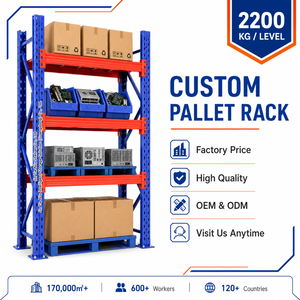
Standard Selective Racking
40% – 50%
100% Direct Access
FIFO (First-In, First-Out)
FMCG, 3PL Distribution, General Warehousing
Baseline (1.0x)
Double Deep Pallet Racking
60% – 65%
50% Instant Access
LIFO / Pantograph Forklift
Dry Goods, Pharmaceuticals, Paper Storage
Moderate (1.2x)
Drive-In / Drive-Through Rack
70% – 80%
Low (Batch Access)
LIFO / FIFO High Density
Seasonal Bulk, Cold Storage, Beverage Bottlers
Cost-Effective (1.3x)
Radio Shuttle Automation
85% – 90%
High Per Lane
Automated FIFO / LIFO
Cold Stores, Meat/Seafood, High-Velocity SKU
Advanced (2.2x)
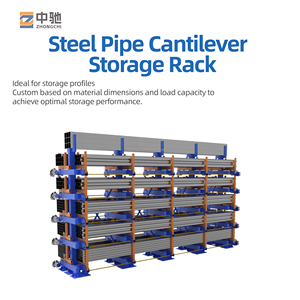
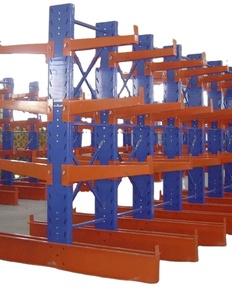
Heavy Duty Cantilever Racks
Variable
100% Open Access
Overhead Crane / Side Loader
Steel Pipe, Timber, Sheet Aluminum, Profiles
Medium (1.5x)
Manufacturing Verification
Why Source from HEDA Shelves: Enterprise Strengths
Combining 25+ years of production heritage with precision robotic metalworking and turnkey international project management.
01
25+ Years Industrial Mastery
Operating continuously since 2001, our staff of over 300 skilled metalworking engineers and technicians has solved over 10,000 project challenges worldwide.
02
Complimentary 3D & CAD Layouts
Prior to contract signing, our structural engineers deliver comprehensive architectural 2D AutoCAD layouts, 3D renderings, and structural beam deflection stress calculations.
03
Tropical-Grade Pre-Treatment
Every component undergoes hot chemical degreasing, ultrasonic rust removal, acid pickling, and phosphating prior to electrostatic powder polymerization, preventing corrosion in 95% RH environments.
04
Complete OEM/ODM Customization
From bespoke column punches (50mm, 75mm, 76.2mm pitch) to corporate electrostatic color schemes, custom packaging nesting, and container cubic load optimization.
In-House Manufacturing: 10 Controlled Stages from Steel Coil to Shipping Container
STEP 01
Raw Steel Testing
STEP 02
CNC Slitting & Cutting
STEP 03
Automated Punching
STEP 04
Cold Roll-Forming
STEP 05
Profile Calibration
STEP 06
Shot Blasting & Polishing
STEP 07
Robotic CO2 Welding
STEP 08
Pickling & Phosphating
STEP 09
Powder Polymerization
STEP 10
QA Inspection & Bundling
Procurement Due Diligence
Industrial Pallet Racking B2B Procurement FAQ
Direct answers to complex structural engineering, import regulations, testing protocols, and logistical operations.
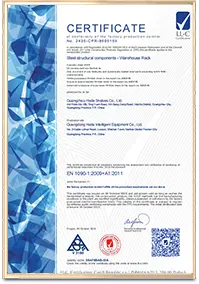
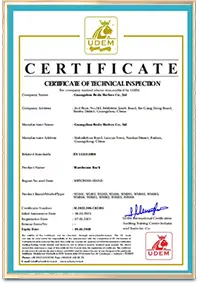
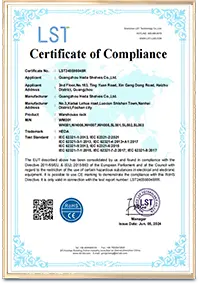
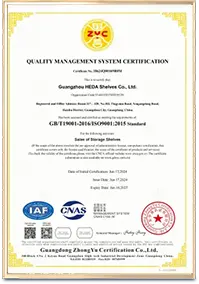
Audit-Ready Quality Assurance & Official Credentials
We provide full certification packages with every shipment, satisfying third-party inspection firms such as SGS, TÜV Rheinland, and Bureau Veritas.
What structural engineering standards do your heavy-duty pallet racks comply with?
Our pallet racks are engineered and structurally audited to meet European standard EN 15512:2020 (Steel static storage systems – Adjustable pallet racking systems), American RMI MH16.1 specifications, and Australian AS 4084:2023 design standards. Structural beam load deflection is limited to no more than L/200, guaranteeing high structural safety factors (typically 1.5 to 1.67) under full working static load conditions.
How do you calculate and verify the load-bearing capacity per level?
Every system is engineered using Finite Element Analysis (FEA) software that calculates bending moments, shear stresses, and column buckling based on exact pallet dimensions, pallet weights, and frame heights. Furthermore, physical destructive testing is periodically conducted on full-scale beam assemblies and upright frames to empirically verify that welded connector teeth and beam locking pins resist shear loads well beyond rated capacities.
What steel grade is used, and can you provide original steel mill certificates?
We exclusively use prime structural steel coils certified Q235B and Q355B (equivalent to ASTM A36 and ASTM A572 Grade 50 / European S235 and S355). Original 3.1 Mill Test Certificates (MTC) detailing chemical composition (carbon, manganese, phosphorus, sulfur) and mechanical tensile/yield properties are provided with every export container.
How is surface rust prevented during ocean transit and in humid tropical climates?
Components go through an intensive 8-stage automated pre-treatment line featuring acid pickling, passivation, and hot zinc phosphating. This chemically etches the steel surface to guarantee optimum powder adhesion. We then apply thermosetting epoxy-polyester electrostatic powder coating (60–90 μm film thickness) cured at 190°C. For aggressive coastal or sub-zero environments, we offer continuous hot-dip galvanizing with coating thicknesses exceeding 85 μm in compliance with ISO 1461.
Can your racking systems be installed in active seismic zones?
Yes. We regularly design racking for seismically active regions across the Pacific Rim, Southeast Asia, and the Americas. Using site-specific peak ground acceleration (PGA) data, soil classifications, and importance factors supplied by your local structural engineer, we calculate required upright section sizes, engineer reinforced diagonal bracing matrices, and specify heavy-duty baseplates with dynamic wedge anchor bolts.
How are shipping containers optimized to protect cargo and reduce ocean freight costs?
Our logistics engineering team calculates load nesting plans using 3D container optimization software. Upright frames are either shipped knock-down (unbolted) to pack maximum tonnage into 40HQ containers, or pre-assembled based on customer handling capabilities. All components are bound with steel strapping, wrapped in protective bubble film, and fitted with custom wooden pallets and lifting skids to allow fast forklift destuffing without scratching the powder-coated finish.
What details are needed to receive a complete CAD warehouse layout and quote?
Simply provide: (1) Architectural warehouse layout drawing with building columns, door openings, and clear height under roof trusses; (2) Pallet specifications (width, depth, overall height including cargo, and maximum gross weight); (3) Operating lift truck make, model, minimum aisle turning radius, and maximum reach height; (4) Preferred operating sequence (FIFO vs. LIFO). Our engineers deliver free preliminary AutoCAD proposals within 24 to 48 hours.
Plan Your Warehouse Storage Layout with HEDA Structural Engineers
Request an engineer-certified layout calculation, 3D structural visualizer rendering, and comprehensive export factory price quote with zero design fees.
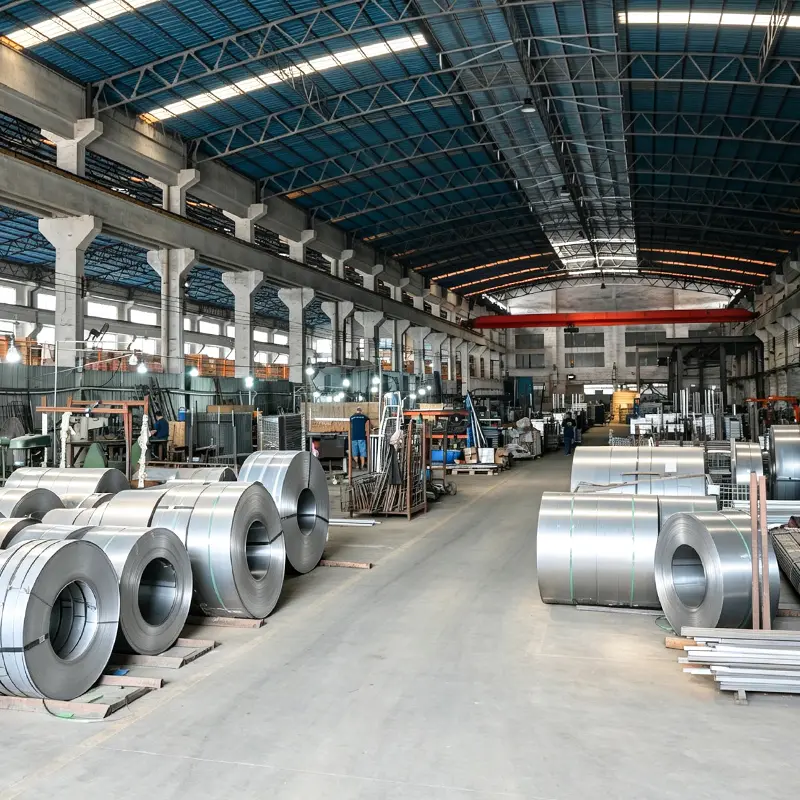
 Steel Structures