Engineered High-Density Storage Solutions
Precision-rolled structural systems fabricated directly in Guangzhou, engineered to optimize high-volume pallet staging, material flow, and vertical space utilization.
Architectural Anatomy: Engineering Modern Drive-In Racking for Maximum Volumetric Density
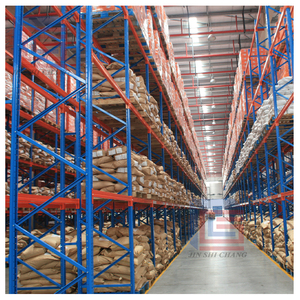
As industrial floor space becomes exceptionally scarce and land acquisition costs escalate worldwide, warehouse designers and supply chain operators face persistent pressure to maximize cubic volumetric utilization. Drive-In racking configurations represent the quintessential high-density storage methodology, stripping out conventional forklift access aisles in favor of continuous continuous pallet support rails.
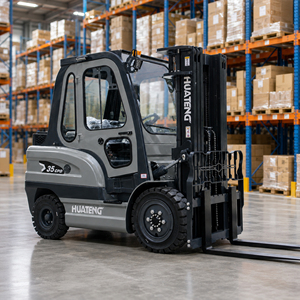
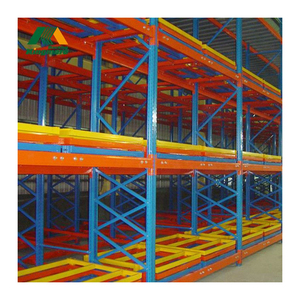
Operating primarily on a Last-In, First-Out (LIFO) inventory model, drive-in systems allow forklifts to enter the structural racking bays directly from one side to deposit or retrieve unitized loads along heavy-gauge cantilevered support rails. When access is designed from both faces—creating a Drive-Through arrangement—the facility unlocks First-In, First-Out (FIFO) turnover functionality, crucial for batch-controlled production lines and ambient staging facilities.
Unlike standard selective rack configurations that rely heavily on regular cross-beam spans for structural rigidity, a drive-in system eliminates intermediate horizontal beams within the travel lanes. Consequently, lateral stability is achieved through an engineered overhead bridging grid, rigid portal frames, heavy-duty top tie beams, and substantial floor anchoring with reinforced guide rails.
Strategic Procurement Horizons: Future Trends in Storage Architecture
Data-driven intelligence and structural resilience paradigms reshaping capital equipment investment across intralogistics supply chains.
High-Yield Q355B Steel Adoption
Procurement teams are shifting decisively toward high-tensile hot-rolled micro-alloyed steels like Q355B. This metallurgical advancement reduces structural tare weight while elevating impact resilience, providing superior protection against forklift mast strikes.
Cold Chain Energy Optimization
With refrigerated cubic volume costing 4.5 times more to operate than ambient staging, cold storage operators are combining drive-in structural frameworks with smart temperature-airflow modeling to eliminate thermal pockets and lower refrigeration overhead.
Seismic-Dampened Base Engineering
Global logistics hubs situated along dynamic seismic corridors (e.g., the Pacific Rim) require FEA-calculated seismic engineering. Advanced procurement mandates ductile base plates and dual-anchor designs that absorb ground acceleration waves.
Technological Trajectory: The Evolution of High-Density Drive-In Racks
How cutting-edge industrial manufacturing techniques transform conventional static steel framing into adaptable, mission-critical assets.
Hybrid Automation Conversions
Modern drive-in structures are increasingly engineered with dual-compatibility profiles, facilitating turnkey retrofitting into 2D radio shuttle systems as operations scale from manual lift operations to semi-automation.
Thermo-Diffusion Finishes
Traditional single-pass coatings fail in coastal high-salinity and deep freeze zones (-30°C). Advanced multi-stage pickling, zinc-phosphate immersion, and electrostatic thermo-cured powders deliver robust corrosion endurance.
Real-Time Deflection Sensing
Integration of IoT strain gauges and LiDAR displacement sensors within entry bays allows facilities to monitor real-time rack stresses, track minor impacts, and trigger preventive maintenance before structural fatigue occurs.
Modular Asymmetrical Arms
Proprietary cantilevered bracket designs offer tapered flanged guide rail seats. This geometry increases entry tolerance for reach trucks, preventing pallet jamming and reducing forklift bumper collisions.
Guangzhou HEDA Shelves: Decades of Direct Manufacturing Excellence
Supplying globally compliant, heavy-duty racking systems direct from our 30,000-square-meter South China industrial manufacturing hub.
Headquartered in the global logistics gateway of Guangzhou, China, Guangzhou Heda Shelves Co., Ltd. stands as a world-renowned designer, manufacturer, and structural solution provider of heavy-duty industrial storage equipment. Operating continuously since 2001, HEDA has grown to command over 30,000 square meters of precision fabrication infrastructure backed by an engineering team of more than 300 experienced professionals, roll-forming specialists, and licensed welding technicians.
Our monthly production volume routinely reaches 30,000 metric tons of steel storage components, serving multinational retail distribution centers, FMCG producers, agricultural cold stores, and third-party logistics firms across more than 120 countries worldwide. Driven by an unwavering commitment to quality assurance, all structural manufacturing runs adhere strictly to CE Certificate No. 2435-CPR-8605159, ISO 9001:2015 Quality Management Standard No. 18624Q00169R0M, and comprehensive European RoHS environmental standards.
Certified Steel Coils
Mill-tested Q235B and Q355B structural steel coils inspected for thickness uniformity.
Roll-Forming
Continuous CNC-controlled roll mills ensure column profiles retain zero internal stress.
Robotic Welding
Automated MIG/TIG stations weld bracket assemblies with deep penetration joints.
Pre-Treatment
Multi-stage ultrasonic degreasing, pickling, and phosphating ensure coating adhesion.
Electrostatic Coat
Thermo-cured polymer powder coats applied to 80-120 micron thickness for rust protection.
Because HEDA operates complete production lines in-house—from raw uncoiling and automatic column punching to cold-bending, welding, chemical pickling, and electrostatic powder coating—we maintain complete quality oversight across every millimeter of delivered structural steel. Every export bundle is marked, sequenced, and optimized for maritime freight shipping, lowering transit costs and ensuring frictionless field installation.
Frequently Asked Procurement Inquiries (FAQ)
Addressing structural calculations, maritime shipping times, climatic coatings, and warehouse integration.
Design Your Custom High-Density Warehouse Today
Submit your facility dimensions, floor plans, and storage requirements. HEDA's structural engineering team will prepare a comprehensive 2D CAD layout, 3D visual rendering, and itemized load-bearing proposal free of charge.
Get Catalog