Factory-Engineered Conventional Selective Pallet Racking Series
Constructed from prime certified Q235B/Q355B structural coil steel, our heavy-duty beam racks guarantee 100% SKU selectivity, rigid upright deflection control, and seamless compatibility with counterbalance, reach, and VNA forklift fleets.
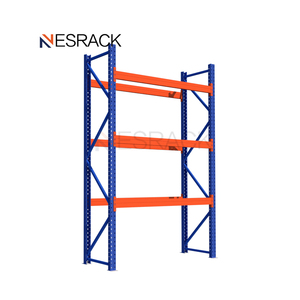
Industrial Storage Racks Heavy Duty Equipment Conventional Pallet Racking Steel Racks For Warehouse
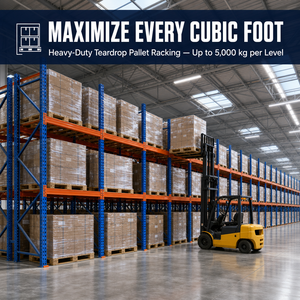
Large Scale E-Commerce Logistics Warehouse Pallet Racking System Customized High Load Industrial Conventional Heavy Duty Rack
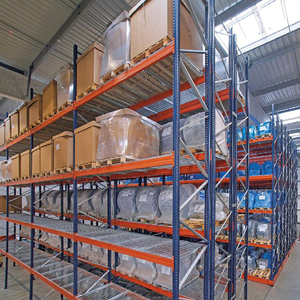
2000KG 3000KG Pounds Tons Racking Pallet 2000KG 3000KG Pounds Tons Racking Heavy Duty Industrial Racking
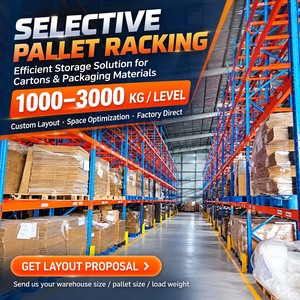
Conventional Steel Pallet Racks for Forklift Access in Industrial Warehouses
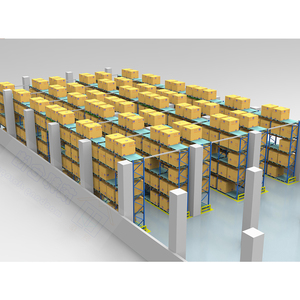
CE Certified Warehouse Racking Conventional Steel Pallet Rack with One-stop Service
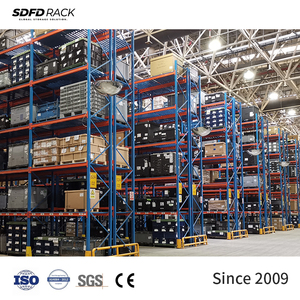
Heavy Duty Pallet Rack System Multi-layer Customized Metal High Load Industrial Warehouse Storage Steel Selective Pallet Racking
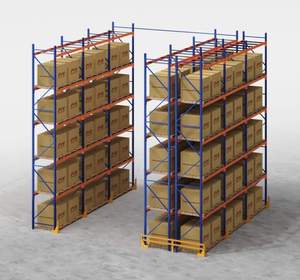
Conventional Single Row Pallet Racking
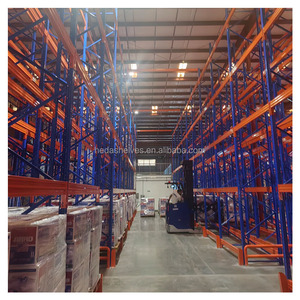
Industrial Warehouse Solutions Conventional Racking Pallet Rack Storage System
Engineering Architecture of Conventional Pallet Racking
Conventional pallet racking (selective racking) serves as the core framework of global supply chain facilities. Understanding its metallurgical, load deflection, and kinematic safety parameters ensures zero catastrophic failures under seismic and dynamic operating conditions.
Omega-Profile Upright Geometry
Our upright frames utilize a cold-rolled, continuous 11-fold to 13-fold Omega (Ω) cross-section. This advanced continuous roll-forming creates exceptional torsional resistance and suppresses local buckling under heavy concentric loads, maximizing axial load transmission into the concrete foundation slab.
Interlocking Box-Beam Physics
Cross beams are fabricated from twin cold-rolled C-sections tightly interlocking in a closed seam weld, delivering balanced vertical and horizontal section moduli. Robotic multi-claw end connectors with high-tensile safety locking pins prevent dislodgement caused by forklift mast uplifts.
FEM 10.2.02 & RMI MH16.1 Deflection Limits
Every beam level is engineered to strictly adhere to international beam deflection thresholds (maximum allowable deflection ≤ L/200 under total working payload, with standard safety margins exceeding 1.5 against yield point). Frame sway stability calculations incorporate dynamic fork impact allowances.
| Steel Grade & Standard | Yield Strength (ReH, MPa) | Tensile Strength (Rm, MPa) | Elongation (δ5 %) | Target Racking Application |
|---|---|---|---|---|
| Q235B (GB/T 700 / Equivalent ASTM A36) | ≥ 235 | 370 – 500 | ≥ 26 | Standard ambient warehouse beam members, baseplates, horizontal & diagonal bracing struts. |
| Q355B (GB/T 1591 / Equivalent EN S355JR) | ≥ 355 | 470 – 630 | ≥ 22 | Heavy-duty upright columns exceeding 10m clear heights, seismic shear bracing, and 3,000kg+ beam runs. |
| Q345D / Low-Temp High Strength | ≥ 345 | 470 – 600 | ≥ 21 | Sub-zero cold chain logistics, blast freezer facilities down to -30°C where impact toughness (Charpy V-Notch) is critical. |
| Hot-Dip Galvanized Coil (DX51D+Z) | ≥ 260 | — | ≥ 22 | Coastal, high-humidity, agricultural fertilizer depots, and corrosive chemical staging areas. |
Global Procurement Trends: Conventional Racking (2025–2030)
Industrial supply chains are moving away from commodity steel buying toward comprehensive Total Cost of Ownership (TCO) assessments, automated guided vehicle (AGV) readiness, and verified Scope 3 embodied carbon metrics.
1. AMR & Autonomous Reach-Truck Interoperability
While conventional racking has historically relied on human-operated counterbalanced forklifts, Tier-1 3PL operators now mandate tolerances (±1.5mm) suitable for automated vision-guided reach trucks and autonomous mobile robots (AMRs). Procurement teams specify continuous guide rail brackets, ultra-flat ground mounting interfaces, and high-contrast reflective beam positioning barcodes at factory production.
2. Decarbonization & Green Steel Mandates
ESG compliance is transforming international tenders. European and American multinational enterprise buyers actively audit primary steel sources (Electric Arc Furnace vs. Blast Furnace-Basic Oxygen Furnace). As an established China manufacturing leader, Guangzhou HEDA Shelves tracks carbon intensity across coil slitters, roll-form lines, and low-VOC electrostatic powder curing ovens to simplify importer Scope 3 carbon boundary verification.
3. Modular Scalability to Catwalk & Mezzanines
Warehouse real estate price escalation across Southeast Asia, North America, and the Middle East makes single-purpose static storage uneconomical. Progressive engineering procurement contracts stipulate rack-supported multi-tier mezzanine upgrade potential—ensuring conventional selective frame columns feature pre-punched structural node patterns to integrate future mezzanine floor beams and catwalk levels.
Technological Innovations in Conventional Pallet Racking Systems
From nanotechnology pre-treatments to embedded IoT deflection monitoring, modern selective pallet racking integrates smart features that increase durability, operator safety, and supply chain uptime.
Zirconium Nano-Ceramic Surface Conversion
Replacing antiquated iron/zinc phosphating, advanced pre-treatment lines now leverage zirconium chemical conversion. This forms a nanoscale ceramic molecular layer across roll-formed steel, multiplying electrostatic powder adhesion strength and elevating ASTM B117 salt spray resistance from 240 hours to over 720 hours without heavy metal sludge emissions.
Seismic Dissipative Base Connections
Traditional rigid anchor bolts often suffer brittle shear failure during cyclic ground motions. Modern seismic conventional racking configurations incorporate high-ductility ductile iron footplates and energy-dissipating base assemblies, verified under nonlinear time-history seismic analyses to absorb earthquake energy in Pacific Rim locations.
Telemetry-Enabled Smart Load Sensing
Emerging logistics hubs now test wireless strain gauges embedded in high-capacity pallet beams. Linked to Warehouse Management Systems (WMS), these micro-sensors detect permanent plastic deformation, point-load imbalances, and unexpected fork impacts in real-time, transitioning maintenance from annual audits to predictive structural safety.
10 Controlled Steps from Steel Coil to Container Dispatch
Every selective upright frame, interlocking box beam, and safety cross-tie is manufactured strictly in-house in our 30,000 m² facility. Total quality control governs every phase from prime coil slit inspection to export container dunnage packing.

Raw Material Mill Verification
Strict incoming verification of Q235B/Q355B coils with ultrasonic thickness and spectrochemical carbon analysis.

High-Speed Slitting & Blanking
Automated CNC continuous uncoiling and strip slitting ensures edge burr-free dimensional tolerances within ±0.2mm.

Continuous CNC Punching
High-speed mechanical presses execute teardrop, diamond, or butterfly hole patterns with cumulative pitch errors under 0.5mm across 12 meters.

Multi-Station Roll Forming
Up to 24 progressive roll tooling passes gradually form the Omega upright cross-section, preserving internal crystalline structure.

Box Beam Seam Forming
Double C-section automatic interlock rolling lines form closed tubular box beams with high torsional resistance.

Deburring & End Milling
Automated milling, beveling, and shot blasting eradicate welding spatter and slag, creating smooth mating surfaces.

Robotic CO2 Shielded Welding
Multi-axis robotic arms weld beam connector claws with constant penetration, zero undercut, and complete throat thickness.

7-Stage Chemical Pre-Treatment
Degreasing, acid pickling, rinse cycles, and nano-zirconium/phosphate conversion strip oxides for superior coating adhesion.

Electrostatic Powder Curing
Automated reciprocating spray booths apply 60-90μm thermosetting epoxy-polyester powder, cured in 200°C baking tunnels.

Full Inspection & Container Packing
Coating adhesion cross-hatch tests, dimensional spot-audits, timber-cushioned steel strapping, and sea freight loading.
Why Global Supply Chains Rely on Guangzhou HEDA Shelves
Founded in 2001, Guangzhou HEDA Shelves Co., Ltd. has grown over a quarter-century into one of southern China’s preeminent manufacturers of warehouse storage equipment. Spanning a 30,000 m² state-of-the-art industrial production park with 300+ technical and production specialists, our plant achieves a monthly throughput of 30,000 tons of finished racking products.
Positioned strategically in Guangzhou, our export supply chain provides direct access to Nansha and Huangpu container terminals, ensuring rapid transit across Southeast Asia, North America, Europe, Australia, and the Middle East. With over 10,000 completed heavy-duty storage projects worldwide, we deliver comprehensive, end-to-end support—from complimentary structural CAD layouts and 3D FEA stress simulations to certified turn-key installation supervision.
Engineering & Factory Assurance
Complimentary engineering drawings, floor load distributions, and 3D warehouse renderings within 24–48 hours.
Short sea freight transit: 2–5 days to Vietnam, 3–5 days to Manila, 5–7 days to Singapore/Thailand, 6–8 days to Malaysia, 7–10 days to Jakarta.
Custom pitch compatibility (50mm European / 75mm Australian / Teardrop American) to seamlessly match existing warehouse installations.
Frequently Asked Questions by Industrial Racking Buyers
Clear, authoritative technical answers addressing engineering standards, container stowage, seismic compliance, and total quality verification when sourcing from China.
How do you verify allowable beam deflection under full dynamic loads?
We test and calculate beam capacity under European FEM 10.2.02 and US RMI MH16.1 specifications. Deflection is measured under a uniformly distributed load (UDL) using laser sensors. The structural threshold mandates that vertical beam deflection does not exceed 1/200th of the clear span length (L/200). In food and pharmaceutical applications requiring precision automated handling, we can specify structural limits down to L/300.
Can conventional pallet racking be engineered for high seismic risk zones?
Yes. In earthquake-prone zones—such as Indonesia, the Philippines, Japan, and the American West Coast—our engineers incorporate site-specific Peak Ground Acceleration (PGA) and soil profile classifications. We calculate seismic responses by adding heavy-duty structural baseplates, dual wedge chemical anchors, reinforced back-to-back row spacers, and vertical spine cross-bracing frameworks to ensure structural safety.
What parameters are required to generate an engineering CAD proposal?
To deliver an accurate, complimentary CAD layout, structural calculation, and competitive quotation within 24 hours, our engineering department requires: (1) Architectural floor plan with column grid coordinates and clear building height beneath ceiling obstructions/sprinklers; (2) Pallet footprint dimensions including overhang (Width × Depth × Total Height); (3) Maximum gross weight per loaded pallet; (4) Forklift model, turning radius, and maximum reach height.
How do you optimize shipping cubing to minimize ocean freight costs?
Pallet racking components are heavy and dense, requiring careful weight-to-volume balancing. We ship upright frames disassembled (knocked-down condition) bundled with custom timber battens, allowing efficient nesting. Beams are stacked in interlocking pairs using high-tensile steel strapping and edge protectors. This containerization plan maximizes standard 40HQ payload allowances (up to 26–28 tons subject to destination limits), significantly reducing landed shipping costs per pallet position.
What anti-corrosion protection is recommended for tropical or coastal sites?
For ambient warehouses facing 80%+ relative humidity, our standard 7-stage pre-treatment (pickling, phosphating, or nano-zirconium) with 60–90μm electrostatic powder coating provides robust protection against rust and peeling. For coastal sites, salt air exposures, or sub-zero freezer applications, we supply hot-dip galvanized upright frames and pre-galvanized beam configurations compliant with EN ISO 1461 standards.
Are your systems compatible with existing teardrop or European racking brands?
Yes. We engineer customized upright hole punch dies that seamlessly match major global racking profiles—including 50mm pitch (European Dexion/SSI Schaefer style), 75mm pitch (Australian/British Standard), and 2-inch punch pitch (American Teardrop compatible). This allows distributors and multinational operations to integrate our beams and uprights directly into existing warehouse footprints.
What warehouse floor slab criteria are necessary for conventional heavy-duty racks?
For standard 2,000kg to 3,000kg beam levels, the concrete industrial floor slab should generally feature a minimum compressive strength of C25/C30 (25 to 30 MPa), with a thickness of at least 150mm to 200mm, reinforced with steel mesh or rebar. Our engineering package specifies upright point loads and baseplate surface pressures, allowing your local structural engineer to verify slab capacity and select anchor embeddings.
What documentation and warranty coverage are included with factory orders?
Each shipment includes complete mill test certificates (MTC), coating thickness verification reports, installation sequence blueprints, and a structural load rating certificate. We back our conventional selective pallet racking lines with a standard 5-year structural warranty against manufacturing and metallurgical defects, supported by global technical consultation.
Accelerate Your Warehouse Capacity with Direct Factory Pricing
Connect directly with our Guangzhou structural engineering team. Receive custom CAD layouts, load calculations, and comprehensive technical specifications tailored to your logistics facility within 24 hours.