Featured High-Bay & Heavy-Duty Pallet Racking Portfolios
Explore our precision-rolled, hot/cold rolled high-tensile steel tall racking units configured for FMCG distribution, cold chains, automotive tiers, and high-density industrial fulfillment hubs.
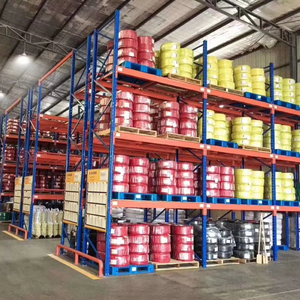
Boltless Stacking Steel Pallet Shelf Multi-Level Freestanding
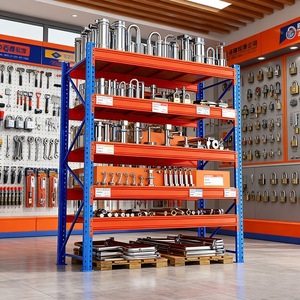
Beam-Type 5-Layer Heavy Duty Iron/Metal Storage Rack
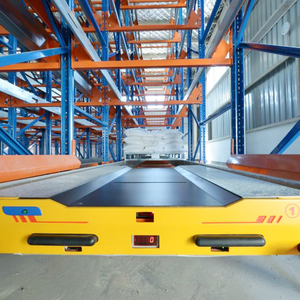
Heavy-Duty ASRS Radio Shuttle Automated Storage System
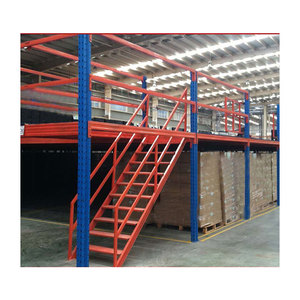
Multi-Tier Steel Grating Pallet Rack Supported Mezzanine
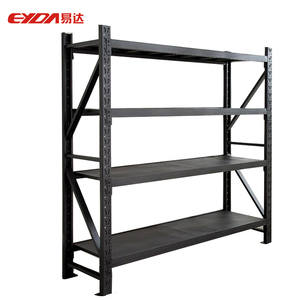
Supermarket 4-Tier Boltless Anti-Corrosion Storage Rack
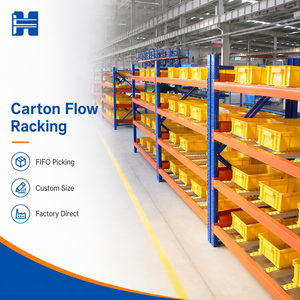
Carton Flow Gravity Roller Pick-to-Light Storage Shelves
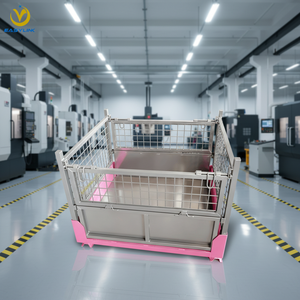
Foldable Steel Mesh Stackable Heavy Duty Storage Bin
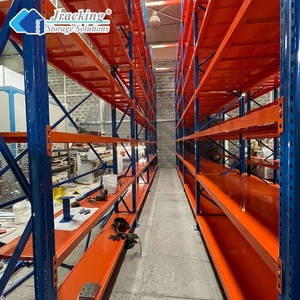
EURO Standard Heavy Duty Distribution Pallet Racking
Structural Rigidity & Safety Engineering in Tall Warehouse Racking (>12 Meters)
When storage structures exceed 12 meters in height, vertical intra-logistics shifts from standard shelving to critical structural civil engineering, governed by second-order P-Delta analysis, sway tolerances, and seismic harmonic oscillations.
Second-Order Structural Effects (P-Δ)
In high-bay tall racking installations (up to 30 meters), vertical loads acting upon horizontally displaced columns generate additional overturning moments. Our finite-element simulations verify that cold-formed omega and teardrop columns maintain structural stability under non-linear second-order lateral sway limits established by EN 15512:2020.
Tolerances & Floor Interface (DIN 15185)
Very Narrow Aisle (VNA) and automated stacker crane operations require rigorous coordination with superflat concrete floor slabs (F-min 100 or DIN 18202 Table 3 Line 4). Micro-deflections in upright anchor footings amplify exponentially at top beam elevations, demanding CNC-punched heavy-gauge shim packs and expansion anchor shear ratings.
Seismic Dissipation & Dynamic Mass
For operations located across active seismic belts (such as the ASEAN Circum-Pacific Belt and Mediterranean zones), racking calculations cannot treat pallets as static loads. We engineer back-to-back ties, K-bracing nodes, and top horizontal portal frames according to FEM 10.2.08 to absorb kinetic resonance without beam detachment.
| Structural System | Max Height Profile | Standard Pallet Load (UDL) | Deflection Limit (FEM / EN) | Primary Application Matrix |
|---|---|---|---|---|
| Selective Tall Pallet Racking | Up to 16 Meters | 1,000 – 4,500 kg / level | L / 200 | High SKU diversity, reach truck & VNA operations |
| Radio Shuttle High-Density ASRS | Up to 24 Meters | 500 – 2,000 kg / pallet | L / 250 | Cold storage (-30°C), food & beverage buffer, high volume FIFO/LIFO |
| Rack-Supported Mezzanines | Up to 18 Meters (4 Tiers) | 300 – 1,200 kg / m² floor | L / 300 (Flooring) | E-commerce sortation, multi-tier manual pick lines, garment logistics |
| Drive-In Deep Storage | Up to 12 Meters | 1,000 – 2,000 kg / pallet | L / 200 | Batch manufacturing, seasonal harvest agricultural bulking |
| Automated Crane Silo (ASRS Clad) | Up to 40 Meters | 1,000 – 3,500 kg / pallet | Strict FEM 9.831 | Turnkey clad-rack warehouses where the rack serves as building framework |
Future Procurement Trends in High-Bay Warehouse Racking
Supply chain executives and procurement directors must evaluate long-term capital investments through the lens of automation convergence, sustainability standards, and structural resilience.
1. Shift Toward Hybrid AMR & VNA Integrated Racking
The traditional boundary between manual forklift aisles and fully automated ASRS silos is dissolving. Next-generation warehouse designs are standardizing on tall VNA racking infrastructure capable of supporting operator-driven man-up turret trucks today while maintaining strict guide wire and rail dimensional clearances for autonomous mobile robot (AMR) retrofitting tomorrow.
Procurement teams are prioritizing rack profiles that offer interchangeable boltless beam brackets and standardized pallet runner add-ons to prevent premature asset obsolescence as warehouse robotic automation costs decrease over a 10-year depreciation cycle.
2. Life Cycle Assessment (LCA) and Green Steel Certification
International tenders across Europe, Australasia, and tier-1 logistics operators now evaluate the embodied carbon of structural storage components. Manufacturers are transitioning to certified recycled-content steel coils, solvent-free heavy metal compliant powder coatings (RoHS verified), and energy-optimized dry-off pre-treatment ovens.
Procurement audits increasingly demand mill test certificates (MTCs) verifying European Standard S355JR / S235JR or domestic Q355B / Q235B steel provenance, ensuring structural reliability under extreme fatigue loads while meeting ESG sustainability quotas.
3. Total Cost of Ownership (TCO) Over Purchase Price
Savvy supply chain engineers have abandoned pure steel-tonnage pricing. A racking system that shaves 50mm of vertical beam clearance across a 15-meter tall bay yields an entire additional storage tier across a 5,000 m² footprint — unlocking hundreds of thousands of dollars in real estate savings.
Precision roll-forming tolerances that prevent frame twisting, coupled with industrial powder coatings that eliminate micro-cracking and rust blooms in humid or refrigerated facilities, drastically reduce recurring maintenance shutdowns and structural rack repair expenses.
4. Cold Chain Expansion & Thermal Structural Integrity
With consumer demand for frozen biologicals and fresh foods surging globally, sub-zero warehouse racking (-25°C to -30°C) requires specialized low-temperature impact-tough structural steels that resist ductile-to-brittle metallurgical transformation. Standard structural carbon steels can suffer catastrophic brittle fractures when impacted by a forklift at low temperatures.
Specifying normalized grain-refined cold-tough steel grades and galvanized drive-in / radio shuttle components ensures operational structural safety without hazardous micro-stress fractures over decades of temperature cycles.
Technological Frontiers in High-Bay Rack Engineering
From digital twins to sensorized structural health monitoring, modern warehouse racking has evolved into an active, intelligent asset.
Rack-Supported Clad-Building Silos
Eliminating conventional building columns and outer walls, clad-rack architecture utilizes the racking uprights as primary structural pillars supporting the facility roof and exterior wall panels. This maximizes land utilization up to 40+ meters high while shortening overall construction time by up to 35% compared to conventional concrete structural builds.
IoT Structural Strain Health Sensors
Embedding wireless micro-strain gauges, optical fiber deflection sensors, and 3-axis MEMS accelerometers onto critical tall column bases allows facility teams to continuously monitor frame fatigue, forklift impacts, and seismic movement in real time, shifting warehouse operations from reactive repair to predictive structural safety.
Advanced Finite Element BIM Modeling
Modern high-bay procurement requires 100% integration into Building Information Modeling (BIM) workflows (IFC and Revit native data). Our digital twin layout modeling simulates sprinkler head coverage (NFPA 13 in-rack piping clash detection), lighting lumens, forklift turning radiuses, and structural load distributions down to the millimeter.
Frequently Asked Questions for Industrial Buyers
Engineering clarity on international certifications, structural calculations, seismic compliance, and global logistical delivery.
1. What is the legal significance of CE Certification (EN 15512) for tall racking?
Under the EU Construction Products Regulation (CPR 305/2011), CE Marking (our Certificate No. 2435-CPR-8605159) validates that our structural racking conforms to EN 15512 standards for steel static storage systems. This confirms third-party notified body auditing of our factory production controls, steel yield certifications, connection moment-rotation testing, and load-bearing safety factor coefficients (typically γM = 1.4 for materials). This certification protects project developers from structural liability risks and insurance disqualification.
2. What floor flatness tolerances are required for racking exceeding 12m?
For operations using reach trucks up to 12m, DIN 18202 Table 3 Group 3 floor flatness generally suffices. However, for Very Narrow Aisle (VNA) or automated high-bay systems up to 16–30m, concrete slabs must conform to DIN 15185 or VDMA guidelines (such as F-min 100 or F-number FF 50 / FL 48). Minor angular floor variances at floor level translate into massive mast sways at 15m elevations, which can cause catastrophic column impacts if tolerances are ignored.
3. How do you engineer racking for high-seismic regions (e.g., ASEAN / Americas)?
We perform dynamic spectral response analysis according to FEM 10.2.08 and Eurocode 8. Based on your geographical site parameters (ground acceleration ag, soil category, and importance factor), we increase base plate foot thicknesses (up to 12–16mm steel), double the concrete anchor shear embedment depths, incorporate continuous vertical and plan K-bracing towers, and utilize specialized seismic beam-to-column safety locks that prevent beam jump-out during upward vertical ground accelerations.
4. How is the racking protected against corrosion in 85%+ relative humidity climates?
Standard spray paint fails rapidly in humid environments. HEDA implements an automated industrial 10-stage pre-treatment line featuring acid chemical pickling to remove all mill scale, followed by zinc phosphating that forms a crystalline rust-inhibiting conversion layer. Components then receive electrostatic powder coating (60–80 microns) cured at 180–200°C. For extreme condensation environments, coastal yards, or cold storage, we provide hot-dip galvanized steel components conforming to ISO 1461.
5. How does in-rack fire suppression affect the structural beam design?
Under NFPA 13 and local civil defense codes, racks exceeding 7.6m (25 ft) storing combustible plastics or commodities frequently require level-by-level in-rack fire sprinkler piping. Our engineering team integrates longitudinal and transverse flue space dimensions (typically 150mm clear) into the CAD/FEM design, incorporating custom pipe hanger support brackets directly into upright frame posts without weakening column load capacities.
6. What is the allowable beam deflection under full operational load?
According to EN 15512 and FEM 10.2.02, beam deflection under maximum design uniformly distributed load (UDL) must not exceed 1/200th of the clear span length (L/200) for standard pallet operations, and L/300 or lower for automated systems like crane corridors and carton flow. If a beam span is 2,700mm, the allowable vertical sag must remain below 13.5mm without permanent residual plastic deformation when unloaded.
7. What exact information is required to receive a full structural CAD/FEM proposal?
We require: (1) Architectural floor plan showing column grid, roof clear height under purlins, and door/dock locations; (2) Pallet dimensions (W x D x H) including overhang and maximum gross unit weight; (3) Forklift model, mast collapsed/extended height, and minimum turning radius (AST); (4) Operating temperature range (ambient vs. chilled/freezer); and (5) Project geographical location for site-specific wind/seismic load calculations.
8. How do you guarantee overseas installation accuracy and safety?
Every component bundle is color-coded, CNC-labeled, and cross-referenced to detailed 3D step-by-step engineering erection drawings. We supply comprehensive digital installation manuals, laser plum-line torque verification standards for floor anchors, and video installation guides. For major distribution centers, our senior site supervisors deploy on-site to oversee local mechanical labor, perform torque audits, and sign off on CE-compliant commissioning certificates.
9. What are the key operational trade-offs between VNA and Radio Shuttle ASRS?
VNA selective racking delivers 100% immediate selectivity for every single pallet location with aisles as narrow as 1.7m, making it ideal for facilities with thousands of distinct, slow-to-medium moving SKUs. Conversely, Radio Shuttle ASRS eliminates all forklift aisles in favor of deep-lane storage (up to 40 pallets deep), delivering 80%+ cubic warehouse density. This makes it ideal for fast-moving items, food manufacturing buffers, and high-energy cold storage warehouses.
10. How does container-optimized packaging prevent sea transit damage?
Tall upright frames and heavy beams are packed using automated bundling fixtures with specialized wooden dunnage, protective foam separation pads, and heavy steel banding straps. Bundles are configured to match internal 40ft High Cube (40HQ) container dimensions down to 20mm tolerances, preventing mechanical rubbing, maritime cargo shifting, or humidity condensation corrosion during intermodal sea freight transits.
Ready to Engineer Your Tall Warehouse Racking Facility?
Connect directly with our senior structural logistics engineering team in Guangzhou. We provide full structural layout calculations, comprehensive CAD blueprints, 3D photorealistic renderings, and CIF/FOB export quotations with zero obligation.