Precision-Engineered Roller Racking & Gravity Flow Systems
Factory-direct industrial live storage systems designed with high-grade Q235B/Q355B structural steel, centrifugal brake rollers, and full compliance with European EN 15512, ISO 9001:2015, and CE standard 2435-CPR-8605159.
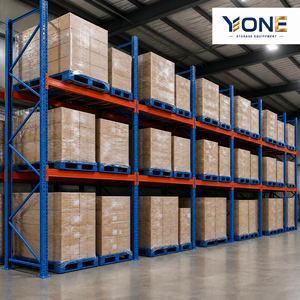
Heavy Duty Installation-Free Boltless 5-Tier Pallet Racking
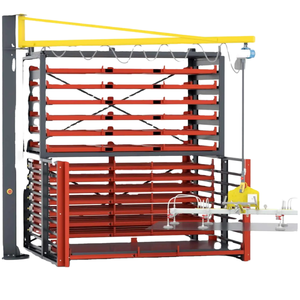
5-Layer Roll-Out Heavy Sheet & Plate Dynamic Storage Rack
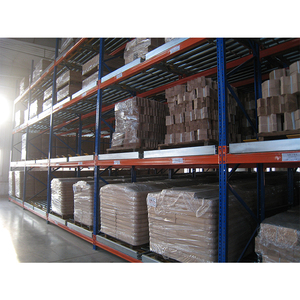
Industrial High-Density FIFO Gravity Flow Roller Racking System
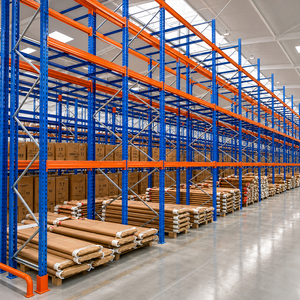
Q235B High-Load Schwerlastregal Tyre & Wheel Pallet Racking
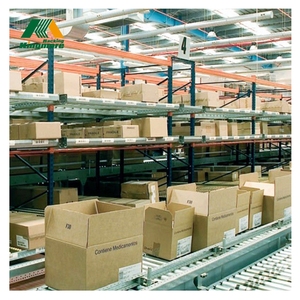
Customized Gravity Carton Flow & Split-Case Roller Rack
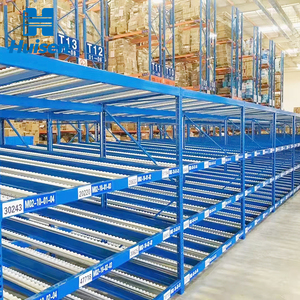
High-Density Automated Gravity Roller Shelving System
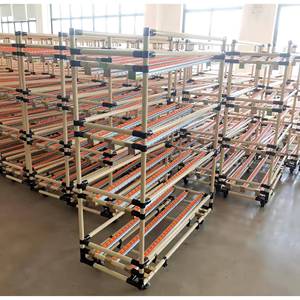
AOCHEN Industrial High-Strength Dynamic Flow Shelving System
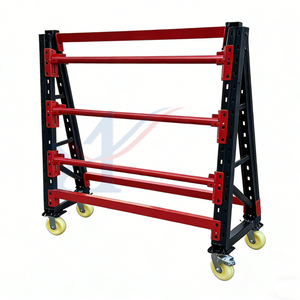
Medium Duty 3-Layer Adjustable Mobile Roller Rack on Casters
Structural Engineering Architecture of CE-Compliant Gravity Roller Racking
Roller racking—frequently classified under dynamic pallet flow and carton flow engineering—operates on pure kinetic gravitational potential. Discover the exacting mechanics behind zero-energy high-throughput live storage.
Gravitational Incline & Kinetic Velocity Control
Dynamic roller lanes are engineered at precise gradients ranging between 2.8% to 4.0% (1.6° to 2.3°), matched to pallet bottom topography (Euro pallets, GMA runners, or plastic slip-sheets). Built-in centrifugal brake rollers ensure pallet velocities never exceed 0.3 m/s, preventing terminal impact shock at unloading faces.
Safety Separation Mechanisms (FIFO Protection)
In deep-lane configurations exceeding 15 meters, the hydrostatic accumulation pressure of following pallets can compromise forklift retrieval. Our CE-certified systems employ automatic mechanical pedal separators that mechanically decouple the front pickup pallet from backline line pressure until the first pallet is completely extracted.
EN 15512 Structural Steel Calculations
All upright columns and horizontal load profiles are cold-formed from certified Q235B and Q355B structural coil. Finite element analysis (FEA) accounts for global stability, beam deflection limits (≤ L/200 under maximal dead plus dynamic live weight), and dynamic shock impacts dictated by seismic Eurocodes.
Comparative Technical Matrix: Gravity Roller Systems vs Conventional Static Racking
| Engineering Parameter | HEDA CE Certified Pallet Flow | Standard Carton Flow Systems | Conventional Selective Pallet Racking | Drive-In Static Storage |
|---|---|---|---|---|
| Footprint Utilization | Up to 80% floor area saved | Up to 70% floor area saved | Baseline (40–45% utilization) | 65–70% utilization |
| Stock Rotation Logic | Strict FIFO (First-In, First-Out) | Strict FIFO / Split-Case Picking | Random Access / Multiple handling | LIFO (Last-In, First-Out only) |
| Energy Consumption | Zero kW (100% Gravity Driven) | Zero kW (100% Gravity Driven) | Zero (Manual Forklift only) | Zero (High Forklift Transit Fuel) |
| Aisle Requirement | Only 2 Aisle Faces (Load & Retrieve) | Split replenishment & order-pick faces | 1 Aisle per 2 Racks (50% wasted aisles) | Single entry lane per bay cluster |
| Throughput Capacity | Ultra-High (Simultaneous feed/pick) | High pick density (300+ lines/hr) | Moderate (Prone to aisle congestion) | Low (Bottlenecks inside storage lanes) |
| Roller / Bearing Spec | Zinc-plated steel Ø50–60mm, sealed ball | Thermoplastic / Aluminum rollers | None (Static roll-formed beams) | None (Cantilever guide rails) |
Future Procurement Trends for Roller Racking & Gravity Flow Systems (2025–2035)
As chief supply chain officers and operations directors navigate rising land costs, labor shortages, and corporate carbon-reduction mandates, procurement criteria for industrial roller racking are experiencing radical structural shifts.
1. Direct Interfacing with Autonomous AGV/AMR Fleets
Modern warehouse projects no longer purchase roller racks purely for manually operated counterbalance trucks. Today's procurement demands millimetric precision at charge and discharge faces. Forward-looking buyers require heavy-duty guidance entry funnels, photo-eye sensor brackets, and reinforced dock stops compatible with autonomous reach trucks and AMR tuggers operating under dark-warehouse protocols.
2. Zero-Energy Passive Decarbonization Mandates
With corporate ESG targets pushing facilities away from high-draw automated powered conveyors, gravity roller racking represents the primary alternative for carbon-neutral internal transport. By harnessing kinetic gravity across runs exceeding 30 meters, facilities eliminate continuous electric motor draw, cutting operational lifecycle carbon emissions by upwards of 40% over active conveyor systems.
3. Modularity for High-Mix / Short-Lifecycle Fulfillment
E-commerce, FMCG, and omni-channel retail cycles require rapid lane reconfiguration without structural welding or facility downtime. Strategic procurement now prioritizes boltless, clip-in roller beds with variable pitch adjustments (from 50mm down to 25mm centers), allowing identical bays to seamlessly transition between Euro wooden pallets, plastic half-pallets, and corrugated totes.
Key Technological Innovations Shaping the Future of Roller Storage
Continuous materials science improvements and precision manufacturing technologies are solving historic limitations in dynamic friction management, sub-zero warehouse reliability, and operational acoustic damping.
Eddy-Current Magnetic Braking
Replacing traditional friction-plate mechanical brakes with non-contact magnetic eddy-current decelerators. This eliminates brake shoe wear, ensures zero dust generation in cleanroom pharma environments, and delivers invariant braking resistance regardless of ambient temperature.
Cold-Chain Cryogenic Lubricants
Dynamic flow racking installed in -30°C blast freezers previously suffered bearing seizure due to standard grease viscosity thickening. Next-generation sealed bearings with synthetic PTFE/synthetic ester lubricants maintain smooth rotation down to -45°C without sluggish startup friction.
Anti-Microbial Epoxy Coatings
Food and dairy logistics facilities operate under stringent sanitization regimes. Advanced zinc-phosphate electro-deposition followed by food-contact compliant powder coats prevents chemical erosion from caustic washdown agents and prevents microbial biofilm formation across roller assemblies.
High-Precision IoT Lane Monitoring
Integrated wireless load-cell stop gates and optical throughput counters enable continuous real-time pallet tracking within gravity lanes, feeding WMS/ERP databases directly to monitor dwell times, batch expiration dates, and lane fullness without human physical audits.
Why Tier-1 Global Contractors & Logistics Giants Partner with HEDA Shelves
Founded in 2001, Guangzhou Heda Shelves Co., Ltd. has grown from a specialized metal processing unit into an international powerhouse in high-density automated racking. Operating out of our Guangzhou manufacturing headquarters with a 30,000 m² modern production facility and a technical force of over 300 experienced engineers and craftsmen, we maintain a sustained monthly capacity of 30,000 metric tons of certified industrial steel racking.
Unlike trading entities or assemblers, our engineering team manages the complete lifecycle in-house: from initial architectural CAD layout optimization, structural finite element loading calculations, down to container-optimized bundle packing that eliminates transit deformation.
Inquire Now10 Controlled Production Steps from Raw Coil to Container Dispatch
Precision execution guarantees that every upright, roller beam, and dynamic brake cartridge performs with absolute safety under continuous multi-ton operational cyclic stress.
Certified Prime Raw Material Inbound Inspection
Every batch of Q235B and Q355B hot-rolled and cold-rolled steel coils undergoes spectroscopic chemical composition verification, yield strength tensile testing, and thickness micrometer checks prior to manufacturing clearance.
High-Precision Automated CNC Slitting & Cutting
Automated uncoiling, leveling, and continuous feed shearing lines cut steel blanks within ±0.2mm dimensional tolerances to eliminate cumulative geometric assembly skew over tall high-bay structures.
High-Speed CNC Multi-Die Column Punching
Multi-punch CNC stamping centers punch teardrop, diamond, or butterfly pitch holes at continuous 50mm or 75mm increments, maintaining pitch repeatability for fast, plumb horizontal beam locking.
Multi-Pass Progressive Cold Roll-Forming
Rolling through 18 to 24 progressive chilled-cast forming dies cold-works the steel profiles, optimizing grain boundaries and yielding enhanced load-bearing structural stiffness with negligible residual internal tension.
Robotic Laser Profiling & Mitering
High-power 3D fiber laser cutters cut specialized notches, safety locking tabs, and angle cuts across roller-bed mounting rails, guaranteeing flush interlocks without manual secondary grinding.
Automated Surface Degreasing & Polishing
Formed beams, frames, and steel rollers are mechanically abraded and deburred to remove flash, burrs, and mill scale, ensuring smooth touch points and maximum surface energy for liquid pre-treatment.
Multi-Axis Robotic Shielded Arc Welding
Automated Panasonic and OTC robotic welding arms perform continuous metal active gas (MAG) welding on beam connectors and baseplate joints, ensuring penetration depth and zero porosity.
Full-Immersion Acid Pickling & Phosphating Pre-Treatment
Components pass through an automated 9-tank multi-stage pre-treatment immersion bath. Pickling strips rust while iron phosphating establishes a microscopic crystalline conversion layer that resists under-film corrosion in humid, tropical, and coastal environments (80%+ RH).
High-Voltage Electrostatic Powder Coating & Curing
Swiss Gema electrostatic powder spray booths apply thermo-setting epoxy-polyester resins at 60–90μm uniform thickness. Cured in high-temperature infrared ovens at 200°C, this delivers a resilient, impact-resistant, high-gloss finish.
Dynamic Test-Bed Inspection, Bundling & Export Loading
Sample roller lanes are erected on dynamic test jigs to verify pallet coasting speeds, brake roller drag force, and safety separation release. Certified items are palletized with protective corner angles and steel strap bundling for sea container shipment.
Frequently Asked Questions: Industrial Roller Racking Procurement
Clear, unvarnished technical answers regarding calculations, pallet compatibility, braking dynamics, and international freight.
What is the optimal incline slope for industrial pallet roller racking systems?
The standard industry gradient is between 3.0% and 3.5% (approximately 1.7° to 2.0°), which translates to a vertical drop of 30mm to 35mm per linear meter of lane. For poor-quality bottom boards or heavily deflected wooden pallets, our engineering team can increase the incline up to 4.0%, pairing the line with closely spaced centrifugal brake rollers to control velocity. Conversely, smooth plastic pallets with flat runners operate efficiently at a lower slope of 2.8% to 3.0%.
How do brake rollers function, and how many are required per lane?
Brake rollers (speed controllers) contain an internal planetary gear set driving centrifugal brake shoes against an outer housing. As a pallet accelerates down the incline, the centrifugal force expands the shoes, providing speed-proportional drag without external electrical wiring. Typically, we engineer one brake roller for every pallet position starting from the second pallet behind the discharge stop. For heavy loads (1,200kg to 1,500kg), twin-coupled brake rollers are installed at critical deceleration intervals.
Can damaged or non-standard wooden pallets be utilized in gravity roller racks?
Gravity flow requires continuous, uniform contact with roller surfaces. Broken, severely bowed (deflection > 1/100), or missing bottom runners can cause pallets to bridge between rollers or skew laterally against guide rails. For applications utilizing lower-tier or mixed-spec wooden pallets, HEDA engineers specify 3-rail or full-width steel roller beds with smaller center-to-center pitches (50mm–75mm) and entry guide flares, or recommend heavy-duty plastic slave boards/trays for reliable continuous flow.
How does the pallet separator work, and why is it essential for operator safety?
In a 10-pallet deep lane carrying 1,000kg pallets, the back-pressure force acting on the front retrieval pallet can exceed 400kgf. Attempting to lift this pallet directly causes friction drag, pallet wedging, or uncontrolled sudden surging of rear pallets into the aisle. HEDA's mechanical separator locks the second pallet in place 200mm behind the front pallet. Only when the forklift operator fully lifts and clears the front pallet does the release lever unlock the rear line, allowing controlled progression to the picking face.
What are the CE and ISO certification compliance standards met by your systems?
Our industrial racking systems conform strictly to European standard EN 15512:2020 (Steel static storage systems – Adjustable pallet racking systems – Principles for structural design), EN 15620 (Tolerances, deformations and clearances), and EN 15629 (Specification of storage equipment). Factory operations hold CE Certification No. 2435-CPR-8605159, ISO 9001:2015 Certification No. 18624Q00169R0M, and RoHS green material compliance, facilitating building code sign-offs globally.
What export lead times and shipping schedules can overseas buyers expect from Guangzhou?
Standard fabrication lead time is 18 to 25 business days from final engineering CAD drawing approval. Operating in Guangzhou adjacent to Nansha and Huangpu deep-water container terminals allows direct vessel sailings with ultra-short maritime transits: 2–5 days to Vietnam and Manila, 5–7 days to Singapore and Bangkok (Laem Chabang), 6–8 days to Port Klang (Malaysia), 7–10 days to Jakarta (Indonesia), and 14–22 days to Australian, Middle Eastern, and Western European primary ports.
Can roller racks withstand seismic forces in active fault regions (e.g., Philippines, Indonesia, Japan)?
Yes. Structural calculations are tailored using regional seismic spectral acceleration parameters ($S_s, S_1$). We adjust column section thicknesses (up to 3.0mm), reinforce footplate anchoring with heavy Hilti chemical masonry anchors, incorporate heavy diagonal cross-bracing towers, and install oversized transverse tie beams across dynamic lanes to dissipate seismic oscillatory vibrations without lane dislodgement.
What ongoing maintenance is necessary for zero-energy gravity roller tracks?
Because gravity systems contain no electrical drive motors or wiring, maintenance is minimal. Semi-annual preventative protocols involve checking roller spin freely by hand, cleaning debris or pallet wood splinters from roller tracks, checking fastener torque on upright anchors, and verifying that the mechanical separator latch clicks and resets cleanly under spring return. Sealed bearings require no routine grease re-packing under standard operating ambient temperatures.
Ready to Engineer Your High-Density Dynamic Storage Facility?
Connect directly with our senior racking structural engineering team in Guangzhou. Receive a comprehensive CAD warehouse layout proposal, finite element loading calculation, and transparent factory-direct pricing within 24 hours.
Inquire Now