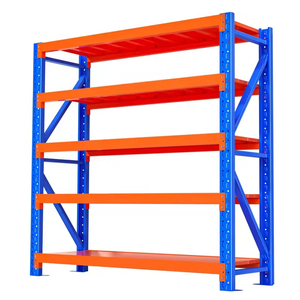
Medium Duty Metal Warehouse Shelves Corrosion-Protected Storage Racks
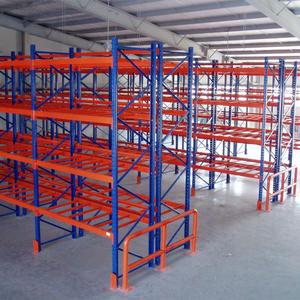
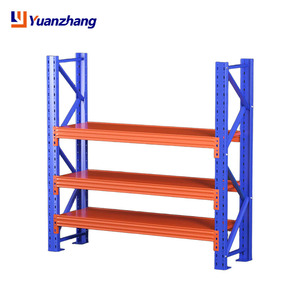
Phosphated, electrostatic powder-coated multi-tier shelving designed for manual case-picking, retail replenishment, and damp inventory consolidation.
Engineered for structural rigidity, volumetric optimization, and total compliance with international safety protocols. Explore our factory-direct modular systems tested for dynamic industrial environments.
Phosphated, electrostatic powder-coated multi-tier shelving designed for manual case-picking, retail replenishment, and damp inventory consolidation.
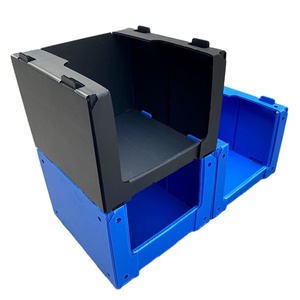
High-density polypropylene copolymer picking bins structured for rapid order routing, garment sorting systems, and e-commerce picking mezzanines.
Heavy-gauge steel configuration designed for intense point-loading, palletized cement, ceramic tiles, and masonry merchandise with reinforced floor anchor plates.
Radio-controlled self-propelled shuttle rail racking delivering ultra-dense pallet consolidation for deep lanes, cold storage, and FMCG warehouses.
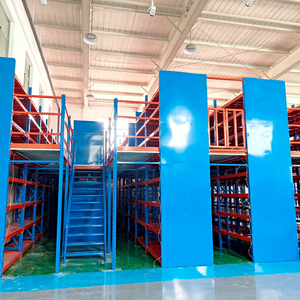
Multi-tier integrated steel platform transforming overhead vertical clearance into productive assembly floors, administrative offices, or picking zones.
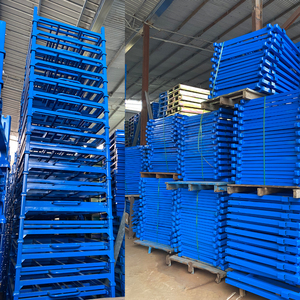
Collapsible, portable nesting post racks ideal for seasonal buffer surges, fabric roll distribution, automotive stamping parts, and bulk shipping.
Two-pallet-deep configuration accessed via pantograph or deep-reach trucks, cutting aisle space by 40% while sustaining high structural integrity.
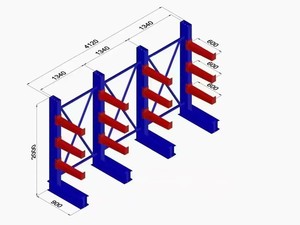
Free-standing structural columns with adjustable articulated load arms, eliminating front upright obstruction for bar stocks, lumber, and extrusions.
In high-bay racking systems, structural failure is never merely a component issue—it is a critical facility catastrophe. We manufacture every upright frame, beam connector, and bracing truss in strict alignment with European Construction Products Regulation (CPR 305/2011).
Structural integrity begins at the blast furnace. Unlike uncertified fabricators utilizing scrap steel heats, our primary columns utilize certified prime grade Q235B and Q355B structural steel with documented chemical batch traceability. Upright profiles undergo multi-stage precision cold roll-forming, producing continuous cold-work hardening across profile bends to enhance local yield strengths up to 355 N/mm².
Our structural engineering team designs racking systems using the Limit State Design framework specified under EN 15512:2020 (Steel Static Storage Systems). Rather than simplistic static load estimations, we simulate global frame buckling, connector rotational stiffness (semi-rigid beam-end physics), and load eccentricity using advanced Finite Element Analysis (FEA).
For logistics distribution centers constructed in seismically active regions, static racking designs present profound tipping risks. Under Eurocode 8 and RMI MH16.1 guidelines, our engineers calculate ground motion acceleration response spectra, utilizing engineered back-to-back ties, reinforced frame bracings, and heavy-duty seismic baseplates.
| Performance Parameter | HEDA CE Certified Industrial Standard | Generic Commodity Racking | Engineering Impact on Warehouse Safety |
|---|---|---|---|
| Raw Material Specification | Certified prime Q235B / Q355B with mill chemical test reports | Recycled or secondary unverified steel scrap | Eliminates micro-cracking and sudden brittle rupture under load |
| Beam Deflection Threshold | Strict ≤ L/200 (Heavy) or ≤ L/300 (Automated AS/RS) | L/100 to L/150 (Unmonitored) | Prevents pallet slippage and automated shuttle rail jamming |
| Connector Hook Integration | Multi-tooth (3 to 5 prongs) high-strength forged lug connectors | 2-tooth stamped light brackets | Provides torsional moment resistance against dynamic fork-truck impact |
| Corrosion Pre-treatment | Multi-stage immersion pickling + zinc phosphating pretreatment | Dry-wiped or flash oil-coated | Guarantees 500+ hours salt-spray resistance in 80%+ RH climates |
| Coating Thickness & Cure | 60–90 μm electrostatic thermoset powder cured at 180°C | 30–45 μm cold enamel paint | Resists chipping, pallet abrasion, chemical washdowns, and flaking |
Global supply chain volatility, urban real estate premiums, and warehouse labor deficits are revolutionizing commercial racking requisitions. Modern facility directors demand scalable structures that future-proof against technological shift.
Escalating land lease costs in tier-one metropolitan hubs are rendering standard selective racking financially unsustainable. Procurement is heavily pivoting toward Radio Shuttle and 4D High-Density systems, which reclaim up to 75% of wasted aisle footage while accelerating pallet turnover rates.
Global 3PL enterprises now mandate that conventional static racking systems must feature manufacturing tolerances tight enough to allow seamless integration with Automated Storage and Retrieval Systems (AS/RS), automated guided vehicles (AGVs), and autonomous mobile robots (AMRs).
International tenders increasingly stipulate carbon-footprint declarations (EPDs) for structural logistics steel. Sourcing teams prioritize manufacturers with energy-efficient electric arc furnaces, non-toxic lead-free powder coatings, and completely recyclable packaging systems.
Industrial buyers have realized that low-bid uncertified racking leads to elevated maintenance, beam sag replacements, and risk of catastrophic collapse. Capital allocation is firmly focused on durable 20+ year life-cycle steel infrastructure backed by verifiable ISO and CE certification.
Modern logistics facilities operate at unprecedented speeds. We continuously innovate structural geometry, corrosion metallurgy, and modular connectivity to keep pace with higher throughput and deeper storage heights.
Reaching vertical storage heights exceeding 18 meters requires specialized tolerance control. VNA systems utilize guide rails or inductive wire-guidance paths on super-flat concrete slabs (FM2 or DIN 18202 standards). Beam deflections must remain under strict microscopic thresholds to avoid mast sway and collision risks for turret trucks.
Freezer storage facilities operating down to -30°C present acute steel embrittlement and condensation risks. Standard paints peel, fostering rapid hidden rust. Our specialized cryogenic configurations utilize continuous hot-dip galvanization conforming to ISO 1461 or zinc-rich polyurethane coatings engineered to resist condensation cycles without thermal fatigue.
Eliminating external building columns, our rack-supported mezzanine floors utilize standard heavy-duty upright frames to bear multi-tier timber, bar grating, or perforated B-deck steel flooring. This multi-level engineering permits simultaneous overhead pallet accumulation and ground-level manual parcel induction.
Established in 2001, Guangzhou Heda Shelves Co., Ltd. has developed into a premier international manufacturing force. We operate dedicated CNC cold-roll mills, automated robotic weld stations, and high-volume powder coating lines supplying 120+ countries.
Submit your raw building DWG or layout dimensions; our team of 30+ licensed structural engineers returns an optimized CAD floorplan, 3D parametric rendering, and point-load calculation matrix within 24 hours at zero cost.
Operating directly from South China shipping corridors (Guangzhou / Nansha / Shenzhen), we leverage 3D loading software to maximize container pack utilization in 40HQ boxes, drastically slashing transoceanic freight cost per pallet position.
Every international container is dispatched with sequentially tagged component manifests, CAD assembly blueprints, step-by-step video manuals, and optional on-site engineering supervision across the Americas, Europe, ASEAN, and the Middle East.
CE Certified Compliance
Certificate: 2435-CPR-8605159
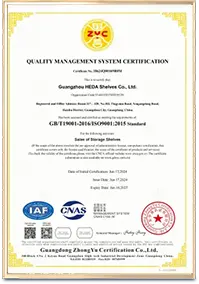
ISO 9001:2015 System
Cert No: 18624Q00169R0M
RoHS Compliance
Heavy Metal Free Surface
Physical Destructive Test
Verified Dynamic Load Safety
Quality is built into every millimeter of steel, not merely inspected after delivery. Trace our automated production cycle from flat master steel coils to export-packaged structural shipments.
Mill test certification verification and ultrasonic thickness gauge testing on hot-rolled coils.
High-speed automated CNC longitudinal slitting lines cut wide master coils to micrometer widths.
Synchronized continuous multi-ton punch presses pierce pitch patterns (50mm/75mm) within ±0.1mm tolerance.
Forming precise structural stiffener ribs across horizontal flanges to resist localized buckling.
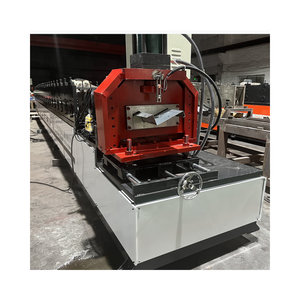
Dedicated 24-station cold-roll lines fold complex cross-sections, upright columns, and interlocking beams.
Automated abrasive de-burring and edge smoothing eliminates mechanical stress raisers and sharp weld beads.
Multi-axis Panasonic CO2 shielded robotic weld cells produce deep-penetration, pore-free connector seams.
Automated immersion acid washing removes all mill scale, followed by crystalline zinc phosphating.
Electrostatic spray guns apply 60–90μm thermoset epoxy polyester powder, baked inside 180°C curing ovens.
Deflection load verification, film wrapping, steel strap banding, and timber bunking for export containers.
Straightforward, engineering-backed answers to the most rigorous inquiries submitted by warehouse project directors, civil engineering consultants, and global supply chain buyers.
Authentic CE certification for structural steel racking falls under the European Union Construction Products Regulation (CPR No. 305/2011), specifically referencing EN 15512:2020 (Structural static analysis of pallet racking) and EN 1090-1 / EN 1090-2 (Execution of steel structures). A generic CE test certificate for low-voltage or consumer goods is invalid. HEDA holds official Notified Body certification (Certificate No. 2435-CPR-8605159), verifying our production control, structural calculation models, weld inspections, and raw material traceability against strict European civil engineering mandates.
In earthquake-prone territories (such as the Philippines, Indonesia, western South America, or Southern Europe), racking systems are treated as self-supporting vertical structures under Eurocode 8 (EN 1998) and RMI Specification MH16.1. Our engineers calculate the spectral response acceleration (Ss and S1 parameters), ground site class (Class A to E), and seismic force behavior factor (q-factor). We integrate seismic brace frames, up-gauge baseplates to 12mm+ structural steel, insert high-tensile anchors, and incorporate dynamic safety factors into beam-to-column connector calculations to prevent ductile joint tears during ground shaking.
According to EN 15512 and FEM 10.2.02 standards, the absolute maximum vertical deflection (δ) of a rack beam under full design load must not exceed 1/200th of the clear beam span (L/200) for standard forklift systems, and L/300 for sensitive semi-automated radio shuttle or AS/RS crane corridors. Excessive deflection causes pallets to pinch inward, damages base timbers, introduces outward horizontal thrust vectors on upright frames, and risks accidental pallet drop. HEDA utilizes box beams fabricated by inter-welding two C-sections with reinforced end-connectors to guarantee strict compliance under maximum static loads.
Corrosion resistance is entirely determined by surface chemical pre-treatment. Rather than simply degreasing, HEDA passes all fabricated members through an automated multi-tank pickling and zinc phosphating pre-treatment process. This creates a microscopic crystalline conversion layer on the bare steel that dramatically enhances epoxy powder adhesion and halts rust creep if scratched. We then apply an electrostatic thermoset polyester powder coating cured at 180°C (60–90 μm dry film thickness). For harsh coastal environments, outdoor yards, or cold-chain freezer environments below -25°C, we specify hot-dip galvanization conforming to ASTM A123 / EN ISO 1461.
To produce an actionable, engineering-grade CAD drawing and price proposal, we request: (1) Architectural floor plan indicating exact column grid spacing, building boundary dimensions, and overhead clear height under trusses or fire sprinkler pipes; (2) Pallet specifications including overall length, width, height (including load), and maximum gross pallet weight; (3) Forklift parameters including model, minimum required aisle turning radius (AST), and maximum mast lift elevation; and (4) Throughput requirements (FIFO vs. LIFO rotation and total SKU profile).
Structural steel racking contains significant air volume if bundled improperly. HEDA engineers custom container nesting layouts for every project order. Upright frames are either dispatched pre-assembled (for projects prioritizing rapid installation speed) or knocked-down bolted (saving up to 40% ocean freight cube space). Beams are inter-nested in uniform steel bundles with wooden separators, while accessories (baseplates, row spacers, shims, safety pins) are packed in reinforced wooden crates. A standard 40-foot high-cube (40HQ) container holds between 22 to 26 metric tons of structural steel, yielding approximately 800 to 1,500 pallet positions depending on system density.
Connect directly with Guangzhou Heda Shelves Co., Ltd.'s structural engineering team. Submit your building dimensions, pallet load requirements, or storage challenges to receive an authoritative, fully certified proposal with zero commercial obligation.