High-Efficiency Warehouse Racking & Pallet Systems
Engineered with premium Q235B and Q355B cold-rolled structural steel, electrostatic powder coating, and precision column geometry to guarantee maximum cubic optimization and zero failure under full rated load.
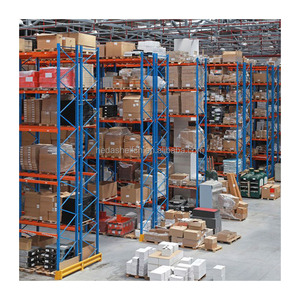
CE Industrial Rack Steel Metal Shelving Heavy Duty Selective Pallet Rack
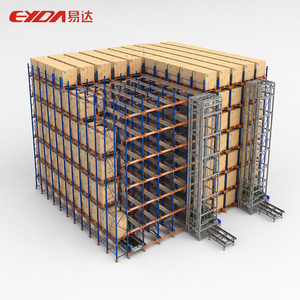
Heavy Duty Pallet Radio Shuttle Rack Automated Racking System for Food & Beverage
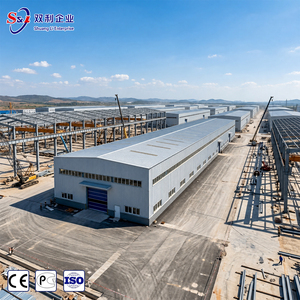
Steel Warehouse Rack Systems Storage Shelving Units and Steel Stairs
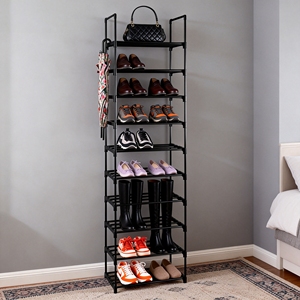
High Capacity 10-Tier Storage Rack Anti-Tilt Metal Frame Organizer for Wholesale
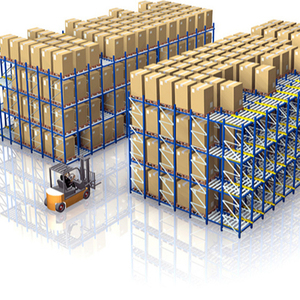
High Density Rack Gravity Flow Racking for Large Load Capacity Storage
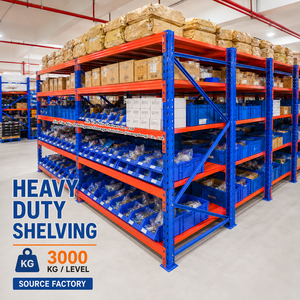
3000KG Custom Steel Deck Storage Rack for Plastic Bins and Small Parts Shelves
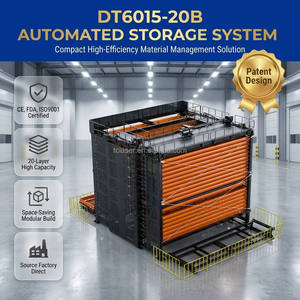
Automatic Vertical SL Series Cold Rolled Steel Heavy Duty Cross Rack
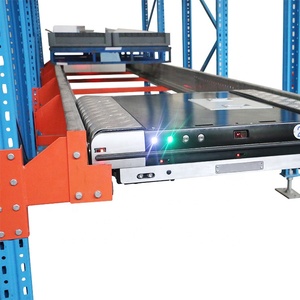
High Density Automated FIFO & FILO Radio Shuttle Racking System
Structural Mechanics, Load Dynamics, and Compliance in Industrial Pallet Racking
Modern industrial supply chains require intralogistics structures capable of handling extreme vertical, horizontal, and seismic forces without catastrophic deflection. As an ISO 9001:2015 and CE Certified manufacturer (CE Certificate No. 2435-CPR-8605159), Guangzhou Heda Shelves Co., Ltd. builds pallet storage systems engineered strictly under EN 15512:2020 (Steel static storage systems – Adjustable pallet racking systems – Principles for structural design) and FEM 10.2.02 codes. By sourcing certified Q235B and Q355B cold-rolled micro-alloyed structural steel, each component is manufactured to maintain structural equilibrium under ultimate limit states (ULS) and serviceability limit states (SLS).
Pallet rack collapse remains one of the primary operational hazards within distribution centers globally. Defective welds, low yield-strength steel, uncontrolled beam sag, or inadequate base-plate anchoring routinely cause structural failures under seismic excitation or accidental forklift impacts. To eliminate these vulnerabilities, our engineering methodology relies on rigorous finite element analysis (FEA), calculating global sway buckling, torsional-flexural buckling in perforated uprights, and semi-rigid connection moments at the beam-to-column connector node.
Comparative Matrix: Industrial Pallet Racking Structural Topologies
Selecting the optimal pallet racking system demands a balanced calculation between capital expenditure (CapEx), direct stock accessibility, volumetric storage density, and forklift operating cycle times. Below is an engineering evaluation comparing the five foundational systems engineered by our factory:
| Racking Topology | Cubic Volumetric Utilization | Pallet Selectivity | Stock Rotation Logic | Aisle Clearance Demands | Seismic & Impact Resistance Rating |
|---|---|---|---|---|---|
| Standard Selective Rack | 40% – 50% | 100% (Instant Direct) | FIFO / LIFO Compatible | Wide (3,000mm – 3,800mm) | Moderate (Requires standard column guards) |
| Radio Shuttle System | 80% – 90% | Batch / Selective by Lane | Configurable FIFO / FILO | Dedicated Entry/Exit Aisles Only | Superior (Zero forklift mast penetration into bays) |
| Drive-In / Drive-Through | 70% – 80% | Low (Per Lane) | Strict FILO (Drive-In) / FIFO | Forklift Drives Inside Racks | Vulnerable (Requires heavy guide rails & tie beams) |
| Gravity Pallet Flow | 75% – 85% | Automatic Lane Flow | Absolute FIFO Rotation | Separate Loading & Picking Aisles | High (Self-contained roller brakes & floor anchors) |
| Push Back Racking | 65% – 75% | Lane Selective (2–6 Pallets) | Strict LIFO Operation | Single Face Access Aisle | High (Telescoping nested carts on sloped rails) |
Future Strategic Procurement Trends: 2025–2035 Intralogistics Outlook
The global pallet racking market is transitioning rapidly from passive static steel shelving toward cyber-physical material handling infrastructures. Supply chain directors, procurement officers, and engineering contractors must align their multi-year storage tenders with four macro procurement trends:
1. AS/RS & Shuttle Readiness
Global warehouse construction is shifting away from purely forklift-reliant operations toward automated shuttle vehicles and Autonomous Mobile Robots (AMRs). Racking systems must feature sub-millimeter punching tolerances to facilitate guide rail accuracy and sensor-based localization.
2. Decarbonized Metallurgy (Green Steel)
With corporate ESG directives and Carbon Border Adjustment Mechanisms (CBAM) taking effect in Europe and North America, enterprise buyers demand low-carbon cold-rolled coil sourcing and powder coatings free of Volatile Organic Compounds (VOCs) and heavy metals.
3. Dynamic Microclimate Resistance
The expansion of perishable food networks and vaccine cold chains necessitates racking finishes engineered for -30°C sub-zero condensing environments and maritime coastal humidity (>85% RH) without blistering or micro-cracking.
Technological Evolution & Intelligent System Integration
Pallet racking systems are no longer isolated steel skeletons. Future-ready warehouses deploy embedded load-cell sensors on connector pins, smart RFID transponders within upright frame protectors, and computerized deflectometers. These telemetry devices feed structural load telemetry in real time to the cloud-based Warehouse Management System (WMS) or Building Management System (BMS), signaling improper point-load placement, dangerous pallet overhang, or micro-fractures following accidental equipment contact.
Furthermore, modularity and vertical scalability have become indispensable. Multi-tier catwalk structures, mezzanine-supported picking modules, and high-bay clad racks (where the racking framework forms the building envelope) offer enterprises the agility to double or triple usable floor space without acquiring expensive new industrial land.
10-Step Controlled Racking Production Process
From prime cold-rolled steel coils to high-temperature curing, each stage is audited under ISO 9001:2015 to deliver dimensional tolerances within ±0.5mm across all structural uprights and beam profiles.

Steel Material QC
Spectrographic analysis of Q235B/Q355B coils for chemical purity and tensile yield.

Precision Slitting
CNC decoiling and micro-slitting to exact structural widths without burrs.

CNC Punching
High-speed automated continuous hole punching with zero cumulative pitch drift.

Cold Roll Forming
Multi-station roll forming maintaining uniform cross-sectional thickness and work-hardening.

Profile Calibrating
Closed-loop box-beam interlocking and continuous roll correction for true straightness.

Surface Polishing
Automated edge de-burring, robotic seam grinding, and localized scale removal.

Robotic Welding
CO2 shielded robotic welding for beam connectors, achieving total weld penetration.

Chemical Pre-treatment
Full 8-stage immersion pickling, degreasing, and phosphating for rust prevention.

Powder Coating
Automated electrostatic spray with pure thermoset polyester, cured at 180°C – 200°C.

CMM QC & Bundling
Coordinate measuring machine inspection, protective strapping, and pallet export packaging.
Guangzhou HEDA Shelves: Strategic Advantages for Global Importers
Founded in 2001, Guangzhou Heda Shelves Co., Ltd. has grown from a specialized roll-forming facility into an international logistics equipment powerhouse spanning a 30,000 square meter modern manufacturing facility, over 300 experienced technical specialists, and an integrated engineering R&D department. Our production capability tops 30,000 metric tons per month, offering global buyers, logistics integrators, and distributors unparalleled supply security.
Full CE, ISO & RoHS Validation
Our structural designs are verified under European CE Certificate No. 2435-CPR-8605159, ISO 9001:2015 Certification No. 18624Q00169R0M, and RoHS hazardous substance restrictions, clearing all technical audits for global government and commercial tenders.
Rapid Free CAD & 3D Modeling
Within 24 to 48 hours of receiving building blueprints and SKU profile metrics, our senior civil engineers provide optimized AutoCAD layout blueprints, 3D parametric renderings, and detailed beam deflection load calculations completely free of charge.
Direct Maritime Export Hub
Operating adjacent to Nansha and Huangpu container ports, sea shipments reach Vietnam in 2-5 days, Manila in 3-5 days, Singapore/Thailand in 5-7 days, Port Klang in 6-8 days, Jakarta in 7-10 days, and primary European ports in 24-28 days.
ASEAN Shipping & Transit Schedule Matrix
For cross-border supply chains, lead time reliability is as vital as structural safety. We offer streamlined FOB, CIF, DDU, and DDP shipping configurations with pre-arranged maritime space to safeguard fast project turnarounds:
| Destination Market | Primary Entry Seaport | Port-to-Port Sea Transit | Local Engineering Compliance | Factory Supply Model |
|---|---|---|---|---|
| Vietnam | Haiphong / Cat Lai (HCMC) | 2 – 5 Days | TCVN Structural Norms | Factory Direct / OEM Available |
| Philippines | Manila South / North Port | 3 – 5 Days | NSCP Seismic Zone 4 Engineering | Customized Baseplate & Chemical Anchors |
| Thailand | Laem Chabang / Bangkok Port | 5 – 7 Days | TIS Industrial Standards | Direct Supply / Distributor Support |
| Singapore | Port of Singapore Authority (PSA) | 5 – 7 Days | SS 583 Construction Safety Standard | High-Density AS/RS & Shuttle Configurations |
| Malaysia | Port Klang / Penang Port | 6 – 8 Days | JKR Standard Specifications | Halal-Zoned Segregation & Heavy Mezzanines |
| Indonesia | Tanjung Priok / Tanjung Perak | 7 – 10 Days | SNI Seismic & Structural Codes | Earthquake-Reinforced Bracing Systems |
Frequently Asked Questions on Pallet Racking Sourcing
Comprehensive technical answers to critical engineering, regulatory, and logistics inquiries submitted by warehouse developers, general contractors, and supply chain managers.
Our structural engineering designs follow European Standards EN 15512:2020 (Adjustable pallet racking systems – Principles for structural design) and FEM 10.2.02. We also verify load designs against ANSI/RMI MH16.1 specifications upon request. Every upright section and box-beam profile is tested for beam deflection under uniform distributed load (UDL) limited to L/200, connector shear-lock resistance, column torsional-flexural buckling, and global frame stability using structural finite element analysis (FEA).
Components undergo an automated 8-stage surface pre-treatment comprising hot alkaline degreasing, clean-water cascading rinses, acid pickling to eradicate mill scale, and zinc phosphating to establish an inert crystalline chemical barrier. Next, high-grade electrostatic thermosetting polyester powder coating is applied at 60–80 microns thickness and heat-cured at 200°C. For coastal installations, high-condensation packaging zones, or sub-zero freezers down to -30°C, we provide hot-dip galvanized finishes complying with ISO 1461, ensuring over 20 years of rust-free operation.
Yes. Our civil engineers calculate seismic response spectrums according to EN 16681 (Adjustable pallet racking systems – Principles for seismic design) and the Uniform Building Code (UBC Zone 4). We calculate the dead load plus dynamic stored live load combination, applying enlarged heavy-duty footplates, high-ductility M12/M16 chemical seismic anchor bolts, reinforced diagonal cross-bracing towers, and specialized seismic top ties to absorb kinetic energy without progressive collapse.
To produce an exact CAD drawing and price schedule, we require: (1) Warehouse architectural drawings detailing clear floor dimensions, roof apex and eave clearance heights, column grid locations, and fire exit door placements; (2) Pallet dimensions (Width x Depth x Height including overhang) and maximum gross weight per unit; (3) Forklift model, minimum turning aisle width (AST), and maximum mast lift reach; (4) Total target SKU positions and required daily throughput cycle rates.
Each commercial shipment includes comprehensive compliance documentation: Official CE Declaration of Performance (CE Certificate No. 2435-CPR-8605159), ISO 9001:2015 Quality Management Certificate, mill test certificates (MTC) verifying raw coil chemical composition and yield tensile strength, RoHS laboratory non-toxicity test reports, factory dimensional inspection checklists, and stamped installation blueprints.
Uprights are pre-assembled or flat-packed into nested bundles secured with heavy-gauge PET strapping, corrugated edge protectors, and air-cushioned bubble wraps. Beams are palletized in matched pairs with connector ears shielded by heavy molded guards. Every bundle is tagged with alphanumeric piece markings tied directly to the engineering assembly drawing, ensuring seamless offloading and rapid on-site erection.
Yes. Guangzhou Heda Shelves Co., Ltd. serves as an authorized OEM/ODM manufacturing partner for leading European, American, and regional material handling brands. We can replicate proprietary upright hole punching pitches (e.g., 50mm, 75mm, 76.2mm teardrop), formulate custom corporate powder coat RAL colors, laser-cut private branding onto column protectors, and package components in unbranded or distributor-branded cartons.
Along with detailed, component-numbered 3D CAD erection diagrams and step-by-step video installation walk-throughs, we deploy bilingual senior installation engineers to client facilities worldwide. Our engineers manage site leveling, laser plumb-line alignments, chemical torque-anchor setting, and load test commissioning to guarantee complete compliance with local building codes.
Request an Engineered Layout & Factory-Direct Quote
Send our civil engineering department your warehouse dimensions and storage requirements. Receive a comprehensive CAD floor layout, 3D structural model, and certified load capacity analysis within 24 hours.