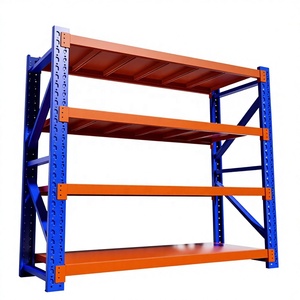
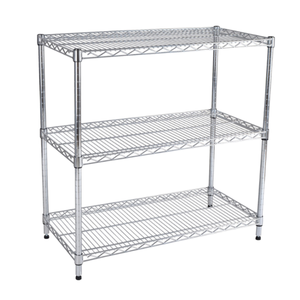
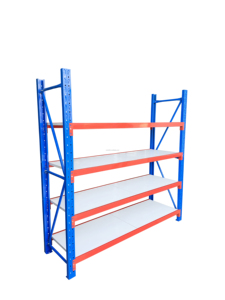
Storage Shelf Warehouse Heavy Duty Industrial Pallet Racking Narrow Aisle Selective Rack System
- Capacity: 1,000–4,500 kg/Beam
- Aisle Width: 1.6m – 1.8m (VNA)
- Material: High-Grade Q235B Steel
- Standard: CE / FEM 10.2.02
Precision-manufactured with premium high-yield cold-rolled steel (Q235B / Q355B). Built according to stringent European structural safety codes to deliver unmatched load safety margins and vertical space efficiency.
Founded in 2001, Guangzhou Heda Shelves Co., Ltd. has established itself as an authoritative global manufacturer specializing in heavy-duty industrial pallet racking, automated high-density warehouse storage systems, and certified multi-tier mezzanine platforms.
Tailored structural blueprints, spatial density simulations, and load calculation sheets delivered in 24–48 hours.
Engineered site-specific calculations for seismic active territories across SE Asia, Oceania, and the Americas.
Coil slitting to pickling, phosphating, automated powder baking, ultrasonic weld inspection, and drop-load validation.
Port-to-port sea transit: 2–5 days Vietnam/Philippines; 5–8 days Singapore/Malaysia/Thailand; 7–10 days Jakarta.
An authoritative engineering breakdown of metallurgy, structural deflection metrics, connection mechanics, and environmental resilience standards required for commercial and industrial warehouse installations.
The structural performance of high-bay racking and industrial shelving is governed primarily by cold-worked yield strength and sectional modulus. Under European Standard EN 15512:2020, structural members must withstand both ultimate limit states (ULS) and serviceability limit states (SLS).
Our manufacturing utilizes certified hot-rolled coil strips transformed through continuous roll-forming mills into complex open-section omega columns (Ω-sections) featuring longitudinal stiffening ribs. By strategically locating multiple bends along the upright web and flange, the moment of inertia ($I_x$ and $I_y$) is significantly augmented without adding dead weight, directly resisting torsional-flexural buckling under combined axial and eccentric pallet loads.
Compared with generic Q195 carbon steel typically used in light commercial shelving, our standard grade Q235B and high-performance Q355B structural micro-alloyed steels provide yield points of ≥235 MPa and ≥355 MPa respectively, delivering safety factors (γ) ranging between 1.4 and 1.5 under design static load scenarios.
Under industrial loading parameters, rack deflection is strictly limited to prevent pallet slippage, crane collision, or binding of automated material handling attachments. For horizontal load-supporting beams, European standards stipulate a maximum vertical beam deflection of:
Where L is the clear span distance between upright frames. For a standard 2700mm beam carrying two 1,000kg standard pallets, the elastic sag is constrained below 13.5mm, ensuring smooth engagement of forklift tines and autonomous guided vehicle (AGV) load sensors.
Additionally, our heavy-duty beam end connectors feature 3-claw, 4-claw, or 5-claw high-tensile stamped hooks with precision CNC nesting slots. This creates a semi-rigid joint that develops a dynamic rotational stiffness ($C_d$), effectively transferring bending moments back into the column grid and mitigating progressive aisle sway.
| Steel Grade | Standard Equivalent | Min. Yield ($R_{eH}$) | Tensile Strength ($R_m$) | Elongation ($A_5$) | Ideal Structural Application |
|---|---|---|---|---|---|
| Q235B | EN 10025-2 S235JR / ASTM A36 | ≥ 235 MPa | 370 – 500 MPa | ≥ 26% | Selective beams, medium-duty shelving, bracing ties |
| Q355B | EN 10025-2 S355JR / ASTM A572 Gr50 | ≥ 355 MPa | 470 – 630 MPa | ≥ 22% | High-bay uprights (>10m), VNA, cold storage shuttle channels |
| DX51D+Z | EN 10346 Continuous Galvanized | 140 – 300 MPa | 270 – 500 MPa | ≥ 22% | Outdoor storage, blast freezer frames, coastal high-humidity zones |
| SPCC Cold Roll | JIS G3141 Commercial Quality | ≥ 210 MPa | ≥ 270 MPa | ≥ 32% | Boltless shelf panels, slotted wall hooks, drawer accessories |
Need full project static structural calculations or seismic finite element analysis (FEA) reports signed by professional structural engineers?
Get CatalogGlobal supply chain pressures, micro-fulfillment centers, and high construction costs are reshaping how corporate procurement executives, logistics developers, and warehouse directors specify industrial storage systems.
With industrial land lease rates soaring in metropolitan logistics clusters (such as Greater Singapore, Bangkok, Selangor, Rotterdam, and Dallas), warehouse builders are shifting from horizontal sprawl to vertical utilization. Modern specifications demand heavy-duty racking exceeding 12 to 18 meters, equipped with narrow aisle (VNA) or automated multi-level mezzanine catwalk systems capable of doubling storage capacity on identical building footprints.
Purely manual forklift racking is rapidly being superseded by semi-automated Radio Shuttle racks, automated carton-flow picking modules, and automated storage and retrieval system (AS/RS) interfaces. B2B enterprise procurement tenders increasingly mandate tighter manufacturing tolerances (±1.0mm profile straightness) to ensure collision-free operation of robotic pallet shuttles and autonomous reach trucks.
Intermediate distributors are being bypassed in favor of direct engagement with original equipment manufacturers (OEMs). Direct-factory partnerships provide project managers with real-time steel batch traceability, tailor-made structural connection stampings, and significant cost savings that offset fluctuating international container freight costs.
Supply chain hubs located in tropical and maritime environments across Southeast Asia, the Pacific, and South America suffer severe premature rust due to continuous relative humidity >80%. Modern tenders insist on chemical multi-stage pickling and phosphating followed by thermosetting pure polyester powder coating or hot-dip zinc galvanization complying with ASTM B117 salt spray ratings.
Insurers and multinational enterprise operators now refuse coverage for warehouse properties without verifiable CE markings (such as EN 15512 / EN 15629) and independent test certifications. Verifiable certificate tracking numbers, third-party destructive load test records, and ISO 9001 factory audits have become non-negotiable procurement prerequisites.
With fluctuating consumer SKU churn, static warehouse layouts become obsolete within seasons. Modern industrial shelving prioritizes boltless, modular slotted upright designs allowing rapid tier height adjustment on 50mm or 75mm pitches, conversion between wire mesh and steel decks, and straightforward integration with carton flow roller tracks.
In-depth technical answers addressing logistics planning, international standards, structural safety factors, factory testing, and customs delivery.
Our structural racking systems are audited under the European Construction Products Regulation (CPR) and verified under standard EN 15512:2020. Our official CE Certificate is registered under No. 2435-CPR-8605159, accompanied by an ISO 9001:2015 Quality Management Certificate (No. 18624Q00169R0M). Full Factory Production Control (FPC) audit dossiers, material mill test certificates (MTC) covering heat numbers and chemical tensile values, and third-party shear and stub column test reports are provided with commercial documentation.
To provide an accurate, code-compliant CAD floor plan, structural engineering layout, and bill of materials (BOM), we require: (1) Architectural floor plan indicating building dimensions, clear roof clearance, column grid layout, and emergency exit paths; (2) Pallet specifications (width, depth, height including cargo overhang, and maximum gross weight); (3) Material handling equipment (forklift make/model, mast collapsed height, minimum turning radius, and maximum reach height); and (4) Environmental operational parameters such as cold storage temperatures or local seismic zone coefficients.
All steel components undergo an automated 10-stage pre-treatment cycle prior to coating: ultrasonic solvent degreasing, hot water rinsing, acid chemical pickling to remove mill scale, dual counter-flow water washing, zinc phosphating to create an anti-corrosion barrier, and deionized passivation. Next, heavy-duty epoxy-polyester hybrid powder is applied electrostatically at 60–80 kV and cured in a gas-fired infrared baking tunnel at 180°C–200°C for 20 minutes. This achieves a durable dry film thickness (DFT) of 60–90 μm, achieving over 500 hours of continuous ASTM B117 salt spray resistance. For sub-zero blast freezers or open outdoor yards, continuous pre-galvanized coils or full hot-dip galvanization is specified.
Yes. For seismic areas (such as the Philippines, Indonesia, Japan, Chile, New Zealand, or western United States), our senior structural calculation team performs dynamic response spectrum analysis according to seismic standards (including Eurocode 8, RMI MH16.1, and local building codes). Upright frame uprights are upgraded to heavy-gauge cold-rolled profiles, baseplates are expanded with double structural gussets, anchor bolts are specified with high-grade seismic wedge anchors, and top and back spine cross-bracing ties are calculated to absorb lateral earthquake oscillations without catastrophic progressive collapse.
Standard customized container orders (1 to 5 forty-foot high cube containers, 40HQ) are fabricated within 15 to 20 working days at our Guangzhou facility. For massive distribution center projects (20+ containers), batch dispatch schedules are arranged. Sea freight transit times from South China (Guangzhou / Shenzhen / Nansha ports) are exceptionally rapid: 2–5 days to Vietnam and Manila, 5–7 days to Bangkok (Laem Chabang) and Singapore, 6–8 days to Port Klang (Malaysia), 7–10 days to Jakarta (Indonesia), 14–18 days to Australia/Middle East, and 24–32 days to European and North American gateway ports.
Upright frames, beams, and shelf panels are bundled on custom heavy-duty steel bases wrapped with industrial PE stretch film and heavy edge corner protectors. Upright frames are stacked flat with anti-friction wooden blocks between tiers; beams are strapped in balanced bundles with interlocking hook orientation. Stacking schemas are modeled via 3D container packing software to maximize gross cubic volume and ensure containers reach optimum tonnage without exceeding road axle limits. Unloading instruction manuals and marked numbered parts lists correspond directly with CAD erection drawings for smooth job-site container stripping.
Every project is supplied with comprehensive bilingual 2D/3D step-by-step installation blueprints, anchor torque specifications, plumb-and-level tolerance guidelines, and high-resolution video installation walkthroughs. For regional turnkey contracts or multi-tier mezzanine floor installations, we can dispatch seasoned project installation supervisors to manage local rigging teams on-site, or provide live remote engineering support throughout the erection, alignment, and commissioning phases.
International warehouse safety inspectors mandate physical impact protection at vulnerable structural intersections. Our standard project specifications incorporate: (1) Heavy-gauge curved steel column guards at all aisle corners; (2) Continuous floor-anchored end-of-row barrier rail systems; (3) Safety spring locking drop pins on all beam connections to prevent accidental forklift tine displacement; (4) Pallet backstop beams; and (5) Heavy-duty wire mesh decking or anti-collapse safety back netting across tunnel passages and pedestrian transit lanes.
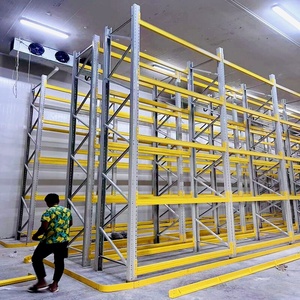
Consult with our senior industrial storage design engineers today. Submit your warehouse floor plan or project parameters to receive a complimentary space-optimization proposal, 3D visual rendering, structural deflection report, and factory-direct pricing quote.