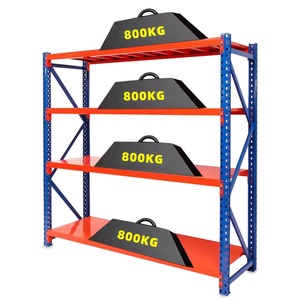
 Custom Made
Chinese Manufacturers Storage Racks & Shelving Units Non-Standard Customized Wire Decking Stacking Racks & Shelves
Wire Decking
Custom Gauge
High Safety
Explore precision-engineered industrial racking and heavy-duty structural steel systems manufactured in strict accordance with European CE and ISO 9001:2015 engineering standards.
Custom Made
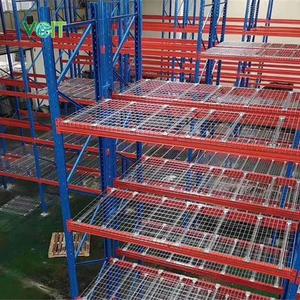 Factory Direct
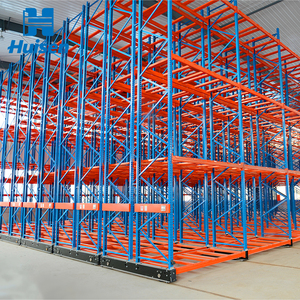 Cold Chain Pro
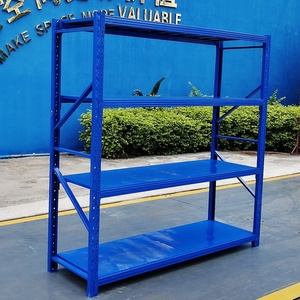 Multi-Tier
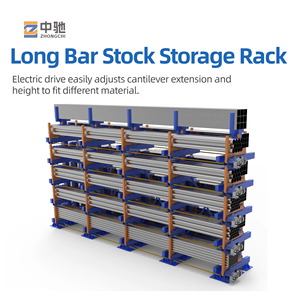 Heavy Profiles
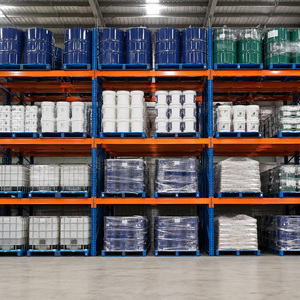 Q235B Certified
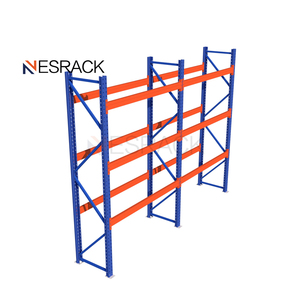 2000kg Load
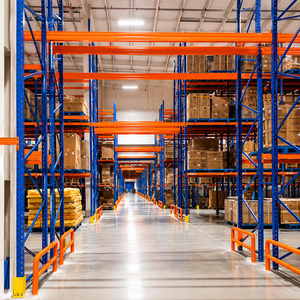 Modular Design
An exhaustive technical evaluation of high-density floor-space utilization, FIFO operational mechanics, and cross-aisle rigidity under static and dynamic forklift operating conditions.
In modern industrial logistics architecture, maximizing volumetric storage density while maintaining strict stock rotation protocols is a paramount objective. Among high-density static storage systems, Drive Through Racking Systems represent one of the most mechanically demanding configurations. Unlike conventional drive-in systems that operate on a Last-In, First-Out (LIFO) single-entry principle, a true drive-through system possesses discrete entry and exit access aisles. This structural topology establishes an uncompromising First-In, First-Out (FIFO) inventory sequence, making it the preferred high-density framework for date-sensitive consumer packaged goods (FMCG), pharmaceuticals, food and cold chain storage, and high-velocity automotive staging.
From a mechanical engineering standpoint, removing conventional internal load beams and replacing them with continuous, cantilevered pallet support rails induces severe structural stresses. Because material handling equipment (such as counterbalanced forklifts or reach trucks) must drive directly into the interior storage bays to deposit or extract pallets, intermediate horizontal cross-ties within the storage volume are prohibited. The structural integrity of a CE-certified drive-through racking installation therefore relies fundamentally on the torsion rigidity of cold-formed upright profiles, continuous overhead horizontal top-tie portal frames, rigid back-to-front top bracing trusses, and robust anchored guide rail tracks at floor level.
The absence of front-to-back load beams at each tier necessitates that pallet loads be supported along their lower edges by continuous cold-rolled steel pallet rails. These rails are bolted to stamped cantilever bracket arms welded or mechanically interlocked into heavy-gauge vertical columns. Under maximum rated payload conditions (typically ranging between 1,000 kg and 2,000 kg per pallet position), these cantilever arms experience substantial bending moments and asymmetric torsional shear. To counteract localized buckling, premier manufacturing plants employ high-yield structural steel grades—predominantly Q235B and Q355B (conforming strictly to European structural equivalents S235JR and S355JR according to EN 10025 standards).
Upright column frames undergo continuous multi-stage roll forming, yielding complex omega (Ω) or multi-fluted geometries with folded stiffener ribs. This profiling dramatically enhances the moment of inertia ($I_x$ and $I_y$) while minimizing the total dead-load weight of the racking array. Column slotting and tear-drop perforations are punched utilizing CNC servo presses prior to cold-roll forming, guaranteeing sub-millimeter hole pitch accuracy across standard 50mm, 75mm, or 76.2mm increments without micro-fracturing along the sheared margins.
Because forklifts enter the depth of the storage tunnels from both ends, a drive-through installation lacks the continuous vertical cross-bracing that typically reinforces the back face of a standard drive-in or selective racking block. As a result, the entire resistance against longitudinal sway ($P\text{-}\Delta$ effects) and lateral seismic displacement must be transferred to the topmost tier and the base plate anchor interfaces.
Engineers achieve structural equilibrium by fabricating a heavy-duty top horizontal portal truss system. Structural rectangular hollow sections (RHS) or paired C-channels link opposite upright columns across the drive lanes, interspersed with diagonal cross-bracing rods with tension turnbuckles. This overhead structural diaphragm functions as a monolithic rigid frame, safely absorbing transient impact shocks induced by forklift mast acceleration, cornering centrifugal force, and seismic ground accelerations.
| System Specification | Standard Selective Rack | Drive-In Racking (LIFO) | Drive-Through Racking (FIFO) | Radio Shuttle Racking |
|---|---|---|---|---|
| Aisle-to-Storage Ratio | 60% Aisle / 40% Pallet | 20% Aisle / 80% Pallet | 25% Aisle / 75% Pallet | 15% Aisle / 85% Pallet |
| Stock Rotation Logic | 100% Random Access | LIFO (Last-In, First-Out) | FIFO (First-In, First-Out) | Flexible (FIFO / LIFO) |
| Throughput Velocity | Ultra-High (Immediate) | Moderate / Low Batch | High (Separate In/Out) | Very High (Automated) |
| Structural Overhead Bracing | Not Required | Rear Vertical + Top Tie | Monolithic Top Portal Frame | Standard Top Tie |
| Forklift Mast Exposure | Low (Aisle Only) | High (Inside Tunnel) | High (Dual Tunnel Access) | Zero (Outside Tunnel) |
| Capital Expenditure Ratio | 1.0x (Baseline) | 1.3x – 1.5x | 1.4x – 1.6x | 2.4x – 3.2x |
Verifiable engineering criteria, factory production control (FPC), and non-destructive load validation essential for worldwide civil safety approvals and customs clearance.
Governs the limit state design principles for steel static storage systems. Demands finite element calculation of second-order effects, semi-rigid beam-to-column connector stiffness ($K_{bi}$), and torsional flexural stability under maximum permissible deflection limits ($L/200$).
Defines exact spatial tolerances for drive-in and drive-through tunnels. Mandates horizontal clearances of at least 75mm between pallet edge and upright column, and vertical clearances exceeding 100mm, preventing severe snagging during high-mast lift maneuvers.
Outlines the inspection, classification, and replacement criteria for damaged racking components. Distinguishes green, amber, and red risk thresholds based on millimeter-level localized buckling of upright columns and permanent deflection of pallet rails.
For cross-border procurement managers, verifying an overseas manufacturer's CE certification requires strict attention to the regulatory framework. Authentic CE marking for steel racking systems must be validated under the Construction Products Regulation (CPR 305/2011/EU) and conform to harmonized standards EN 1090-1 (Execution of Steel Structures and Aluminium Structures) or the dedicated European pallet racking standard EN 15512. Factory Production Control (FPC) certificates issued by accredited Notified Bodies (such as Notified Body No. 2435) provide legal assurance that raw coil chemical composition, ultrasonic weld integrity, and automated punch dimensions are continuously audited.
Predictive insights on technological convergence, automated guided vehicles, cold-chain energy efficiency, and seismic-resilient procurement strategies.
Warehouses are replacing standard manned reach trucks with counterbalanced AGVs. Drive-through lanes are now designed with reflective laser guidance strips and precision optical end-stops to permit unmanned, high-speed pallet extraction around the clock.
Advancements in micro-alloyed High-Strength Low-Alloy (HSLA) steels allow manufacturers to drop column gauge while increasing load capacities. Yield strengths exceeding 420 MPa reduce total steel tonnages by up to 14%, cutting ocean freight costs significantly.
In Southeast Asia and coastal industrial hubs, standard coatings fail due to 85%+ relative humidity. Global buyers increasingly mandate 5-stage chemical pre-treatment (zinc-phosphating plus nano-ceramic conversion) paired with TGIC-free polyester powder or full hot-dip galvanization.
Procurement specs now frequently include real-time IoT strain gauges and LiDAR base deflection sensors. Warehouse operators receive automatic WMS alerts if a forklift impact exceeds structural deflection thresholds, preventing progressive collapse incidents.
Furthermore, climate-conscious corporate policies are making embodied carbon verification a mandatory procurement criterion. Multinational logistics companies demand Environmental Product Declarations (EPD) that detail cradle-to-gate carbon footprints per metric ton of steel manufactured. Chinese manufacturers equipped with automated photovoltaic rooftops, scrap-steel electric arc furnace (EAF) sourcing, and zero-discharge powder coating lines are securing distinct competitive advantages in international municipal and Fortune 500 corporate tenders.
Full in-house vertical manufacturing ensures sub-millimeter dimensional tolerances, non-destructive weld certification, and defect-free surface passivation.

Certified Q235B/Q355B prime coil with mill test certificates.

High-speed automated CNC longitudinal slitting lines.

Multi-station mechanical press lines punching continuous hole patterns.

Precise continuous hydraulic braking and angle calibration.

Up to 24 roll-stand profile forming stations without residual stresses.

Robotic de-burring, slag cleaning, and seam smoothing.

Automated CO2 gas-shielded arc welding for bracket-to-arm joints.

Full-immersion rust removal, degreasing, and anti-corrosion chemical wash.

GEMA automatic electrostatic spray guns curing at 180°C–200°C.

Barcode tagging, deflection spot-testing, and containerized steel bundling.
Delivering engineered high-density warehouse solutions across 120+ nations with comprehensive CE, ISO, and RoHS verified documentation.
Founded in 2001 in Guangzhou, China, Guangzhou Heda Shelves Co., Ltd. has grown into an international engineering leader specializing in the turn-key delivery of pallet racking, structural steel mezzanines, and high-density warehouse racking systems. Operating a modernized 30,000 m² automated production complex staffed by over 300 experienced engineers, structural technicians, and logistics specialists, HEDA maintains an extraordinary manufacturing volume exceeding 30,000 metric tons per month.
Our international track record includes verifiable enterprise credentials: CE Certification No. 2435-CPR-8605159, ISO 9001:2015 Management System Registration No. 18624Q00169R0M, and comprehensive European RoHS environmental compliance. Utilizing South China's deep-water sea transportation corridors (including Nansha, Guangzhou Port, and Shenzhen Yantian Port), we deliver direct factory shipments to international logistics hubs worldwide with unmatched speed: 2 to 5 days to Vietnam, 3 to 5 days to the Philippines, 5 to 7 days to Singapore and Thailand, 6 to 8 days to Malaysia, and 7 to 10 days to Jakarta, Indonesia, as well as expedited container routes to European and American maritime terminals.
In-depth engineering answers addressing structural stability, forklift interface clearance, seismic engineering, and global customs documentation.
Consult directly with our structural engineering team. We deliver free AutoCAD layouts, 3D photorealistic renderings, load calculation sheets, and competitive direct factory FOB/CIF quotations for industrial distribution centers worldwide.
Connect with a structural sales engineer immediately to receive complete technical data, beam load charts, and product catalogs.
Get Catalog