Engineered Pallet Racking & Warehouse Systems
Explore heavy-duty, selective, dynamic and hybrid racking platforms factory-engineered for logistics facilities, automated picking lines, cold chains and global distribution hubs.
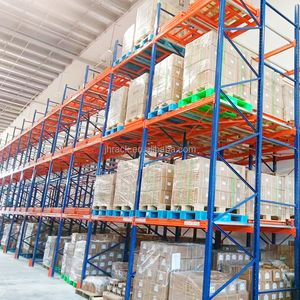
Industrial Push-Back Pallet Racks: Heavy-Duty Steel Storage
Nested cart gravity-fed LIFO system handling 2 to 6 pallets deep per lane, boosting floor footprint utilization by up to 75% without forklift intrusion.
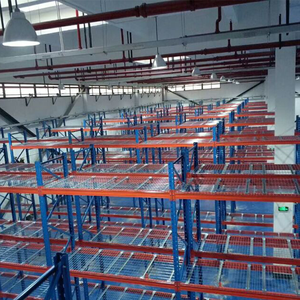
OEM ODM Selective Pallet Racking With Adjustable Beam
Versatile teardrop or boltless upright frames with 50mm/75mm beam adjustability. Optimized for dynamic inventory profiles and diverse forklift geometries.
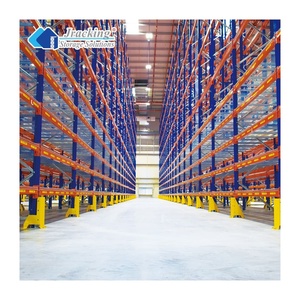
Durable Adjustable EURO Pallet Racking & Industrial Shelves
Standardized for European pallet footprints (1200x800mm) with certified deflection limits. Integrated roll-formed box beams prevent torsion under dynamic loads.
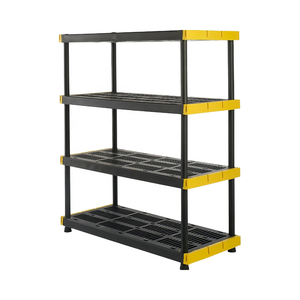
Durable HD 4-Tiered Ventilated Foldable Shelving Unit
High-impact polymer and composite reinforced tiers for cleanroom, workshop, cold-room, and retail replenishment staging where corrosion immunity is critical.
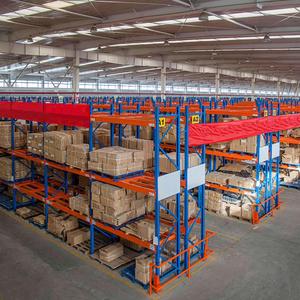
PT-HD Industrial 5-Layer Heavy Duty Selective Pallet Rack
Multi-tier high bay racking designed with enhanced corrosion-resistant electrostatic powder coating, floor anchor expansion bolts, and safety column crash protectors.
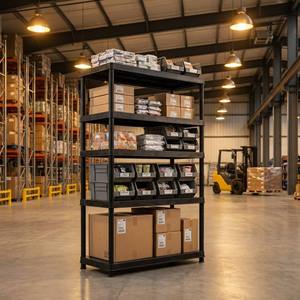
Heavy Duty Stacking Storage Shelf & Racking System
Compact high-rigidity sectional shelving system engineered for parts distribution hubs, buffer picking aisles, and commercial maintenance storage vaults.
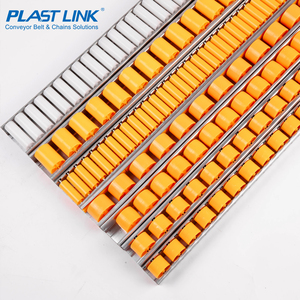
Industrial Aluminum Flow Rail Track With Roller Conveyor
Precision aluminum alloy flow tracks with low-friction ABS/nylon rollers for carton flow racking, lean assembly lines, and ergonomic kanban staging pick modules.
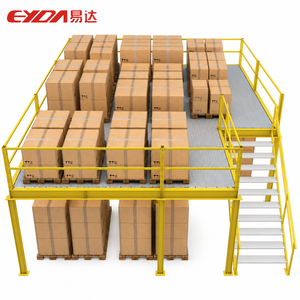
Modular Detachable Warehouse Mezzanine Loft Platform
Rack-supported or structural steel mezzanine doubling overhead floor capacity with non-slip steel decking, perimeter balustrades, staircase modules, and pallet drop gates.
Structural Integrity & Load Verification Under European Norms
As international supply chains face mounting throughput demands and elevated storage heights, purchasing pallet racking is no longer merely an equipment procurement exercise—it is a critical civil and structural engineering decision. Racking frames serve as self-standing steel structures bearing hundreds of metric tons of dynamic and static weight. A slight miscalculation in upright column slender ratio or beam connector hook deflection can cause systemic structural instability.
Our adjustable pallet racking systems are engineered and verified strictly in accordance with EN 15512:2020 (Steel static storage systems - Adjustable pallet racking systems - Principles for structural design) and EN 15620 (Tolerances, deformations and clearances). Utilizing certified high-tensile structural cold-rolled steel (grades Q235B and Q355B with verified mill test certificates), our beam connectors incorporate a 3-to-5-prong interlocking hook mechanism with automatic safety locking pins, preventing accidental dislodgement caused by forklift impact or upward pallet shear forces.
Furthermore, our structural calculation models incorporate dynamic impact factor allowances ($1.25\times$ dead load factor) and safety margins that exceed the baseline requirements of SEMA (Storage Equipment Manufacturers' Association) and AS 4084-2012 Australian racking codes. This ensures that warehouse operators in seismic zones—such as the Pacific Rim, Indonesia, and the Philippines—achieve total operational continuity without brittle weld failure.
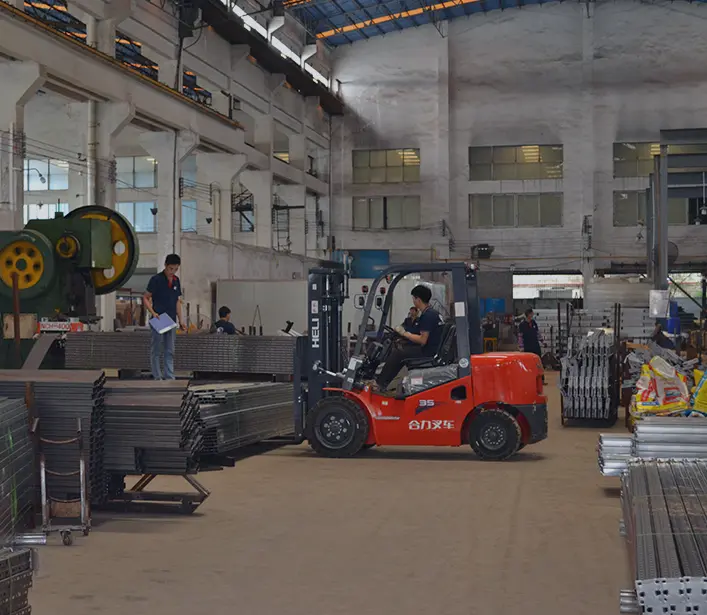
Enterprise Advantages: Guangzhou Heda Shelves Co., Ltd.
Direct manufacturer capabilities eliminating broker markups, guaranteeing material traceability, certified weld execution, and rapid maritime dispatch.
25+ Years Proven Expertise
Established in 2001, providing 2+ decades of end-to-end engineering excellence across heavy-duty pallet racking, complex mezzanine floors, and automated dynamic flows.
30,000 m² Production Base
Monthly fabrication capacity reaching 30,000 metric tons backed by automated stamping presses, robotic beam welders, and dual Swiss Gema electrostatic powder coat lines.
CE & ISO 9001:2015 Certified
Fully compliant with verified CE Marking No. 2435-CPR-8605159, ISO 9001:2015 No. 18624Q00169R0M, and RoHS green building safety credentials.
Free 3D & CAD Design
Complimentary CAD warehouse floor optimization, volumetric density audits, load stress profiles, and realistic 3D renderings delivered within 24 to 48 hours.
10-Step Controlled Manufacturing Workflow
From prime hot-rolled carbon steel coils to pre-container staging, our in-house metallurgical and surface finishing process safeguards against corrosion, warping, and premature load fatigue.

Raw Steel Assay
Mill test spectrometry testing yield strength and elongation limits.

Precision Slitting
Laser slitting strips to exact width tolerance (±0.05mm).

CNC Punching
Continuous automatic hole pitch stamping for beam connectors.

Cold Bending
Multi-roller forming shaping complex upright omega profiles.

Beam Seaming
Continuous interlocking roll-forming of heavy box and step beams.

Deburring & Polish
Mechanical edge rounding preventing stress concentrations.

Robotic Welding
CO₂ gas shielded automated beam connector fillet welding.

Chemical Pre-treat
Multi-stage acid pickling and phosphating for maximum primer bond.

Powder Coating
Thermoset epoxy polyester cured at 180°C (60-80μm film thickness).

QC & Ocean Bundling
Laser load testing, barcode bundling, and seaworthy steel framing.
Future Procurement Trends for Industrial Racking (2025–2030)
How automation, warehouse real estate compression, ESG decarbonization mandates, and IoT sensor technologies are reshaping global pallet racking procurement strategies.
AS/RS, Shuttle & AMR Integration Compatibility
Traditional static storage is rapidly shifting toward semi-automated and fully automated intralogistics ecosystems. Modern procurement teams no longer purchase standalone racks; they specify structural systems designed to interface seamlessly with Autonomous Mobile Robots (AMRs), Narrow Aisle AGVs, and Radio Shuttle carriers.
This structural convergence demands millimeter-level beam manufacturing tolerances (±0.5mm over a 3000mm clear span) and deflection ratios tighter than $1/300$, ensuring optical sensors on robotic mast stackers never encounter target misalignment or dynamic sag during high-speed pallet retrieval.
- Automated Radio Shuttle runway profiles
- Reinforced guide rails for reach trucks & VNA
- Integrated wire-guided induction loops
High-Humidity Tropical & Cold-Chain Resilience
With rapid e-commerce and cold-chain cold-storage facility investments across Southeast Asia, Latin America, and coastal logistics nodes, pallet racking faces extreme microclimatic stress. Sub-zero temperatures paired with 85%+ relative humidity trigger accelerated condensation and electrolytic rust creep inside hollow cold-rolled sections.
Procurement specifications now explicitly mandate hot-dip galvanization (HDG conforming to ISO 1461 with minimum 65μm zinc thickness) or multi-stage zinc-phosphate immersion pre-treatment prior to electrostatic thermosetting polyester powder coating, completely eliminating hidden corrosion beneath beam hooks and footplates.
- Zinc-phosphate dip before 80μm electrostatic bake
- Hot-dip galvanized options for walk-in blast freezers
- Anti-microbial and non-toxic RoHS coatings for pharma/F&B
Digital Twin Structural Health Monitoring (SHM)
The next frontier in warehouse life-cycle risk mitigation is the integration of IoT-enabled impact and overload telemetry directly into rack uprights. Future procurement requests frequently stipulate compatibility with clip-on wireless piezoelectric impact sensors and strain gauges.
These telemetry arrays feed real-time structural load data into the company's Building Information Modeling (BIM) or Digital Twin dashboard, alerting safety inspectors immediately if an MHE (Material Handling Equipment) collision damages an upright beyond the permissible $3\text{mm}$ deflection threshold specified under EN 15635.
- Pre-drilled mounting nodes for IoT impact sensors
- BIM-compatible Revit and STEP structural models
- Continuous life-cycle FEA load reassessment data
Storage System Comparative Engineering Benchmarks
Compare spatial efficiency, inventory rotation methods, forklift requirements, and capital expenditure indices across major industrial racking configurations.
| System Architecture | Direct Selectivity | Floor Space Utilization | Stock Rotation | Standard Load / Level | Primary Application Scope |
|---|---|---|---|---|---|
| Selective Pallet Racking | 100% Immediate | 40% – 50% | FIFO (First-In, First-Out) | 1,000 kg – 4,500 kg | Fast-moving consumer goods, retail DCs, high SKU counts. |
| Push-Back Pallet Racking | Lane Dependent | 65% – 75% | LIFO (Last-In, First-Out) | 1,000 kg – 1,500 kg / cart | Cold storage, buffer inventory, batch consolidation. |
| Drive-In / Drive-Through | Low (Tunnel access) | 70% – 80% | LIFO / FIFO | 1,000 kg – 2,000 kg / pallet | Seasonal bulk staging, beverage distribution, homogeneous goods. |
| Radio Shuttle Racking | Semi-Automated | 80% – 85% | Flexible FIFO & LIFO | 500 kg – 1,500 kg / pallet | Deep freeze vaults, high-throughput manufacturing buffers. |
| Multi-Tier Mezzanine Platform | 100% Floor Access | 100% – 200% Expansion | Manual / Ergonomic Flow | 300 kg – 1,000 kg / m² | E-commerce sortation, spare parts staging, garment hanging. |
Verified Quality Credentials & Certifications
Full regulatory compliance documentation provided with every export shipment for tender submissions, local municipal building approvals, and insurance risk underwriting.
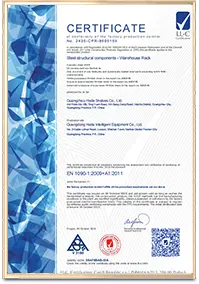
CE Certificate
No. 2435-CPR-8605159 (EN 15512)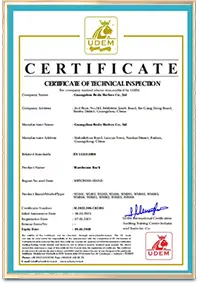
ISO 9001:2015
Reg. No. 18624Q00169R0M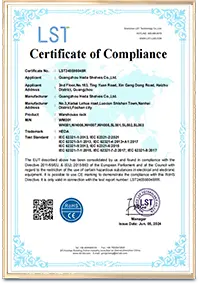
RoHS Directive
Hazardous Material Restriction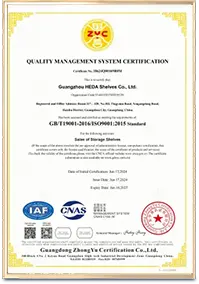
Load Test Report
Tensile & Deflection AuditFrequently Asked Questions on Pallet Racking Procurement
In-depth responses covering seismic loading, material certificates, ocean transit protection, container packaging, and international installation supervision.
Q1 What design data is required to calculate an optimal racking layout?
Our structural engineers require: (1) Warehouse architectural drawings indicating clear height under roof trusses, column grids, fire sprinkler drops, and dock door locations; (2) Pallet specifications (width, depth, overall height including cargo overhang, and gross weight per unit); (3) Forklift parameters (minimum aisle turning radius, mast lowered/extended heights, and reach capacity); (4) Inventory SKU velocity profile (FIFO vs. LIFO requirements).
Q2 How does HEDA verify seismic compliance for earthquake-prone regions?
For seismic areas such as Indonesia, the Philippines, New Zealand, or western South America, our engineers calculate base shear forces, spectral accelerations ($S_s, S_1$), and site soil classification coefficients in accordance with Eurocode 8 and ASCE 7. We specify heavy-duty seismic baseplates with double M12–M16 wedge anchors, cross-aisle and spine heavy channel bracing, and increased upright steel wall thicknesses.
Q3 How are the steel components protected against corrosion during ocean transit and tropical storage?
Every structural profile undergoes a continuous eight-stage chemical immersion process: alkaline degreasing, rinse, rust-dissolving acid pickling, rinse, zinc phosphating, and deionized neutralization. Components then receive electrostatically applied pure polyester or epoxy-polyester powder baked at 180°C–200°C. For open yards or sub-zero condensation zones, we offer continuous hot-dip galvanization (ISO 1461).
Q4 What container loading optimizations do you deploy to minimize ocean freight costs?
Racking components can easily incur excessive "cube-out" freight costs if loaded poorly. We design uprights and beams with modular nesting profiles bundled into unitized steel-strapped crates. Upright frames are delivered pre-assembled or knock-down (bolted on-site), allowing up to 26–28 metric tons to fit snugly into a single 40ft High Cube (40HQ) container without wasted air space.
Q5 Can your adjustable pallet racking beams be adjusted without cutting or welding?
Yes. The system utilizes cold-formed interlocking hook connectors welded to both ends of the box beam. These fit into precision CNC-stamped butterfly or teardrop slots along the upright face on standard 50mm or 75mm pitch increments. Beams can be effortlessly unhooked and re-pinned in minutes as pallet heights evolve, secured by heavy-duty spring-steel safety pins.
Q6 Do you provide installation guidance and overseas supervisory support?
Every shipment is accompanied by detailed CAD erection drawings, 3D exploded assembly diagrams, part-marking color tags, and bilingual step-by-step video tutorials. For large-scale projects exceeding 2,000 pallet positions, HEDA dispatches senior installation project engineers to the job site to supervise local crews, verify plumb tolerances, and sign off on anchor torque compliance.
Request Your Free CAD Warehouse Layout & Structural Load Audit
Send our senior engineering team your warehouse floor dimensions, clear ceiling heights, and pallet specifications. Receive a certified proposal complete with CAD drawings, 3D renderings, and FOB/CIF budget pricing within 24 hours.
Speak directly with our technical racking engineering specialists via live consultation.
Contact Us