Choosing the right Warehouse Racking System in 2026 is less about finding one universal winner and more about matching storage design to daily operations. A busy distribution center with fast-moving pallets may need clear access to every load. A facility holding large volumes of the same product may benefit from denser storage, even if access takes longer. The trade-off is real.
This guide compares leading options, including selective pallet racking, drive-in and drive-through systems, push-back racks, pallet flow, cantilever racks, and automated storage solutions. It looks at how each handles selectivity, storage density, product rotation, equipment needs, and expansion. For example, a reach truck needs workable aisle clearance, while gravity-fed flow lanes depend on compatible pallets and consistent product movement. Small details matter.
“Top” depends on the building and its workload. Before selecting a system, operators should confirm pallet dimensions, load weights, ceiling height, floor conditions, inventory patterns, and handling equipment. Manufacturer load ratings and qualified engineering review are essential; a layout that looks efficient on paper may not suit actual traffic or safety requirements. Even a well-designed rack can create bottlenecks when receiving, picking, and replenishment are overlooked. That deserves a second look. The sections ahead offer a practical basis for comparing systems, not a substitute for site-specific assessment.
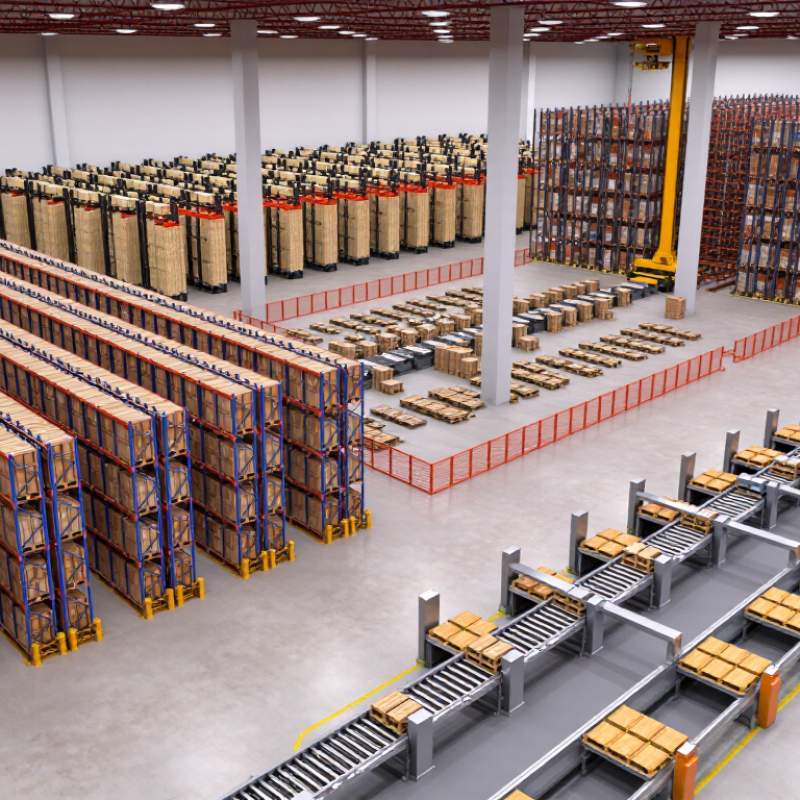
How Warehouse Racking Systems Work and What Makes Them Top Choices in 2026
Warehouse racking supports more than stored weight. Upright frames carry the load, while beams hold pallets and transfer force to the floor. Operators choose a layout based on pallet size, SKU count, access needs, and equipment turning space. Selective racks provide direct access to each pallet, making them useful for varied inventory. Drive-in racks fit more pallets into less floor area but reduce individual access. Pallet-flow systems use inclined rollers to move stock forward, often supporting first-in, first-out rotation. Access matters.
The “top” system depends on the work, not just storage density. MHI’s 2024 Annual Industry Report found that 55% of surveyed supply-chain professionals planned to adopt robotics and automation within five years. That trend makes rack clearances, aisle widths, and equipment compatibility practical design concerns. A dense layout may look efficient on paper, yet slow replenishment when fast-moving items sit deep inside a lane. Not always. Before installation, teams should verify rated loads, floor conditions, sprinkler clearance, and actual pallet dimensions. These details are easy to underestimate. A layout also needs regular inspection, because damaged uprights or overloaded beams can compromise the whole bay.
What Are the Top Warehouse Racking Systems in 2026? — How Warehouse Racking Systems Work and What Makes Them Top Choices in 2026
| System | How It Works | Storage Density | Pallet Selectivity | Typical Stock Rotation | Best Suited For | Key Trade-Off |
|---|---|---|---|---|---|---|
| Selective pallet racking | Each pallet is accessed directly from an aisle using a forklift. | Low to medium | Very high; every pallet position is directly accessible | Flexible; rotation is controlled by inventory procedures | Warehouses with many SKUs, frequent picking, or mixed inventory | Aisles use floor space that could otherwise hold storage. |
| Double-deep racking | Pallets are stored two positions deep, requiring a deep-reach forklift to access the rear position. | Medium to high | Moderate; front pallets can block rear pallets | Generally LIFO within each two-deep lane | Operations seeking more pallet positions while retaining access by aisle | Needs compatible lift equipment and works best with multiple pallets per SKU. |
| Drive-in racking | Forklifts enter storage lanes and place pallets on rails; lanes are commonly served from one end. | High | Low; pallets deeper in a lane are less directly accessible | Typically LIFO | Large quantities of the same product, including suitable bulk or seasonal stock | Forklifts travel inside the rack, so careful driving and load handling are important. |
| Drive-through racking | Forklifts can enter a lane from either end, allowing separate loading and unloading sides. | High | Low to moderate; access is lane-based | Can support FIFO when loading and retrieval are managed from opposite ends | High-volume products where through-flow and stock rotation are priorities | Requires access aisles at both ends of the lanes. |
| Pallet flow racking | Pallets move by gravity on inclined roller or wheel tracks from the loading face to the picking face. | High | Moderate; access is organized by lane | FIFO | Perishable, date-sensitive, or high-throughput goods stored in suitable pallet loads | Pallet condition, load consistency, and track maintenance affect reliable flow. |
| Push-back racking | Each new pallet pushes earlier pallets backward on nested carts or rollers; pallets move toward the aisle as stock is removed. | Medium to high | Moderate; access is typically by SKU lane | Typically LIFO | Several pallets per SKU where faster access than deep drive-in lanes is useful | Not generally suited to strict FIFO rotation; carts and pallet dimensions must be compatible. |
| Mobile racking | Rack rows move on floor-mounted rails or guided systems to open an access aisle where needed. | High compared with fixed selective layouts | High when the required aisle is opened | Flexible; determined by inventory procedures | Space-constrained facilities needing direct access to a broad range of pallet loads | Access depends on moving rows; installation and operating systems are more involved. |
| Cantilever racking | Horizontal arms extend from upright columns to support long or irregular loads without front columns. | Medium; configuration depends on load dimensions and handling needs | High for individual stored items or bundles | Flexible; not inherently FIFO or LIFO | Lumber, pipe, bar stock, furniture, and other long or bulky materials | Not designed for standard pallet storage; load support and handling must match the material. |
Note: Density and selectivity are comparative layout characteristics, not guaranteed performance figures. Actual capacity and suitability depend on rack design, pallet and load dimensions, floor conditions, building constraints, fire protection, and applicable safety requirements.
FAQS
It gives workers direct access to every pallet. It suits mixed products and frequent picking, but aisles use valuable floor space.
Drive-in racking stores pallets in deep lanes with fewer aisles. It can increase storage density, but access is less flexible. Check forklift clearance and pallet damage risks.
Push-back systems use nested carts and usually load and retrieve from the same aisle. Pallet-flow systems use inclined rollers to move pallets forward by gravity.
Pallet-flow racking can support first-in, first-out rotation. It may suit dated inventory, though rollers need maintenance and uneven pallets can interrupt movement.
Check pallet weight, beam levels, frame design, and floor conditions. Include installation, labor, equipment, and aisle space in the cost. Appearance alone proves nothing.
Review SKU variety, pallet dimensions, turnover, and replenishment patterns. Test a few representative aisles using real picking data. A model can miss an awkward corner.
Keep aisles clear, secure loads, and inspect damaged equipment. Use capacity labels and column guards. A bent upright needs prompt assessment.
Inventory systems, sensors, and automated retrieval can improve visibility when location data stays accurate. They do not fit every site. Walk the aisle.
Not always. It may save floor space but increase forklift travel or slow picking when access and replenishment are poorly planned. I might be overvaluing density here; test actual pick routes.
Conclusion
In 2026, choosing a Warehouse Racking System means balancing storage density, product access, handling needs, and operational costs. Selective racks offer direct access to individual pallets, while drive-in systems make efficient use of space for large quantities of similar products. Push-back racks and pallet flow systems provide higher-density storage with different approaches to loading, retrieval, and inventory rotation.
For operations seeking greater density or automation, mobile racking, shuttle systems, and automated storage and retrieval systems can help make better use of available space and support faster workflows. The right choice depends on load capacity, inventory variety, turnover patterns, and the level of access required. A successful layout also considers equipment movement, safety clearances, building constraints, and technology integration. Comparing these factors helps organizations select a system that suits both current operations and future growth.