0%

Choosing the right Pallet Storage Racking System begins with physical reality, not attractive product photographs. A warehouse may hold identical pallets, yet its rack requirements can differ sharply. Inventory turnover, pallet weight, forklift reach, aisle width, ceiling height, fire protection, and stock rotation all influence the final design. Small errors become expensive when steel frames, vehicles, and workers share narrow aisles.

Industry evidence supports a more disciplined approach. MHI’s 2024 Annual Industry Report identified robotics and automation as a major investment priority, with 46% of surveyed companies reporting current use. The report also highlighted continuing pressure from labor shortages and rising service expectations. These conditions make storage density important, but density alone can create slower access and greater operating complexity. The U.S. material handling equipment market also continues to develop around higher throughput, visibility, and automation.

No single rack type wins every time.

John J. Bartholdi III, a respected warehouse design researcher, states, “The purpose of a warehouse is to provide storage and retrieval services.” That principle keeps the discussion practical. Selective pallet racks usually provide direct access, while drive-in racks favor high-density storage. Push-back and pallet-flow systems can improve space use and stock movement, but they require stricter load planning and maintenance discipline. Double-deep layouts may increase capacity, although they can complicate retrieval.

This guide compares the leading Pallet Storage Racking System types through capacity, accessibility, safety, cost, and operational fit. Some recommendations remain imperfect. A rack that looks efficient on paper may perform poorly beside a busy loading door.
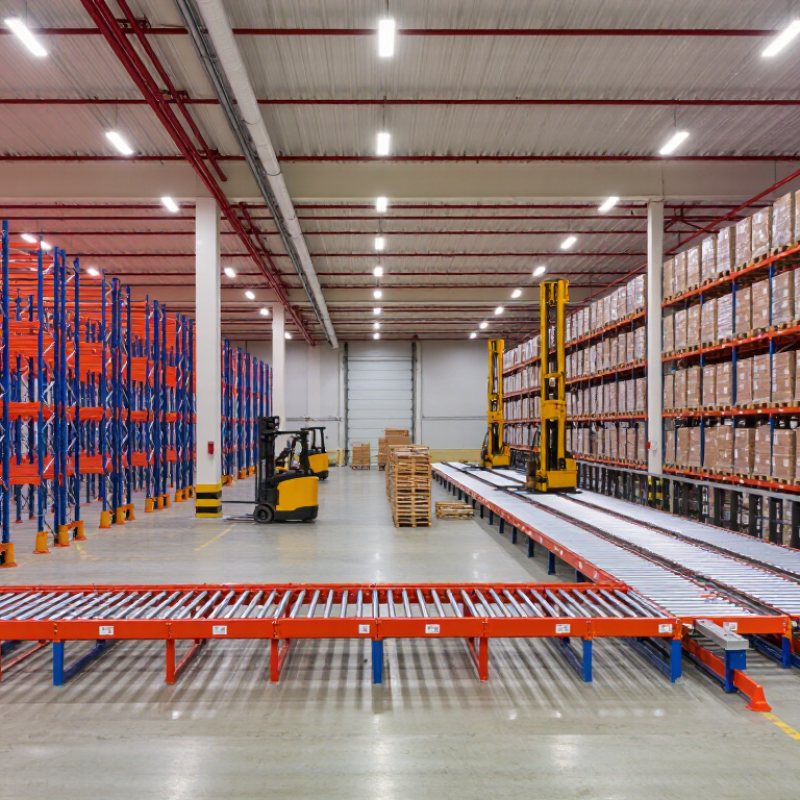
What Are the Top Pallet Storage Racking System Types?

Pallet Storage Racking Systems: Definition and Basic Structure

Pallet storage racking is a structured system for holding palletized goods above the warehouse floor. It creates organized storage levels and supports safer material handling. Unlike floor stacking, it uses vertical space more efficiently. Each storage bay usually includes upright frames, horizontal beams, and pallet supports. The frame transfers weight to the floor, while beams carry the pallet load. Loads should remain within the system’s rated capacity.

The basic structure is simple but requires careful planning. Upright columns form the vertical supports, often connected by braces for stability. Beams lock into the columns at selected heights. Pallets rest directly on these beams or on additional decking. Row spacers, guards, and anchor points can improve alignment and protection. A clear aisle must separate opposing rack rows for equipment and workers. Small details matter here.

Different layouts suit different operating needs. Selective racking offers direct access to every pallet and fits many product categories. Drive-in designs increase density but reduce immediate access. Double-deep arrangements save space, though they need suitable handling equipment. A well-organized plan can still fail during busy shifts. The first layout is rarely perfect. Product dimensions, pallet condition, turnover rate, and equipment movement deserve regular review. A practical inspection may reveal blocked aisles, uneven loading, or beams placed too high for daily work. Rack labels and load notices also help workers make consistent decisions.

Selective Pallet Racking for Flexible Warehouse Access

Selective pallet racking is often the most practical choice for warehouses handling many product types. It provides direct access to every pallet position. That access reduces unnecessary movement and supports faster picking.

In practice, operators can adjust beam levels as pallet heights change. This flexibility helps businesses manage seasonal inventory without major reconstruction. A clear aisle layout also improves stock counting and reduces handling errors. Selective systems usually require more floor space than drive-in or push-back racking. That trade-off matters. A narrow warehouse may need a different solution, such as very narrow aisle racking. Load weight, pallet dimensions, forklift turning space, and ceiling height should guide the final design. Small measurement mistakes can create expensive problems. They happen more often than expected.

Tips: Keep heavier pallets on lower levels. Label each bay from a visible aisle position. Inspect beams, uprights, and safety pins regularly. Keep damaged components out of service immediately. Leave enough clearance for stable forklift operation. Review the layout after busy seasons. A system that worked last year may feel crowded today. Storage plans should reflect actual movement patterns, not only a neat drawing. Ask trained racking professionals to verify load ratings and installation details before use.

Drive-In and Drive-Through Racking for High-Density Storage

What Are the Top Pallet Storage Racking System Types?

Drive-In and Drive-Through Racking for High-Density Storage

Drive-in and drive-through racking suit warehouses holding many pallets of similar products. They use deep storage lanes instead of separate access aisles. This design can increase floor utilization significantly. Drive-in systems have one loading side and follow last-in, first-out rotation. They work well for stable goods with longer storage periods. Drive-through systems allow forklift access from both ends. They support first-in, first-out rotation when stock rotation matters. The distinction is practical, not cosmetic. Channel depth, pallet condition, and forklift clearance must match the system.

A careful site assessment should come before installation. Measure pallet dimensions, load weights, ceiling height, and aisle turning space. Upright protection and guide rails can reduce impact damage. Operators also need clear training for entering deep lanes. I have seen efficient layouts become difficult when product variety increases. No design stays perfect forever. Regular inspections should check beams, supports, rails, and floor anchors. Any damaged component needs prompt evaluation by a qualified professional. Local safety requirements and engineered load ratings must guide the final specification.

Tips: Use drive-in racking for uniform inventory and slower rotation. Choose drive-through racking when both access and stock sequence matter. Keep heavier pallets in lower positions. Mark entry points clearly. Leave enough clearance for safe forklift movement. Review the layout when pallet sizes or turnover patterns change. One small adjustment can prevent repeated handling problems.

Pallet Flow and Push-Back Racking for Organized Product Rotation

What Are the Top Pallet Storage Racking System Types?
Pallet Flow and Push-Back Racking for Organized Product Rotation

Pallet flow racking uses gravity rollers or wheels to move pallets toward the picking face. It suits fast-moving goods that need clear first-in, first-out rotation. The loading side stays separate from the unloading side. This reduces travel and keeps replenishment activity away from pickers. Installers must match the lane slope, roller spacing, and pallet condition carefully. Damaged boards can stop a lane. Small details matter.

Push-back racking stores pallets on nested carts or inclined rails. Operators load and retrieve from the same aisle, usually following last-in, first-out rotation. This layout offers strong storage density and works well where product batches remain consistent. It can also simplify access in buildings with limited dock space. However, deep lanes may hide older stock. That is a real weakness.

Good selection starts with product movement, not rack height. Measure daily pallet volume, SKU variety, load weight, and required rotation. Food, dated materials, and temperature-sensitive inventory often benefit from flow lanes, while reserve stock may suit push-back storage. A professional assessment should review forklift clearance, impact protection, lane capacity, and inspection routines. Perfect rotation is not automatic. Human decisions still shape performance, and even a well-designed system may need adjustment after real warehouse use.

Automated and Specialized Racking Systems for Complex Storage Needs

Pallet storage racking systems now extend beyond standard selective racks. Automated and specialized designs support warehouses with high volume, limited space, or unusual product dimensions.

Automated storage and retrieval systems place pallets into tall racks with computer-guided cranes. They reduce travel time and improve inventory visibility. In a busy facility, sensors can record pallet positions within seconds. The system may also control lighting, access routes, and replenishment tasks. Automation is not magic. A wrong product code can still create a costly delay. Experienced teams should verify pallet weights, dimensions, and software settings before daily operation.

High-bay automated racks suit facilities with stable pallet sizes and predictable movement. Pallet shuttle racks use powered carriers inside deep storage lanes. They improve density while limiting forklift travel. Drive-in racks offer strong space efficiency but provide less selectivity. Flow racks support fast rotation, especially when loading and picking areas stay separate. These systems are useful, but not universal.

Mobile racks move along floor rails and can open one working aisle at a time. They help cold stores and compact warehouses use restricted space more effectively. Cantilever racks handle long or irregular materials that cannot sit safely on normal beams. A practical design review should examine fire protection, floor strength, emergency access, and maintenance clearance. I have seen layouts favor maximum capacity while ignoring repair access. That trade-off deserves another look.

What Are the Top Pallet Storage Racking System Types? - Automated and Specialized Racking Systems for Complex Storage Needs
Racking System Type Operating Principle Typical Storage Density Pallet Selectivity Automation Level Best-Suited Inventory Profile Key Advantages Main Limitations
Selective Pallet Racking Each pallet position is directly accessible from an aisle using a forklift. Low to medium
Usually requires wider aisles and more floor area.
100%
Every pallet can normally be accessed independently.
Manual Many stock-keeping units with relatively low quantities per item and frequent stock rotation. Flexible beam levels, simple configuration, easy stock control, and broad compatibility with pallet sizes. Lower space utilization than high-density systems because of aisle requirements.
Very Narrow Aisle (VNA) Racking Specialized turret or articulated forklifts operate in narrow aisles between tall rack structures. Medium to high
Uses vertical space and reduces aisle width.
100% Semi-automated Warehouses that need high selectivity and greater vertical capacity without installing a fully automated system. High storage height, good access to individual pallets, and improved floor utilization. Requires specialized trucks, precise floor tolerances, and careful traffic management.
Double-Deep Pallet Racking Two pallets are stored one behind the other on each side of an aisle, normally using reach trucks. Medium to high About 50%
The rear pallet is less directly accessible.
Manual Products with several pallets per stock-keeping unit and moderate inventory rotation. Greater pallet density than selective racking and relatively straightforward operation. Reduced selectivity and possible first-in, first-out limitations without disciplined stock control.
Drive-In Racking Forklifts enter deep storage lanes supported by rails, allowing pallets to be stored several positions deep. High Low
Access is generally arranged by lane rather than by individual pallet.
Manual Large quantities of similar products, low SKU variety, and stable inventory demand. Very high cube utilization and reduced aisle space. Limited selectivity, higher risk of rack impact, and more demanding forklift positioning.
Pallet Flow Racking Pallets move by gravity on inclined roller lanes from the loading side toward the picking side. High Lane-level
Each lane can normally hold one product or batch.
Semi-automated High-throughput goods requiring first-in, first-out rotation, such as dated or perishable inventory. Supports FIFO rotation, separates loading and picking aisles, and improves operator productivity. Higher installation cost and less flexibility when product dimensions or loads vary significantly.
Push-Back Racking Each new pallet pushes the previous pallet deeper into the lane on nested carts or inclined rails. High SKU-level
Individual pallets are not usually accessed directly.
Semi-automated Last-in, first-out storage for multiple pallets of the same product or batch. High density, fewer aisles, and faster loading and retrieval than drive-in storage in many layouts. Generally follows LIFO rotation and requires consistent pallet quality and load dimensions.
Mobile Pallet Racking Rack rows are mounted on motorized bases that open only the aisle required for access. Very high
Can reduce the number of permanently open aisles.
High Automated movement High-value, low-to-medium throughput inventory where space is expensive or limited. Combines high space utilization with direct pallet access and controlled aisle opening. Higher capital cost, slower simultaneous access, and dependence on electrical and safety systems.
Radio Shuttle Racking A battery-powered shuttle transports pallets within deep lanes while forklifts load and unload at the lane entrance. Very high Lane-level
Access depends on lane and loading strategy.
Automated High-volume, high-density storage with repeated pallet movements and limited SKU variety per lane. Reduces forklift travel inside lanes, improves safety, and supports deep-lane storage. Requires batteries, controls, maintenance procedures, and consistent pallet quality.
Automated Storage and Retrieval System (AS/RS) for Pallets Computer-controlled cranes, shuttles, or stacker systems automatically store and retrieve pallets. Very high
Uses significant vertical volume and optimized aisle layouts.
High to 100%
Depends on the system layout and control logic.
Fully automated High-throughput operations with stable processes, strict inventory accuracy requirements, or labor constraints. Consistent performance, traceability, reduced forklift traffic, and strong use of building height. High initial investment, integration complexity, and the need for preventive maintenance and backup procedures.
Automated Pallet-Shuttle System Shuttles transfer pallets through dedicated channels and may work with lifts or conveyors between levels. Very high Medium to high
Varies with lane arrangement and control software.
Fully automated High-density distribution, buffer storage, and temperature-controlled facilities with repetitive pallet flows. Scalable lane capacity, reduced manual travel, and efficient use of deep storage channels. More complex controls and equipment coordination than conventional shuttle or forklift systems.
AS/RS Crane with Stacker Aisles Automated stacker cranes place and retrieve pallets from both sides of a narrow, tall aisle. Very high High Fully automated Large centralized warehouses requiring accurate pallet tracking, high throughput, and vertical storage. Excellent height utilization, repeatable handling, high inventory accuracy, and reduced labor exposure. Large project scope, specialized engineering, and significant consequences if a critical component is unavailable.
Cantilever Racking for Palletized Long Loads Horizontal arms support loads from upright columns without front rack posts. Low to medium High Manual Long, irregular, or oversized palletized materials that do not fit standard beam-rack openings. Open-front design, flexible load access, and easy adjustment for varying load lengths. Not optimized for standard high-density pallet storage and requires careful load balancing.

FAQS

What is pallet storage racking?

It is a structured system for storing palletized goods above the warehouse floor. Upright frames, horizontal beams, and pallet supports form each storage bay. It uses vertical space better than floor stacking.

What are the main parts of a pallet rack?

Upright columns carry the vertical load and connect with braces. Horizontal beams support pallets at selected heights. Decking, guards, row spacers, and floor anchors can improve stability and protection.

Why are clear aisles important?

Clear aisles give workers and handling equipment enough room to move safely. Blocked aisles can slow operations and create collision risks. Small details matter.

Which racking type provides direct pallet access?

Selective racking provides direct access to every pallet. It suits warehouses with varied products and frequent picking needs. However, it may use more floor space than dense storage designs.

When is drive-in racking suitable?

Drive-in racking suits uniform products with slower turnover. It uses deep storage lanes and usually has one loading side. Stock rotation follows a last-in, first-out pattern.

How does drive-through racking differ from drive-in racking?

Drive-through racking allows equipment to enter from both ends. It can support first-in, first-out stock rotation. Both layouts need suitable pallet sizes, forklift clearance, and careful operator training.

What should be checked before installing high-density racking?

Measure pallet dimensions, load weights, ceiling height, and turning space. Check the floor, aisle width, and equipment clearance. The original layout may not remain suitable after inventory changes.

How can warehouse teams reduce rack damage?

Mark entry points clearly and protect exposed uprights. Keep heavier pallets in lower positions. Inspect beams, supports, rails, and anchors regularly. Any damaged part needs professional evaluation.

What information should load notices and rack labels provide?

They should communicate rated capacities and practical loading limits. Clear labels help workers make consistent decisions during busy shifts. Labels alone cannot correct poor loading.

When should a racking layout be reviewed?

Review it when pallet sizes, product variety, or turnover rates change. Check for uneven loading, blocked aisles, and beams placed too high. One small adjustment may prevent repeated handling problems.

Conclusion

A Pallet Storage Racking System is a warehouse structure designed to store palletized goods safely, efficiently, and in an organized manner. It typically consists of upright frames, horizontal beams, pallet supports, and protective accessories, allowing businesses to make better use of vertical and floor space. Different configurations are suited to different storage volumes, access requirements, and inventory management methods.

Selective pallet racking provides direct access to individual pallets and offers excellent flexibility for warehouses with varied products. Drive-in and drive-through racking maximize storage density by reducing aisle space, making them suitable for larger quantities of similar goods. Pallet flow and push-back systems support more organized product movement and rotation, helping improve stock handling. For complex or high-volume operations, automated and specialized racking systems can combine mechanical equipment, software, and customized layouts to enhance efficiency, accuracy, and overall warehouse performance.

Amelia

Amelia

Amelia is a dedicated marketing professional with a deep understanding of the company’s products, customers, and industry landscape. With a strong background in market research, content strategy, and customer communication, she transforms complex product information into clear, practical, and......