Choosing the right Pallet Rack Systems can shape every movement inside a warehouse. A poor decision may create blocked aisles, damaged pallets, and wasted floor space. A well-planned system supports safer storage, faster picking, and controlled growth.
James A. Tompkins, a respected warehouse design expert, said, “The warehouse is the heart of the supply chain.” His point remains practical. Rack selection should begin with real operating conditions, not attractive product images. Measure ceiling height, aisle width, pallet dimensions, load weights, forklift turning space, and sprinkler clearances. Then examine inventory turnover. Fast-moving cartons may need selective racks near dispatch doors. Slow-moving stock could suit higher-density configurations. Every detail matters.
Safety must remain visible. Check beam capacity, upright protection, anchor requirements, inspection routines, and local engineering standards. Do not assume that a stronger-looking frame always offers greater safety. That assumption can fail. Product quality, installation accuracy, and daily discipline work together.
The following ten tips explore these decisions in a practical sequence. They compare storage density, accessibility, expandability, budget, and maintenance demands. They also consider seismic conditions and changing inventory profiles. A warehouse rarely stays unchanged. New packaging, heavier pallets, or different forklifts can expose weaknesses later.
Some recommendations may not fit every facility. That is normal. The best choice depends on measured needs, qualified advice, and honest review of past problems. Before approving a layout, walk the aisles with operators. Watch where pallets hesitate, where drivers reverse, and where congestion quietly begins. That evidence is often more useful than a polished sales proposal.
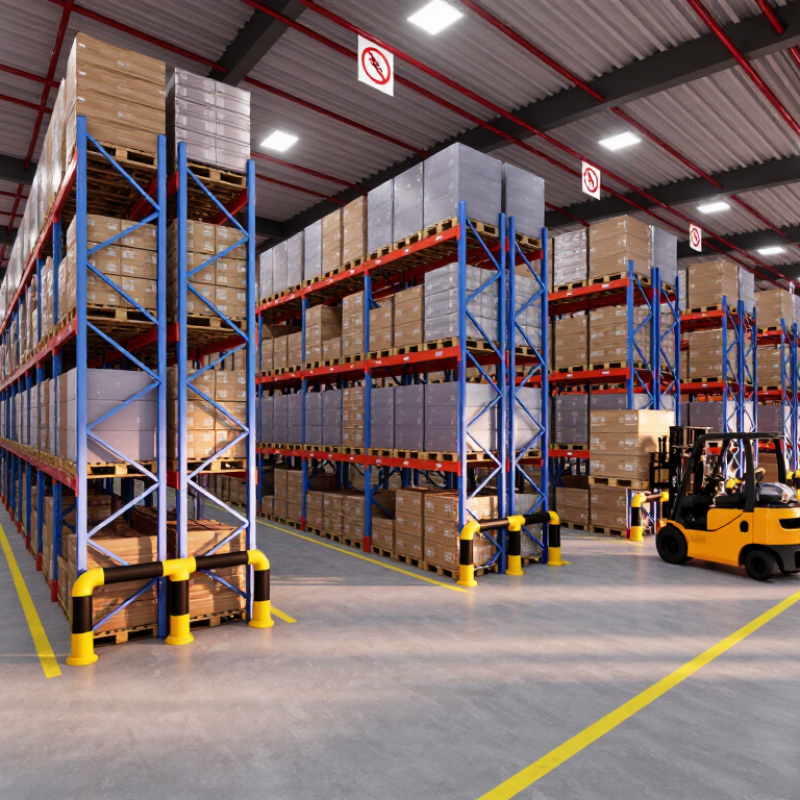
Choosing pallet rack systems starts with an honest storage audit. Measure aisle widths, ceiling height, floor load limits, and door clearances. Record pallet length, width, height, and average weight. Do not rely on one “standard” pallet. Variations create expensive gaps.
Walk through a normal receiving day. How many pallets arrive hourly? How long do they remain stored? Separate fast-moving goods from seasonal inventory. Then calculate capacity by usable locations, not floor area alone. A 30,000-square-foot warehouse may lose space to columns, sprinkler clearance, staging, and safe travel paths. Leave room for turning equipment. Tight aisles look efficient on paper.
I once planned around peak inventory and made daily picking awkward. The layout held more pallets, but workers traveled farther. That mistake changed my process. I now compare average, peak, and growth scenarios before selecting rack height and bay depth.
Check whether the slab can support concentrated loads, and confirm the structure with a qualified engineer. Capacity estimates should include damaged pallets, inspection zones, and temporary overflow. Small details matter. Review the plan with operators who use the aisles every day. Their practical warnings may challenge the spreadsheet, and they are often right.
Choosing pallet rack systems starts with the operation, not the catalog. Selective rack gives every pallet direct access and suits many SKUs, but uses more aisle space. Drive-in rack stores dense, uniform loads, though forklift movement is slower. Product rotation can suffer. Push-back rack improves selectivity and depth, while pallet flow rack supports FIFO with gravity rollers. Double-deep rack increases storage density, yet requires compatible equipment and accurate inventory control.
Measure ten details before approval: pallet dimensions, load weight, SKU count, daily moves, and rotation method. Record aisle width, ceiling height, forklift reach, floor capacity, and future growth. Check beam deflection, frame protection, and visibility at intersections. Ask whether operators can place loads without striking uprights. Small errors become expensive.
In cold or humid areas, specify suitable finishes and inspect corrosion points regularly. Use rack guards where traffic is tight. Keep sprinkler clearances verified by a qualified professional. Cantilever racks may serve long goods better, but standard pallet racks should not be improvised for that purpose. Selective systems often suit mixed inventory; flow or drive-in systems can suit repeat loads. The honest choice may be less dense storage. Density is not everything. A packed rack is not efficient if picking becomes slow, unsafe, or difficult to audit.
| Selection Tip | What to Evaluate | Selective Rack | Drive-In Rack | Double-Deep Rack | Push-Back Rack | Pallet Flow Rack | Mobile Rack | Automated Shuttle Rack |
|---|---|---|---|---|---|---|---|---|
| 1Define the required storage density | Compare pallet positions, aisle space, building height, and required floor utilization. | Best for flexible access. One pallet position deep per side is typical. |
Very high density. Several pallets can be stored deep in a lane. |
Higher density than selective rack because pallets are stored two deep. | High density. Commonly configured for multiple pallets deep. |
High density with dedicated lanes. Depth depends on product velocity and lane design. |
High floor utilization. Storage aisles open only when needed. |
Very high density. Deep lanes reduce aisle requirements. |
| 2Match the rack to SKU variety | Count active SKUs and determine whether each SKU needs its own lane or position. | Excellent for many SKUs. Each pallet position is generally accessible. |
Best for fewer SKUs with several pallets per SKU. | Works well for moderate SKU variety when two-deep storage is acceptable. | Best for fewer to moderate SKUs stored in batches. | Best when each lane can be dedicated to a SKU or product group. | Suitable for many SKUs, especially where floor space is limited. | Effective for high-volume SKUs and repeat pallet movements. |
| 3Choose the right inventory rotation | Determine whether the operation requires FIFO, LIFO, or simple access without strict rotation. | Can support FIFO with proper aisle and location control. | Usually LIFO. The last pallet loaded is normally the first pallet retrieved. |
Generally supports LIFO for the rear pallet; front pallets are retrieved first. | Usually LIFO. Pallets are loaded and retrieved from the same aisle. |
Well suited to FIFO. Loading and picking occur from opposite sides. |
Can support FIFO or LIFO depending on aisle and location planning. | Can be configured for FIFO or LIFO depending on the shuttle and lane arrangement. |
| 4Check pallet and load dimensions | Verify pallet length, width, height, weight, overhang, load stability, and pallet condition. | Highly adaptable, provided beam capacity and clearances are correctly engineered. | Requires consistent pallet dimensions and stable loads because rails support pallets inside lanes. | Requires sufficient aisle depth and a reach truck capable of placing pallets two deep. | Requires compatible pallet bases and consistent load dimensions for smooth cart movement. | Requires pallets suitable for rollers or wheels and consistent lane loading. | Requires accurate rack and aisle dimensions to maintain safe moving clearances. | Requires consistent pallet dimensions and load quality for reliable shuttle operation. |
| 5Consider forklift access | Review truck type, turning radius, lift height, aisle width, operator visibility, and traffic flow. | Compatible with common counterbalance, reach, and turret-truck layouts when aisle widths are designed correctly. | Forklifts enter storage lanes, so truck dimensions and operator skill are critical. | Requires a reach truck or another truck designed for accurate double-deep placement. | Forklifts load and unload from the aisle; lane access is simpler than drive-in storage. | Forklifts typically load from one side and pick from the opposite side. | Forklift travel is reduced, but operators must follow mobile-base safety controls. | Forklifts generally load and retrieve at the aisle face while the shuttle travels inside the lane. |
| 6Plan for throughput and access frequency | Estimate pallet receipts, picks, replenishments, peak periods, and required response time. | Strong all-purpose throughput. Fast access to individual pallets. |
Efficient for batch storage but slower for mixed-SKU picking inside deep lanes. | Improves density but adds handling time compared with single-deep selective storage. | Efficient for batch operations and medium-to-high pallet turnover. | Strong for high-volume flow. Separates loading and picking activities. |
Access may be slower because an aisle must be opened before use. | Strong for repetitive, high-volume movements. Automation reduces travel inside deep lanes. |
| 7Compare installation and operating costs | Include rack, installation, forklifts, controls, maintenance, energy, training, and future expansion. | Usually the simplest and most economical starting point for general storage. | Can reduce building space but may require specialized handling and stricter operating procedures. | Moderate system cost with potential savings from increased density. | Higher equipment cost than selective rack because of carts, rails, and additional components. | Higher initial cost due to rollers or wheels, but can improve flow and labor efficiency. | Higher installation and maintenance cost because of powered moving bases. | Highest initial investment among the listed options because of shuttles, controls, and integration. |
| 8Evaluate safety and compliance requirements | Account for rack protection, load notices, inspections, fire protection, seismic conditions, and local codes. | Requires upright protection, beam locks, load signs, and regular inspections. | Requires protection at lane entrances and strict forklift procedures inside lanes. | Requires protection against rear impact and careful control of double-deep placement. | Requires cart stops, backstops, guide rails, and protection at operating faces. | Requires lane controls, pallet stops, side guides, and protection from roller damage. | Requires interlocks, emergency stops, restricted access, and procedures for moving bases. | Requires guarding, emergency stops, access control, sensor checks, and documented maintenance. |
| 9Allow for future flexibility | Consider changing SKUs, seasonal inventory, new pallet sizes, growth, and possible layout changes. | Most flexible. Beam levels and bays can often be adjusted within design limits. |
Less flexible because lane depth and SKU grouping strongly influence performance. | Moderately flexible, but the two-deep configuration limits some future changes. | Flexible for batch storage, though cart depth and lane configuration must be planned carefully. | Less flexible when SKU mix or product dimensions change substantially. | Flexible in floor access, but changes may require moving-base and control-system modifications. | Best when product profiles are stable; changes may require software and equipment adjustments. |
| 10Select based on the operating environment | Assess temperature, dust, moisture, cold storage, labor availability, automation goals, and maintenance capability. | Suitable for warehouses with varied products and conventional manual handling. | Suitable for stable, block-style storage where product variety is limited. | Suitable where density is important but individual pallet access is still needed. | Suitable for temperature-controlled or batch-storage environments with repeat pallet handling. | Suitable for distribution, food, beverage, and other operations that benefit from controlled rotation. | Suitable where warehouse footprint is expensive and controlled access is acceptable. | Suitable for high-volume facilities with reliable power, controls, maintenance, and trained technicians. |
Tip 1: Start with the real load, not the average load. Record each pallet’s weight, length, width, height, and center of gravity. Add the heaviest planned case. According to ANSI MH16.1, rack capacity depends on beam spans, upright frames, and configuration, not one universal rating. A tidy spreadsheet can still be wrong.
Tip 2: Match rack dimensions to the warehouse, equipment, and product flow. Measure clear ceiling height, slab condition, aisle width, sprinkler clearance, and door locations. Leave practical space above every pallet. The 2024 Liberty Mutual Workplace Safety Index reported $58.5 billion in serious workplace injury costs, using 2021 data. Poor clearances and hurried forklift movements can turn a small design error into a costly event. Keep the numbers visible on the layout.
Tip 3: Check beam deflection, frame height, and pallet overhang with a qualified rack engineer. I have seen plans that fit on paper but blocked sprinklers in the building. That mistake is easy to miss. Compare the proposed design with current site measurements, then inspect damaged uprights before loading. Recheck after installation. Warehouse conditions change, and the original assumptions may not survive a busy season.
10 Tips for Choosing Pallet Rack Systems
Safety should guide every rack decision, not just the final inspection. OSHA estimates that forklifts cause about 85 deaths and 35,000 serious injuries annually in the United States. Rack layouts need visible load ratings, protected uprights, stable anchoring, and clear forklift aisles. Follow applicable OSHA requirements and ANSI MH16.1 design guidance. A rack that looks strong may still fail under uneven loading.
Accessibility also affects daily safety. Measure aisle width against the actual forklift turning radius, not a catalog estimate. Place fast-moving pallets between knee and shoulder height where possible. Clear labels should show bay capacity and product location. The U.S. Bureau of Labor Statistics continues to identify transportation and warehousing as high-risk work environments, making simple access controls worthwhile. Small delays can encourage rushed handling.
Durability depends on impact resistance, inspection, and maintenance. Choose steel sections suited to the expected load, temperature, and operating cycle. Inspect beams, connectors, anchors, and floor damage at scheduled intervals. Replace damaged parts rather than improvising repairs. That sounds obvious, but busy facilities sometimes postpone it. Perfect prevention is unrealistic. Consistent records, trained operators, and honest reassessment are more reliable than confidence alone.
Pallet footprint is a key starting point when selecting rack depth, beam length, aisle width, and handling equipment. The chart compares recognized pallet formats using published nominal dimensions. Before installation, verify load capacity, rack configuration, floor conditions, impact protection, inspection procedures, and compliance with applicable requirements such as OSHA 29 CFR 1910.176(b), ANSI/RMI MH16.1, and ISO 6780.
Dimensions shown are nominal pallet footprints; actual rack design must be confirmed by a qualified rack designer and the equipment manufacturer.
Tip 1: Measure the building before choosing rack height. Record clear height, column spacing, sprinkler locations, dock traffic, and floor capacity. A drawing can hide real obstacles. My first layout looked efficient on paper, but a fire-protection pipe reduced usable height by nearly one beam level. Confirm local permits and seismic requirements with a qualified engineer. ANSI MH16.1:2023 provides design guidance for industrial steel storage racks.
Tip 2: Plan expansion before installation. MHI’s 2024 Annual Industry Report found that 83% of surveyed supply-chain leaders expected increased technology investment. Growth also changes storage profiles. Reserve space for new bays, wider aisles, and safer picking routes. Use adjustable beams where product dimensions may change. Do not fill every opening on day one. That decision often creates expensive relocations later.
Tip 3: Calculate long-term costs, not only the purchase price. Include engineering, freight, installation, floor repairs, inspections, protection barriers, and future dismantling. OSHA 29 CFR 1910.176(b) requires stored materials to be stable and secure in U.S. workplaces. Rack inspections therefore need a practical budget and clear ownership. Photograph damaged uprights, tag them, and remove unsafe sections promptly. A spreadsheet may still miss downtime, overtime, and lost picking capacity. Review the estimate after a real traffic walk-through, not only after a supplier quotation.
Measure aisle widths, ceiling height, door clearances, and floor load limits. Record each pallet’s length, width, height, and weight. Include columns, staging areas, sprinkler clearances, inspection zones, and temporary overflow. Floor area alone can mislead.
Compare average, peak, and growth scenarios. Peak planning may increase capacity but create longer picking routes. I once optimized pallet count and made daily work awkward. That mistake still matters.
Selective racks often suit many stock-keeping units because every pallet remains accessible. They need more aisle space. This trade-off can be worthwhile when products change frequently.
Drive-in systems suit uniform loads with limited product variety. Push-back systems add depth while preserving better access. Dense storage can slow rotation and inventory checks. More pallets are not always better.
Pallet flow racks use gravity rollers to move older pallets forward. They can support consistent rotation. Confirm pallet compatibility and maintenance needs before approval.
Check pallet dimensions, load weight, SKU count, daily moves, and rotation method. Also measure forklift reach, turning radius, ceiling height, and floor capacity. Do not trust a catalog aisle width.
Use visible load ratings, stable anchoring, protected uprights, and clear travel paths. Add rack guards where forklift traffic is tight. Keep fast-moving goods within comfortable handling heights when possible. Small delays can cause rushed handling.
Inspect beams, connectors, anchors, uprights, and floor damage regularly. Check corrosion in humid or cold areas. Replace damaged parts instead of creating improvised repairs. Perfect prevention is unrealistic. Consistent records help.
Choosing the right Pallet Rack Systems begins with a clear understanding of your storage needs, warehouse capacity, inventory turnover, and available floor space. Consider how many pallets must be stored, the types of goods handled, and whether a selective, drive-in, push-back, or other rack design best supports daily operations. Compare each option according to accessibility, workflow efficiency, and compatibility with your material-handling equipment.
Load requirements and rack dimensions should be carefully evaluated to ensure the system can safely support pallet weights, heights, and configurations. Safety standards, inspection procedures, durability, and protection against operational damage are also essential considerations. Finally, plan for professional installation, future expansion, maintenance, and long-term costs rather than focusing only on the initial purchase. A well-planned rack system can improve organization, maximize vertical space, support safer work practices, and remain adaptable as your warehouse needs change.